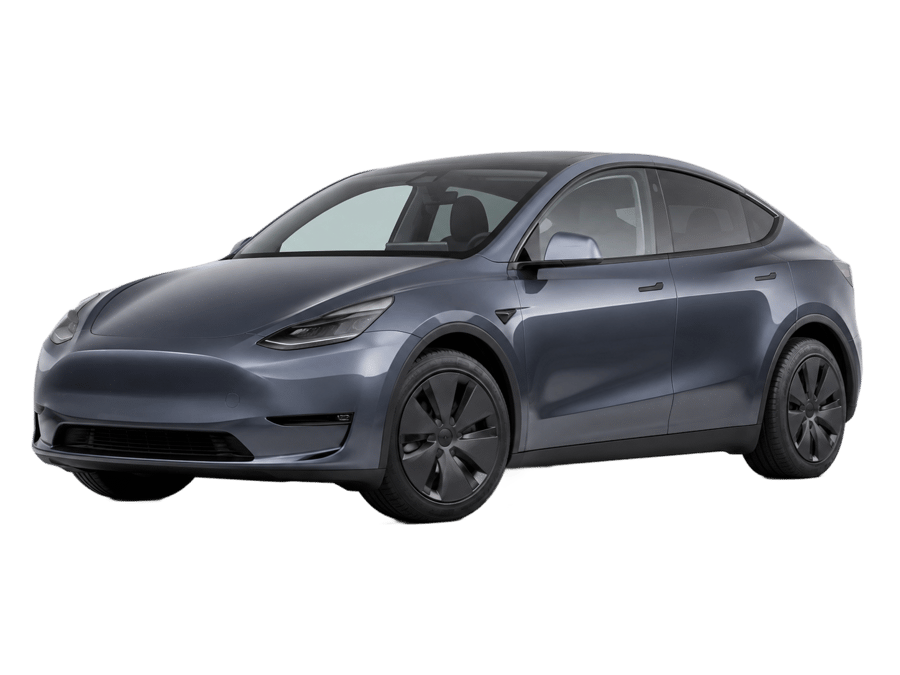
Complaint volume
827 consumer-submitted complaints are matched to this model year. Treat the count as a research signal, then read the actual summaries for repeated symptoms.
Complaint records
827 consumer-submitted complaints on record for the 2022 Tesla Model Y, grouped by component category.
Buyer interpretation
Complaint records are most useful when they turn into inspection points, seller questions, and comparison checks against nearby model years.
827 consumer-submitted complaints are matched to this model year. Treat the count as a research signal, then read the actual summaries for repeated symptoms.
The most common categories are forward collision avoidance, forward collision avoidance: adaptive cruise control, unknown or other. Use those categories as a test-drive checklist instead of judging the vehicle from the total count alone.
Enriched records include 80 crash reports, 8 fire reports, 35 injury reports, and 3 fatality reports. These fields come from complaint records and should be read in context.
Mileage is available on 73 complaints, with an average reported failure mileage of 16,603 miles. Compare that with the mileage on the listing.
Build a buyer checklist to turn these issues into questions and inspection points.
827 total complaints on record
| Date | Component | Summary | Severity | Mileage |
|---|---|---|---|---|
| Apr 2026 | EXTERIOR LIGHTING | My driver side headlight assembly stopped working. The headlight assembly includes the driving lights, high beams, and turn signals. I am open to having this product inspected upon request. This impacts the safety of me and others due to decreased visibility and the inability to appropriately indicate when I am turning. The dealer has not reviewed this yet, but I have a scheduled appointment on Friday, April 24. Vehicle has not been inspected by any third-party, improving manufacturer, police, insurance, or other representatives. There were no warning, lamps, messages, other symptoms of the problem prior to failure. The failure first appeared at around 55,000 miles, which was 5000 miles beyond my warranty. I believe that Tesla is pushing out updates that intentionally cause light assemblies and other high priced items to stop working after the warranty. there are multiple instances people replacing the same fixture after their warranty period has expired. Tesla charges $2000 to replace one light fixture. I believe this is fraudulent and corrupt business practices by Tesla. | Crash: No Fire: No | Unknown |
| Apr 2026 | SUSPENSION | My 2022 Model Y Performance developed severe front-left inner shoulder tire wear caused by a suspension alignment defect. On 4/7/2026 at 57,974 miles, Les Schwab diagnosed excessive shoulder wear due to alignment issue, deemed the tires unsafe, and required a liability waiver before I could leave (WO #XXX). I drove to Tesla Portland. Tesla’s own ExpressAlign check confirmed the front toe was out of spec, with multiple values flagged red on their equipment. The left front toe was the most severe, matching the wear pattern Les Schwab diagnosed that morning. Tesla charged me $1,874 for four new tires but did NOT perform a corrective alignment. Their own post-install report shows front toe STILL flagged red (left front toe slightly worse than before). They released the car on new tires with alignment still out of tolerance. I had paid Tesla for an alignment in Feb 2025 at 33,261 miles to prevent uneven wear. It failed within 24,713 miles with no suspension impacts or damage. The specific inner shoulder wear pattern, validated independently by both Les Schwab and Tesla on the same day, is consistent with the documented suspension geometry defect in 2020-2024 Model Y vehicles. I request NHTSA consider expanding the scope of recall 21V-835 (Tesla SB-21-31-003), which addressed front suspension lateral link issues on 2019-2021 Model 3/Y, to include 2022+ Model Y vehicles exhibiting the same alignment geometry failure. This is a safety hazard. Les Schwab required a liability waiver. I replaced all four tires as a safety necessity to transport my children. The underlying defect appears to be a factory design or manufacturing issue that Tesla’s alignment service does not resolve. INFORMATION REDACTED PURSUANT TO THE FREEDOM OF INFORMATION ACT (FOIA), 5 U.S.C. 552(B)(6) | Crash: No Fire: No | Unknown |
| Apr 2026 | UNKNOWN OR OTHER | Car was on FSD Software version 2026.8.6 Car had trouble centering itself in the lane (so it does a “ping pong effect”) which I believe caused the car to lose control No others cars involved no injuries Lo and behold, 2 days later a software update (2026.8.6.1) to correct this issue is issued by Tesla I have dashcam and footage of the accident which shows car was on FSD and also shows the “ping pong effect” | Crash: Yes Fire: No | Unknown |
| Apr 2026 | LANE DEPARTURE | The contact stated that they rented a 2022 Tesla Model Y. The contact stated that the vehicle was supervised in autonomous mode when it suddenly turned left while driving at approximately 45 MPH, causing it to hit an electrical box nearby. The vehicle then steered itself back onto the road and shortly after, turned off the road towards the right and crashed into a tree, where it came to a stop. There were no warnings or notifications that were displayed during the incident. The air bags did deploy. The vehicle did not allow the driver to correct the direction of the vehicle or disable the autonomous mode setting. The vehicle had caught on fire. The contact and the other passenger, sitting in the front passenger seat of the vehicle at the time, were able to exit the vehicle. The fire department was called and extinguished the fire. The police department was contacted, and a police report was filed. The vehicle was towed and totaled. The contact received a broken left wrist, a sprained right foot, and seat belt bruising to their lower stomach and chest area. The passenger in the vehicle received seat belt bruising. Medical attention was needed. The contact rented the vehicle through Turo and informed the person they had rented from. The contact was not sure if the incident was reported to the dealer or manufacturer by the owner. The contact stated their attorney contacted the manufacturer and informed them of the incident in an attempt to retrieve data information from the vehicle at the time of the incident. The failure mileage was unknown. | Crash: Yes Fire: Yes Injuries: 2 Towed Medical attention | Unknown |
| Mar 2026 | FORWARD COLLISION AVOIDANCE: ADAPTIVE CRUISE CONTROL | Following a 25-day repair at a certified collision center due to an earlier accident, the vehicle's Full Self-Driving (FSD) and Active Safety Systems began failing. The vehicle repeatedly failed to keep speed and failed to stay centered in the lane. On March 25, 2026, while traveling at low speed on a public roadway with FSD actively engaged, the system failed to maintain a stable path and incorrectly steered the vehicle into a curb, causing property damage to the wheel. This failure put my safety and the safety of surrounding traffic at risk by executing an unpredictable steering maneuver that the active safety systems failed to prevent. The vehicle was taken to the manufacturer's service center twice with this specific complaint prior to the curb strike. The service center investigated and officially concluded that this was not a software issue, stating that they could do nothing else. They deferred the resolution back to the collision shop, citing likely camera/sensor physical misalignment from the 25-day body repair. The collision shop is now refusing to review the vehicle or inspect the hardware, claiming lack of visible exterior damage despite the internal service team stating this is a latent hardware alignment defect. The vehicle is currently in the same failing condition and available for inspection upon request. No warning lamps or error messages appeared on the screen prior to the failure or the curb strike. The symptom of unpredictable lane tracking first appeared immediately upon receiving the vehicle back from the collision repair earlier this year. Note: I have a formal data privacy request pending with Tesla to pull the exact chat logs showing their refusal to service this hardware defect. I will provide these to the investigator upon follow-up. | Crash: Yes Fire: No | Unknown |
| Mar 2026 | AIR BAGS | On January 12, 2026, I was involved in a multi-vehicle collision on I-4 West near US-27 Off Ramp in Polk County, Florida. My vehicle was struck on the left rear quarter panel causing me to lose control, hit a second vehicle, and travel off the road to the hazard lane. The vehicle was declared a total loss by the insurance company. Despite the severity of the impact, none of the airbags deployed. The Florida state crash report confirms airbags were marked as Not Deployed. The vehicle is currently at a salvage yard and is available for inspection. No warning lamps related to the airbag system were present prior to the crash. The failure of the airbag system to deploy in a total loss collision put the driver at significant risk of serious injury.” | Crash: Yes Fire: No Towed | Unknown |
| Mar 2026 | STRUCTURE:BODY | Tesla Model Y Performance with 47,000 miles. Driver's side, rear passanger door would not open. No accident or damage to the car or car door. Door could not be opened from the inside nor the outside with the handle. ISSUE: The Emergency Door release in the pocket of the door failed to release and open the door. | Crash: No Fire: No | Unknown |
| Mar 2026 | STEERING | The contact owns a 2022 Tesla Model Y. The contact stated that the steering wheel material had been unraveling. The contact received notification of TSB Number: SB2332003. A Tesla Service Center was contacted via the Mobile App Chat feature, and informed the contact that the vehicle would be repaired at the owner's expense because the warranty had expired. The vehicle was not repaired. The manufacturer was notified of the failure. The failure mileage was approximately 70,000. | Crash: No Fire: No | 70,000 |
| Mar 2026 | STRUCTURE | While driving on Intestate I-95 in the Express Lane at high speed in my 2022 Tesla Model Y, the hood (frunk) suddenly flew open, smashed into the windshield and remained in the upright position. Luckily I was able to slow down and ease blindly into the emergency lane without causing further damage to myself or others. I lost entire visibility at high speed and my windshield was smashed on the highway. This was a traumatic experience that could have caused serious damage to me personally and other motorists. The hood (frunk) latch failed to operate properly and was available for inspection immediately. Once the highway safety patrol officer forced the hood down and escorted me safely off the highway, we drove the vehicle to a Tesla dealership directly after the incident. The Tesla dealer initially took full responsibility for the incident and said they would repair at their expense. However, the story changed once they did a VIN search on my vehicle and discovered I had been hit (not my fault, driver ran red light) in the front quarter panel prior to this incident. Tesla said the fault was on the repair shop (Tesla recommended) who had fixed the vehicle prior to the incident. The repair facility claimed they were not at fault, and Tesla was responsible, as they did not touch the frunk latch as noted by the invoice for repair/parts and painting/lack of near the latch. This is a recurring incident as reported by recalls and my vehicle is listed as one of the possible vehicles for recall. The vehicle was inspected by insurance, and the same Tesla recommend repair facility we used before. There were no warning lamps, signals or symptoms to indicate anything was wrong or loose with the latch. In the end, we had to file the incident through our insurance provider and pay out of pocket for the repair in order to get the vehicle back on the road. I'm truly frustrated with the lack of ownership by Tesla over the incident, they are losing a brand loyal customer. | Crash: No Fire: No | Unknown |
| Mar 2026 | SERVICE BRAKES | The vehicle was delivered with a critical safety defect in the braking system and inoperable safety software (GPS/FSD/Navigation). Upon further inspection by the dealer's own technician, it was confirmed that the vehicle had 'EXTREMELY POOR BRAKE FEEL' and 'EXTREME RUST BUILD UP' on all pads and rotors, which violated Tesla’s 6mm minimum safety standard for used vehicles. Additionally, a physically damaged windshield harness caused the failure of GPS and FSD features. These defects posed a significant safety risk to myself and my family during operation. The dealer has documented and confirmed these safety issues but is now refusing a buyback and is retaliating with storage fees for my rejection of the unsafe product. No warning lights appeared prior to the technician's discovery of the brake defects. | Crash: No Fire: No | Unknown |
| Feb 2026 | ELECTRICAL SYSTEM | Hello. I brought my Tesla Y to Tesla service local at 7077 W. Sahara Av., Las Vegas, NV. To fix noise in the breaks on Aug 28, 2025, After that on the same day i went to drive Tesla and I started feeling severe ear pressure, heart pressures, severe body pain from high EMF exposure, also severe electric shocks from the floor, seats, back of the seat, wheel, it has been constantly ongoing for already 6 six month since Aug 28, 2025. It’s when ever I am getting inside my car, driving, or just when it’s parked, I feel all that severe pain in the body, severe ear pressure, severe heart pressure, pain in hands, legs from high EMF exposure inside Tesla, also electric shocks from the floor, back of the seat, seat, wheel. My Tesla Y caused severe damaged t my health. I have all those symptoms and pain only when I am inside the car, when I am not in the car, I don’t feel any pain, and I don’t feel all of those severe symptoms and pain in my body. I have this car from 2024, it was perfectly fine, except that during hot season in Vegas, when the temperature is above 80 F, the glass roof got extremely hot, and it burned my head severely despite I cover with sun protector glass roof. But besides that I didn’t have any issues with my Tesla Y. Only after I brought my car to Tesla service on Aug 28. 2025, same day Tesla started causing me severe pain from High EMF and high Voltage causing electric shocks. I contacted local Tesla service many times and tried to address this issues. They didn’t help. I got response from Tesla manager at W. Sahara “ hope it will resolve by itself”:(( no one addressed this issue seriously. I noticed, every time I broght my Tesla Y to local Tesla services here in Las Vegas, the EMF exposure and electric shocks became even more extreme, worst like a 100 times more:(( I honestly after these horrific experience with Local Tesla services I DONT TRUST THOSE TESLA TECHS anymore. PLEASE HELP AND CONDUCT HIGH EMF AND HIGH VOLTAGE INSPECTIONS FOR MY CAR! | Crash: No Fire: No | Unknown |
| Feb 2026 | BACK OVER PREVENTION,FORWARD COLLISION AVOIDANCE | Around 02/10/2026, all of ADAS functions of my 2022 Tesla Model Y has suddenly stopped working, and the rearview was just black. On 02/27/2026, Tesla service diagnosed the car and tole me that the car computer should be replaced and its total repair cost would be about $3,200. My car's mileage was 51,000 at the onset of the problem, so just passed the standard 50K warranty. My car has total loss of rearview camera (FMVSS 111 violation) and loss of Active Safety Systems (AEB/FCW), but Tesla refused to repair a federally mandated safety defect if I don't pay the full repair cost. | Crash: No Fire: No | Unknown |
| Feb 2026 | FORWARD COLLISION AVOIDANCE | The contact owns a 2022 Tesla Model Y. The contact stated that while driving at an undisclosed speed and attempting to make a left turn, the Forward Collision Avoidance system activated while the accelerator pedal was depressed; however, no object or persons were in front of the vehicle. The vehicle was taken to a service center to be diagnosed; however, the service center stated that the obstacle-aware acceleration system was activated, and that the vehicle performed as designed. The vehicle was not repaired. The manufacturer was notified of the failure. The failure mileage was approximately 35,000. | Crash: No Fire: No | 35,000 |
| Feb 2026 | EQUIPMENT,BACK OVER PREVENTION | The contact owns a 2022 Tesla Model Y. The contact stated that while charging the vehicle or using the onboard navigation system to search for a charging station, the entire infotainment central processing unit shut down unintendedly. The contact stated that there was an abnormally low humming sound, and approximately 30-seconds later the infotainment screen shut down unintendedly. The contact had taken the vehicle to a local dealer where the battery and the coolant system were checked. The contact was advised by the dealer that they were not able to isolate the failure and needed to run additional diagnostic testing. The vehicle was not repaired. The contact researched online and related the failure to NHTSA Campaign Number: 22V296000 (Back Over Prevention, Equipment); however, when the dealer was contacted about the recall, the contact was advised there was no recall associated with the VIN. The manufacturer was not informed of the failure. The failure mileage was approximately 70,000. | Crash: No Fire: No | 70,000 |
| Feb 2026 | VEHICLE SPEED CONTROL | On January 9th my wife got into an accident in our 2022 Tesla Model Y vehicle. She reported that as she was backing out of a prking spot in a strip mall, the vrhicle suddenly accelerated backward involuntarely which resulted in colliding with a vehicle which was approaching from the rear side. My wife reported the speed was so violent that she felt dizziness. When she took the car bto the Tesla shop for repair by the insurance, the Tesla repair people discounted her reporting and did not do any follow-up to investigate the issue. Note the onboard camera recorded the swift movement of the vehicle and I will try to upload it. We have read that such problem was looked into by the NTHSA in the past and that it is being revisited again. Note that that Tesla has determined the vehicle as being totalled and has kept it at their shop. Please let us know your thoughts on this matter so if this is a serious problem that it can be addressed so it won't happen to others. My wif was lucky she didn't get hurt and also she didn''t heart others. Please note I am currently traveling out of the country and will be be back in the US on March 12, 2026. You can contact me via my email or I will be available for phone conversation on the indicated date. Also please note I could not upload the recording of the on board camera because of the format incompatibility. THe phone number included is my wife's and please feel free to contact her. | Crash: No Fire: No | Unknown |
| Feb 2026 | FORWARD COLLISION AVOIDANCE | On December 30th, 2025, my wife experienced a serious and unexpected safety event while using Autosteer in one of our Tesla Model Y cars (we own two of them). The version of the vehicle software in use was v12 (2025.26.8) and the Full Self Driving (Supervised) Software was v12.6.4. The vehicle came to a complete stop at a red traffic light on northbound San Gabriel Blvd in Pasadena at the intersection that controls entry to the I-210 West. After waiting for approximately 55 seconds, Autosteer initiated forward movement into the intersection while the traffic light was still red. The vehicle’s movement was not caused by driver input. My wife’s feet were away from the pedals at the time. There was no visible lead vehicle movement or other obvious external trigger. Fortunately, my wife was attentive and immediately disengaged Autosteer, brought the vehicle to a stop, and carefully reversed back into a safe position. Moments later, multiple fast-moving vehicles crossed the intersection in front of her path. Had she not intervened promptly, there was a realistic risk of a serious side-impact collision. This serious incident was reported to Tesla on 12/30/2025 including a video of the incident. In my correspondence, I requested that all relevant vehicle telemetry, Autosteer/FSD logs, and any uploaded video associated with this time and location be preserved and reviewed. As of today (7 weeks later) they have not followed up with me. The 18-second video was recorded by an independently installed Viofo dashcam, which clearly shows: . the vehicle stopped at a red light, . the light remaining red, . and the vehicle beginning to move forward unexpectedly. | Crash: No Fire: No | Unknown |
| Feb 2026 | FUEL/PROPULSION SYSTEM | HV failure failed on 2/12/26 @ 62k miles. Multiple errors (BMS_d265 Replacebatterypack, BMS_a079_Max_charge_limit_exceeded, and BMS_a029_dSOC_limiting. Frequent errors while driving, especially during acceleration on highway which were confusing/distracting. The errors seem to indicate danger with the vehicle and to not charge the vehicle/limit the charge to prevent further damage to the vehicle/surroundings. Took into service center on 2/13/26. Confirmed need a replacement HV Pack. | Crash: No Fire: No | Unknown |
| Feb 2026 | SUSPENSION | Front driver side lower control arm bolts came off without external forces. Both bolts fell off with no damage to the threads. Tesla service stated that they were possible not seated or missing per their inspection. Further er damage was caused by this defective part leading to the car not being operable due to no steering and no drive as well as wheel literally coming off the car. | Crash: No Fire: No | Unknown |
| Feb 2026 | SUSPENSION | Front driver side lower control arm bolts came off without external forces. Both bolts fell off with no damage to the threads. Tesla service stated that upon inspection of their technician it is determined that the front left lower link bolt was either not properly seated or missing which caused a defective front lower link bushing. (I included a screenshot of their finding). The damage was caused by this defective part leading to the car not being unsafe and inoperable due to no steering and no drive as well as wheel literally coming off the car while in motion. Luckily I was simply backing into my driveway when this failure happened narrowly avoiding a potential life threatening accident. I have researched that this was a known issue for my exact make and model just months before my car was purchased in march 2022. I have attached the document "Part 573 Safety Recall Report 21V-835. Unfortunately, Tesla refuses to admit the defect when it was time to pay for the repairs despite clearly admitting it on their initial inspection, leaving me with the repair bill. | Crash: No Fire: No | Unknown |
| Feb 2026 | FUEL/PROPULSION SYSTEM | We live on a road with a steep embankment. My wife backed across our driveway and when she put the car from reverse to drive it accelerated uncontrollably. She hit our mailbox, then a power pole across the street, a driveway across the street then over the embankment where she hit a retainer wall another wooden railing and finally came to rest against our neighbors house. If she wouldn’t have caught the edge of the house she would have went down approximately 150 foot embankment. Not only the car accelerated on its own it is supposed to automatically brake, it didn’t and the airbags never deployed. This all this happened right after it went through an automatic update. The car was totaled, with my wife getting a concussion and a lot of muscle injuries. There was no warning lights prior to event and we reported it to Tesla and all they did was send camera images which we had. The car is now in possession of Wawanesa Insurance because it was a total loss | Crash: Yes Fire: No Injuries: 1 Towed | Unknown |
| Feb 2026 | WHEELS | While driving, the front left brake caliper detached, causing immediate damage to the wheel and a tire blowout. There was no recent brake, wheel, or suspension service (over two years). Tesla is repairing the vehicle for an estimated $2,336.41 but did not clearly identify root cause. This was a sudden brake system failure that could have resulted in loss of control. I am reporting this as a potential safety defect. | Crash: No Fire: No | Unknown |
| Feb 2026 | VISIBILITY/WIPER | HVAC system failure in sub-freezing weather causing loss of windshield defrost and cabin heat. Tesla has acknowledged this as a known hardware design limitation of the heat pump/octovalve system but is refusing repair coverage outside of warranty. This condition affects driver visibility and winter driving safety. | Crash: No Fire: No | Unknown |
| Feb 2026 | TIRES | A tire experienced a sudden bead-area blowout while the vehicle was traveling at freeway speed. There was no pothole, curb, debris, or roadway impact. The failure occurred approximately ten days after installation. Inspection shows failure at the tire bead adjacent to a wheel defect. The wheel was represented as new at installation but shows evidence of prior material removal and cosmetic reconditioning, including rounded aluminum exposure and surface striations inconsistent with fresh impact. The compromised wheel-tire interface caused sudden bead unseating and rapid air loss. | Crash: No Fire: No | Unknown |
| Jan 2026 | STEERING | The contact owned a 2022 Tesla Model Y. The contact stated that while the contact’s daughter was driving at approximately 70 MPH under significant rainy weather conditions, with autopilot mode engaged, the auto pilot became inoperable. The contact stated that the driver attempted to steer the steering wheel; however, the steering could not be steered, causing the driver to lose control of the vehicle. The vehicle subsequently collided with a concrete wall and might have collided with another vehicle. There was no warning light illuminated. The contact stated that all the air bags of the vehicle deployed during the crash. As a result of the incident, the driver sustained a nose injury and facial lacerations. The driver was transported to a local Emergency Room for medical treatment. A police report was filed. The vehicle was towed and deemed a total loss. A Tesla service center was not contacted. The vehicle was not diagnosed or repaired. The manufacturer was made aware of the failure, but no assistance had been provided. The failure mileage was approximately 55,000. | Crash: Yes Fire: No Injuries: 1 Towed Medical attention | 55,000 |
| Jan 2026 | VEHICLE SPEED CONTROL | While using cruise control at highway speed, the car suddenly slams on the breaks causing major panic. Oversteering onto incoming traffic and cars following are affected slamming on their breaks to avoid contact. Have contacted Tesla Service Center multiple times addressing the problem (Phantom breaking problem). What they keep on telling me is that there is no fix to the problem at this time. The cruise control intermittently turns off and on by itself with no warning or obstruction. No lamps warning or messages prior to failure. My Tesla 2022 Model Y (Performance) has been inspected at the Tesla Service Center many times, but to no avail problem still exists. | Crash: No Fire: No | Unknown |