Complaint volume
827 consumer-submitted complaints are matched to this model year. Treat the count as a research signal, then read the actual summaries for repeated symptoms.
Complaint records
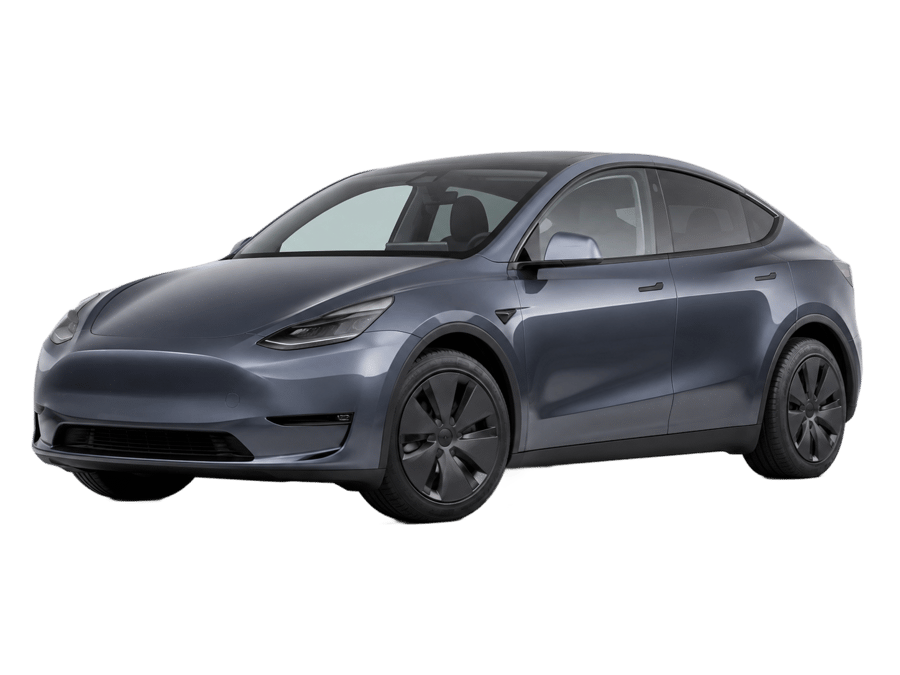
827 consumer-submitted complaints on record for the 2022 Tesla Model Y, grouped by component category.
Buyer interpretation
Complaint records are most useful when they turn into inspection points, seller questions, and comparison checks against nearby model years.
827 consumer-submitted complaints are matched to this model year. Treat the count as a research signal, then read the actual summaries for repeated symptoms.
The most common categories are forward collision avoidance, forward collision avoidance: adaptive cruise control, unknown or other. Use those categories as a test-drive checklist instead of judging the vehicle from the total count alone.
Enriched records include 80 crash reports, 8 fire reports, 35 injury reports, and 3 fatality reports. These fields come from complaint records and should be read in context.
Mileage is available on 73 complaints, with an average reported failure mileage of 16,603 miles. Compare that with the mileage on the listing.
Build a buyer checklist to turn these issues into questions and inspection points.
827 total complaints on record
| Date | Component | Summary | Severity | Mileage |
|---|---|---|---|---|
| Jan 2026 | VEHICLE SPEED CONTROL | In 9/2025 I noticed that the vehicle software was defaulting to a speed limit of 55 mph. I noticed that when in any form of autopilot and FSD it would accelerate to that speed. This happens in any situation before the car encounters a sign or an area that it's internal map corrects it, which is not common outside of major routes in Idaho. This includes paved marked roads, graded roads, single track dirt roads, my driveway and garage. Sometimes the car controls it's speed consistent with conditions, sometimes not. It can happen unexpectedly, and that's the issue. Where I have learned this is a problem, I of course turn off the AP or FSD and drive myself, however, if I am in driver assist mode and things are going well and the speed limit in the vehicle changes suddenly to the default 55 mph, it can take a moment for me to react. In October 2025 I reported this to my Tesla Service center as well as Tesla's over the air and on line email reporting options (from which I got no response). The service center entered a ticket directly with Tesla, and told me that that Tesla was aware. The explanation that came back was that it was due to a mapping update for the internal map of the car. They said it was the result of Google Maps setting the default speed limit in Idaho, which is where I live, to 55 and that this was due to a September 2025 update. They said it might be corrected with the next update, which has not occurred at this point (January 2026). This speeding behavior can happen suddenly and unexpectedly and seemingly randomly, and has the potential to injure pedestrians, the driver, and property, not to mention that it is also exceeding by far the legal speed limit. Drivers from other areas that may not be aware of the issue are likely to be caught unaware. There is absolutely no reason for the default speed to be 55, ever. It's unsafe, and unnecessary. It is rare to see a speed limit of 55 at all in Idaho. Most of the roads are above or below that speed limit. | Crash: No Fire: No | Unknown |
| Jan 2026 | SUSPENSION | The lateral lower front right suspension link and its securing bolts failed, causing the control arm to drop and the vehicle to become uncontrollable. (The bolts actually fell out on the ground) This was the second repair involving the same suspension area, with prior work performed on March 27, 2025. The replaced components should be available for inspection upon request. The failure caused the vehicle to become uncontrollable while backing into a parking spot. Had this occurred at road speed, it could have resulted in a complete loss of control, posing a risk to the driver, passengers, pedestrians, and surrounding traffic. Tesla service confirmed the failure during the January 5, 2026 repair and replaced the affected suspension components under Invoice #[XXX]. Tesla service technicians inspected the vehicle during both repair visits (March 27, 2025 and January 5, 2026). There is no record of inspection by police or insurance representatives. No warning lamps, messages, or prior symptoms were present. The failure occurred suddenly while backing into a parking spot with no advance indication. INFORMATION REDACTED PURSUANT TO THE FREEDOM OF INFORMATION ACT (FOIA), 5 U.S.C. 552(B)(6) | Crash: No Fire: No | Unknown |
| Jan 2026 | ELECTRICAL SYSTEM | I got into my car two days ago and the computer screen was black. I have tried everything to reset it, holding down both scroll wheels with the brake pressed for up to 2 minutes, unplugging the low voltage battery overnight and plugging it back in, and even doing the hard reset at the disconnect under the rear passenger seats and my computer will not turn on. I can't see any information about my speed or how much charge I have, I can't turn on climate controls and it's the middle of winter and I live in the mountains of Colorado. I can't even open my glove box without the screen. From everything I read, it sounds like an MCU failure, my vehicle has the newer MCU2. Tesla quoted about 800 for a tow and it sounds like the replacement costs could be 2500 | Crash: No Fire: No | Unknown |
| Jan 2026 | VEHICLE SPEED CONTROL | I am reporting a repeated safety defect that happens only in rainy conditions. My 2022 Tesla Model Y repeatedly shows critical safety warnings including “Automatic Emergency Braking unavailable”, traction and stability control disabled, and “Vehicle Hold unavailable”. This has occurred during normal driving in rain every rainy season for 3 years, despite 4 service visits and parts replacement including the inverter. It started when I was pregnant and is now ongoing with my newborn in the car. The system failures happen while driving in normal wet/slippery conditions and greatly increase the risk of a crash. This appears to be a systemic safety defect, not driver error, and Tesla has not fixed it after multiple service attempts. Events & Dates: •First occurrence: Feb/2024 •Service visits: 02/01/2024 1. Verified customer's concern via vehicle log data. Technician reviewed the vehicle's logs and found that the vehicles communication system was faulted. Technician was not able to duplicate the concern at this time. Performed diagnosis and found no issues present at this time. Verified vehicle's communication system is operating as designed at this time. No further repairs are recommended at this time. Recommending customer to continue to monitor situation at this time. 2. Updated vehicle to latest available firmware version per service bulletin. •Most recent occurrence: 01/01/2026 fyi today is the 4th time I’ve indicated this issue , and this is during my pregnancy again, I feel extremely stressed and helpless | Crash: No Fire: No | Unknown |
| Jan 2026 | EXTERIOR LIGHTING | The headlights turned off while driving. Not being able to see where you're going is risky. The problem has occurred twice under the same conditions - light snow covering on the car. It has not been reproduced at dealer or service center. Components have not been inspected. The headlights operate properly when the snow is removed. No warning, messages or symptoms. Tesla Assist states that if there if driving in snow or low viz conditions, the headlights should be turned on manually, which is not intuitive or appropriate given the advanced nature of the car | Crash: No Fire: No | Unknown |
| Jan 2026 | EXTERIOR LIGHTING | During a snowstorm, the headlights caused blinding visibility issues due to the reflected light from the snow flakes. Normally, using low beams fixes this problem. I tried all combinations of headlights during the drive- auto high, high, auto low, manual low, just parking lights. All resulted in horrible visibility conditions that limited speed to around 20 MPH. The vehicle was inspected by Tesla service. Tesla reported the headlights operate as designed. There is a light bar above the headlight that remains on when driving and this illuminates the snow. This lightbar should turn off at night or at least have an option to turn off by the driver. | Crash: No Fire: No | Unknown |
| Dec 2025 | UNKNOWN OR OTHER | 1. Incident Description (FSD Failure) "While operating the vehicle using FSD (Supervised) on December 30, 2025, at approximately [Time], the vehicle failed to detect and completely ran through a red light/stop light at the intersection of [Street Name] and [Cross Street]. I had to take over the vehicle to avoid a potential collision. The system did not provide a warning or attempt to brake for the traffic signal." 2. Control Failure (Sliding/Steering) "Under low-speed conditions (approximately 13 mph), the vehicle suffered an uncontrolled loss of traction and directional stability. The Traction Control System (TCS) failed to intervene or stabilize the car. I was forced to perform a manual steering intervention to correct the slide and maintain my lane. This occurred at [Location/Address]." 3. Hardware/Exit Concern (Door) "The vehicle has a mechanical defect in the [Front/Rear] door. It requires excessive physical force (hard slamming) to latch properly. I am concerned that in an emergency, the door may fail to open or close correctly, posing a safety risk to passengers." 4. Summary of Risk "I no longer feel safe operating this vehicle. The combination of an autonomous driving system that ignores traffic signals and a stability system that fails at school-zone speeds makes this vehicle a life-threatening hazard to myself and others on the road." | Crash: No Fire: No | Unknown |
| Dec 2025 | UNKNOWN OR OTHER | Full Self Driving caused my Tesla to enter an intersection while the light was red. The FSD stopped at the red light on Monday Dec. 22. 2025 at 9:37 am. After a few moments is began to drive from the correct stop and enter the intersection while the traffic light was red. I had to manually take control to prevent it from continuing thru. | Crash: No Fire: No | Unknown |
| Dec 2025 | FORWARD COLLISION AVOIDANCE: AUTOMATIC EMERGENCY BRAKING | Incident Summary: Car Computer (HW3) suffered internal hardware failure on 12/17/25 following software update 2025.44.3. While the media screen and rearview camera functioned, the Autopilot Board (APB) was "MIA." Tesla Randolph (Invoice #3000S0015357298) confirmed the internal failure and replaced the unit. Safety Risk: Failure disabled safety-critical ADAS: Automatic Emergency Braking (AEB) and Forward Collision Warning. Driving visualizations were severely compromised; the vehicle failed to detect pedestrians or lane markings while in motion, creating an immediate collision risk. The car’s active safety "intelligence" was essentially blind despite the camera feed being visible on the screen. Inspection & Contradictions: Tesla Service confirmed the "internal failure" (12/19-12/23). Note: The Service Manager verbally claimed "no codes," but the official invoice explicitly states technicians "found multiple alerts present." Part was retained by Tesla. Warning Symptoms: Failure followed a software reboot loop. Symptoms (MIA board/power cycle failure) match Recall 25V-002. Vehicle had only 36,289 miles. Reporting as potential HW3 defect expansion. | Crash: No Fire: No | Unknown |
| Dec 2025 | ELECTRICAL SYSTEM | The contact owns a 2022 Tesla Model Y. The contact stated while his wife was driving 40-50 MPH in the evening with Self-Driving mode activated, the vehicle failed to decelerate while driving onto the exit lane and crashed into the rear of another vehicle. The contact was occupying the front passenger's seat during the incident. The front driver's side and passenger's side air bags deployed. There was no reported injury. The vehicle was towed to the residence. The vehicle was later towed to a Tesla autobody repair shop to be repaired. The vehicle was then towed to the autobody repair shop recommended by the insurance company. The vehicle was later totaled by the insurance company due to the cost of the air bags replacement. A police report was filed. The manufacturer was notified of the failure. The failure mileage was approximately 30,000. | Crash: Yes Fire: No Towed Medical attention | 30,000 |
| Dec 2025 | POWER TRAIN,ELECTRICAL SYSTEM,UNKNOWN OR OTHER | My 2022 Model Y, 213k miles, battery health 77%, no issues until Beginning of November 2025. After Tesla’s update, BMS_a079 popped up, capped charge at 22%. No dead cells, no imbalance—pure software bug remotely triggered by Tesla. Service refused written diagnosis, only said ‘nine thousand dollars for new battery. Risk of stranding. | Crash: No Fire: No | Unknown |
| Dec 2025 | SERVICE BRAKES | Vehicle: 2022 Tesla Model Y VIN: [XXX] Mileage: 85,000 Complaint Description (Copy & Paste): I am filing this complaint due to serious and ongoing safety-related defects with my 2022 Tesla Model Y that remain unresolved despite multiple service visits. The vehicle experiences shuddering and vibration during regenerative braking, especially when driving downhill. In addition, the braking behavior is unpredictable, which compromises vehicle control and creates a risk of loss of control while driving. These issues occur during normal driving conditions and present a significant safety hazard to myself, my passengers, and other road users. I have taken the vehicle to Tesla for service three separate times for this issue. Despite these visits, the Tesla service department has stated they are unable to fix the problem, and the safety concern remains unresolved. I’m being having this issues since I bought the car new. INFORMATION REDACTED PURSUANT TO THE FREEDOM OF INFORMATION ACT (FOIA), 5 U.S.C. 552(B)(6) | Crash: No Fire: No | Unknown |
| Dec 2025 | STEERING | On [XXX], while using Full Self-Driving (FSD) to drive to a hospital in Oak Park, Illinois, the vehicle experienced sudden unintended acceleration during the disengagement of FSD. As the vehicle approached the hospital area, I initiated disengagement of FSD to manually enter the parking area. During—or immediately after—the disengagement, the vehicle suddenly accelerated at full power without warning, causing an immediate loss of control and a collision with a nearby fixed structure. No system warnings or alerts were issued prior to the event, and the acceleration was so abrupt that manual intervention was not possible. This occurred in a low-speed, street-level environment where no acceleration was intended or expected and does not correspond to any normal driver input. Based on review of preliminary incident data provided by Tesla, there appear to be irregularities during the FSD-to-manual control transition, including missing or invalid input values, gaps in accelerator/brake/steering signals, and speed readings inconsistent with the crash severity. These indicators suggest potential instability in the real-time control system during disengagement. This report is submitted due to concern that sudden unintended acceleration during FSD disengagement may represent a safety defect with potential risk to drivers and the public. INFORMATION REDACTED PURSUANT TO THE FREEDOM OF INFORMATION ACT (FOIA), 5 U.S.C. 552(B)(6) | Crash: Yes Fire: No Injuries: 2 Towed Medical attention | Unknown |
| Dec 2025 | SUSPENSION | While slowly backing out of a parking space at a Whole Foods in San Jose, CA, the driver's-side front wheel suddenly collapsed without warning. The front tire completely locked up, preventing further movement. Upon inspection, I found two bolts lying on the ground and the lower control arm detached and hanging loosely. The sudden jolt from the tire impacting the vehicle's body also caused minor damage to the plastic underbody cover. I had the car towed to the Tesla Service Center at 2801 Northwestern Parkway, Santa Clara, CA 95051, and it is now in their possession. Fortunately, this occurred at very low speed in a parking lot—if it had happened on the freeway, the outcome could have been catastrophic. I've since discovered similar incidents reported by other Tesla owners in this forum thread: [XXX] INFORMATION REDACTED PURSUANT TO THE FREEDOM OF INFORMATION ACT (FOIA), 5 U.S.C. 552(B)(6) | Crash: No Fire: No | Unknown |
| Dec 2025 | ELECTRICAL SYSTEM,VEHICLE SPEED CONTROL,ENGINE | The car stopped in a busy freeway saying electric issue and doesn’t give sufficient time to drive to shoulder. This is the 2nd time this happened within 2 weeks. First time, tesla said high voltage controller had an internal issue with voltage sensing. the hv controller was replaced along with pyrotechnic fuse. Tesla assured this shouldn’t repeat and it repeated again. This has kept us in a catastrophic situation. I request immediate attention to this error and matter. | Crash: No Fire: No | Unknown |
| Dec 2025 | SEAT BELTS | The seat belt buckle not latching and keep popped out while driving | Crash: No Fire: No | Unknown |
| Dec 2025 | ENGINE | I have repeatedly had electrical failure in the vehicle in the form of a "Reduced Power Alert" which renders the vehicle with significant limitation to drivability. This places the vehicle in "limp mode" and this frequently occurs on the highway. Once this Alert appears the vehicle has limited propulsion, limitations to steering and braking as well as other electrical systems. It has been to the dealership for repair on 4 occasions without remedy. It is leaving us on the highway in a dangerous situation repeatedly. It's not a one time event. There were 20 Alerts showing on the screen when I limped it into the dealership once again on [XXX] having nearly wrecked on [XXX] just before the [XXX] exit. The reason this is so dangerous is the failures occur at higher speeds such as highway driving. Leaving one with an immediate loss of forward motion as if you've hit the brakes but vehicles behind you have no warning. This is going to end up with someone getting rear ended or worse. Social media indicates it is a prevalent and not well understood recurring problem. Tesla has been quietly repurchasing vehicles from angry owners. Dreadful. INFORMATION REDACTED PURSUANT TO THE FREEDOM OF INFORMATION ACT (FOIA), 5 U.S.C. 552(B)(6) | Crash: No Fire: No | Unknown |
| Dec 2025 | ELECTRICAL SYSTEM | To the National Highway Traffic Safety Administration, I am filing a formal complaint regarding a dangerous safety defect in the 2021 Tesla Model Y. On December 2, 2025 at approximately 4:25 PM, my vehicle suffered a sudden, complete electrical shutdown while I was driving, with no warning and no opportunity to reach safety. Critical details: The vehicle displayed an electrical system message, then instantly powered down. I lost all ability to steer or move the vehicle, which remained immobilized in active traffic. Hazard lights did not function, leaving the vehicle unmarked and invisible to oncoming vehicles. Electronic systems failed, requiring manual release of the driver door. The incident occurred at dusk and blocked the roadway, placing myself and others at significant risk. This failure presented an immediate threat to life and safety. I have since discovered that other Tesla owners have reported similar abrupt electrical or drive-unit shutdowns, suggesting this may represent a broader systemic defect. I am formally requesting that NHTSA investigate whether this issue meets the threshold for a safety recall and whether Tesla’s systems contain a defect capable of causing sudden, uncommanded shutdown while driving. Thank you for your prompt attention to this matter. I am prepared to provide all supporting documentation, including incident details, screenshots, timestamps, and service correspondence. | Crash: No Fire: No | Unknown |
| Dec 2025 | FUEL/PROPULSION SYSTEM | My high voltage drive inverter experienced a failure resulting in loss of all power as well as regenerative braking. Mechanical braking and steering remained available. There were no warnings or indications before the failure. After the failure there were warnings that the propulsion system had failed and to pull over immediately. | Crash: No Fire: No | Unknown |
| Nov 2025 | WHEELS | Tesla Collison Center Denver - returned vehicle with bent wheel after an accident They refuse to repair despite safety risk They are now Blocking my access to service of fixing my car for unrelated issues as well. This bent wheel may result in an unsafe vehicle on the road | Crash: Yes Fire: No | Unknown |
| Nov 2025 | SERVICE BRAKES | On October 13th 2025, while driving, I began to hear a clunking and rattling sound from the front left wheel area when braking. Concerned for my safety, I brought the vehicle to a local independent brake specialist for inspection. Their technician found that one of the two bolts securing the brake caliper was completely missing, and the remaining bolt was approximately halfway backed out. The shop explained that this condition presented an immediate risk of caliper detachment and total brake failure, potentially leading to serious injury or death. After both bolts were replaced and properly torqued, the brake noise that Tesla had previously attributed to “pad burnishing” disappeared entirely. This indicates that the squeaking and vibration symptoms Tesla dismissed were, in fact, caused by an improperly secured caliper—a direct safety issue, not a normal wear condition. I notified Tesla legal of this problem (via certified mail) on October 13 2025 and requested a response within 14 days. I have received no such response, nor have I been contacted for further investigation into this dangerous situation with my vehicle. | Crash: No Fire: No | Unknown |
| Nov 2025 | ELECTRICAL SYSTEM | 2022 Tesla Model Y Long Range AWD VIN: [XXX] Current mileage: 71,967 SAFETY DEFECT: Power Conversion System (PCS) internal hardware failure causes sudden, complete loss of Supercharging capability and extreme vampire drain. Tesla technician’s own words – invoice #[XXX] dated 11/04/2025: “The problem was caused by an internal hardware condition in the Power Conversion System.” This is a manufacturing defect – NOT wear/tear. Safety risk: • Stranding hazard – vehicle stalls at 99%/95% on V3 Superchargers. • One documented trip (Indiana Las Vegas) required 27 Supercharger stops and 14 hours of charging instead of the normal 10–12 stops. • Vampire drain: 95% 70% in 4 days parked (all features off) – July 2025. • Battery degradation: 16.4% loss at 72k miles (83.5% health, 268 mi range) – far above fleet average. Tesla knew since 49k miles: • Nov 20, 2024 – full HV circuit integrity check – goodwill 0 • Feb 19, 2025 – Service Manager [XXX] ran diagnostics and wrote “everything checks out great” • 15 service visits, 3 charge-port doors replaced – same root symptom Tesla now demands 2,503.17 out-of-pocket and refuses to release the vehicle until paid – despite admitting the defect in writing. Cybertruck loaner (provided by Tesla) exhibits identical 99% stall 5 times – proving systemic issue. Attachments (will upload): 1. Invoice #[XXX] – “internal hardware condition” 2. Nov 2024 goodwill invoice 3. [XXX] “great” email 4. Vampire drain screenshots 5. Cybertruck loaner 99% stall photos 6. CA AG complaint confirmation Request immediate investigation and recall of 2022 Model Y Power Conversion System. [XXX] [XXX] [XXX] [XXX]INFORMATION REDACTED PURSUANT TO THE FREEDOM OF INFORMATION ACT (FOIA), 5 U.S.C. 552(B)(6) | Crash: No Fire: No | Unknown |
| Nov 2025 | EQUIPMENT | The contact owns a 2022 Tesla Model Y. The contact purchased aftermarket rubber floor mats, and the floor mat on the driver’s side was warped and had started to block the contact from depressing the accelerator pedal. The contact stated that after removing the foot from the accelerator pedal to depress the brake pedal, and then switching back to depress the accelerator pedal, it was more difficult than normal due to the warped floor mat blocking the accelerator pedal. The manufacturer was informed of the failure and replaced the floor mats twice; however, the second set of floor mats was also warped. The failure mileage was approximately 85,000. | Crash: No Fire: No | 85,000 |
| Nov 2025 | SUSPENSION | Driver side rear outer camber bolt lost the nut holding the bolt for the camber arm. Rear tire cambered in greatly. Upon disassembly saw that bolt has backed out about 75% because of the absence of nut. If bolt had completely backed out the camber of the rear wheel would have collapsed completely and very possibly caused an accident. | Crash: No Fire: No | Unknown |
| Oct 2025 | SEATS | One day I was exiting the vehicle, and as I swung my leg out to get out of the car the outboard panel broke. Nothing caught on it, it just broke as my weight shifted. As the technician came out to inspect it for repair, it was claimed that this was a common repair. The seat controls are on this panel, so when this happens, this means wires are loose, while the seat automatically moves for use. This changes how the seat positions itself, and the panel interferes with the door closing properly, the seat position. | Crash: No Fire: No | Unknown |