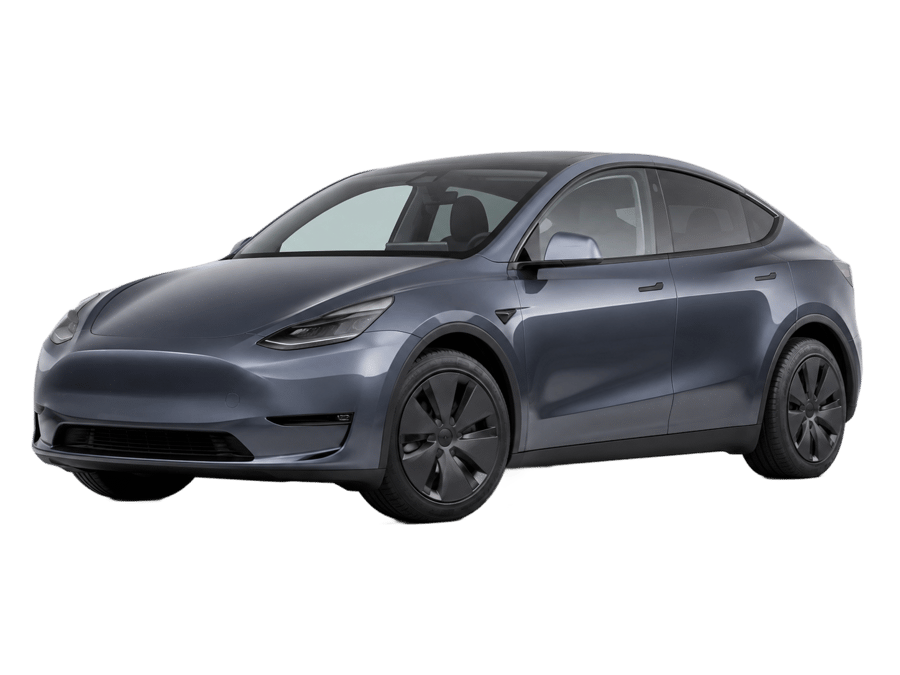
Complaint volume
296 consumer-submitted complaints are matched to this model year. Treat the count as a research signal, then read the actual summaries for repeated symptoms.
Complaint records
296 consumer-submitted complaints on record for the 2024 Tesla Model Y, grouped by component category.
Buyer interpretation
Complaint records are most useful when they turn into inspection points, seller questions, and comparison checks against nearby model years.
296 consumer-submitted complaints are matched to this model year. Treat the count as a research signal, then read the actual summaries for repeated symptoms.
The most common categories are electrical system, unknown or other, back over prevention. Use those categories as a test-drive checklist instead of judging the vehicle from the total count alone.
Enriched records include 63 crash reports, 4 fire reports, 34 injury reports, and 0 fatality reports. These fields come from complaint records and should be read in context.
Mileage is available on 22 complaints, with an average reported failure mileage of 14,479 miles. Compare that with the mileage on the listing.
Build a buyer checklist to turn these issues into questions and inspection points.
296 total complaints on record
| Date | Component | Summary | Severity | Mileage |
|---|---|---|---|---|
| Dec 2025 | STEERING,UNKNOWN OR OTHER,LANE DEPARTURE | Date & Time: December 25, approximately 6:00 PM Location: Northbound I-880 between the Mowry Avenue and Thornton Avenue exits, Fremont, CA Weather & Road Conditions: Heavy rain at the time of the incident. Road surface was wet with reduced visibility. Vehicle & System State: Tesla Model Y. Driver assistance / self-driving functionality was active at the time of the incident (traffic-aware cruise control / Autopilot functionality). Description of the Incident: While driving northbound on I-880 in heavy rain, the vehicle had been operating normally. Without warning, the vehicle appeared to incorrectly detect that it was drifting out of its lane and attempted to correct this perceived drift. Instead of a minor lane correction, the vehicle abruptly applied heavy braking and initiated a sudden and aggressive left steering maneuver. The car crossed approximately four lanes of traffic in the same direction of travel and continued rotating, ultimately performing an unintended U-turn while remaining on the northbound side of the highway. As a result, the vehicle came to a stop oriented against the direction of travel, facing oncoming northbound traffic. Immediately afterward, the vehicle unexpectedly began reversing at high speed without driver input, creating an additional imminent risk of collision with the outer highway wall (noise barrier separating the highway from adjacent residential areas). During this entire sequence of events, I was unable to regain control of the vehicle despite attempting to intervene. There were no vehicles immediately surrounding us at that moment. Had there been nearby traffic, this incident would likely have resulted in a severe or fatal multi-vehicle collision. Occupants: My wife and two young children were in the vehicle. The children were asleep in the back seat, secured in car seats. Outcome: No physical collision occurred. However, the incident caused extreme fear and distress, and we remain shaken by the event. | Crash: No Fire: No | Unknown |
| Dec 2025 | SEAT BELTS | The rear seat on the left , seat belt off from the mount while my 7 years old son trying to fasten seatbelt. | Crash: No Fire: No | Unknown |
| Dec 2025 | ELECTRICAL SYSTEM,LATCHES/LOCKS/LINKAGES,WHEELS | The contact owns a 2024 Tesla Model Y. The contact stated that while driving at various speeds, the TPMS displayed that the PSI of the tires was low. Additionally, a notification advising that the vehicle was experiencing low voltage and drainage and would shut down was displayed. The contact called towing services. The contact stated that the towing agent who assisted in towing the vehicle informed the contact that the tires were losing air, and the front passenger's side tire or wheel was defective. The vehicle was towed to a Tesla Service Center, where the power converter system(PCS) was corrected. Additionally, the technician informed the contact that the passenger's side tire was leaking air due to a rim defect, but the vehicle was not repaired, and the contact was advised to pick up the vehicle. The contact stated that the vehicle could not be driven at 20 MPH due to the failure. The contact had not retrieved the vehicle from the Service Center. The contact related the failure to NHTSA Campaign Number: 24V935000 (Tires), but the Tesla Service Center informed the contact that the recall repair was completed. The contact stated that NHTSA Campaign Numbers: 24V554000 (Latches/Locks/Linkages, Electrical System) and 24V935000 (Tires) were marked as complete on the Manufacturer's website; however, the NHTSA VIN tool displayed that the recalls were incomplete. Additionally, the contact stated that the driver's seat was not adjustable. The contact stated that while attempting to move the seat higher and forward, the seat turned inward towards the right. The vehicle was not repaired. The failure mileage was approximately 100,000. | Crash: No Fire: No Towed | 100,000 |
| Dec 2025 | EXTERIOR LIGHTING | The right rear taillight and turn signal on my Tesla Model Y became dim and intermittently flicker, and the turn signal does not function properly. This issue began immediately after a Tesla software update. The malfunction significantly reduces rear visibility and signaling to other drivers, especially at night, creating a safety risk. I contacted Tesla Service and provided photos/videos. Tesla have scheduled a repair which is 1 week later but declined to confirm whether the vehicle is safe or legal to drive with this lighting malfunction. Tesla also declined to provide a loaner vehicle or alternate transportation and advised me to use my own judgment. Rear lighting and turn signals are safety-critical components required by law. Operating the vehicle in this condition poses a risk of rear-end collision or failure to signal lane changes or turns. I am filing this complaint due to safety concerns and Tesla’s inability to provide written guidance confirming safe operation until repair. | Crash: No Fire: No | Unknown |
| Dec 2025 | VEHICLE SPEED CONTROL | The car spontaneously accelerated while approaching a stop sign. I was able to hit the brake to stop it. | Crash: No Fire: No | Unknown |
| Dec 2025 | ELECTRICAL SYSTEM | I’m reaching out to document and summarize an incident that occurred in Sanford, Florida, and to ask for the appropriate next steps and any documentation you may need from me. Incident summary (Sanford, FL – Appaloosa Court – Dec 2, 2025): In the early morning on Tuesday, December 2, 2025 (around 5:00–5:15 a.m.), a fire occurred at a residence located on [XXX] . A Tesla located in the garage was reported as being involved, and the fire spread to the garage that totaled the house The vehicle was reportedly charging in the garage when smoke/fire was noticed. Emergency responders (Sanford Fire Department and Sanford Police) responded to the scene. The incident resulted in property damage and at least one injury reported as non-life-threatening (per local reporting). Fire forensics stated that the fire started and caused by the TESLA around the charging plug area by the rear left passenger door. [XXX] INFORMATION REDACTED PURSUANT TO THE FREEDOM OF INFORMATION ACT (FOIA), 5 U.S.C. 552(B)(6) | Crash: No Fire: Yes Injuries: 2 Medical attention | Unknown |
| Dec 2025 | UNKNOWN OR OTHER | The heating system in my 2024 Tesla Model Y failed after only one winter season. Under normal HVAC operation, the vehicle blows cold air and does not provide cabin heat. Heat only intermittently works when defrost mode is selected. This failure affects the vehicle’s ability to safely operate in cold weather, including proper windshield defogging and defrosting. A loss of heating presents a safety risk to occupants and reduces visibility. Tesla diagnosed the issue and provided an estimated repair cost of approximately $3,235.00. The vehicle is just outside the warranty period, and this appears to be a premature failure of the heating or heat pump system, not normal wear and tear. Given the age of the vehicle and prior reports of Tesla HVAC and heat pump failures in Model Y vehicles, I believe this may indicate a design or component defect that warrants investigation. | Crash: No Fire: No | Unknown |
| Dec 2025 | UNKNOWN OR OTHER | While exiting a parking area, the vehicle’s Autopilot/driver-assist system engaged during a tight right-hand turn. At the time of the maneuver, my hands were not actively controlling the steering wheel, as the system appeared to be managing the turn. The vehicle failed to properly account for curb proximity and steered too close to the curb, resulting in the wheel striking the curb and causing visible rim damage. The system did not provide adequate warning or disengage in time to prevent the curb impact. This raises safety concerns regarding Autopilot behavior during low-speed, tight turning scenarios such as parking lot exits, where precise steering control is critical. I contacted Tesla to request that they review vehicle logs to determine whether this was a system error. Tesla did not adequately address the issue or take responsibility for reviewing or acknowledging a potential defect in the automated driving system. This incident presents a broader safety concern, as similar behavior could result in more serious damage or injury in different circumstances (e.g., pedestrians, cyclists, or roadside objects). I am reporting this to NHTSA so the agency can evaluate whether Tesla’s automated driving technology performs safely in tight-turn, low-speed environments. I request that NHTSA review this issue as a potential defect in Tesla’s automated driving or driver-assist systems. | Crash: Yes Fire: No | Unknown |
| Dec 2025 | STEERING | Steering locked at 75 MPH on freeway. Model Y suddenly jerked left and locked, then jerked right and locked again. Loss of control and near-crash event. No road debris, no rain, no warnings on screen. Steering temporarily becomes unresponsive, requiring fight to correct. Tesla refuses repair because no alert code stored. Vehicle unsafe to drive. | Crash: No Fire: No | Unknown |
| Dec 2025 | SUSPENSION,WHEELS | I am reporting a potential safety defect related to premature rear tire wear on my 2024 Tesla Model Y Performance At 15,482 miles, on May 2, 2025, Tesla’s Paramus, NJ Service Center confirmed an alignment issue and performed a four-wheel alignment. At the same visit, they replaced both rear tires with Michelin Pilot Sport AS 4 275/35R21 103W XL and sold me a Tire Protection Plan for those tires (Tesla invoice #XXX). tesla_invoiceXXX The vehicle now has 24,460 miles. The rear tires have worn out in less than 10,000 miles and about 7 months since the alignment and replacement. The tread wear is excessive and uneven compared with the front tires, and is inconsistent with the normal expected life (around 20,000+ miles) of these tires. This appears to indicate an ongoing alignment or suspension issue that is causing abnormal rear tire wear. Rapid rear tire wear on this vehicle could lead to loss of traction, especially in wet conditions, and therefore represents a safety risk. I am requesting that NHTSA review this complaint in case it reflects a broader issue with rear tire wear/alignment on Tesla Model Y Performance vehicles. | Crash: No Fire: No | Unknown |
| Nov 2025 | FORWARD COLLISION AVOIDANCE: ADAPTIVE CRUISE CONTROL | My 2024 Tesla Model Y hit a parked vehicle on the right side of the street during FSD self driving. The car suddently slanted to the right and hit the parked vehicle. During FSD drive, it did not give any warning before the accident. My dauther was injured on her face. Clearly the new version FSD v14.1 software is very defective. I am located in San Jose, CA. | Crash: Yes Fire: No Injuries: 1 Towed Medical attention | Unknown |
| Nov 2025 | FORWARD COLLISION AVOIDANCE: ADAPTIVE CRUISE CONTROL | My vehicle’s auto-high beam system does not properly recognize other traffic. It specifically fails to substantially dim the high beams when approaching oncoming vehicles or when behind other traffic on roadways. I have reported this to the manufacturer and attempted to have the dealership fix this on multiple occasions. The dealerships insist that the vehicle dims the required number of pixels in the headlights to not blind other drivers. However, this does not appear to be effective as other drivers that I have followed behind reported that they were being blinded by my highbeams while I was behind them. There is a notable difference between the highbeams and the low beams which the car fails to substantially adjust for when using this required feature to utilize the self driving/auto pilot feature. | Crash: No Fire: No | Unknown |
| Nov 2025 | ELECTRICAL SYSTEM | While the car was in operation a message popped up with flashing red light and said drive unit issue car powering down. It went into neutral. Turns out the inverter and rear drive unit had to be replaced | Crash: No Fire: No | Unknown |
| Nov 2025 | UNKNOWN OR OTHER | When there is sustained rain, horn fills with water becoming inoperable. Tesla confirmed this is the normal operation of the horn. | Crash: No Fire: No | Unknown |
| Nov 2025 | STEERING | I would like to report a significant incident involving the auto-corrective steering in my vehicle. While driving on the highway, the steering wheel experienced a strong jolt, which I believe was caused by the auto-corrective steering system. This resulted in the vehicle spinning three times and ultimately coming to rest on the grassy center divider. Fortunately, no damage occurred at that time, and I initially attributed the incident to road conditions. I continued driving for approximately 30 minutes in rainy weather without further incident. However, a few hours later, during my return journey, the same forceful jolt to the steering wheel recurred about 20 minutes into the drive. On this occasion, the car spun 1.5 times and subsequently collided backward with the concrete center divider. It is fortunate that no other vehicles were involved, given the heavy traffic and rainy conditions at the time. During both of the incidents, I had both hands on the steering wheel and was not able to correct steering due to the strong force from the steering wheel jolt. I did have a Police Report filed, but have to get number when I return home. | Crash: Yes Fire: No Towed | Unknown |
| Nov 2025 | UNKNOWN OR OTHER | Vehicle appears to be giving off toxic fumes causing medical symptoms like headaches for multiple drivers over last 2 months since vehicle was purchased used, fumes have a sweet smell but source of fumes was unable to be identified by Tesla service center. Fumes appears to be coming from front vents of vehicle. Suspecting there is a coolant leak but source of leak is unknown. Tesla had indicated that coolant reservoir was slightly below expected levels. Tesla replaced cabin air filters but that did not resolve the issue, cabin air filters had already been replaced prior to tesla replacing the filters. Tesla service centers indicated they do not have the equipment needed to test what chemicals are in the fumes and have no idea what they could be. | Crash: No Fire: No | Unknown |
| Nov 2025 | SEATS | The driver’s seat material is deteriorating prematurely on the left bolster area. The damage affects the structural support of the seat edge, which causes the driver to shift position unexpectedly during turns, braking, and lane changes. This instability can delay reaction time and reduces secure seating posture. The deterioration is progressive, and if it continues, the driver may not remain firmly supported, which creates a safety risk under normal driving conditions. This also suggests a potential materials or manufacturing defect for this model year. | Crash: No Fire: No | Unknown |
| Nov 2025 | FORWARD COLLISION AVOIDANCE: AUTOMATIC EMERGENCY BRAKING | I am writing to report critical safety issues I’ve experienced while using Tesla’s Full Self-Driving (FSD) software version 14.1.3. The recent update has introduced several dangerous behaviors that were not present in previous versions. One issue occurs frequently on neighborhood roads: the vehicle performs sudden emergency braking for no valid reason. For example, during one drive, it abruptly stopped because a few leaves blew across the road. There were no pedestrians, vehicles, or real obstacles present. These false-positive braking events are alarming and could easily cause a rear-end collision. An even more concerning issue arises during highway driving. The car now repeatedly swerves partially into adjacent lanes—without signaling—and then abruptly returns to its original lane. This happens constantly, even in light traffic, and it did not occur in previous versions of the software. This erratic behavior is incredibly dangerous and could easily cause sideswipe accidents or create confusion for surrounding drivers. It is clear that version 14.1.3 is a regression from earlier versions. The system’s decisions are more erratic, less confident, and frequently unsafe. I no longer trust the FSD to operate reliably in environments where it previously performed well. I urge your agency to investigate this software update as it presents a real and growing hazard on public roads. | Crash: No Fire: No | Unknown |
| Nov 2025 | FORWARD COLLISION AVOIDANCE | While driving ~40 mph with no Autopilot or cruise control active, my 2024 Model Y suddenly braked itself from 40 → 0 mph for no reason. The road ahead was clear. I did not touch the brake. My 3-year-old was in the car. We were nearly rear-ended and could have been seriously injured. When I went to Tesla Service, the manager insisted I must pay a $270 diagnostic fee unless they “find a problem,” while also saying the incident was likely caused by “shadows.” This makes me believe they will simply say “no issue found” and charge me despite this being a severe safety malfunction. When I reached out to Tesla Customer Support, they stated it was a known issue. This poses a serious risk of rear-end collisions, injuries, or fatality, and Tesla is not addressing it. | Crash: No Fire: No | Unknown |
| Nov 2025 | STEERING | On November 8, my 2024 Model Y suddenly came to a complete stop from about 40 mph while I was driving with no cruise control or Autopilot active. This was extremely dangerous — my [XXX] was in the car, and we were lucky no one was behind us. It put myself, my child, and others in the absolute risk of collision and injury. When I contacted the service center they said it sometimes happened due to "shadows" or "sun". They refused to run a diagnostic on the car for free and wanted me to pay for it. INFORMATION REDACTED PURSUANT TO THE FREEDOM OF INFORMATION ACT (FOIA), 5 U.S.C. 552(B)(6) | Crash: No Fire: No | Unknown |
| Nov 2025 | ELECTRICAL SYSTEM | The contact owns a 2024 Tesla Model Y. The contact stated that while the vehicle was making a right turn out of the parking lot in Full Self-Driving mode at approximately 2-3 MPH, it continued to turn to the right and crashed into a nearby parked vehicle. The air bags did not deploy. There were no injuries or medical attention needed. A police report was not filed. The vehicle was not taken to the dealer. The vehicle was not repaired. The manufacturer was not informed of the failure. The failure mileage was approximately 6,000. | Crash: Yes Fire: No | 6,000 |
| Nov 2025 | ELECTRICAL SYSTEM | On [XXX] at ([XXX]]) my Tesla Model Y (VIN: [XXX] ) was **parked in Park/Hold mode** in the [XXX] The **GPS navigation was set to an address in the center of the park**. the address on the address log of the car navigation system. The **TESLA GPS navigation destination was set to a point marked in the middle of the park** (not a parking spot or road). **Without any driver input** (no accelerator pedal pressed, no hands on wheel), the vehicle **suddenly shifted into Drive, jumped the curb, and accelerated approximately more than 30 feet] into the park grass**. This caused **damage to wheels, and all the passenger side of the vehicle to impact with a large rock placed in the park **Zero pedal input** — confirmed by driver and will be verified in Tesla server logs. No injuries. No other vehicles involved. **Root cause**: **Full Self-Driving (FSD) software / navigation system** incorrectly engaged **Lane Keeping Assistance** while parked, triggering **unintended acceleration** via **Speed Control** logic. The car was on software update and suddenly disappeared. The car **autonomously drove itself** toward the GPS point **from a complete stop**. Police report filed to LAPD (Case #[XXX]). Tesla Vehicle Data Report requested. **Request NHTSA investigation** into **FSD navigation-induced unintended acceleration from Park**. INFORMATION REDACTED PURSUANT TO THE FREEDOM OF INFORMATION ACT (FOIA), 5 U.S.C. 552(B)(6) | Crash: Yes Fire: No | Unknown |
| Nov 2025 | SERVICE BRAKES | I was driving the Tesla and coming up my circular drive(note I was driving uphill). The car suddenly accelerated and went out of control. I pumped the brake and took my foot off the accelerator but the car kept going and crashed into our house (sunroom) at end of the driveway at high speed > we went through the casement windows and brick foundation and would have gone through the other side window and down a hill and probably been killed if it were not for a heavy cast iron table that brought us to a stop. The airbags never opened.The car was totaled(the insurance company declared it a total lost and refused to repair and paid us a small amount , less than we paid for the car. This was the second repeat incident, the first one very similar was reported to NHTSA by my erhusband ,reported to NHTSA 0n 1/20/2025, 6.19 pm; complaint number 11637163 .after the first crash we tried to get Tesla to pick up the car . they refused. Instead they said they would check it remotely. We gave them the opportunity to inspect and repair the car between the first and second incident . They ignored us , do to their negligence we were almost killed. Please open an investigation. We have names and emails to show who we complained to. | Crash: Yes Fire: No Towed | Unknown |
| Oct 2025 | ELECTRICAL SYSTEM | The contact owns a 2024 Tesla Model Y. The contact stated that the battery was losing charge abnormally quickly. The contact needed to charge the battery every 2-3 days instead of every 5-6 days. There were no warning lights illuminated. The vehicle was not taken to the dealer to be diagnosed or repaired. The manufacturer was not informed of the failure. The failure mileage was unknown. | Crash: No Fire: No | Unknown |
| Oct 2025 | FORWARD COLLISION AVOIDANCE: ADAPTIVE CRUISE CONTROL | Tesla removed the speed limit offset feature in FSD version 14.1.4 and now only uses speed profiles called Sloth, Chill, Standard, Hurry, and Mad Max, and this has made my car extremely unsafe to drive. The problem is that these profiles make the car go either way too slow or way too fast and I cannot adjust it to match actual traffic conditions anymore. To make matters worse, the speed limit detection is broken and frequently shows the wrong speed limit for the road I am on. When I use Sloth, the car never goes over the detected speed limit no matter what, so if the system thinks I am in a 35 mph zone when I am actually on a 55 mph highway, my car crawls along at 35 while traffic is flying past at 60-70 mph. I have people tailgating me, honking, flashing their lights, swerving around me dangerously, and I have almost been rear-ended multiple times because my car is going so much slower than everyone else. Without the ability to set a maximum speed offset, I am stuck going whatever speed the broken detection system thinks is right. If I switch to Standard, Hurry or Mad Max to try to keep up with traffic, sometimes the car goes way too fast for the actual conditions or blows through school zones and residential areas at unsafe speeds. I cannot fine-tune the speed anymore to drive safely with the flow of traffic. I am forced to either be a rolling roadblock and risk getting hit from behind, or use an aggressive profile that might go dangerously fast. This happens every single time I use FSD now and the combination of broken speed limit detection plus no manual offset control has created a seriously unsafe situation. I feel endangered every time I drive and I am genuinely worried about causing or being in an accident. | Crash: No Fire: No | Unknown |