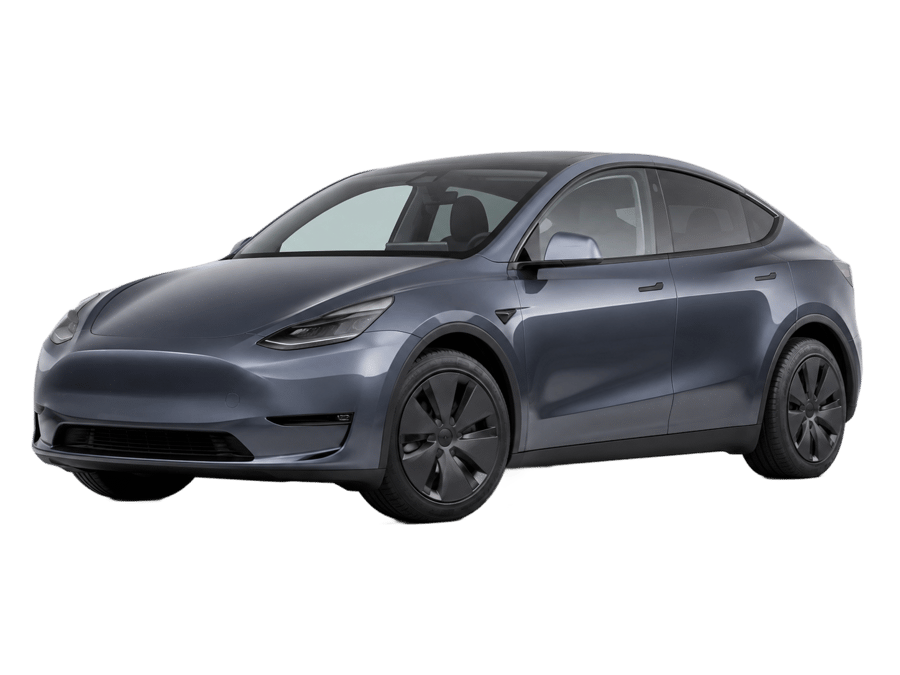
Complaint volume
296 consumer-submitted complaints are matched to this model year. Treat the count as a research signal, then read the actual summaries for repeated symptoms.
Complaint records
296 consumer-submitted complaints on record for the 2024 Tesla Model Y, grouped by component category.
Buyer interpretation
Complaint records are most useful when they turn into inspection points, seller questions, and comparison checks against nearby model years.
296 consumer-submitted complaints are matched to this model year. Treat the count as a research signal, then read the actual summaries for repeated symptoms.
The most common categories are electrical system, unknown or other, back over prevention. Use those categories as a test-drive checklist instead of judging the vehicle from the total count alone.
Enriched records include 63 crash reports, 4 fire reports, 34 injury reports, and 0 fatality reports. These fields come from complaint records and should be read in context.
Mileage is available on 22 complaints, with an average reported failure mileage of 14,479 miles. Compare that with the mileage on the listing.
Build a buyer checklist to turn these issues into questions and inspection points.
296 total complaints on record
| Date | Component | Summary | Severity | Mileage |
|---|---|---|---|---|
| May 2026 | FORWARD COLLISION AVOIDANCE | I am reporting a software-induced driver distraction defect in Tesla’s Full Self-Driving (Supervised) system, specifically the post-disengagement “Why did you intervene?” dialog introduced in software 2026.2.9.8 and modified in 2026.2.9.9 and 2026.2.9.10, running FSD v14.3.2. Every time the driver disengages FSD via steering, brake, or accelerator input, a modal dialog appears on the center touchscreen asking the driver to categorize the intervention. It presents four options (Navigation, Preference, Discomfort, Critical) plus a voice memo prompt. The dialog cannot be dismissed or deferred. It remains on screen indefinitely until the driver reads the prompt and taps a selection. This creates a serious safety hazard: The dialog appears the moment the driver has resumed manual control, often in response to an unsafe FSD action requiring immediate attention to the road. Forcing the driver to read text and make a multi-choice touchscreen selection during this high-cognitive-load transition directly conflicts with NHTSA’s Driver Distraction Guidelines for in-vehicle devices. The dialog occupies a large portion of the center display and obscures the navigation map and surrounding-vehicle visualization, removing situational awareness at the moment it is most needed. Because it cannot be dismissed, drivers are coerced into touchscreen interaction while driving, including in active traffic, intersections, merges, and lane changes. The forced-choice design also incentivizes drivers to tap any option to clear the screen, defeating the stated data-collection purpose and increasing eyes-off-road time. Tesla provides no setting to disable this dialog. I request NHTSA investigate this as a driver distraction defect and require Tesla to provide a dismiss option, defer the prompt until Park, or remove the forced-interaction requirement. I am the vehicle owner and experience this on every FSD disengagement. | Crash: No Fire: No | Unknown |
| May 2026 | FORWARD COLLISION AVOIDANCE | Hello, I am not writing about a specific incident, but rather wanted to alert the NHTSA to a potentially dangerous development with Tesla's Full Self-Driving (FSD) technology. In the latest software update being pushed to owners, Tesla now forces drivers to provide feedback if they disengage the FSD system for any reason. This feedback comes in the form of a box on the screen and it cannot be closed. You cannot interact with any part of the vehicle infotainment system until you complete the feedback. I believe that this can cause safety issues, especially in a stressful situation if someone is trying to access the car's map system, for example. Even in normal situations, the driver would be required to read the options and make a selection on the screen - while still driving. I would highly recommend the NHTSA look into this, as I believe this is a very shortsighted policy that will needlessly endanger drivers, other drivers, pedestrians and everyone on the road. To be clear for form purposes: I am not writing about a specific incident, but I am submitting this information via this form because I do not see a general information form. | Crash: No Fire: No | Unknown |
| Apr 2026 | STEERING | The contact owns a 2024 Tesla Model Y. The contact stated that while driving approximately 25 - 35 MPH, while driving near cones on the road, the contact manually turned the vehicle towards the right, and the steering wheel failed to perform as needed. The contact attempted to manually correct the steering wheel but was unable return the steering wheel to center because the steering wheel was independently turning to the left or the right. The contact believed that the vehicle was operating in self-driving mode; however, the vehicle was not equipped with the feature. The contact depressed the brake pedal to decelerate, almost stopping the vehicle, to regain control of the vehicle. The contact was able to drive to the destination. The contact stated that the failure had occurred while driving approximately 60 - 70 MPH, and the vehicle veered to the left and the right while the lane assist was activated. The contact depressed the brake pedal and decelerated almost to a stop to regain control of the vehicle. The manufacturer was informed of the failure, but the contact had not received a follow-up call. The failure mileage was unknown. | Crash: No Fire: No | Unknown |
| Apr 2026 | UNKNOWN OR OTHER | Full self driving did not detect pole. I press the fsd of tesla going out of the parking lot and the car turned to the side where the pole is located hitting the side where the camera part right next to driver side. The sensor of the car did not detect completely that there is a pole on side | Crash: Yes Fire: No | Unknown |
| Apr 2026 | SUSPENSION | While driving, my vehicle released a loud pop and metal noise. After pulling over large bolts fell from the front of my car caused by a suspension issue. Tesla service later confirmed that the problem was due to improper torque in the suspension components, specifically the front lower links. This resulted in hardware failure, including bolts loosening or coming out of the suspension assembly. This is a serious safety concern, as it could have led to loss of control while driving. The vehicle required replacement of suspension components and hardware under warranty. This defect appears to be related to improper assembly or servicing rather than normal wear and tear. Tesla is now refusing to give me a detailed report of the manufactured defect cause. | Crash: No Fire: No | Unknown |
| Apr 2026 | UNKNOWN OR OTHER | INCIDENT: On April 17, 2026 at ~8:30 AM, my 2024 Tesla Model Y was operating on FSD (Supervised) approaching Wunderlich County Park parking lot entrance, Woodside, CA. Clear daylight, 11-12 MPH, turning into the parking lot. WHAT HAPPENED: A stationary metal W-beam guardrail (~2-3m long, ~1m tall) was directly in the forward path, clearly visible. FSD failed to detect the obstacle, then silently disengaged 2 seconds before impact. TIMELINE FROM IN-VEHICLE REPLAY: - 08:30:23: Vehicle fully aligned with guardrail, direct collision course - 08:30:24: FSD actively engaged (Self-Driving indicator displayed), 12 MPH, guardrail clearly visible - 08:30:25: FSD disengaged - 08:30:27: Impact TWO FAILURES: 1) DETECTION: For ~2 sec (08:30:23-08:30:25), FSD in active control with clearly visible stationary standardized guardrail directly in path. System failed to detect, decelerate, or alter course. 2) SILENT DISENGAGEMENT: FSD disengaged at 08:30:25 with no audible alert, no haptic feedback, no visual alert in driver's forward field of view, no "Take Over" prompt. Only indication was center display change, outside driver's forward line of sight required by Tesla's Owner's Manual to keep eyes on the road. DRIVER STATE: I was monitoring road per Owner's Manual. I received no warning of FSD handoff. I had no awareness FSD disengaged. I took no manual action (no brake, no steer) because I was not notified. I discovered disengagement only upon reviewing in-vehicle dashcam replay the following day. The 2-sec interval was insufficient reaction time even for an informed driver (below AAA/NHTSA 1.5-sec baseline). Research on automated handoff indicates 3-7 sec needed even when notified. I was not notified at all. CRASH: Yes, vehicle collided with the guardrail. INJURIES: None. THIRD-PARTY DAMAGE: None. FIRE: None. CONSISTENCY WITH NHTSA PROCEEDINGS: Pattern matches concerns in Investigation PE21-020, Engineering Analysis EA22-002, Recall 23V-83 | Crash: No Fire: No | Unknown |
| Apr 2026 | UNKNOWN OR OTHER | [XXX] [XXX] leaving [XXX] through residential gate using Tesla FSD, a car had passed through and the gate was closing. I expected the car to stop, it proceeded at a speed of 10 mph. The barrier struct the rear passenger side of the car. Significant damage. INFORMATION REDACTED PURSUANT TO THE FREEDOM OF INFORMATION ACT (FOIA), 5 U.S.C. 552(B)(6) | Crash: Yes Fire: No | Unknown |
| Apr 2026 | ELECTRICAL SYSTEM | On December 2, 2025, my Tesla was charging in the garage of my residence in [XXX] , when a fire appears to have originated in or around the vehicle area. Before the fire, I smelled smoke/burning and also heard popping sounds. The fire spread rapidly and resulted in the destruction of my home, creating an immediate and severe risk to the safety of all occupants and anyone nearby. This incident exposed those present to danger from flames, smoke inhalation, toxic fumes, and structural collapse, and it caused emergency evacuation and displacement. The fire department identified the garage or vehicle area as the origin. The exact component or system that failed is unknown at this time, but the circumstances indicate a possible failure involving the vehicle, charging system, battery system, or related electrical components. I am not aware of any prior battery, charging, or electrical warning messages before the incident. Emergency responders and insurance representatives were involved after the fire. I previously attempted to notify Tesla of this incident, but I did not receive a response. Because this event involved a catastrophic fire and total residential loss, I believe it should be reviewed as a serious vehicle safety matter and that all relevant vehicle data, charging data, components, and related evidence should be preserved for inspection. INFORMATION REDACTED PURSUANT TO THE FREEDOM OF INFORMATION ACT (FOIA), 5 U.S.C. 552(B)(6) | Crash: No Fire: Yes Injuries: 2 Medical attention | Unknown |
| Mar 2026 | SEAT BELTS | Seatbeall does not click in | Crash: No Fire: No | Unknown |
| Mar 2026 | WHEELS | These rims outter lip have a poor design and when hitting a pot all the outer lips add additional pressure and the rim causes the tire burst This is the 2nd time this has happened to me. In 2 the years I had the car. The first time it happened was in NY state | Crash: No Fire: No | Unknown |
| Mar 2026 | FORWARD COLLISION AVOIDANCE | NHTSA COMPLAINT NARRATIVE — SAFERCAR.GOV Vehicle: 2024 Tesla Model Y Component/System: Full Self-Driving (Supervised) Software, Version 14.2.2.5 On March 14, 2026, at approximately 5:22 PM, a 2024 Tesla Model Y was traveling on U.S. Route 3 in Franconia, New Hampshire, at approximately 45 mph within the posted speed limit. The vehicle was operating with Full Self-Driving (Supervised) software version 14.2.2.5 actively engaged. Three occupants were present in the vehicle, including two minor passengers. All occupants were properly restrained with seat belts. Component/System That Failed: The Full Self-Driving (Supervised) system, version 14.2.2.5, failed to safely detect and respond to a snow-covered road surface. The system lost control of the vehicle upon encountering a snow patch on the roadway, causing the vehicle to strike a tree. The FSD system is the primary failed component. The vehicle has been towed and is available for inspection upon request. How Safety Was Put at Risk: The FSD system was in active control of the vehicle's steering, braking, and acceleration at the time of the failure. The system provided no auditory alert, no visual warning, and no driver takeover request prior to the loss of control event. The failure occurred without any warning whatsoever, leaving insufficient time for the driver to intervene and prevent the collision, despite the driver actively supervising the system in full compliance with Tesla's own supervision requirements. Three occupants were placed in immediate risk of serious injury or death. The vehicle struck a tree and was totaled. Emergency services responded and evaluated all occupants on scene. An official police report was filed. Prior Warning Lamps, Messages, or Symptoms: None. The FSD system issued zero warnings — no auditory alerts, no visual prompts, no haptic feedback, and no takeover requests — at any point prior to or during the loss of control event. The system was operating normally by all displayed indicato | Crash: Yes Fire: No Towed | Unknown |
| Mar 2026 | ELECTRICAL SYSTEM | The contact owns a 2024 Tesla Model Y. The contact stated that while driving at 22 MPH in full self-driving mode, the vehicle inadvertently crashed into the rear driver's side of a parked vehicle on the shoulder lane. No warning light was illuminated. The other vehicle was unoccupied. The contact's front passenger side sustained damage. The contact stated that the automatic emergency braking system activated moments before the crash, but it was too late to prevent the collision. The air bags did not deploy. The contact suffered from cervical strain and rib contusion and received medical attention for the injuries. A police report was filed. The vehicle was towed to a body shop and was not deemed totaled by the insurance company. The manufacturer was not made aware of the failure. The failure mileage was approximately 25,000. | Crash: Yes Fire: No Injuries: 1 Towed Medical attention | 25,000 |
| Feb 2026 | SUSPENSION,SERVICE BRAKES | Component/System: Braking System (Caliper Bolt) and Suspension (Control Arm/Linkage Bolt). Description of Incident: While traveling on a tollway at 70 mph, I heard a faint noise followed by a severe metallic scratching sound coming from the front driver-side wheel. Upon inspection at a tire service center, it was discovered that a brake caliper bolt had fallen out, causing the caliper to displace and score the inner rim of the wheel. The vehicle was towed to a Tesla Service Center, where the caliper and wheel were replaced under warranty. Tesla could not identify a root cause but stated they performed a quality check on all remaining wheels. Subsequently, a second failure occurred on the front passenger-side wheel. A different bolt—this time related to the suspension—loosened or fell out. The vehicle produced a severe grinding noise and felt unstable, as if the wheel was about to dislodge. Safety Risk: Both incidents posed an immediate risk of catastrophic mechanical failure at high speeds. A detached brake caliper can lead to total loss of braking or wheel lock-up, while a suspension bolt failure can cause a complete loss of steering control. Either scenario could have resulted in a high-speed collision, endangering my life and the lives of my two children. Confirmation/Inspection: • Confirmed by Dealer: Yes, Tesla Service Center performed repairs on both occasions. • Available for Inspection: The vehicle has been repaired, but service records and photos of the damage/missing bolts are available. • Other Inspections: Initial driver-side failure was visually confirmed by Discount Tire. Warning Signs: There were no dashboard warning lamps or messages. The only symptoms were a brief "pop" or "click" followed immediately by loud metal-on-metal grinding and vibration. | Crash: No Fire: No | Unknown |
| Feb 2026 | LANE DEPARTURE: ASSIST | Vehicle: 2023 Tesla Model Y VIN: [XXX] Mileage: Approximately 40,531 miles Software Version: 2025.45.9 FSD (Supervised) Version: v14.2.2.4 While driving on [XXX] near the [XXX] entrance in Mission Viejo, California, the vehicle was operating under Full Self-Driving (Supervised) mode. As the freeway lane ended/merged, the vehicle unexpectedly performed a sudden full stop at freeway speed. There was no visible obstruction in front of the vehicle. Multiple vehicles behind me had to brake abruptly to avoid a rear-end collision. The system did not provide any audible or visual warning before the sudden braking. This has created a serious safety risk due to the high-speed freeway environment. This issue appears to be related to lane-ending or merge interpretation by the FSD system. I am concerned that this behavior could result in a rear-end collision. INFORMATION REDACTED PURSUANT TO THE FREEDOM OF INFORMATION ACT (FOIA), 5 U.S.C. 552(B)(6) | Crash: No Fire: No | Unknown |
| Feb 2026 | FORWARD COLLISION AVOIDANCE | When Adaptive cruise control is on random phantom braking occurs. It can be very severe and drops speeds of 20-30 miles within seconds. Occurs on highways and is random and occurs daily. ( multiple times in a day) Has been serviced 4 times and Tesla cleans the cameras and adjusts them. It has progressively gotten worse and Tesla said don't bring it in because they cannot fix it. They describe it as a software update. | Crash: No Fire: No | Unknown |
| Feb 2026 | ELECTRICAL SYSTEM | Driver side front window auto rolled back up after pressing the button to once to roll it down. This happened while driving while the right hand was on the steering wheel. The left hand got caught inbetween the window glass and the window frame as it auto rolled back up on its own. It caused bleeding and pain to the left hand. | Crash: No Fire: No Injuries: 1 Medical attention | Unknown |
| Feb 2026 | FORWARD COLLISION AVOIDANCE: ADAPTIVE CRUISE CONTROL | On Saturday morning January 3, 2026 I was driving with my wife, daughter and dog. There was light rain at the time and I had my adaptive cruise set at approximately 72 mph. I was driving our 2024 Tesla Y. At approximately 10:21am the rear of car began to slide right as we entered gradual left curve, possibly because we hit water on road. I tried to slightly correct right and when I did that the steering wheel aggressively corrected back left which put us into a slide. Within a second we hit a tree on the passenger side. The impact was severe and on the passenger side door where my wife was sitting. At that time I theorize that my dog was ejected out of the back window and thrown across the freeway. We then rolled in the other direction (I dont know how many times) down a hill and settled upside down. I immediately smelled smoke and began to try get out of my seatbelt but I couldn’t. I carry a knife and I was able to cut myself out. I then tried to open door and could not so I began punching the glass and eventually got it moving and pushed on it and got it open. I slid myself out, turned around and saw car was on fire. I pulled my daughter out and then began extracting my wife. She was unconscious and had obvious orthopedic injuries. I am 100% confident that had I been driving my other vehicle (non Tesla) that this accident would have NOT occurred. The Tesla and its steering system caused this accident. On top of that, the batteries immediately caught fire, my seatbelt release button did not work, and the electric door button did not work. Had I not been carrying a knife and strong enough to punch door open this story would have ended up differently. The car completely burned. As far as I know, this was the first time this exact issue presented itself. However, when looking online its seems this issue is fairly common with Teslas in wet weather. | Crash: Yes Fire: Yes Injuries: 3 Towed Medical attention | Unknown |
| Feb 2026 | UNKNOWN OR OTHER | The emergency mechanical levers for BOTH of my front doors do not work at all. I pull them while pushing the door and they do not open the car. If the power dies in the car, there is no way for me or my passenger to escape the car. I reported this to Tesla and they are not able to immediately investigate it or provide me replacement vehicle. | Crash: No Fire: No | Unknown |
| Feb 2026 | ELECTRICAL SYSTEM | Tesla Model Y 99,000 km It is known issue with many driver of same model and milage that Wire Harness connected to Oil pump gets hot and damage. This can also cause fire. Many people have been complaining about similar issue on Facebook group. | Crash: No Fire: No | Unknown |
| Feb 2026 | FORWARD COLLISION AVOIDANCE,LANE DEPARTURE | Tesla's full self-driving software continues to malfunction. On January 30th at 9:50 a.m. mountain standard Time I was parked at work and discovered my vehicle was left unlocked with a partial window unrolled. This was my first indicator of many faulty problems signaling the vehicle was not operating properly. The vehicle has a proximity sensor via Bluetooth that locks and unlocks the vehicle on the owners approach was not properly working. On January 31st I experience a catastrophic failure with the software of the vehicle as I was locked out of my vehicle after utilizing summons feature that stopped the vehicle in the middle of the intersection obstructing traffic. Police arrived on scene within 30 minutes and we were unable to put the car in any gear to either drive the vehicle or place it in neutral to roll it out of the way. I have detailed video of the incident which is a better accounting of the incident on both occasions, the 30th and 31st of January. This is roughly the third or fourth occasion of Tesla's system producing a catastrophic failure resulting in damage to the vehicle or property damage. | Crash: Yes Fire: No Injuries: 3 | Unknown |
| Jan 2026 | ELECTRICAL SYSTEM,ENGINE | Vehicle experienced PCS (Power Conversion System/DC-DC converter) failure, rendering it completely undrivable—no 12V power, cannot charge or start. PCS is physically integrated inside high-voltage battery pack per service manuals. High-voltage battery warranty active (8yr/120k miles). Tesla service denies coverage citing "associated component" in vague emails—provided only general warranty table, no specific exclusion language despite repeated requests for exact quote/formal written denial. Escalated to managers: Offered "view-only" internal service bulletin on screen at meeting—no print/copy/photo allowed. Explicitly refused formal written denial letter. | Crash: No Fire: No | Unknown |
| Jan 2026 | STEERING,WHEELS,LANE DEPARTURE | On [XXX], while operating my 2024 Tesla Model Y in Full Self-Driving (Supervised) mode, the vehicle experienced an Uncommanded Steering Input leading to a collision. The vehicle was traveling at a very low speed of approximately 5 mph in a clear, simple environment. Despite this walking pace, the FSD software failed to identify a visible concrete curb and initiated a sudden, sharp turn directly into the obstacle without any prior warning or driver input. The fact that the system executed such a violent and erroneous maneuver at 5 mph indicates a fundamental failure in the Neural Network's object detection and path planning logic. If this logic failure had occurred at higher speeds or near pedestrians, the results could have been catastrophic. The local Tesla Service Center (Watertown, MA) refused to conduct a physical inspection or a log review of the steering torque. They issued a Repair Estimate of $1,217.26 while claiming 'no hardware fault codes' were present, thus ignoring the documented software malfunction. As a leaseholder of this vehicle with only 15,489 miles, I am reporting this as a significant safety defect that the manufacturer refuses to investigate. INFORMATION REDACTED PURSUANT TO THE FREEDOM OF INFORMATION ACT (FOIA), 5 U.S.C. 552(B)(6) | Crash: Yes Fire: No | Unknown |
| Jan 2026 | FORWARD COLLISION AVOIDANCE: WARNINGS | Incident Description (in my own words): We were driving southbound on [XXX] from New Hampshire back to Boston in our Tesla Model Y. Traffic became increasingly congested and slowed to a crawl. My wife was driving, and I was in the front passenger seat working on my laptop. As traffic built up, my wife became momentarily distracted and did not apply the brakes in time. I noticed, in my peripheral vision, the vehicle ahead of us—a truck—suddenly filling the windshield. At that point, I heard the forward collision warning alert, but it activated extremely late, essentially at the moment of impact. The vehicle did not automatically brake or stop, despite the low speed, close proximity, and clear visibility of the truck ahead. We collided with the truck in front of us. Damage was minimal (license plate damage and a small dimple on the front of the vehicle), but the safety concern is significant. Both of our Teslas are configured with forward collision warning set to “Early.” Under normal circumstances, this alert triggers frequently, sometimes conservatively. In this incident, however, the warning activated far later than expected, and there was no automatic braking intervention prior to impact. The front camera appeared clean and unobstructed. I am filing this complaint because this behavior undermines my confidence in the vehicle’s collision avoidance and automatic emergency braking systems. I am also filing a similar complaint for our Tesla Model 3. I am now anxious about whether the software will perform as expected in situations where driver attention lapses briefly—precisely the scenario these safety systems are designed to mitigate. I am requesting that NHTSA review this issue, as the system did not behave in a manner consistent with its intended safety function. INFORMATION REDACTED PURSUANT TO THE FREEDOM OF INFORMATION ACT (FOIA), 5 U.S.C. 552(B)(6) | Crash: Yes Fire: No | Unknown |
| Jan 2026 | ELECTRICAL SYSTEM | Center console USB component part#1522264-00-B, available for inspection. USB-C charging port that had been plugged in for more than a year, started smoking and wire melted while vehicle was parked. If this would have happened while my wife was on the highway on the way to work and smoke suddenly appeared, it would have cause her to be startled and degrade her ability on a busy highway. This would have most likely have created a traffic incident in Memphis on highway 240. I asked the dealer if there were any reports of defective part and I was told no. I brought the components in to show but the parts manager or service staff were not interested in the details or my concerns that smoke had been detected and that it melded the metal piece of USB-C charger to that TESLA part. I bought another replacement part from TESLA, but I am not utilizing the charging port for fear of smoke/fire. There were no warning lights or indication prior to the day of event where my wife observed burnt plastics and visible smoke. On November 26th called me in a panic that the car was smoking. She went out to our vehicle during her break and she smelt burnt plastic and observed smoke from the middle console. Shortly after she called me at my work, and after making sense of what she was telling me, I told her to unplug the USB-C but the parts manager melted of and the metal piece was stuck in the charging port. I left my work and after 30 minutes got to the vehicle, the burnt plastic was still evident but smoke no longer visible. I detached the panel with the part unplugged from power source, thank you YouTube for the DIY video. Pictures will be included with this report, but format doesn’t allow for video upload. Video will be provided upon request. | Crash: No Fire: No | Unknown |
| Dec 2025 | FORWARD COLLISION AVOIDANCE: ADAPTIVE CRUISE CONTROL | Autopilot was engaged and active at the time of the incident. The vehicle failed to detect a stationary piece of road debris (appearing to be a dropped vehicle part) located in the driving lane. The system did not provide any warning, slow the vehicle, or attempt an avoidance maneuver. The vehicle drove directly over the debris, resulting in damage to the lower exterior/body panel. Road and traffic conditions were normal. This raises concerns about Autopilot’s object detection and hazard response capabilities. | Crash: No Fire: No | Unknown |