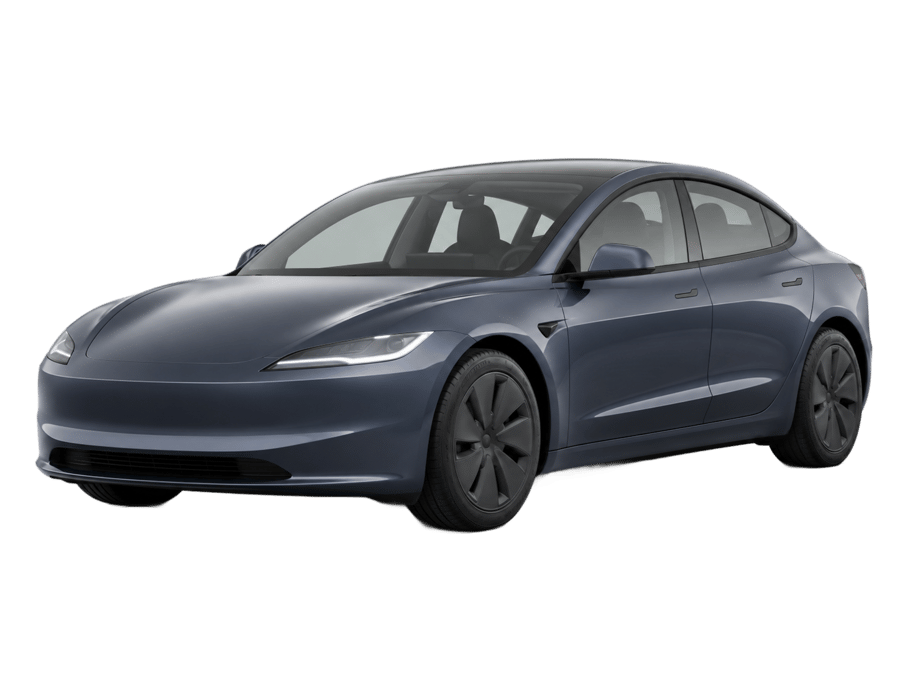
Complaint volume
748 consumer-submitted complaints are matched to this model year. Treat the count as a research signal, then read the actual summaries for repeated symptoms.
Complaint records
748 consumer-submitted complaints on record for the 2022 Tesla Model 3, grouped by component category.
Buyer interpretation
Complaint records are most useful when they turn into inspection points, seller questions, and comparison checks against nearby model years.
748 consumer-submitted complaints are matched to this model year. Treat the count as a research signal, then read the actual summaries for repeated symptoms.
The most common categories are forward collision avoidance, vehicle speed control,forward collision avoidance, service brakes,forward collision avoidance. Use those categories as a test-drive checklist instead of judging the vehicle from the total count alone.
Enriched records include 52 crash reports, 3 fire reports, 27 injury reports, and 1 fatality report. These fields come from complaint records and should be read in context.
Mileage is available on 56 complaints, with an average reported failure mileage of 14,263 miles. Compare that with the mileage on the listing.
Build a buyer checklist to turn these issues into questions and inspection points.
748 total complaints on record
| Date | Component | Summary | Severity | Mileage |
|---|---|---|---|---|
| Jul 2026 | ELECTRICAL SYSTEM | The center touchscreen/camera display system in my 2021 Tesla Model 3 is malfunctioning. The vehicle’s camera views do not work properly on the center display, including camera visibility needed for reversing and safe operation. The failed system is available for inspection upon request. This creates a safety risk because the vehicle relies heavily on the center screen to display camera views and vehicle information. When the camera display does not work properly, rear and surrounding visibility is reduced, especially while reversing, parking, changing lanes, or maneuvering around pedestrians, vehicles, curbs, and other obstacles. Tesla has refused to repair or cover the repair. The problem has been reported to Tesla. Tesla has not provided a satisfactory safety-related repair solution. It is unknown whether Tesla has fully inspected the failed component or confirmed the exact cause. There were no known warning lamps before the failure. The symptom is that the camera display/center screen camera views do not function properly when needed. The issue appears to involve the center display, camera display system, camera hardware, wiring/harness, vehicle computer, or related software. The exact cause is unknown. I am reporting this as a potential safety defect involving loss or malfunction of the camera display system in a 2021 Tesla Model 3. | Crash: No Fire: No | Unknown |
| Jul 2026 | ELECTRICAL SYSTEM | The contact owns a 2022 Tesla Model 3. The contact stated that while operating the vehicle, abnormal crackling and bubbling sounds were heard coming from underneath the rear seat. While driving later, an electrical arcing sound emanated from the same area. While at a local charging station, the contact discovered that the battery failed to charge when connected to a high-voltage charger; however, the battery could still be charged at the contact's residence using a 110-volt charger. The vehicle was driven to a local dealer, who was unable to identify the problem, and no service was performed. The vehicle was driven back to the charging station, but the high-voltage charging failure persisted. The vehicle was then towed to a local service center, where it was diagnosed and it was determined that the high-voltage battery required replacement. The high-voltage battery was replaced, and the vehicle was repaired. The manufacturer was notified of the failure. The failure mileage was 38,200. | Crash: No Fire: No Towed | 38,200 |
| Jun 2026 | STEERING,STRUCTURE,VEHICLE SPEED CONTROL | My wife had a collission on June 25th at 2 30PM CST while she was parking her vehicle in her office parking spot. The car suddenty sped and hit a tree. We suspect it be a misfire in Tesla. | Crash: Yes Fire: No Injuries: 1 Towed Medical attention | Unknown |
| Jun 2026 | UNKNOWN OR OTHER | On [XXX], at approximately [XXX], I was traveling northbound at the intersection of [XXX] and [XXX], with the vehicle’s self-driving feature engaged. As I approached the intersection, the vehicle unexpectedly proceeded into a left turn despite the traffic signal displaying a red left-turn arrow. I immediately recognized that the vehicle was not stopping and had to take control by forcefully jerking the steering wheel and slamming on the brakes to prevent the vehicle from running the red light and potentially causing a serious collision. There were no actions on my part that would have caused the vehicle to continue through the red left-turn signal. The weather was clear, the roads were dry, and there was no rain or any adverse weather conditions that would have affected visibility or vehicle operation. This incident raises serious concerns about the reliability and safety of the self-driving system under normal driving conditions INFORMATION REDACTED PURSUANT TO THE FREEDOM OF INORMATION ACT (FOIA), 5 U.S.C. 552(B)(6) | Crash: No Fire: No | Unknown |
| Jun 2026 | UNKNOWN OR OTHER,FORWARD COLLISION AVOIDANCE,LANE DEPARTURE | Vehicle was operating under Tesla Full Self-Driving (Supervised) on [XXX], on [XXX]. While FSD was engaged, the vehicle struck a large object/debris that was present in the travel lane. The system did not appear to detect or avoid the obstacle. The impact caused severe damage to two wheels and two tires, and the vehicle required towing. Tesla Service later confirmed that the damage was caused by road debris and replaced the damaged wheels and tires. I am submitting this report because I am concerned that the FSD system failed to identify or respond to a significant roadway hazard. INFORMATION REDACTED PURSUANT TO THE FREEDOM OF INFORMATION ACT (FOIA), 5 U.S.C. 552(B)(6) | Crash: No Fire: No | Unknown |
| Jun 2026 | FORWARD COLLISION AVOIDANCE | I was driving my Tesla 3 back from LA yesterday. The car has "AI3" hardware not "AI4". The software is fully up to date. I do *not* subscribe to "Tesla FSD (Supervised)" but the car is equipped with "Autopilot". I was driving in "Autopilot" mode driving southeast on [XXX] between Eloy, Arizona and Marana, Arizona, on a clear freeway in bright daylight, at about [XXX] PT on [XXX]. The car suddenly slammed on the brakes for an emergency stop for no good reason. There was nothing in front of us. Fortunately it was clear behind me so no one slammed into us. We came to almost a complete stop. The "Autopilot" disengaged. I'm not sure why. I might have pressed the accelerator out of instinct to keep moving. During the incident a message in bright red briefly came up on the screen. I didn't get a chance to read it but I did catch the word "error" like some error in software was triggered. Once we got moving again and all was fine although my wife was in shock. I did not engage "Autopilot" again for the rest of the trip and I'm reticent to do so ever again. INFORMATION REDACTED PURSUANT TO THE FREEDOM OF INFORMATION ACT (FOIA), 5 U.S.C. 552(B)(6) | Crash: No Fire: No | Unknown |
| Jun 2026 | WHEELS | I am reporting a severe structural defect in the 2022 Model 3 front suspension and wheel hub assembly that poses an imminent threat of catastrophic failure. My vehicle is nearly new, with less than 30k miles. As the original, single owner who maintains this car, a critical failure of this nature is highly premature and indicative of a manufacturing defect rather than normal wear-and-tear. The issue manifests as a progressive clicking and popping noise from the front wheel area during operation. After noticing this sound, I took my vehicle to the dealership. The technician's inspection revealed that critical structural components were loose and failing. The technician explicitly warned me that this specific failure carries a direct risk of sudden wheel separation while the vehicle is in motion. This forced me to take immediate, emergency action right there at the dealership; leaving the shop without fixing it was simply not an option, as driving my car in that condition would have caused immediate and dangerous consequences on the road. A wheel separating or a suspension collapsing at highway speeds is an inherently fatal scenario that endangers my life, my passengers, and the public. This mechanical failure is highly similar to the defect described in NHTSA Number: 21V835000, which covered front suspension lateral links separating from the subframe and carries the same dangerous consequences. However, because my vehicle is a '22 model, Tesla refused to acknowledge the connection to that safety campaign and denied coverage under the drivetrain warranty. I was forced to pay over 800 out of pocket to resolve this hazard. While I could afford this, many drivers cannot. Tesla’s failure to expand their recall to the '22 model year means thousands of drivers are unwittingly operating a ticking time bomb. NHTSA must investigate this issue and force Tesla to expand the recall to include '22 vehicles before this known, fatal defect causes an an entirely preventable tragedy. | Crash: No Fire: No | Unknown |
| May 2026 | VEHICLE SPEED CONTROL,LANE DEPARTURE | I purchased the Full Self-Driving (FSD) package for approximately $10,000 on my 2022 Tesla Model 3 Long Range AWD. Tesla marketed FSD as a feature that would enable autonomous driving capabilities including Navigate on Autopilot, Auto Lane Change, Autopark, Summon, and city street driving - all to be delivered via software updates. Tesla has since confirmed my vehicle's HW3 (Hardware 3.0) computer cannot support FSD as advertised. There is no hardware upgrade path. The FSD Transfer Program that allowed owners to move their purchase to a new vehicle ended March 31, 2026 with no accommodation for affected owners. The system regularly fails to perform as advertised. It requires constant human supervision despite being sold as "Full Self-Driving." I have sent three formal complaints to Tesla's executive team (May 7, 8, and 12, 2026) with zero response. Tesla's own support chatbot confirmed I am not eligible for FSD transfer. | Crash: No Fire: No | Unknown |
| May 2026 | SUSPENSION | Driving at low speed, the control arm became unfastened from the frame and the front driver's side wheel collapsed into the frame of the car. | Crash: No Fire: No | Unknown |
| May 2026 | ELECTRICAL SYSTEM,UNKNOWN OR OTHER,ENGINE | While driving my Tesla, Autopilot was engaged and navigating with the destination entered. At the time of the incident, my hand was on the steering wheel when the vehicle suddenly attempted to make a hard right turn toward a divider. This was not an exit or intended route, which raises serious concerns about what caused the vehicle to react that way. In addition, I have experienced multiple battery-related issues with this vehicle. The battery has already been replaced once, and on approximately 2–3 occasions the vehicle entered “Turtle Mode,” limiting the car to about 35–50 mph. This created a serious safety hazard because it occurred while I was driving on the highway alongside tractor-trailers and fast-moving traffic. | Crash: No Fire: No | Unknown |
| May 2026 | UNKNOWN OR OTHER | I’m writing to express my disappointment with Tesla's decision to stop the transferable option for the Full Self-Driving (FSD) package, which I purchased for $12,000. At the time of purchase, Tesla promised this feature would be transferable to a new vehicle, which was a key factor in my decision. The sudden removal of this option, without prior notice, feels unfair and deceptive. I urge Tesla to reconsider this change or offer a satisfactory resolution for customers like me who relied on the original terms. | Crash: No Fire: No | Unknown |
| Apr 2026 | STEERING,SUSPENSION | 2022 Tesla Model 3 with approximately 19,373 miles. Third-party tire shop inspection on April 25, 2026 identified visible tearing of front lower control arm bushings on BOTH sides (bilateral failure). Rubber bushing material has separated from inner metal sleeve on both left and right front lower control arms in identical pattern. No impact event or curb strike. Symmetric bilateral failure indicates manufacturing/material defect, not impact damage. Failure occurred at mileage well below the 40,000-70,000 mile range commonly cited for this known Tesla Model 3 lower control arm bushing wear pattern. Suggests accelerated failure mode that warrants investigation. Photos from third-party inspection attached. Vehicle scheduled for Tesla service center evaluation under remaining factory warranty. | Crash: No Fire: No | Unknown |
| Apr 2026 | VISIBILITY/WIPER | What component or system failed or malfunctioned, and is it available for inspection upon request? The front windshield (Acoustic Glass) failed due to a spontaneous stress fracture. The crack originated from the edge of the glass without any external impact. The vehicle has been repaired, but the service records and high-resolution photos of the crack are available for inspection upon request. How was your safety or the safety of others put at risk? The spontaneous crack occurred suddenly during a heatwave, significantly obstructing the driver’s forward visibility. Furthermore, the crack expanded rapidly during a subsequent rainstorm and temperature change, compromising the structural integrity of the windshield and potentially interfering with the front-facing ADAS cameras (Autopilot/Safety features) located behind the rearview mirror. Has the problem been reproduced or confirmed by a dealer or independent service center? Yes. The problem was formally inspected and confirmed by the Tesla Burlingame Service Center. They issued a written evaluation report stating the damage was a "Stress Impact" (a manufacturing/structural defect) rather than a rock chip. Has the vehicle or component been inspected by the manufacturer, police, insurance representatives or others? Yes, the component was inspected by the manufacturer (Tesla Service Centers in both Burlingame and San Francisco). Were there any warning lamps, messages or other symptoms of the problem prior to the failure, and when did they first appear? No warning lamps or messages appeared. However, this vehicle was previously subject to a Heat Pump recall (22V045) related to defrosting issues, which may have contributed to long-term thermal stress on the windshield structure prior to this failure. | Crash: No Fire: No | Unknown |
| Apr 2026 | UNKNOWN OR OTHER | I went to open the trunk on my 2022 Tesla Model 3 using the normal electric trunk button above the license plate. When I clicked the button, the trunk opened a few inches, made an abnormal noise, and then came crashing shut. At this point, I opened trunk manually to see what occurred and immediately saw the electrically-operated trunk strut separated from the trunk and also a crack in my rear glass as a result of the strut breaking off and getting sandwiched between the glass and the trunk lid when it came crashing shut. This is not only a major design flaw, but a huge safety concern. Other Model 3 owners on Reddit have experienced this exact same event happen, clearly indicating the flaw in the part and design of it. In the newer generation Model 3 from 2024 until present, Tesla has changed the design of the trunk strut because they knew it was flawed on the last one. My 2022 Model 3 has the older, more dangerous design. Had my hand and fingers been under the trunk when this occurred, I could’ve sustained a serious injury from the weight of the trunk collapsing on me, but it thankfully didn’t. There is no failsafe in place like a backup gas strut in the event that something like this happens and Tesla put the entire weight of the trunk lid on one electrically-actuated strut on the left side that is prone to misalignment and failure. Tesla needs to be held accountable for this design flaw in the older Model 3s as this trunk part is beginning to wear out or become misaligned in many people’s vehicles by this point. My car has only 62,500 miles on it and this managed to occur. It’s only a matter of time before this part fails on many other Tesla owners, causing massive financial losses and potential injury. | Crash: No Fire: No | Unknown |
| Mar 2026 | ELECTRICAL SYSTEM,FUEL/PROPULSION SYSTEM,VISIBILITY/WIPER | My 2022 Tesla Model 3 experienced a heat pump compressor failure at approximately 89,457 miles. Tesla Service Center diagnosed an internal failure in the heat pump system. The heat pump system controls cabin heating, windshield defrosting, and thermal management for the vehicle. When the system failed, the vehicle lost heating and proper defrost capability. This can impair windshield visibility during cold or foggy conditions, creating a potential safety hazard while driving. Tesla quoted approximately $3,000 to repair the compressor and declined warranty assistance despite the system being critical to safe vehicle operation. | Crash: No Fire: No | Unknown |
| Feb 2026 | STEERING,VISIBILITY/WIPER,LANE DEPARTURE | While using Tesla's Full Self-Driving (Supervised) software on the Pacific Coast Highway (PCH) and other highways, the vehicle’s automated steering system repeatedly malfunctions by failing to maintain lane centering. Specifically, the car drifts or actively steers across double yellow lines into the lane of oncoming traffic. This issue is a persistent failure of the Advanced Driver Assistance System (ADAS) and Lane Keeping Assistance. The vehicle has attempted this maneuver multiple times at [Approximate Speed, e.g., 40-60 mph], requiring immediate and forceful manual steering intervention to avoid head-on collisions with oncoming vehicles. The system provides no warning chimes, error messages, or "Take Over Immediately" alerts prior to crossing the lines; it appears to perceive the oncoming lane as a valid path or fails to recognize the double yellow boundary entirely. This has occurred during [mention conditions: e.g., bright daylight with high glare / night time]. The vehicle is equipped with Hardware 3.0 (HW3). I believe the 1.2-megapixel camera suite or the processing power of the HW3 computer is insufficient to safely navigate the geometry of the PCH or any roads within mountains/hills. I have attempted to "Clear Calibration" and performed system resets, but the life-threatening behavior persists. The vehicle and its internal data logs are available for inspection. I have also sent "Bug Reports" via voice command to the manufacturer immediately following these near-miss events. | Crash: No Fire: No | Unknown |
| Feb 2026 | EXTERIOR LIGHTING | I am filing a safety complaint regarding water intrusion into the rear tail lamp assembly of my 3-year-old Tesla Model 3. The rear tail light has progressed from minor condensation to active water accumulation and visible pooling inside the sealed housing. This is not light fogging — there is standing moisture inside the assembly. The vehicle has not been involved in any collision and there is no visible external damage to the lamp. I have already been pulled over, and drivers behind me have indicated that the affected tail light is not clearly visible. Reduced rear illumination creates a serious safety risk, particularly at night or in poor weather conditions. A malfunctioning tail lamp increases the likelihood of a rear-end collision. Rear lighting is a federally regulated safety component. Water intrusion into a sealed LED lighting assembly creates risk of electrical malfunction, corrosion, and sudden loss of rear illumination. The vehicle is currently out of warranty due to mileage; however, it is only three years old. A sealed LED tail lamp is not a wear-and-tear item and should not fail due to normal mileage accumulation. This appears to be premature sealing failure. I contacted Tesla Service regarding this issue. Their written response stated that because the vehicle is out of warranty due to mileage, any repairs would be at my expense. They did not address the safety concern or the presence of internal water accumulation. There are numerous reports from other Model 3 owners describing similar tail lamp water intrusion issues. I am requesting that NHTSA review whether water intrusion into sealed rear lighting assemblies constitutes a safety defect and whether further investigation is warranted. | Crash: No Fire: No | Unknown |
| Feb 2026 | UNKNOWN OR OTHER | While I was making a left turn my steering wheel suddenly got stuck. A vehicle almost hit me. | Crash: No Fire: No | Unknown |
| Feb 2026 | ELECTRICAL SYSTEM | RECURRING 12V LOW-VOLTAGE SYSTEM FAILURE AND DEFECTIVE REAR DEFROSTER HEATER GRID VEHICLE: 2022 Tesla Model 3 (VIN: [XXX] ). ODOMETER: 114,093 miles at time of third service visit. SUMMARY OF DEFECT: Vehicle has experienced recurring low-voltage (12V) system alerts since late December 2025. The 12V battery has been replaced three times by Tesla service. After each replacement, the low-voltage alerts return within days. Tesla's diagnostic system detected a DCR (DC resistance) reading of 16.8 milliohms against a threshold of 16 milliohms, indicating the battery's internal resistance is too high for the vehicle's electrical system to function properly. A brand-new 12V battery showed "Degraded - Replace" status within one week of installation. These low-voltage errors did not exist before Tesla replaced the 12V battery during the first service visit. DIAGNOSTIC FINDINGS: During the third service visit (February 2026), Tesla technician performed a resistance check on the rear defroster heater grid and described it as "out of spec but not significantly." Ground straps were also described as "out of spec but again not significantly." The technician stated there was "no smoking gun yet" and it was "maybe a combination of all leading to the 12V warning." Tesla proposed replacing the rear backlight glass at a cost of 1,265 to the customer. Additionally, severe rodent damage was discovered in the front wiring harness with chewed wires and nesting material. Despite this confirmed damage to the electrical system, the service manager stated the rodent damage was "not associated with the error" while the technician simultaneously stated there was no confirmed root cause. SAFETY CONCERN: The recurring 12V low-voltage condition presents a safety risk. The 12V system powers critical vehicle functions including exterior lighting, hazard lights, door locks, windows, the vehicle's computer systems, and safety features. Repeated system alerts include DIF_a018_hwLVSupplyUV (ha INFORMATION REDACTED PURSUANT TO THE FREEDOM OF INFORMATION ACT (FOIA), 5 U.S.C. 552(B)(6) | Crash: No Fire: No | Unknown |
| Feb 2026 | FORWARD COLLISION AVOIDANCE | Tesla Full Self-Driving (FSD) drove the vehicle onto a curb inadvertently, a few days after a software update. The incident caused a scratch to the wheel and a cut in the tire. Tesla has refused to cover the repair, stating that FSD requires driver attention. The issue is that the vehicle had never driven into a curb on a 90-degree turn before. I had my hands on the wheel and did not anticipate the software making an incorrect decision and striking the curb. Full Self-Driving was engaged at the time, and the software made an incorrect calculation that resulted in the impact. Tesla should replace the damaged tire and repair the wheel. I have the 1 min recording of the incident but could not upload the video due ot its size being more than 10 MB. | Crash: Yes Fire: No | Unknown |
| Feb 2026 | ELECTRICAL SYSTEM,UNKNOWN OR OTHER,VISIBILITY/WIPER | When cabin heat is enabled, visible vapor/smoke emits from the front trunk area under the windshield cowl and is pulled directly into the cabin through the HVAC intake. The vapor has a chemical/sweet odor consistent with coolant or refrigerant. Smoke enters the passenger compartment, especially when stopped or idling. This occurs repeatedly in cold temperatures and stops immediately when HVAC heat is turned off. No warning lights appear. This appears to be a heat pump or coolant system leak upstream of the cabin intake, allowing chemical fumes to enter the cabin air stream. Occupants are exposed to fumes while driving. This is a safety concern due to inhalation risk and lack of driver warning. | Crash: No Fire: No | Unknown |
| Dec 2025 | ELECTRICAL SYSTEM,UNKNOWN OR OTHER,VISIBILITY/WIPER | While driving, the center display intermittently goes completely black. When this occurs, I lose access to the speedometer and all driver information. The issue has been ongoing and progressively worsening. The vehicle was purchased new. The issue was reported during the warranty period and initially attributed to software updates. A recent service visit confirmed the vehicle computer is failing, and the issue immediately recurred after pickup. Loss of speed and driver information while driving creates a safety concern. | Crash: No Fire: No | Unknown |
| Dec 2025 | VISIBILITY/WIPER | This car uses auto-dimming rear view and side mirrors. However, the rear view mirror is only able to be dimmed automatically, or be disabled in the settings. The issue is that the dimming is not based on a light sensor at all, it is merely timed to dim around 30 minutes after sunset and return to normal 30 minutes before sunrise. I have confirmed this timing on many drives and it is repeatable. The safety concern is that there is no way to manually dim the rear view mirror, which is a big issue around sunrise and sunset when cars headlights turn on before the mirrors dim. This is especially an issue with larger trucks behind a sedan like my Model 3. The only option I have to fight the blinding glare from headlights is to manually move my mirror so that I can no longer see out of the rear window, which makes lane changes much more dangerous. | Crash: No Fire: No | Unknown |
| Nov 2025 | ELECTRICAL SYSTEM | Submitted Under 49 CFR §552.3 Request for Defect Investigation & Safety Recall Tesla Model 3 / Model Y: Interior High-Voltage Heater Fire Hazard, Missing Firewall, and Entrapment Due to Electronic Door Failures. My 2022 Tesla Model 3 experienced an interior flash fire caused by a design defect. Tesla placed the high-voltage PTC cabin heater and HV wiring inside the dashboard with no firewall. After a crash, I saw a straight “strip flame” shoot out of the HVAC dash vent, exactly like a gas heater. The fire began INSIDE the dash/HVAC ducting within seconds of impact, not from the battery. This shows an arc-flash failure of the HV heater or wiring inside the cabin. The flame entered the cabin instantly because there is no firewall separating HV components from occupants. During the fire, all electronic door releases failed. Tesla hides the manual front releases and provides NO rear mechanical releases. I was trapped inside a burning cabin and suffered major injuries trying to escape by kicking the rear passenger window before bystander helped me brake out the rear passenger window to get me out. Most people cannot escape this design. This is a dangerous combination of defects: (1) HV heater and wiring located inside the cabin with no firewall; (2) HVAC ducting becomes a flame pathway; (3) Electronic door releases fail during fire/crash; (4) No labeled manual rear-door exits; (5) No backup 12-V actuator power to open doors. Tesla must: relocate the HV heater outside the cabin (frunk), add a real firewall, add fire-retardant HVAC materials, add labeled manual releases on all doors, and include a 12-V backup to door actuators. Please open a defect investigation. This design nearly killed me and will kill others. | Crash: Yes Fire: Yes Injuries: 1 Towed Medical attention | Unknown |
| Nov 2025 | ELECTRICAL SYSTEM,STRUCTURE,UNKNOWN OR OTHER | The vehicle has a manufacturing defect in the charge port body seal allowing water intrusion into the vehicle cabin and near high-voltage charging components. This has resulted in dampness and potential mold growth, posing a respiratory health hazard to occupants. | Crash: No Fire: No | Unknown |