Complaint volume
592 consumer-submitted complaints are matched to this model year. Treat the count as a research signal, then read the actual summaries for repeated symptoms.
Complaint records
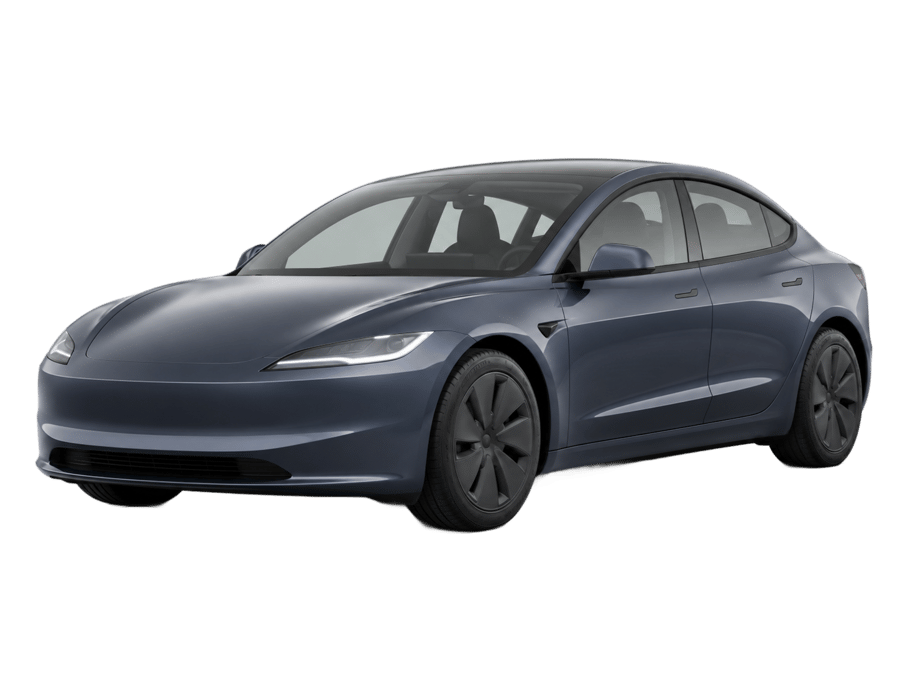
592 consumer-submitted complaints on record for the 2019 Tesla Model 3, grouped by component category.
Buyer interpretation
Complaint records are most useful when they turn into inspection points, seller questions, and comparison checks against nearby model years.
592 consumer-submitted complaints are matched to this model year. Treat the count as a research signal, then read the actual summaries for repeated symptoms.
The most common categories are suspension, forward collision avoidance, air bags. Use those categories as a test-drive checklist instead of judging the vehicle from the total count alone.
Enriched records include 58 crash reports, 5 fire reports, 19 injury reports, and 3 fatality reports. These fields come from complaint records and should be read in context.
Mileage is available on 134 complaints, with an average reported failure mileage of 21,753 miles. Compare that with the mileage on the listing.
Build a buyer checklist to turn these issues into questions and inspection points.
592 total complaints on record
| Date | Component | Summary | Severity | Mileage |
|---|---|---|---|---|
| Feb 2025 | AIR BAGS | passenger safety restraint system light came on, Tesla says to fix needs to install OCS filter module and replace existing OCS sensor because its not compatible with existing OCS sensor...cost is $806....there are no broken parts in my car. according to Teslas service bulletin Sep 21, 2020 this problem is caused by electrical interference in the seat harness causing the airbag restrain system message on screen due to faulty design.....Tesla says i need to pay for it because car is out of warranty, i say its a faulty design and they have to fix free. this should be a recall because Tesla is aware of many of same problems that make the airbag inoperable. from the bulletin "On some Model 3 and Model Y vehicles, the Occupant Classification System (OCS) signal might be affected by electrical interference in the seat harness, causing the airbag indicator to display on the touchscreen." Tesla has been aware of the problem for 4 years at least. | Crash: No Fire: No | Unknown |
| Jan 2025 | SUSPENSION | Some 2019 Tesla model 3’s recalled due to lateral and control link issues. Problem seems to be more wide spread. Exactly same problem is apparently happening with my car - also a 2019 Tesla model 3, but not covered for some reason. | Crash: No Fire: No | Unknown |
| Jan 2025 | STEERING | My 2019 Tesla Model 3 (RWD) began alerting error messages on the primary dashboard screen saying "Steering assist reduced. Steering may require increased effort." and "Lane Departure Avoidance features unavailable", followed by the power steering going out completely. Steering required significant effort, which was dangerous while turning through intersections or navigating parking lots, and almost caused a collision with other cars. The error goes away after parking the car and powering it off and on again, but reappears after driving short distances (anywhere from 5 to 30 miles). With the error on the screen, sometimes the power steering appears to work without increased effort (but with Lane Departure Avoidance unavailable), but other times the power steering is completely disabled. I received no warnings or alerts prior to the error messages and behavior I described above. I scheduled an appointment with Tesla Service (Plano-Lexington Drive-Service 300 Lexington Dr Plano, TX 75075) through the Tesla app, and after it was accepted, the app asked me to approve a repair estimate of almost $3000 to "remove and replace the steering rack". The replacement item is listed as "STEERING GEAR - LEFT HAND DRIVE (1188832-00-B)" with a unit price of 2,260.00. I contacted Tesla Service and asked if they would just do a diagnosis first to inspect the car, and they agreed and reduced the estimate to just a $215 diagnosis. The morning of my appointment (Jan 17th, 2025), Tesla Service sent me another new invoice for $3,176.36 for a complete steering rack replacement. When I arrived at the service center, the tech said they inspected the logs remotely, and found the steering rack was failing and needed a complete replacement, before even looking at the car in person. | Crash: No Fire: No | Unknown |
| Jan 2025 | SEAT BELTS | The rear driver side passenger seat belt buckle abruptly stopped latching, there is no debris in the the latch mechanism. | Crash: No Fire: No | Unknown |
| Jan 2025 | SUSPENSION | Sep 2022 Tesla Model 3 brought in for noise when steering wheel is turned. Was told it was the control arm. Left and right arms both replaced. Mileage - 53247 Jan 2025 Tesla Model 3 brought in for heating issue and for similar noise when steering wheel is turned. Service rep said lateral links needed replacing. Mileage - 85321 Control arms and lateral link replacement at 53K and 85K, respectively, seems highly irregular. I have checked several online forums and found many other Tesla Model 3 owners having similar complaints. I have now replaced a significant portion of this vehicle's front suspension. We have owned 7 other vehicles, all purchased new, over the last 20 years. We have kept those cars between 150k - 200k miles and only 1 of those cars required this type of work, which was performed on a 2011 Jaguar XF at 160k+ miles | Crash: No Fire: No | Unknown |
| Jan 2025 | SUSPENSION | Two major safety issues need to be reported: 1) The left front lower control arm falling off in the middle of driving, caused car wheel stuck on a traffic street (luckily it was off the freeway 5 minutes ago). The long bolts connected the lower control arms were loss due to the defective design (the bolts are screwed upward vertically, falling off is definitely just a matter of time). I found there was a class action against Tesla due to this problem (it is referred to Model X and S) 2) The other major safety issue I encountered as I turned on the “advanced autopilot “ feature, the car could break suddenly without warning on the freeway. There were no cars or obstacles in the front. I researched online and found many Tesla owners have experienced this so called “phantom breaking” problem as I had (I had experienced this unsafe auto breaking randomly since I have driven this car) | Crash: No Fire: No | Unknown |
| Jan 2025 | AIR BAGS | The airbag and seat belt system on the driver's side is faulty, which may result in an unsuccessful deployment of the airbag should I get into an accident. This is an immediate safety concern, yet Tesla would like to charge me over $400 to remedy the situation. That's why I'm reporting this as a safety recall so that no other owner/ leasee faces this risk or financial burden. | Crash: No Fire: No | Unknown |
| Dec 2024 | VISIBILITY/WIPER | We own a 2019 Tesla model 3 which had a left front headlight stop working (headlight, turn signal, and daytime running light). As soon as the headlight went out the windshield wipers stopped working. The vehicle does not have fuses but the headlight and wipers share a wiring circuit. I thought it might be a coincidence but found several of the same issues on a google search. It is beyond ridiculous that lowing a headlight at night would cause your wipers to stop working. Its bad enough to have a reduction in visibility due to a light going out but to have the windshield wipers tied to the headlight causing them to stop working is nothing short of reckless. The warning stating the turn signal needed to be serviced and to make an appointment came on when the light stopped working. I own an automotive repair shop so I ordered the headlight assembly and installed it, the lights then worked and not surprisingly so did the windshield wipers. | Crash: No Fire: No | Unknown |
| Dec 2024 | STRUCTURE | The accident happened in a parking lot. There was a tap of the bumpers going really slow. The passenger in the Tesla is claiming whiplash. The car is not safe if it cannot take a slight bump on the fender in a parking lot. | Crash: Yes Fire: No | Unknown |
| Dec 2024 | BACK OVER PREVENTION | Hello. A recall was issued in 2022 on my vehicle. There was an issue with the wiring harness that would sometimes cause the rear camera feed to be dropped when opening and closing the trunk. According to Tesla, this issue was fixed in 2022 is therefore no longer subject to being fixed again. This issue is occurring again and Tesla is refusing to fix the issue without me paying for it. As this was a recall item, that is reoccurring. I feel that as a safety component that can drop out the rear camera/cross traffic detection system. This is a serious safety concern. NHTSA campaign number: 21VO0DO00. Tesla's own number for this recall is SB-21-17-008. | Crash: No Fire: No | Unknown |
| Nov 2024 | AIR BAGS,SEAT BELTS | I along with many people online have reported the occupant safety restraint system having an issue and setting off a fault. I took it back several times on a warranty to Tesla. However, they were unable to replicate the air. Now the air is started again. the car is out of warranty and Tesla wants $2000 now to put in a new airbag new occupant sensor and clip. This is absolute ridiculous, and has really undermined my faith in Tesla. They should not be having occupant faults.and not fixing it. | Crash: No Fire: No | Unknown |
| Nov 2024 | SUSPENSION | The contact owns a 2019 Tesla Model 3. The contact stated while driving at an undisclosed speed, there was an abnormal squeaking sound coming from the front suspension. The sound was heard while making a turn. The vehicle was taken to the dealer where it was diagnosed with a failed upper control arm. The contact was informed that the upper control arm needed to be replaced. The vehicle was repaired. The contact stated that five days later the failure reoccurred. The vehicle was taken to the dealer; however, the failure was not duplicated. The vehicle was not diagnosed or repaired by an independent mechanic or the dealer. The contact stated that while the vehicle was at the dealer for a scheduled service appointment in May 2024, the vehicle was diagnosed with a failed suspension lateral link needed to be replaced. The contact was informed that the suspension lateral link needed to be replaced. The vehicle was not repaired. The contact was informed of two recalls, NHTSA Campaign Number: 23V235000 (Suspension) and NHTSA Campaign Number: 21V835000 (Suspension); however, the VIN was not included in the recalls. The manufacturer was made aware of the failure but provided no assistance. The failure mileage was approximately 40,775. | Crash: No Fire: No | 40,775 |
| Nov 2024 | FORWARD COLLISION AVOIDANCE | Driving on Hwy 8 (Houston Beltway), going west, dog came out from left side, Tesla auto pilot was engaged and did not detect collision with the dog. Car did not stop, did not alarm, dog was hit, my front bumper was damaged, and car kept on going. | Crash: Yes Fire: No | Unknown |
| Nov 2024 | ELECTRICAL SYSTEM | I’m at the Tesla service center and Tesla is refusing to perform recall work without payment/diagnostic time. Even though Tesla’s website and notices states that they will perform recall work free of charge they are in fact refusing to perform recall work free of charge. They are mandating that I be charged diagnostic fees for them to determine whether they will perform the recall work as of 11/13 at 7:15am per Marc the service advisor at Tesla Service Center Kearny Mesa. | Crash: No Fire: No | Unknown |
| Nov 2024 | SERVICE BRAKES,FORWARD COLLISION AVOIDANCE | It brakes at highway speeds of 70 without reasons on cruise control and FSD. Happened three times on highway 46. It can be very bad if there was a car behind me. This happened to me through all these years since 2019. | Crash: No Fire: No | Unknown |
| Nov 2024 | STEERING | I was driving with food donations from my local shop to deliver them. I was about to turn left to go onto a different street when the car showed a notification that read "Steering Assist Reduced. Steering may require increased effort". It was incredibly hard to turn the steering wheel, left of right. If the car is moving very slowly is becomes increasingly harder to turn it, making it almost impossible to park. | Crash: No Fire: No | Unknown |
| Nov 2024 | AIR BAGS | The OCS filter (occupant classification sensor) failed causing a “passenger restraint system fault”. This is simply a poorly designed component that fails. It is extremely common. The repair was quoted at nearly $2000 because the airbag and module have to be upgraded alongside it. Tesla sold a bunch of cars with a faulty $15 sensor, and is forcing $2000 worth of repairs just to get the passenger safety system to work. | Crash: No Fire: No | Unknown |
| Oct 2024 | SEAT BELTS | I am submitting a complaint regarding an unresolved safety issue with the front passenger restraint system in my 2019 Tesla Model 3 (VIN: [XXX] ). Since February 2024, I have encountered recurring alerts for this system, despite multiple service visits to address it. Service History and Concerns: The initial repair attempt on February 27, 2024, involved Tesla replacing the Occupant Classification System (OCS) filter module. However, the alert returned shortly after, showing the issue was not resolved. On October 14, 2024, I returned to Tesla, where they quoted $1,800 for further repairs, claiming my general warranty was expired. Their records indicate that this failure directly impacts the front passenger’s safety restraint, making it a serious defect. During a follow-up visit on October 23, 2024, the issue was confirmed but left unaddressed unless I paid out-of-pocket. This recurring fault poses a critical safety risk, as a defective restraint system compromises passenger protection in a crash. Tesla’s refusal to provide coverage, despite prior similar recalls for restraint systems, suggests a pattern of shifting safety costs onto consumers. I request the NHTSA to investigate this fault’s prevalence and require Tesla to provide a remedy that upholds passenger safety. Thank you for your attention to this serious issue. INFORMATION REDACTED PURSUANT TO THE FREEDOM OF INFORMATION ACT (FOIA), 5 U.S.C. 552(B)(6) | Crash: No Fire: No | Unknown |
| Oct 2024 | SUSPENSION | Upper control arm unit is defective on most model 3's. This has been reported by thousands of Tesla owners. After 50,000 miles the upper control arm will fail due to being assembled incorrectly, which causes a hard time driving the car and causing a strange sound in the suspension which can cause a risk in driving and increase the likelihood of an accident. | Crash: No Fire: No | Unknown |
| Oct 2024 | LANE DEPARTURE: ASSIST | I see in today's news that the NHTSA is investigating Tesla's FSD due to accidents in poor visibility, but the articles I've read are not discussing another visibility issue that may actually be more widespread. I already reported concerns with Telsa's FSD in incident 11618812, but I forgot to mention another issue I believe is crucial to the success or failure of Tesla's FSD, and I am surprised to find that nobody is talking about this serious flaw. Because Tesla's FSD relies on camera video only, the vehicle is blind in the dark. I live in a rural area, and on some roads without streetlights or other vehicles nearby illuminating the areas around the vehicle, Tesla's FSD falsely assumes that the side and rear facing cameras are obstructed because they cannot see in the dark. This was also an issue when my son and I drove home through the night from South Carolina. When we hit North Carolina on [XXX] in the middle of the night between cities and no streetlights, traffic was sparse so there was nobody behind or to the sides of the vehicle. Every few minutes, FSD falsely warned us that the cameras were obstructed, and alerted us that FSD's capabilities were limited. One point of view is that there was nobody there so my car was clear, and FSD could assume that everything is okay and suppress the warning, but what if the driver of the other vehicle at night failed to have their lights on? And how will FSD ever know that the camera is obstructed, or is in pitch dark? Take an average of the low light across multiple cameras? Is that risky? In my opinion, Tesla's FSD cannot rely on video alone and either needs to use LIDAR, night vision, or 3D radar to see more accurately around the vehicle in poor visibility conditions. The answer to low light, bright low sun, fog, or dust is probably the same solution. But we were all promised FSD, so will Musk upgrade the hardware in our cars at Tesla's expense, or expect all of us to pay for the upgrade to get what we were all promised? INFORMATION REDACTED PURSUANT TO THE FREEDOM | Crash: No Fire: No | Unknown |
| Oct 2024 | UNKNOWN OR OTHER | I have been an owner and fan of Tesla’s FSD for 5 and 1/2 years. Even though Tesla has repeatedly missed Elon’s promised delivery dates, I’ve remained an advocate. I am a Sr. Enterprise Architect and have a Masters in Software Engineering. I know how difficult a problem like an AI-based FSD is to solve, so I’ve been cutting Elon some slack on his constant over-promising and under-delivering. My daughter goes to school over 800 miles from home, and I’ve used FSD to do over 90% of the driving taking her to and from school, and it’s done pretty darn well, but the latest two versions I’ve received over the last few weeks have been so bad, they are dangerous in my opinion. Issues like panic braking for no visible reason, and today my car made an unexpected lane change across two lanes, cutting off a rapidly moving truck in the fast lane, all requiring me to take control. I now have interventions every few minutes, sometimes only a few minutes from engagement. With Tesla’s focus on “Robotaxi Day,” I am concerned that the demo may be more smoke and mirrors, because the latest version of FSD on my car is nowhere near ready for prime time. Can Tesla fix this? I’m sure they can, but this software version was definitely rushed out too soon, probably because Elon put heavy pressure prior to their big Robotaxi event. My wife has a Model Y with FSD behaving the same way, so it is not isolated to just my car. If Robotaxi Day is a smash success, they are either running a hardware or software version my 2 cars do not have, or they demoed in a very controlled environment. But here’s another issue. We’ve all been promised a working FSD. If Tesla found that level 3 hardware cannot deliver, and if Elon has to eat crow and embrace LIDAR, for example, there will be a class action against Tesla from owners stuck with an FSD technology that is not safe and doesn’t deliver on Elon’s promises. I doubt Tesla will upgrade all of us to hardware that works. Then what? My FSD is v12.5.4.1. | Crash: No Fire: No | Unknown |
| Oct 2024 | AIR BAGS,SEAT BELTS,SEATS | Front left safety restraint system fault alert which requires service from Tesla service center. Tesla is charging $360 before taxes to fix this issue which seems to be an ongoing issue for many Tesla owners. The cost should be on the company since it’s a safety concern. | Crash: No Fire: No | Unknown |
| Oct 2024 | AIR BAGS,SEAT BELTS,SEATS | Front left safety restraint system fault/Service is required | Crash: No Fire: No | Unknown |
| Oct 2024 | STEERING | steering rack failed due to water intrusion connector integrity failed | Crash: No Fire: No | Unknown |
| Oct 2024 | SUSPENSION | Lateral links failed. It was exactly what was described in this recall. However my car was not part of the recall because it was manufactured outside the date range. Recall affected until Mar 2019. My car was produced maybe a month or two afterwards. [XXX] The fastener became loose and the entire lateral link popped off. This happened in the parking lot and the entire car dropped 3 inches. Had this happened on the freeway it would have been much more dangerous. Problem was inspected by Tesla and Tesla said they were not at fault. INFORMATION REDACTED PURSUANT TO THE FREEDOM OF INFORMATION ACT (FOIA), 5 U.S.C. 552(B)(6) | Crash: No Fire: No | Unknown |