Vehicle report

2019 Tesla Model 3

Recalls, consumer complaints, safety ratings, fuel cost estimate, and next steps from official public data sources.
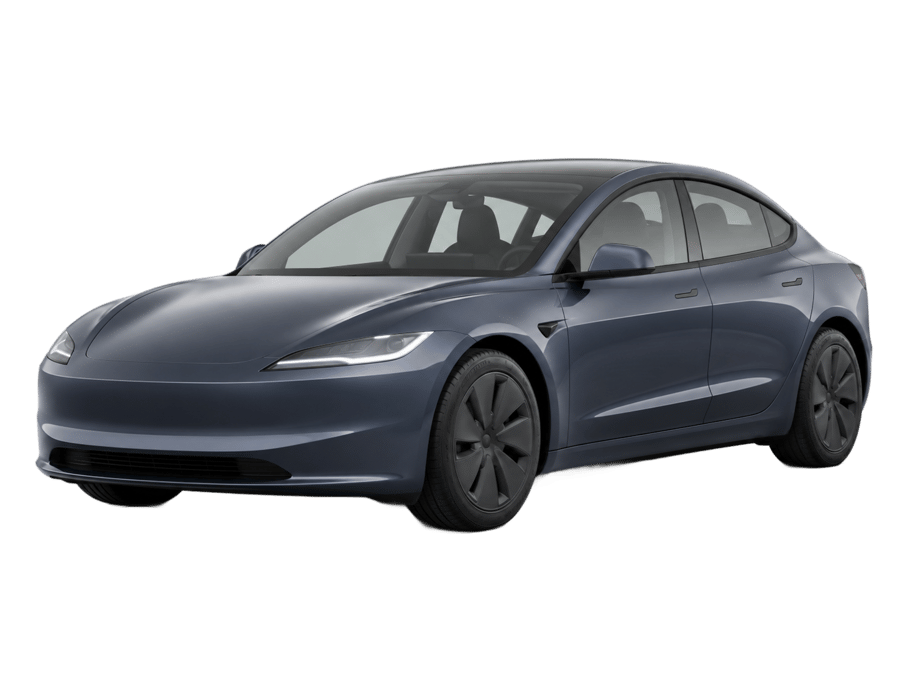
2019 Tesla Model 3
21 Total recalls
Dec 17, 2024 Latest recall date
587 Complaint reports
$586 Estimated fuel cost
Quick answer: The 2019 Tesla Model 3 has 21 official recalls and 587 consumer complaints in our database. The latest recall date is Dec 17, 2024. The most common complaint categories include forward collision avoidance, suspension, unknown or other. Estimated annual fuel cost is $586 based on the current calculator assumptions.

Buyer interpretation

What this record means before you buy

The useful question is not just whether this page has records. It is what those records should make you verify before money changes hands.

Recall homework

There are 21 official recalls listed for this model year. Before buying, use the VIN to confirm which campaigns are still open and ask for dealer repair records on completed work.

Owner complaint pattern

Owner complaints most often mention forward collision avoidance, suspension, unknown or other. Scan those categories before the test drive so you know what symptoms, warning lights, or service history to ask about.

Open investigation signal

5 federal defect investigations are still open. That is not a recall, but it is worth reading before assuming the issue is settled.

Ownership-cost check

The fuel-cost estimate is based on a representative EPA match, not every trim. Confirm the actual engine, drivetrain, and tire setup before comparing this listing with another year or model.

Questions to ask the seller

  • Can you show the current VIN recall status for this 2019 Tesla Model 3?
  • Do you have dealer invoices or campaign paperwork for the listed recall repairs?
  • Have you noticed any issues related to forward collision avoidance, suspension, unknown or other?
  • Can I review recent maintenance records before the test drive?
Used-car checklist

Thinking of buying this vehicle?

Use our buyer checklist to know what to inspect, ask, and verify before the test drive.

2019 Tesla Model 3 Electricity
Create checklist Compare with other years Sends year, make, and model to pre-fill your checklist.

Safety ratings

Official safety ratings were found for 2 tested variants of the 2019 Tesla Model 3.

Overall 5/5 stars
Frontal crash 5/5 stars
Side crash 5/5 stars
Rollover 5/5 stars

Displayed variant: 2019 Tesla Model 3 4 DR RWD ; rollover risk 6.6%

Safety ratings can vary by tested body style, trim, drivetrain, or variant. Do not assume every trim has the same rating unless the official record says so.
Variant Overall Front Side Rollover
2019 Tesla Model 3 4 DR RWD Default 5/5 stars 5/5 stars 5/5 stars 5/5 stars
2019 Tesla Model 3 4 DR AWD 5/5 stars 5/5 stars 5/5 stars 5/5 stars

How many recalls does the 2019 Tesla Model 3 have?

Verify with official VIN lookup

21 official recalls on record for the 2019 Tesla Model 3. 146 matched quarterly completion reports are available.

Latest recall: December 17, 2024

Recall data is based on official records. This page is not an official VIN recall check. Always confirm open recalls with an official VIN lookup, the manufacturer, or an authorized dealer. Completion reports are campaign-level, delayed, and not VIN-specific.
Campaign Component Summary Consequence Remedy Date Completion
24V935000 TIRES:PRESSURE MONITORING AND REGULATING SYSTEMS Tesla, Inc. (Tesla) is recalling certain 2024 Cybertruck, 2017-2025 Model 3, and 2020-2025 Model Y vehicles. The tire pressure monitoring system (TPMS) warning light may not remain illuminated between drive cycles, failing to warn the driver of low tire pressure. As such, these vehicles fail to comply with the requirements of Federal Motor Vehicle Safety Standard number 138, "Tire Pressure Monitoring Systems." Driving with improperly inflated tires increases the risk of a crash. Tesla released an over-the-air (OTA) software update, free of charge. Owner notification letters were mailed February 15, 2025. Owners may contact Tesla customer service at 1-877-798-3752. Tesla's number for this recall is SB-24-00-018. Dec 2024 2026-1
695,669 remedied / 696,281 involved (99.9%)
24V376000 SEAT BELTS:FRONT:WARNING LIGHT/DEVICES Tesla, Inc. (Tesla) is recalling certain 2012-2024 Model S, 2015-2024 Model X, 2017-2023 Model 3, and 2020-2023 Model Y vehicles. In the event of an unbelted driver, the seat belt warning light and audible chime may not activate as intended. As such, these vehicles fail to comply with the requirements of Federal Motor Vehicle Safety Standard number 208, "Occupant Crash Protection." A seat belt warning system that fails to alert occupants of an unbelted seat belt can increase the risk of injury during a crash. Tesla will release an over-the-air (OTA) software update. Owner notification letters were mailed July 26, 2024. Owners may contact Tesla customer service at 1-877-798-3752. Tesla's number for this recall is SB-24-00-008. May 2024 2026-1
111,911 remedied / 125,233 involved (89.4%)
24V153000 FORWARD COLLISION AVOIDANCE: WARNINGS:EXTERNAL/PEDESTRIAN ALERT Tesla, Inc. (Tesla) is recalling certain 2013, 2018-2021 Model S, 2020-2021 Model X, 2018-2022 Model 3, and 2020-2022 Model Y vehicles. A factory reset muted the Pedestrian Warning System (PWS) sounds. As such, these vehicles fail to comply with the requirements of Federal Motor Vehicle Safety Standard number 141, "Minimum Sound Requirements for Hybrid and Electric Vehicles." Pedestrians may be unaware of an approaching vehicle if the PWS sounds are muted, increasing the risk of a crash. Tesla released an over-the-air (OTA) software update, release 2023.44.30.14, free of charge. Owner notification letters were mailed April 27, 2024. Owners may contact Tesla customer service at 1-877-798-3752. Tesla's number for this recall is SB-24-00-006. Feb 2024 2026-1
6,510 remedied / 6,557 involved (99.3%)
24V051000 ELECTRICAL SYSTEM: INSTRUMENT CLUSTER/PANEL Tesla, Inc. (Tesla) is recalling certain 2012-2023 Model S, 2016-2024 Model X, 2017-2023 Model 3, 2019-2024 Model Y, and 2024 Cybertruck vehicles. An incorrect font size is displayed on the instrument panel for the Brake, Park, and Antilock Brake System (ABS) warning lights. As such, these vehicles fail to comply with the requirements of Federal Motor Vehicle Safety Standard number 105, "Hydraulic and Electric Brake Systems" and 135, "Light Vehicle Brake Systems." Warning lights with a smaller font size can make critical safety information on the instrument panel difficult to read, increasing the risk of a crash. Tesla began releasing an over-the-air (OTA) software update, free of charge. Owners may contact Tesla customer service at 1-877-798-3752. Tesla's number for this recall is SB-24-00-003. Jan 2024 2025-4
2,165,548 remedied / 2,193,869 involved (98.7%)
23V838000 ELECTRICAL SYSTEM:ADAS:AUTONOMOUS/SELF DRIVING:SOFTWARE Tesla, Inc. (Tesla) is recalling 2012-2023 Model S, 2016-2023 Model X, 2017-2023 Model 3, and 2020-2023 Model Y vehicles equipped with all versions of Autosteer leading up to the version(s) that contains the recall remedy. In certain circumstances when Autosteer is engaged, the prominence and scope of the feature's controls may not be sufficient to prevent driver misuse of the SAE Level 2 advanced driver-assistance feature. In certain circumstances when Autosteer is engaged, and the driver does not maintain responsibility for vehicle operation and is unprepared to intervene as necessary or fails to recognize when Autosteer is canceled or not engaged, there may be an increased risk of a crash. Tesla will release an over-the-air (OTA) software update, free of charge. Owner notification letters were mailed February 10, 2024. Owners may contact Tesla customer service at 1-877-798-3752. Tesla's number for this recall is SB-23-00-008. Dec 2023 2025-4
2,007,492 remedied / 2,031,220 involved (98.8%)
23V235000 SUSPENSION:FRONT Tesla, Inc. (Tesla) is recalling certain 2018-2019 Model 3 vehicles. The front suspension lateral link fasteners may loosen, allowing the lateral link to separate from the sub-frame. A lateral link separation could shift the wheel alignment, causing instability and increasing the risk of a crash. Tesla Service will tighten or replace the lateral link fasteners as necessary, free of charge. Owner notification letters were mailed May 30, 2023. Owners may contact Tesla customer service at 1-877-798-3752. Tesla's number for this recall is SB-23-31-001. This recall is an expansion of previous recall number 21V-835. Mar 2023 2025-4
329 remedied / 422 involved (78.0%)
23V085000 STEERING:AUTOMATED/ADAPTIVE STEERING Tesla, Inc. (Tesla) is recalling certain 2016-2023 Model S, Model X, 2017-2023 Model 3, and 2020-2023 Model Y vehicles equipped with Full Self-Driving Beta (FSD Beta) software or pending installation.  The FSD Beta system may allow the vehicle to act unsafe around intersections, such as traveling straight through an intersection while in a turn-only lane, entering a stop sign-controlled intersection without coming to a complete stop, or proceeding into an intersection during a steady yellow traffic signal without due caution. In addition, the system may respond insufficiently to changes in posted speed limits or not adequately account for the driver's adjustment of the vehicle's speed to exceed posted speed limits. FSD Beta software that allows a vehicle to exceed speed limits or travel through intersections in an unlawful or unpredictable manner increases the risk of a crash. Tesla will release an over-the-air (OTA) software update, free of charge.  Owner notification letters were mailed April 15, 2023.  Owners may contact Tesla customer service at 1-877-798-3752.  Tesla's number for this recall is SB-23-00-001. Feb 2023 2025-1
349,908 remedied / 362,758 involved (96.5%)
22V798000 SEAT BELTS:REAR/OTHER:ANCHORAGE Tesla, Inc. (Tesla) is recalling certain 2017-2022 Model 3 vehicles. The second-row left seat belt buckle and second-row center seat belt anchor may have been incorrectly reassembled during vehicle service. An incorrectly reassembled seat belt anchor can impair the performance of the seat belt during a crash, increasing the risk of injury. Tesla Service will inspect and reassemble the seat belt anchors as necessary, free of charge. Owner notification letters were mailed December 20, 2022. Owners may contact Tesla customer service at 1-877-798-3752. Tesla's number for this recall is SB-22-20-004. Oct 2022 2024-3
18,984 remedied / 24,064 involved (78.9%)
22V702000 VISIBILITY:POWER WINDOW DEVICES AND CONTROLS Tesla, Inc. (Tesla) is recalling certain 2017-2022 Model 3, 2020-2022 Model Y, and 2021-2022 Model S and Model X vehicles. The window automatic reversal system may not react correctly after detecting an obstruction. As such, these vehicles fail to comply with the requirements of Federal Motor Vehicle Safety Standard number 118, "Power-Operated Window Systems." A closing window may exert excessive force by pinching a driver or passenger before retracting, increasing the risk of injury. Tesla will perform an over-the-air (OTA) software update of the automatic window reversal system, free of charge. Owner notification letters were mailed March 31, 2032. Owners may contact Tesla customer service at 1-877-798-3752. Tesla's number for this recall is SB-22-00-013. Sep 2022 2024-4
1,089,206 remedied / 1,096,762 involved (99.3%)
22V263000 ELECTRICAL SYSTEM: INSTRUMENT CLUSTER/PANEL Tesla, Inc. (Tesla) is recalling certain 2018-2022 Model 3 Performance vehicles. The unit of speed (mph or km/h) may fail to display on the speedometer while in Track Mode. As such, these vehicles fail to comply with the requirements of Federal Motor Vehicle Safety Standard number 101, "Control and Displays." The driver may not know how fast the vehicle is traveling without the mph or km/h unit display, increasing the risk of a crash. Tesla will perform an over-the-air (OTA) software update, free of charge. Owner notification letters were mailed June 17, 2022. Owners may contact Tesla customer service at 1-877-798-3752. Tesla's number for this recall is SB-22-00-008. Apr 2022 2024-1
48,158 remedied / 48,184 involved (100.0%)
22V235000 ELECTRICAL SYSTEM:SOFTWARE Tesla, Inc. (Tesla) is recalling certain 2020-2022 Model Y, Model X, Model S, and 2017-2022 Model 3 vehicles. The Boombox function allows sounds to be played through an external speaker while the vehicle is in motion, which may obscure the Pedestrian Warning System (PWS) sounds. As such, these vehicles fail to comply with the requirements of Federal Motor Vehicle Safety Standard number 141, "Minimum Sound Requirements for Hybrid and Electric Vehicles." Pedestrians may be unaware of an approaching vehicle if the PWS sounds are obscured, increasing the risk of a crash. Tesla will perform an over-the-air (OTA) software update that will disable the Boombox functionality when the vehicle is in Drive, Neutral and Reverse modes, including Summon and Smart Summon, free of charge. Owner notification letters were mailed June 6, 2022. Owners may contact Tesla customer service at 1-877-798-3752. Tesla's number for this recall is SB-22-00-003. Note: This recall supersedes recall 22V-063. Vehicles configured with Summon or Smart Summon and already remedied under 22V-063 will need to have the new remedy software installed. Apr 2022 2024-1
592,591 remedied / 594,894 involved (99.6%)
22V169000 BACK OVER PREVENTION:DISPLAY FUNCTION Tesla, Inc. (Tesla) is recalling certain 2018-2019 Model S, Model X, and 2017-2020 Model 3 vehicles equipped with Autopilot Computer 2.5 and operating certain firmware releases. The rearview image may not immediately display when the vehicle begins to reverse. As such, these vehicles fail to comply with the requirements of Federal Motor Vehicle Safety Standard number 111, "Rear Visibility." A delayed rearview camera image reduces the driver's rear view, increasing the risk of a crash. Tesla will perform an over-the-air (OTA) software update, free of charge. Owner notification letters were mailed May 17, 2022. Owners may contact Tesla customer service at 1-877-798-3752. Tesla's number for this recall is SB-22-00-004. Mar 2022 2022-3
947 remedied / 947 involved (100%)
22V063000 ELECTRICAL SYSTEM:SOFTWARE Tesla, Inc. (Tesla) is recalling certain 2020-2022 Model S, Model X, Model Y, and 2017-2022 Model 3 vehicles. The Boombox function allows sounds to be played through an external speaker while the vehicle is in motion, which may obscure the Pedestrian Warning System (PWS) sounds. As such, these vehicles fail to comply with the requirements of Federal Motor Vehicle Safety Standard number 141, "Minimum Sound Requirements for Hybrid and Electric Vehicles." Pedestrians may be unaware of an approaching vehicle if the PWS sounds are obscured, increasing the risk of a crash. Tesla will perform an over-the-air (OTA) software update that will disable the Boombox functionality when the vehicle is in Drive, Neutral and Reverse modes, free of charge. Owner notification letters are expected to be mailed April 5, 2022. Owners may contact Tesla customer service at 1-877-798-3752. Tesla's number for this recall is SB-22-00-003. Note: This recall has been superseded by Recall 22V-235. Tesla's number for the new recall is SB-22-00-003. Feb 2022 Not matched
22V045000 ELECTRICAL SYSTEM:SOFTWARE Tesla, Inc. (Tesla) is recalling certain 2021-2022 Model S and Model X, 2017-2022 Model 3, and 2020-2022 Model Y vehicles. The audible chime may not activate when the vehicle starts and the driver has not buckled their seat belt. As such, these vehicles fail to comply with the requirements of Federal Motor Vehicle Safety Standard number 208, "Occupant Crash Protection." The driver may be unaware that their seat belt is not fastened, increasing the risk of injury during a crash. Tesla will perform an over-the-air (OTA) software update, free of charge. Owner notification letters were mailed April 1, 2022. Owners may contact Tesla customer service at 1-877-798-3752. Tesla's number for this recall is SB-22-00-002. Feb 2022 2024-1
795,764 remedied / 817,143 involved (97.4%)
22V037000 ELECTRICAL SYSTEM:ADAS:AUTONOMOUS/SELF DRIVING:SOFTWARE Tesla, Inc. (Tesla) is recalling certain 2016-2022 Model S and Model X, 2017-2022 Model 3, and 2020-2022 Model Y vehicles. The "rolling stop" functionality available as part of the Full Self-Driving (Beta) software may allow the vehicle to travel through an all-way stop intersection without first coming to a stop. Failing to stop at a stop sign can increase the risk of a crash. Tesla will perform an over-the-air (OTA) software update that disables the "rolling stop" functionality, free of charge. Owner notification letters were mailed March 28, 2022. Owners may contact Tesla customer service at 1-877-798-3752. Tesla's number for this recall is SB-22-00-001. Jan 2022 2022-2
53,822 remedied / 53,822 involved (100%)
21V00D000 ELECTRICAL SYSTEM:WIRING: REAR COMPARTMENT/TRUNK Tesla, Inc. (Tesla) is recalling all 2017-2020 Model 3 vehicles. The rearview camera cable harness may be damaged by the opening and closing of the trunk lid, preventing the rearview camera image from displaying. A rearview camera that does not function reduces the driver's rear view, increasing the risk of a crash. Tesla Service will inspect and install a guide protector and new cable harness as necessary, free of charge. Owner notification letters were mailed April 24, 2022. Owners may contact Tesla customer service at 1-877-798-3752. Tesla's number for this recall is SB-21-17-008. Dec 2021 2024-4
280,645 remedied / 356,309 involved (78.8%)
21V846000 FORWARD COLLISION AVOIDANCE: SENSING SYSTEM: CAMERA Tesla, Inc. (Tesla) is recalling certain 2017-2021 Model S, Model 3, Model X, and 2020-2021 Model Y vehicles operating software version 2021.36.5.2. A communication error may cause false forward-collision warning (FCW) or unexpected activation of the automatic emergency brake (AEB) system. Unexpected activation of the AEB system may cause the car to stop suddenly, increasing the risk of a crash. Tesla Service has released an over-the-air (OTA) software update, free of charge. The recall began October 25, 2021. Owners may contact Tesla customer service at 1-877-798-3752. Tesla's number for this recall is SB-21-00-004. Oct 2021 2021-4
11,728 remedied / 11,728 involved (100%)
21V835000 SUSPENSION:CRITICAL FASTENERS Tesla, Inc. (Tesla) is recalling certain 2020-2021 Model Y and 2019-2021 Model 3 vehicles. The front suspension lateral link fasteners may loosen, allowing the lateral link to separate from the sub-frame. A lateral link separation could shift the wheel alignment, causing instability and increasing the risk of a crash. Tesla Service will tighten or replace the lateral link fasteners as necessary, free of charge. Owner notification letters were mailed December 20, 2021. Owners may contact Tesla customer service at 1-877-798-3752. Tesla's number for this recall is SB-21-31-003. Oct 2021 2024-1
2,345 remedied / 2,791 involved (84.0%)
21V387000 SERVICE BRAKES, HYDRAULIC:FOUNDATION COMPONENTS:DISC:CALIPER Tesla, Inc. (Tesla) is recalling certain 2019-2021 Model 3 and 2020-2021 Model Y vehicles. The brake caliper bolts may be loose, allowing the brake caliper to separate and contact the wheel rim. Contact with the rim may cause a loss of tire pressure, increasing the risk of a crash. Tesla Service will inspect and tighten, or replace the caliper bolts as necessary, free of charge. Owner notification letters were mailed July 23, 2021. Owners may contact Tesla customer service online by visiting www.tesla.com/support/contact or by calling 1-877-79-TESLA (or 1-877-798-3752). Tesla's number for this recall is SB-21-33-002. May 2021 2023-2
5,179 remedied / 5,974 involved (86.7%)
21V389000 SEAT BELTS Tesla, Inc. (Tesla) is recalling certain 2018-2020 Model 3 and 2019-2021 Model Y vehicles. One or both fasteners that secure the front seat shoulder belt to the b-pillar may not be properly attached. An improperly attached fastener may prevent the seat belt system from performing as designed, increasing the risk of injury. Tesla Service will inspect and repair both fasteners if necessary, free of charge. Owner notification letters were mailed July 23, 2021. Owners may contact Tesla customer service online by visiting www.tesla.com/support/contact or by calling 1-877-79-TESLA (or 1-877-798-3752). Tesla's number for this recall is SB-21-20-001. May 2021 2023-2
4,393 remedied / 5,530 involved (79.4%)
19V719000 EQUIPMENT:OTHER:LABELS Tesla Motors, Inc. (Tesla) is recalling certain 2019 Tesla Model 3 vehicles. The driver-side sun visor may not have the required air bag warning information. As such, these vehicles fail to comply with the requirements of Federal Motor Vehicle Safety Standard (FMVSS) number 208, "Occupant Crash Protection." Failure to provide the air bag warning information increases the risk of injury. Tesla will notify owners, and Tesla Service Centers will inspect the visor and replace it, as necessary, free of charge. The recall began December 6, 2019. Owners may contact Tesla customer service at 1-877-798-3752. Tesla's number for this recall is SB-19-15-003. Oct 2019 2021-4
88 remedied / 89 involved (98.9%)

Are there federal defect investigations for the 2019 Tesla Model 3?

Official records show 68 federal defect investigations matched to the 2019 Tesla Model 3.

5 open 63 closed
Investigations are not recalls. They show official defect reviews and may close without a recall, or may reference a related campaign when one exists.
Action Status Component Subject Opened Related recall
EA26002 Open ELECTRICAL SYSTEM:ADAS FSD Collisions in Reduced Roadway Visibility Conditions
The Office of Defects Investigation (ODI) is opening this Engineering Analysis to evaluate Tesla’s Full Self Driving Beta and Full Self Driving (Supervised) (collectively, FSD) degradation detection system. The focus of this investigation will be to assess the system’s ability, when encountering reduced roadway visibility conditions, to detect degradation and alert the driver with sufficient time to respond. ODI will evaluate the performance of FSD in degraded roadway conditions and the updates or modifications by Tesla to the degradation detection system, including the timing, purpose, and capabilities of the updates, and Tesla’s assessment of their safety impact. Tesla’s FSD is an advanced driver assistance system (ADAS) that relies exclusively on vision-based cameras and the related FSD software to detect and respond to the roadway ahead, projecting a path forward based on traffic control devices, vehicles, pedestrians, and the roadway itself. When Tesla began transitioning away from using both cameras and radars to an exclusively camera-based approach, known as Tesla Vision, in mid-2021, it developed and implemented a degradation detection system that it deployed by a software update to existing and new Tesla vehicles. On June 28, 2024, the day after Tesla submitted the SGO report of the November 28, 2023 fatal crash listed in this document, Tesla began developing an update to the degradation detection system. At this time, ODI does not have information on when the update was deployed and which vehicles have the updated system. ODI discussed individual incidents and its initial findings during the PE phase of its investigation with Tesla. As part of those discussions, Tesla’s post-incident analysis indicated that the update to the degradation detection system, had it been installed on the vehicles at the time, may have affected 3 of the 9 incidents identified by ODI. Tesla also described internal data and labeling limitations that prevented a uniform identification and analysis of crash events with the subject system engaged. ODI believes this limitation could have led to under-reporting of subject crashes over portions of the defined time-period. Available incident data raise concerns that Tesla’s degradation detection system, both as originally deployed and later updated, fails to detect and/or warn the driver appropriately under degraded visibility conditions such as glare and airborne obscurants. In the crashes that ODI has reviewed, the system did not detect common roadway conditions that impaired camera visibility and/or provide alerts when camera performance had deteriorated until immediately before the crash occurred. Review of Tesla’s responses revealed additional crashes that occurred in similar environments and where the system either did not detect a degraded state, and/or it did not present the driver with an alert with adequate time for the driver to react. In each of these crashes, FSD also lost track of or never detected a lead vehicle in its path. In upgrading PE24031 to an Engineering Analysis (EA), ODI will gather further information on the updated degradation detection system, including the status of updating vehicles and scope of compatible vehicles, the system’s visibility degradation detection capability, and alerts or warnings to the driver. Lastly, ODI will conduct analysis on six recent potentially related incidents. These incidents can be found at NHTSA.gov under the following SGO report identification numbers: 13781-11937, 13781-13211, 13781-13569, 13781-13633, 13781-13693, 13781-13788. The crashes included in the failure report summary can be found at NHTSA.gov under the following SGO report identification numbers: 13781-8004, 13781-7181, 13781-7381, 13781-7767, 13781-7964, 13781-8977, 13781-9267.
Mar 2026 None
PE25012 Open ELECTRICAL SYSTEM:ADAS Traffic safety violations while Full Self Driving ("FSD") is engaged
The Office of Defects Investigation (“ODI”) is opening this Preliminary Evaluation (PE) to assess the scope, frequency, and potential safety consequences of FSD executing driving maneuvers that constitute traffic safety violations. This investigation concerns versions of FSD that Tesla has labeled as "FSD (Supervised)" and "FSD (Beta)." Tesla characterizes FSD as an SAE Level 2 partial automation system requiring a fully attentive driver who is engaged in the driving task at all times. Level 2 partial automation systems are designed to support and assist the driver in performing certain aspects of the driving task, requiring a driver to supervise and intervene as necessary.  The driver remains fully responsible at all times for driving the vehicle, including complying with applicable traffic laws. ODI’s investigation will therefore focus, in particular, on whether certain driving inputs within the control authority of FSD forestall the driver’s supervision when they are unexpectedly performed. ODI has identified a number of incidents in which the inputs to the dynamic driving task commanded by FSD induced vehicle behavior that violated traffic safety laws. Although reports of this nature span a variety of behaviors, the reports appear to most commonly involve two types of scenarios. The first type of scenario involves a vehicle operating with FSD proceeding into an intersection in violation of a red traffic signal. The second type of scenario involves FSD commanding a lane change into an opposing lane of traffic. With respect to the first type of scenario, ODI has identified 18 complaints and 1 media report alleging that a Tesla vehicle, operating at an intersection with FSD engaged, failed to remain stopped for the duration of a red traffic signal, failed to stop fully, or failed to accurately detect and display the correct traffic signal state in the vehicle interface. Some complainants also alleged that FSD did not provide warnings of the system's intended behavior as the vehicle was approaching a red traffic signal. ODI has identified six Standing General Order ("SGO") reports in which a Tesla vehicle, operating with FSD engaged, approached an intersection with a red traffic signal, continued to travel into the intersection against the red light and was subsequently involved in a crash with other motor vehicles in the intersection. Of these incidents, four crashes resulted in one or more reported injuries. At least some of the incidents appeared to involve FSD proceeding into the intersection after coming to a complete stop. ODI's pre-investigative work, including coordination with the Maryland Transportation Authority and State Police, indicated that the problem may be repeatable, given that multiple subject incidents occurred at the same intersection in Joppa, Maryland. NHTSA understands that Tesla has since taken action to address the issue at this intersection. With respect to the second type of scenario, ODI has identified 2 SGO reports, 18 complaints, and 2 media reports alleging that a Tesla vehicle, operating with FSD engaged, entered opposing lanes of travel during or following a turn, crossed double-yellow lane markings while proceeding straight, or attempted to turn onto a road in the wrong direction despite the presence of wrong-way road signs. Likewise, ODI has identified 4 SGO reports, 6 complaints, and 1 media report alleging that a Tesla vehicle, operating with FSD engaged, proceeded straight through an intersection in a turn-only lane or executed a turn at an intersection in a through lane despite the presence of lane markings or signals. Complaints also alleged that FSD did not provide warnings of the system's intended behavior. Some complaints alleged that more than one of these failures occurred and, as such, the numbers are not cumulative. Some of the reported incidents appeared to involve FSD executing a lane change into an opposing lane of travel with little notice to a driver or opportunity to intervene. ODI’s review will assess whether there was prior warning or adequate time for the driver to respond to the unexpected behavior or to safely supervise the automated driving task. This review will assess any warnings to the driver about the system's impending behavior; the time given to drivers to respond; the capability of FSD to detect, display to the driver, and respond appropriately to traffic signals; and the capability of FSD to detect and respond to lane markings and wrong-way signage. NHTSA's review will also consider any updates or modifications to the system(s) that may affect the performance of FSD with respect to obeying traffic safety laws and signals. This assessment will focus, in particular, on the types of traffic safety violations described above, as most reports identified thus far have centered around those behaviors. While the behaviors under investigation appear to occur most frequently at intersections, NHTSA’s investigation will encompass any other types of situations in which this behavior may arise, such as when traveling adjacent to a lane of opposing traffic or when approaching railroad crossings. If other evidence received during this investigation involve other types of traffic safety violations, those may be considered as part of this assessment as well. To review the ODI reports cited in the Opening Resume ODI Report Identification Number document, go to NHTSA.gov. The SGO reports cited in this Resume are listed below by report ID and are available for download at NHTSA.gov/laws-regulations/standing-general-order-crash-reporting. 13781-8739-1, 13781-8995-1, 13781-9623-1, 13781-10333-1, 13781-10872-1, 13781-10930-1, 13781-10939-1, 13781-10941-1, 13781-11069-1, 13781-11305-1, 13781-11579-1 Media reported allegations included as a separate attachment.
Oct 2025 None
AQ25002 Open ELECTRICAL SYSTEM:ADAS Compliance with Standing General Order 2021-01 Reporting Requirements
The Office of Defects Investigation (“ODI”) has identified numerous incident reports submitted by Tesla, Inc. (“Tesla”) in response to Standing General Order 2021-01 (the “SGO”), in which the reported crashes occurred several months or more before the dates of the reports. The majority of these reports involved crashes in which the Standing General Order in place at the time required a report to be submitted within one or five days of Tesla receiving notice of the crash. When the reports were submitted, Tesla submitted them in one of two ways. Many of the reports were submitted as part of a single batch, while others were submitted on a rolling basis. Preliminary engagement between ODI and Tesla on the issue indicates that the timing of the reports was due to an issue with Tesla’s data collection, which, according to Tesla, has now been fixed. NHTSA is opening this Audit Query, a standard process for reviewing compliance with legal requirements, to evaluate the cause of the potential delays in reporting, the scope of any such delays, and the mitigations that Tesla has developed to address them. As part of this review, NHTSA will assess whether any reports of prior incidents remain outstanding and whether the reports that were submitted include all of the required and available data. The SGO reports cited in the Opening Resume, can be found at NHTSA.gov/SGOCrashReporting under the following SGO 2021-01 report IDs: 13781-11020-1 13781-10844-1 13781-10843-1 13781-10530-1 13781-10160-1 13781-10159-1 13781-10157-1 13781-10146-1 13781-10122-1 13781-10098-1 13781-10097-1 13781-10096-1 13781-10095-1 13781-10094-1 13781-10093-1 13781-10023-1 13781-10022-1 13781-10021-1 13781-10020-1 13781-10017-1 13781-10016-1 13781-10015-1 13781-10014-1 13781-10013-1 13781-10012-1 13781-6047-1 13781-9930-1 13781-9917-1 13781-9928-1 13781-9925-1 13781-9924-1 13781-9923-1 13781-9922-1 13781-9835-1 13781-9834-1 13781-9833-1 13781-9832-1 13781-9831-1 13781-9830-1 13781-9829-1 13781-9827-1 13781-9818-1 13781-9780-1 13781-9779-1 13781-9778-1 13781-9777-1 13781-9775-1 13781-9774-1 13781-9773-1 13781-9772-1 13781-9771-1 13781-9770-1 13781-9728-1 13781-9688-1 13781-9715-1 13781-9714-1 13781-9713-1 13781-9712-1 13781-9711-1 13781-9710-1 13781-9709-1 13781-9696-1 13781-9695-1 13781-9694-1 13781-9693-1 13781-9692-1 13781-9691-1 13781-9690-1 13781-9687-1 13781-9686-1 13781-9342-1 13781-9319-1 13781-9019-1 13781-8910-1 13781-8732-1 13781-8712-1 13781-8310-1 13781-7897-1 13781-7895-1 13781-7835-1 13781-7798-1 13781-7797-1 13781-7758-1 13781-7757-1 13781-7756-1 13781-7755-1 13781-7667-1 13781-7399-1 13781-7398-1 13781-7397-1 13781-7396-1 13781-7395-1 13781-7394-1 13781-7393-1 13781-7389-1 13781-7388-1 13781-7387-1 13781-7386-1 13781-7385-1 13781-7383-1 13781-7187-1 13781-7186-1 13781-7185-1 13781-7184-1 13781-7181-1 13781-7023-1 13781-6399-1 13781-6389-1 13781-6388-1 13781-6387-1 13781-6386-1 13781-6379-1 13781-6378-1 13781-6377-1 13781-6375-1 13781-6214-1 13781-6172-1 13781-6155-1 13781-6154-1 13781-6122-1 13781-6120-1 13781-6118-1 13781-5800-1
Aug 2025 None
RQ24009 Open ELECTRICAL SYSTEM:ADAS:DRIVER MONITORING:SOFTWARE Recall 23V838 Remedy Effectiveness
The Office of Defects Investigation (ODI) is opening a Recall Query to assess the remedy adequacy of Recall 23V838. On December 12, 2023, Tesla filed a Defect Information Report (Recall 23V838) applicable to all Tesla models produced and equipped with any version of its Autopilot system, which Tesla described as an SAE Level 2 (L2) Advanced Driver Assistance System (ADAS). Autopilot is the simultaneous engagement of Tesla’s Traffic-Aware Cruise Control (TACC) and Autosteer. In describing the safety defect, Tesla’s Defect Information Report (DIR) explained that “the prominence and scope of the system’s controls may be insufficient to prevent driver misuse,” and Tesla committed to the deployment of a multipart remedy aimed at improving system and engagement controls and reducing mode confusion. EA22002 (upgraded from PE21020) was opened to investigate whether Tesla’s Autopilot contained a defect that created an unreasonable risk to motor vehicle safety and involved extensive crash analysis, human factors analysis, vehicle evaluations, and assessment of vehicle control authority and driver engagement technologies. The work conducted in these investigations aligns with Tesla’s conclusion in its 23V838 recall filing. During EA22002, ODI identified at least 13 crashes involving one or more fatalities and many more involving serious injuries in which foreseeable driver misuse of the system played an apparent role. Tesla filed Recall 23V838 to address concerns regarding the Autopilot system investigated in EA22002. Following deployment of the remedy in Recall 23V838, ODI identified concerns due to post-remedy crash events and results from preliminary NHTSA tests of remedied vehicles. Also, Tesla has stated that a portion of the remedy both requires the owner to opt in and allows a driver to readily reverse it. Tesla has also deployed non-remedy updates to address issues that appear related to ODI’s concerns under EA22002. This investigation will consider why these updates were not a part of the recall or otherwise determined to remedy a defect that poses an unreasonable safety risk. ODI is therefore opening this Recall Query investigation to further evaluate the adequacy of the remedy for recall 23V838.
Apr 2024 None
DP23002 Open VEHICLE SPEED CONTROL Sudden Unintended Acceleration
The Office of Defects Investigation (ODI) received a petition requesting that ODI reevaluate its decision to deny DP20-001 on the basis that intermittent high electrical current demands on the vehicles' 12VDC systems may have caused some or all of the incidents examined by ODI in DP20-001. The petitioner bases this information on a review of open-source research and the DP20-001 denial. The petition and related materials can be reviewed at NHTSA.gov under the following ODI number: 11528471.
Jun 2023 None
PE24033 Closed ELECTRICAL SYSTEM:ADAS:AUTONOMOUS/SELF DRIVING Actually Smart Summon sessions resulting in low-speed impacts.
On January 6, 2025, the Office of Defects Investigations (ODI) opened Preliminary Evaluation 24003 (PE24033) to investigate Actually Smart Summon (Summon) sessions resulting in crashes during active sessions. According to Tesla, Summon is a short-distance SAE Level 2 system, controlled by the user from a cell phone within a certain distance and intended for use in parking lots and on private property. ODI analyzed complaint data provided by Tesla as well as complaints submitted to ODI from consumers to identify Summon incidents resulting in crashes. ODI's analysis indicates that almost all Summon reported crashes involved minor property damage claims with no reported incidents involving a vulnerable road user, injury, fatality, or major property damage as indicated by an air bag deployment or vehicle tow away. Out of millions of Summon sessions, a fraction of 1% resulted in an incident. Almost all those incidents took place where, typically early in a Summon session, the system or person using the app failed to fully detect or respond appropriately to vehicle surroundings resulting in minor impacts. Incidents took place when app users did not have a complete 360-degree view of the surroundings in the app to assess situational awareness. This limited the app user’s ability to determine whether an impact was imminent during initial vehicle maneuvers such as reversing in close proximity to an obstacle or a curb. ODI found that the impacts most often occurred with parking gates, adjacently parked vehicles, and short parking bollards. During this investigation, ODI identified two Summon crashes related to camera blockages. In both crashes, Summon attempted to navigate a snowy parking lot with snow partially or fully obstructing the forward-facing cameras. Summon did not detect the camera blockage and the vehicles collided with unoccupied parked vehicles while navigating the parking lot. App users in both instances did not command a vehicle stop or pause despite the obstructed camera visible in the camera stream in the app. On January 15, 2025, Tesla released Over-the-Air (OTA) Software (SW) Update Action numbers 578998 and 579185 for vehicles in service to implement a camera blockage detection condition. Both OTAs improve camera blockage detection mechanisms. Additionally, on January 20, 2025, and January 30, 2025, Tesla identified additional system requirements associated with camera visibility checks and released OTA SW-578752 and SW-580322, respectively. These firmware updates reduce false negative camera blockage detections due to snow or condensation. In its investigation, ODI identified one Summon incident where the vehicle did not yield for a gate arm blocking a garage exit lane and the app user did not command a vehicle stop or pause, resulting in an impact. On February 6, 2025, Tesla deployed OTA SW-578839 to improve vehicle reaction to dynamic gates. This OTA update upgraded vehicle perception systems through a high-fidelity occupancy determination network, which uses data from vehicle sensory systems to improve reconstruction of field objects with high accuracy. On November 20, 2025, Tesla further improved vehicle performance by adding object detections from a separate neural network through OTA SW-580514. Owners of the affected vehicles received all six OTA SW updates. Tesla also released these SW updates to production vehicles. See online public file for detailed descriptions of all six OTA SW updates. Due to low incident occurrence and low incident severity, this preliminary evaluation is closed. The closing of this investigation does not constitute a finding that a safety-related defect does not exist. The agency reserves the right to take additional action if warranted by future circumstances. For additional information regarding this investigation, see the complete online public file.
Jan 2025
Closed Apr 2026
None
PE24031 Closed ELECTRICAL SYSTEM:ADAS FSD Collisions in Reduced Roadway Visibility Conditions
On October 17, 2024, NHTSA’s Office of Defects Investigation (ODI) opened a Preliminary Evaluation (PE24031) of Tesla’s Full Self Driving Beta and Full Self Driving (Supervised) (collectively, FSD) to assess: the ability of the FSD system to detect and respond appropriately to reduced roadway visibility conditions; whether any other FSD crashes had occurred under degraded roadway visibility conditions that are similar in nature to the four SGO-reported crashes identified in the opening document, and if so, the contributing circumstances for each of those crashes; and any updates or modifications by Tesla to the FSD system that may affect the performance of FSD in degraded roadway visibility conditions, including the timing, purpose, and capabilities of any such updates, and Tesla’s assessment of their safety impact. Tesla’s FSD is an advanced driver assistance system (ADAS) that relies exclusively on vision-based cameras and the related FSD software to detect and respond to the roadway ahead, projecting a path forward based on traffic control devices, vehicles, pedestrians, and the roadway itself. During this phase of the investigation, ODI reviewed the materials provided by Tesla detailing any actions taken, or changes, modifications, and updates made that may relate to the alleged defect. ODI reviewed information related to Tesla’s transition to a vision-only perception system, and its deployment of the strategy in vehicles. ODI’s findings include information on limitations of the vision-only perception system and updates made in response to known subject crashes. When Tesla began transitioning away from using both cameras and radars to an exclusively camera-based approach, known as Tesla Vision, in mid-2021, it developed and implemented a degradation detection system that it deployed by a software update to existing and new Tesla vehicles. On June 28, 2024, the day after Tesla submitted the SGO report of the November 28, 2023 fatal crash listed in this document, Tesla began developing an update to the degradation detection system. ODI reviewed certain public statements, including those made during an April 2025 earnings call, in which Tesla stated that it had developed a breakthrough “direct photon-counting” capability that eliminates the degradation that the camera-based system experiences when glare is encountered. At this time, ODI does not have information on when the update was deployed and which vehicles have the updated system. ODI has discussed individual incidents and its initial findings with Tesla. Based on Tesla’s post-incident analysis, the update to the degradation detection system, had it been installed on the vehicles at the time, may have affected 3 of the 9 incidents identified by ODI. Review of Tesla’s responses revealed additional crashes that occurred in similar environments and where the system either did not detect a degraded state, and/or it did not present the driver with an alert with adequate time for the driver to react. In each of these crashes, FSD also lost track of or never detected a lead vehicle in its path. Tesla also described internal data and labeling limitations that prevented a uniform identification and analysis of crash events with the subject system engaged. ODI believes this limitation could have led to under-reporting of subject crashes over portions of the defined time-period. Available incident data raise concerns that Tesla’s FSD system fails to detect and/or warn the driver appropriately under degraded visibility conditions such as glare and airborne obscurants where the camera-based system performance degrades significantly. In the crashes that ODI has reviewed, the FSD system did not detect common roadway conditions that impaired its visibility and/or provide alerts when camera performance had deteriorated until immediately before the crash occurred. ODI is upgrading this investigation (PE24031) to Engineering Analysis (EA) 26002 to further evaluate this matter. The crashes included in the failure report summary can be found at NHTSA.gov under the following SGO report identification numbers: 13781-8004, 13781-7181, 13781-7381, 13781-7767, 13781-7964, 13781-8977, 13781-9267.
Oct 2024
Closed Mar 2026
None
DP23001 Closed UNKNOWN OR OTHER Defect Petition Interlock Request
On March 21, 2023, the Office of Defects Investigation (ODI) received a petition requesting a “recall of all Tesla cars” produced from 2013 to the date on which the petition was filed due to what Petitioner considers to be the increased likelihood of pedal misapplication. Attached to the Petition is a paper authored by Petitioner. According to Petitioner, the differences in the operator controls between the subject Tesla vehicles and internal combustion engine powered vehicles promote driver pedal misapplication, leading to sudden unintended acceleration (SUA) incidents. To fix this alleged defect, Petitioner argues that the subject vehicles should be equipped with measures that require: (i) occasional removal of the driver’s foot from the pedals; and (ii) application of the brake pedal before fully stopping the vehicle. ODI evaluated the allegations by, among other things, reviewing the Petition and supporting technical paper, and analyzing Tesla’s response to ODI’s Information Request. ODI is denying this Petition. ODI has not found evidence that warrants the opening of a safety defect investigation into the Tesla vehicles as described in the Petition. The use of regenerative braking controlled by the accelerator pedal, or one-pedal driving, is common across most light vehicle manufacturers of electric vehicles and Tesla vehicles are not unique in this respect. Further, ODI identified only a handful of collisions potentially within the scope of the alleged defect; and corresponding vehicle data demonstrated that the subject vehicles responded appropriately to control inputs by their drivers. Moreover, ODI is unaware of any evidence to suggest that Petitioner’s proposed interlock would have prevented alleged SUA events as apparently described in the Petition and supporting materials. Accordingly, the Agency is denying the petition. As with all potential motor vehicle safety risks, NHTSA will continue to review any new information or incidents as they are submitted to the Agency.
Apr 2023
Closed Mar 2026
None
DP22005 Closed ELECTRICAL SYSTEM:PROPULSION SYSTEM Pedestrian alert sounds
NHTSA received a petition on or about July 18, 2022, requesting that Federal Motor Vehicle Safety Standard (FMVSS) 141 be applied to all electric and hybrid vehicles operating in the United States. The petition can be reviewed at NHTSA.gov under ODI Number 11486072. FMVSS 141 establishes performance requirements for pedestrian alert sounds for motor vehicles. The standard applies to hybrid and electric vehicles that have a gross vehicle weight rating of 4,536 KG or less or are defined as low-speed vehicles. The standard became fully applicable to all such vehicles manufactured on or after March 1, 2021.On January 27, 2023, NHTSA opened Defect Petition (DP) 22-005 to evaluate the subject matter described in the petition. On June 24, 2023 and as supplemented on June 25, 2023, the petitioner notified NHTSA he was withdrawing his petition. The petitioner indicated that, based on his review of data, there is no justification for asserting potential benefits that could be derived from actions sought by my petition. Based on the petitioner's withdrawal, DP22-005 is closed. Closure of this DP does not represent a determination by NHTSA regarding the subject matter of the petition.
Jan 2023
Closed Aug 2023
22V063000
EA22002 Closed ELECTRICAL SYSTEM Autopilot System Driver Controls
The Office of Defects Investigation (ODI) upgraded PE21020 to EA22002 on June 8, 2022, to extend work and deepen the PE21020 crash analysis, to supplement that analysis with additional data, and to perform vehicle evaluations to understand how Tesla’s Autopilot system may exacerbate human factors or behavioral safety risks by undermining the effectiveness of the driver’s supervision. To support this work, ODI collected additional crash information and assessed vehicle control authority, driver engagement technologies, and related human factors considerations associated with partial automation via analysis of peer vehicle data and hands-on vehicle evaluation, assessments from NHTSA human factors subject matter experts, and reviews of related publications dedicated to partial driving automation. Autopilot is the simultaneous use of the features that Tesla calls Traffic-Aware Cruise Control (TACC) and Autosteer. TACC is a type of adaptive cruise control that, like traditional cruise control, maintains a set speed but also slows or accelerates as necessary to maintain the vehicle’s following distance from a vehicle in front. As designed, Autosteer detects lane markings and the presence of other nearby vehicles and objects to keep the vehicle in its driving lane. Autopilot is characterized by Tesla as an SAE Level 2 (“L2 system”) partial driving automation system that provides driver assistance through steering, propulsion, and braking within a specified driving environment under direct supervision of the driver. L2 systems should be designed to support the driver’s need to monitor the system in response to the constantly changing driving environment and, if necessary, take over the dynamic driving task. To ensure sufficient driver engagement, vehicles with L2 systems should employ driver engagement systems and usage controls that are appropriate and sufficient for the L2 system design and driver expectations. ODI completed an analysis of 956 crashes reported up to August 30, 2023. In approximately half (489) of those crashes, ODI found: 1.) that there was insufficient data to make an assessment; 2.) the other vehicle was at fault; 3.) Autopilot was found to not be in use; or 4.) the crash was otherwise unrelated to EA22002. Of the remaining 467 crashes, ODI identified trends resulting in three categories: collisions in which the frontal plane of the Tesla struck another vehicle or obstacle with adequate time for an attentive driver to respond to avoid or mitigate the crash (211), roadway departures where Autosteerwas inadvertently disengaged by the driver’s inputs (111), and roadway departures in low traction conditions such as wet roadways (145). ODI observed this pattern across all Tesla models and hardware versions. Crash and human factors assessment showed that Autopilot controls did not sufficiently ensure driver attention and appropriate use. At the same time, peer analysis and vehicle evaluations established that Autopilot invited greater driver confidence via its higher control authority and ease of engagement. This mismatch of weak usage controls and high control authority was evident in these crash categories, which included indications of driver disengagement from the driving task. This mismatch was also evident in roadway departures when the system was engaged in low traction conditions outside of Tesla’s recommendations.Additional information regarding NHTSA’s crash analysis is available in the EA22002 file. ODI reviewed these findings with Tesla during several conversations in Quarter 4 of 2023. On December 12, 2023, Tesla filed a Defect Information Report (DIR) (Recall 23V838) applicable to all Tesla models produced and equipped with any version of its Autopilot system. Tesla’s DIR described the functionality of this system, stated that the prominence and scope of the system’s controls may be insufficient to prevent driver misuse, and described a remedy to improve the effectiveness of driver warnings and to reduce mode confusion. ODI completed an extensive body of work via PE21020 and EA22002, which showed evidence that Tesla’s weak driver engagement system was not appropriate for Autopilot’s permissive operating capabilities. This mismatch resulted in a critical safety gap between drivers’ expectations of the L2 system’s operating capabilities and the system’s true capabilities. This gap led to foreseeable misuse and avoidable crashes. During EA220002, ODI identified at least 13 crashes involving one or more fatalities and many more involving serious injuries, in which foreseeable driver misuse of the system played an apparent role. ODI’s analysis conducted during this investigation, which aligns with Tesla’s conclusion in its Defect Information Report, indicated that in certain circumstances, Autopilot’s system controls and warnings were insufficient for a driver assistance system that requires constant supervision by a human driver. Given Tesla’s recall (23V838) of all vehicles equipped with Autopilot for insufficient controls to prevent misuse, ODI is closing EA22002. Concurrent with that closing, ODI has opened a Recall Query (RQ24009) to assess the effectiveness of the 23V838 remedy. To review the ODI reports cited in the Closing Resume ODI Report Identification Number document, go to NHTSA.gov.
Jun 2022
Closed Apr 2024
23V085

Are there manufacturer notices for the 2019 Tesla Model 3?

Official records show 105 manufacturer communications on record for the 2019 Tesla Model 3.

0 warranty 0 service campaigns 40 software/OTA

Common components: UNKNOWN OR OTHER (40), EQUIPMENT (26), ELECTRICAL SYSTEM (12), EQUIPMENT:OTHER:OWNERS/SERVICE/OTHER MANUAL (9), AIR BAGS (8)

Manufacturer communications are not recalls. They can include service bulletins, repair instructions, warranty extensions, software updates, service campaigns, and other notices.
Date Type Component Summary ID / document
Feb 2026 Service Bulletin/Repair Instructions SERVICE BRAKES On certain Model 3 vehicles, brake lines may be corroded beyond acceptable limits, which may result in loss of brake fluid. Loss of brake fluid will result in a customer facing alert if the fluid reaches the predetermined level to trigger an alert. Upon customer complaint of a low brake fluid alert, evidence of a brake fluid leak, or a failed periodic roadworthiness inspection, inspect the brake lines. If corrosion is found on any of the brake lines, replace all brake lines on the vehicle with new corrosion-resistant parts, in one combined repair. NOTE: Due to dual reduncancy, vehicle safety is not impacted by corrosion on the brake lines. 11029583
SB-26-33-001
Jun 2025 Service Bulletin/Repair Instructions SUSPENSION A firmware diagnosis feature is being introduced on Model 3 and Model Y vehicles that monitors wheel alignment over time. This feature detects changes in wheel alignment that may be related to incorrect tire pressures, degraded ball joints, bushings or damaged suspension links. If the feature determines that an inspection at a Tesla Service Center is required, a customer-facing alert will appear on the touchscreen. 11020192
SB-25-31-004
Sep 2024 Over The Air UNKNOWN OR OTHER Tesla does not provide physical owner's manual copies. Instead, all available owner’s manual content is integrated into the vehicle software, and only the content relevant for a given vehicle, based on vehicle configuration and software version installed, is displayed on its touchscreen. This file contains all available owner’s manual content for the vehicle converted to PDF format, and given the distribution method and NHTSA’s submission format requirements, it is the best available representative copy of owner’s manual content. However, a customer who accesses the owner’s manual via their vehicle’s touchscreen would only see the parts of this PDF file that are relevant to their vehicle. 11008806
fsd-12-5-4_s3xy.pdf
Sep 2024 Over The Air UNKNOWN OR OTHER Tesla does not provide physical owner's manual copies. Instead, all available owner’s manual content is integrated into the vehicle software, and only the content relevant for a given vehicle, based on vehicle configuration and software version installed, is displayed on its touchscreen. This file contains all available owner’s manual content for the vehicle converted to PDF format, and given the distribution method and NHTSA’s submission format requirements, it is the best available representative copy of owner’s manual content. However, a customer who accesses the owner’s manual via their vehicle’s touchscreen would only see the parts of this PDF file that are relevant to their vehicle. 11008779
2024.38_s3xy.pdf
Sep 2024 Over The Air UNKNOWN OR OTHER Tesla does not provide physical owner's manual copies. Instead, all available owner’s manual content is integrated into the vehicle software, and only the content relevant for a given vehicle, based on vehicle configuration and software version installed, is displayed on its touchscreen. This file contains all available owner’s manual content for the vehicle converted to PDF format, and given the distribution method and NHTSA’s submission format requirements, it is the best available representative copy of owner’s manual content. However, a customer who accesses the owner’s manual via their vehicle’s touchscreen would only see the parts of this PDF file that are relevant to their vehicle. 11008782
fsd-12-5-4_s3xy.pdf
Sep 2024 Over The Air UNKNOWN OR OTHER Tesla does not provide physical owner's manual copies. Instead, all available owner’s manual content is integrated into the vehicle software, and only the content relevant for a given vehicle, based on vehicle configuration and software version installed, is displayed on its touchscreen. This file contains all available owner’s manual content for the vehicle converted to PDF format, and given the distribution method and NHTSA’s submission format requirements, it is the best available representative copy of owner’s manual content. However, a customer who accesses the owner’s manual via their vehicle’s touchscreen would only see the parts of this PDF file that are relevant to their vehicle. 11008805
fsd-12-5-3_s3xy.pdf
Sep 2024 Over The Air UNKNOWN OR OTHER Tesla does not provide physical owner's manual copies. Instead, all available owner’s manual content is integrated into the vehicle software, and only the content relevant for a given vehicle, based on vehicle configuration and software version installed, is displayed on its touchscreen. This file contains all available owner’s manual content for the vehicle converted to PDF format, and given the distribution method and NHTSA’s submission format requirements, it is the best available representative copy of owner’s manual content. However, a customer who accesses the owner’s manual via their vehicle’s touchscreen would only see the parts of this PDF file that are relevant to their vehicle. 11008783
fsd-12-5-4-1_s3xy.pdf
Sep 2024 Over The Air UNKNOWN OR OTHER Tesla does not provide physical owner's manual copies. Instead, all available owner’s manual content is integrated into the vehicle software, and only the content relevant for a given vehicle, based on vehicle configuration and software version installed, is displayed on its touchscreen. This file contains all available owner’s manual content for the vehicle converted to PDF format, and given the distribution method and NHTSA’s submission format requirements, it is the best available representative copy of owner’s manual content. However, a customer who accesses the owner’s manual via their vehicle’s touchscreen would only see the parts of this PDF file that are relevant to their vehicle. 11008781
fsd-12-5-3_s3xy.pdf
Sep 2024 Over The Air UNKNOWN OR OTHER Tesla does not provide physical owner's manual copies. Instead, all available owner’s manual content is integrated into the vehicle software, and only the content relevant for a given vehicle, based on vehicle configuration and software version installed, is displayed on its touchscreen. This file contains all available owner’s manual content for the vehicle converted to PDF format, and given the distribution method and NHTSA’s submission format requirements, it is the best available representative copy of owner’s manual content. However, a customer who accesses the owner’s manual via their vehicle’s touchscreen would only see the parts of this PDF file that are relevant to their vehicle. 11008776
2024.26.9_s3xy.pdf
Sep 2024 Over The Air UNKNOWN OR OTHER Tesla does not provide physical owner's manual copies. Instead, all available owner’s manual content is integrated into the vehicle software, and only the content relevant for a given vehicle, based on vehicle configuration and software version installed, is displayed on its touchscreen. This file contains all available owner’s manual content for the vehicle converted to PDF format, and given the distribution method and NHTSA’s submission format requirements, it is the best available representative copy of owner’s manual content. However, a customer who accesses the owner’s manual via their vehicle’s touchscreen would only see the parts of this PDF file that are relevant to their vehicle. 11008800
2024.26.9_s3xy.pdf

What are the most common 2019 Tesla Model 3 complaints?

587 total complaints on record

How much does the 2019 Tesla Model 3 cost in fuel?

Estimated annual cost $586 $49/month at 12,000 miles/year
Energy used 3,111 kWh/yr
Price assumption $0.19 $/kWh

Assumptions: 136 city / 123 highway / 130 combined MPGe · Electricity · efficiency ratings from official public data when available · fuel price default: official public data (U.S. average, Mar 1, 2026)

Fuel score 10/10Smog 10/10SmartWay Elite310 mi EV range25.9 kWh/100 mi10.0 hr L2 charge

Find public charging stations

Model-year comparison