Complaint volume
592 consumer-submitted complaints are matched to this model year. Treat the count as a research signal, then read the actual summaries for repeated symptoms.
Complaint records
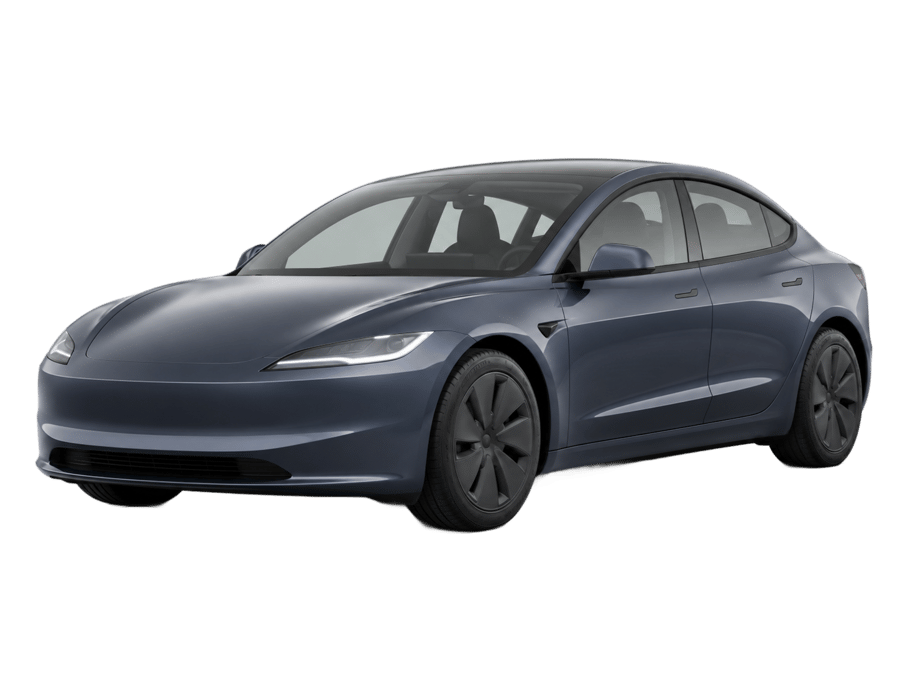
592 consumer-submitted complaints on record for the 2019 Tesla Model 3, grouped by component category.
Buyer interpretation
Complaint records are most useful when they turn into inspection points, seller questions, and comparison checks against nearby model years.
592 consumer-submitted complaints are matched to this model year. Treat the count as a research signal, then read the actual summaries for repeated symptoms.
The most common categories are forward collision avoidance, suspension, unknown or other. Use those categories as a test-drive checklist instead of judging the vehicle from the total count alone.
Enriched records include 58 crash reports, 5 fire reports, 19 injury reports, and 3 fatality reports. These fields come from complaint records and should be read in context.
Mileage is available on 134 complaints, with an average reported failure mileage of 21,753 miles. Compare that with the mileage on the listing.
Build a buyer checklist to turn these issues into questions and inspection points.
592 total complaints on record
| Date | Component | Summary | Severity | Mileage |
|---|---|---|---|---|
| Jul 2026 | ELECTRICAL SYSTEM,AIR BAGS,SEATS | I am getting an electrical fault which has disabled my front passenger seat airbags. They need to replace the wiring, which means they also now need to replace the passenger airbag itself because wiring has changed and the old airbag is not compatible with the new wiring. Replace Occupant Classification System (OCS) of Front Passenger Seat while Servicing Subcomponents Update Front Passenger Airbag to Maintain Compatibility with Front Passenger Seat I had this same error 4 months ago and it ended up shorting out the entire electrical system, which disabled autosteer and eventually completely disabled power steering which made the car unusable. Tesla service center called it a water intrusion problem and had to replace the entire front electrical harness system and steering rack costing $4500. Now the problem has resurfaced and I'm afraid I might lose power steering again which is extremely dangerous and could happen any time, in addition to my airbags potentially not deploying. | Crash: No Fire: No | Unknown |
| Jul 2026 | SUSPENSION,STRUCTURE | Summary of the Problem Rear subframe assembly and multiple rear suspension links required full replacement due to failure/wear at approximately 51,890 miles, on a vehicle with no history of collision or accident damage. Tesla diagnosed the issue as an interior rattle/squeak reproducible over bumpy roads and speed bumps, which led to replacement of the rear subframe and nearly the entire rear suspension link set. Total repair cost was approximately $7,667.65, entirely out of pocket, as Tesla stated no recall applies to this VIN. Full Description (detailed narrative field) In December 2025, I began noticing a rattling/squeaking noise from the rear of my 2019 Tesla Model 3, reproducible on bumpy roads, speed bumps, and rail tracks. The vehicle has never been in an accident and has no history of collision damage. I brought the vehicle to Tesla Service (Fremont, CA) on 07-Jan-2026 at 51,890 miles. Tesla's diagnosis found it necessary to replace: The rear subframe assembly Rear toe link assemblies (left and right) Rear upper fore link assemblies (left and right) Rear lower fore link assemblies (left and right) Rear upper aft link assemblies (left and right) Front lower compliance links (left and right) Front lower lateral links (pair) A four-wheel alignment This amounted to nearly a full rear (and partial front) suspension rebuild, at a cost of $6,843.34 for this job alone, and $7,667.65 total, entirely at my expense. Tesla confirmed there is no open recall covering this VIN or this failure. I am concerned this represents a premature structural/suspension component failure unrelated to accident damage or normal wear, at a mileage (51,890) that suggests a potential defect in the subframe or suspension hardware/corrosion resistance for this model year, rather than an isolated wear item. I am filing this complaint so NHTSA can evaluate whether this is part of a broader pattern for 2019 Model 3 vehicles. | Crash: No Fire: No | Unknown |
| Jun 2026 | AIR BAGS,SEAT BELTS,SEATS | It was raining and my passenger got in the car (slightly damp). When he sat down, I reveived an error message on the screen saying "Front passenger safety restraint system issue". The airbag light is red indicating that it won't work for my passenger. You should be able to get into a car wet without your airbag no longer working. My understanding is that this is a common problem. Tesla wants > $1000 to replace the seat sensor + requires me to pay to have my airbag replaced so the part matches the sensor. According to Tesla Service Bulletin SB-23-20-002, the new style of seat sensor is strictly incompatible with the older style of airbag (known as a "Full Suppression" airbag). $182 (Diagnostic Fee) $475 (OCS Replacement) $318 (Airbag Update) + Labor + Tax The internet is full of reports of this issue. Just google "Front passenger safety restraint system issue". I do not have an invoice for the repair yet. Tesla's service center's first available appt is in 25 days. This means I have to go 25 days without a passenger in my front seat. | Crash: No Fire: No | Unknown |
| Jun 2026 | FORWARD COLLISION AVOIDANCE | I was using Full self driving (FSD), but I notice the autopilot gets "impatient" when (correctly) stopped for a "long" period of time (~2 minutes), but will then try to proceed in dangerous conditions. 1. I had FSD engaged while waiting to make an uncontrolled left turn. The street I'm turning onto is busy, so both lanes are going at a steady pace. After about 2 minutes of waiting, the autopilot decided to make the left turn while BOTH directions had cars approaching. It turned towards a motorcyclist (which might be why it thought the lane was "empty"), and cut off a rather large car behind the motorcycle which almost caused a collision. I was honked from both sides (rightfully so) and put in a very dangerous position as my car was now stopped in the middle of the row of both lanes. 2. I was at a red light intersection with no traffic coming from either side with FSD engaged. After about 2 minutes of waiting, the car tried to go on its own while the light was still red. After manually stopping the autopilot, the light naturally turned green a few seconds later. | Crash: No Fire: No | Unknown |
| Jun 2026 | AIR BAGS,SEAT BELTS | Our seatbelts and airbags required replacement as Tesla stated safety equipment on a Tesla is only guaranteed until 60,000 miles and after that they often need repairs. It was quite expensive. The seatbelts and airbags total cost was $1296.40 and already the Tesla says the front passenger airbag needs to be replaced again. | Crash: No Fire: No | Unknown |
| May 2026 | SUSPENSION | these cars have a defective control arm system and they are prone to messing up over and over, they have replacement revisions but try to charge you for labor and parts if youre out of warranty even though they know the parts were a problem and revised them. Tesla does nothing to help you and will even try to charge you $200 just to diagnose the issue. | Crash: No Fire: No | Unknown |
| May 2026 | STRUCTURE | Component: Exterior Door Handle (Front Passenger) Incident Description: A latent manufacturing defect resulted in the structural delamination of the interior chrome plating on the front passenger door handle. This failure occurred after the last use of the handle, creating a razor-sharp metallic edge that was not visible during a normal approach to the vehicle. Upon contacting the handle to open the door, a passenger sustained a deep laceration from this jagged metallic blade. Safety Hazard: The defect transforms a primary vehicle touchpoint into a concealed cutting hazard. The chrome skin peels and curls into a sharp edge without warning or visible signs of wear, posing an ongoing risk of serious physical injury to any occupant. Manufacturer Response: Tesla Service (Los Gatos) was provided with photographic evidence of the razor edge and the resulting injury. While acknowledging the injury, Tesla refused a safety-based "goodwill" repair, citing the vehicle’s age (2019) and the absence of a formal recall. Tesla further attempted to attribute this structural material failure to cleaning products, despite the vehicle being garage-kept and maintained only with pH-neutral enthusiast-grade soaps. Tesla has since refused further discussion. Request: This defect poses an ongoing risk of serious physical injury to any occupant using the handles. I am reporting this to assist in identifying a trend of material failure in 2017–2020 Model 3 chrome door handles. | Crash: No Fire: No Injuries: 1 Medical attention | Unknown |
| May 2026 | FORWARD COLLISION AVOIDANCE,LANE DEPARTURE | Tesla FSD on HW3 vehicles has become very unstable. Users complain the car ping pongs within the lane and occasionally will steer onto the left or opposite lane. This seems to have happened after a recent update between Feb/March 2026. Growing reports of the same issue reported on Reddit. Ping pong tesla fsd Sources: r/TeslaFSD, r/TeslaLounge, r/TeslaSupport Tesla FSD Ping Pong Effect Software Updates Recent Updates: Many users have reported that the ping-pong effect started after recent software updates, particularly 2026.8.6 and 2026.14.3. "Yes, this started for me after the update to 2026.8.6 and continued on 2026.8.6.1" HW3 Issues: Some users with Hardware 3 (HW3) have noted that FSD has become unusable due to this effect. "I'm HW3 Software 2026.14.3 FSD Software V12.6.4 Driving on the highway is completely unusable and would result in a crash if I kept it on." Troubleshooting Steps Camera Calibration: Several users have suggested recalibrating the cameras, which can sometimes help. "Try a camera housing cleaning and a camera calibration" DAS Reset: Performing a Driver-Assist System (DAS) reset has also been recommended. "Also reset the DAS" Cleaning Cameras: Ensuring the cameras are clean can improve performance. "Ask SC or mobile service to check camera alignment AND clean the front cameras, and recalibrate cameras." Hardware Issues IMU/Gyroscope: A few users have been told by Tesla service that the issue might be due to a failing gyroscope/IMU in the HW3 Autopilot computer. "The tech told me it might be a failing gyroscope/IMU inside the HW3 Autopilot computer." HW3 Replacement: Replacing the HW3 computer can be costly, and some users are considering waiting for a HW4 retrofit. "Their solution is to replace the entire HW3 computer — quoted around $2,500–$3,000." User Experiences Ping-Ponging on Highways: Many users have reported the ping-pong effect specifically on highways. "While using FSD on higher speed interstates (multiple) my car acts like a | Crash: No Fire: No | Unknown |
| May 2026 | ELECTRICAL SYSTEM | The contact owns a 2019 Tesla Model 3. The contact stated that while the rear seat warmer was active, a hole had burned through the seat due to the heat coming from the seat warmer. The contact stated that a blanket was placed over the seat which caused the blanket to melt and fuse into the seat. As a result of the failure, the contact had to tear apart the back of the seat where the failure occurred. The contact spoke to a Tesla service technician who gave the contact an estimate for the repair. The vehicle was not repaired. The failure mileage was approximately 78,000. | Crash: No Fire: No | 78,000 |
| May 2026 | UNKNOWN OR OTHER,BACK OVER PREVENTION | There was a failure of a rear camera to detect the proximity of a closed garage door when in reverse in a driveway. The result was hitting the garage door and damaging the garage door as a result. This could be dangerous as there was no warning on the backup camera screen and no audible warning. This was a very expensive repair given the garage door was a unique color and design. | Crash: Yes Fire: No | Unknown |
| May 2026 | AIR BAGS | I am submitting a complaint regarding a “Front Passenger Safety Restraint System Fault” warning that recently appeared on my Tesla vehicle. My vehicle currently has approximately 45,000 miles. This warning indicates a potential issue with the passenger airbag or related restraint system components, which is a critical safety feature. A malfunction in this system raises serious concerns about whether the passenger airbag would deploy properly in the event of a crash. I contacted Tesla service, and I was informed that the repair would cost over $1,500 out of pocket. Given the relatively low mileage and the importance of the safety system involved, I am concerned that this may represent a broader defect rather than normal wear and tear. Additionally, I have found similar reports online from other Tesla owners experiencing the same warning, which suggests this may not be an isolated incident. A failure or malfunction of the passenger restraint system presents a significant safety risk to occupants. I believe this issue warrants further investigation to determine whether there is a systemic defect affecting Tesla vehicles. I am requesting that NHTSA review this issue and consider whether further action, including a potential recall or manufacturer responsibility, is appropriate. Vehicle details (VIN, model, year, etc.) can be provided as needed. | Crash: No Fire: No | Unknown |
| May 2026 | AIR BAGS,SEAT BELTS | The car was giving me a warning "Front Left Restraint System Fault" (RCM_a021) approximately for 4 months (Jan 2026?) - I brought the car in for service April 2026 and after researching, the technician found that there was a failure in the wiring harness - this is the wiring harness that is responsible for the seatbelt pretension mechanism that activates in a accident. The technician had to replace the harness for the issue to resolve. However, it's my understanding that, had an accident occurred prior to the repair, that the safety system would not have operated properly. | Crash: No Fire: No | Unknown |
| Apr 2026 | SERVICE BRAKES | The Tesla was hit on the passenger side by a Honda civic that ran a red light traveling more than 25 mph The Tesla spun 180 degrees after impact. No airbags deployed. Immediately after impact the Tesla turned on hazard lights. However the vehicle would not come to a stop after pressing on the brakes. After impact the vehicle was coasting backwards at probably less than 5-6 mph. It would not respond to brake presses. Oddly the vehicle had regen braking enabled which should have brought it to a stop, but it didn’t. The vehicle kept coasting backwards as if it was in neutral for about 20 meters until it hit a curb and stopped. BRAKES WOULD NOT WORK!!! | Crash: Yes Fire: No Injuries: 3 Towed Medical attention | Unknown |
| Apr 2026 | AIR BAGS,SEAT BELTS,SEATS | I received a notice onscreen (photo attached) that says "Front passenger safety restraint system issue, Service is required." I did some research online and a number of other owners of 2019 Tesla Model 3 vehicles have received this warning, which involves a malfunction that is a combination of the front passenger seat belt, air bag, and seat sensor for the air bag. A number of people with this year and make have gone to Tesla, and Tesla service workers have said "this a known issue" for this year and make. Since this issue involves a number of safety components, and is a known issue, Tesla should be required to fix this as a product defect recall. Instead, they quoted multiple owners, including myself, approximately $2,000 to fix. | Crash: No Fire: No | Unknown |
| Apr 2026 | VEHICLE SPEED CONTROL | The contact owns a 2019 Tesla Model 3. The contact stated that while the vehicle was stopped at a residential gate, the vehicle unexpectedly accelerated. There was no warning light illuminated. The vehicle was towed to a private residence. No warning light was illuminated. The vehicle was not repaired. The manufacturer was notified of the failure. The approximate failure mileage was 80,000. | Crash: No Fire: No Towed | 80,000 |
| Apr 2026 | STRUCTURE | The chrome lamination/sticker is peeling from the underside of the door handles. This peeling causes an extremely sharp edge that cut my finger. This issue is noted rather constantly over the internet. The sharp edge is hidden by the retracting mechanism of the door handles, and so you don’t see it until you grab it and cut yourself. | Crash: No Fire: No Injuries: 1 Medical attention | Unknown |
| Apr 2026 | SEAT BELTS,SEATS | An error message appears every time my husband drives. Whenever he moves the driver seat backwards, “Front left safety restraint system issue” message appears on the display screen. | Crash: No Fire: No | Unknown |
| Apr 2026 | LANE DEPARTURE,FORWARD COLLISION AVOIDANCE | I was involved in a collision while driving my 2019 Tesla Model 3. The incident occurred on April 2nd 2026 in [XXX] Prior to the collision, the vehicle was operating normally The crash resulted in damage to the front driver-side of the vehicle, including a destroyed headlight and body panel damage. At the time of the incident, weather and traffic was light and normal. The vehicle was set and supposed to head straight when suddenly at the intersection it jerked right and headed straight into another vehicle. I attempted to take control but was unable to due to resistance on the wheel and how quickly the incident occurred. There was no warning or emergency braking which should've also been expected from my tesla. I am submitting this report to document a potential safety concern and request review. INFORMATION REDACTED PURSUANT TO THE FREEDOM OF INFORMATION ACT (FOIA), 5 U.S.C. 552(B)(6) | Crash: Yes Fire: No Towed | Unknown |
| Mar 2026 | SUSPENSION | Suspensions. I know there’s been known defects with the suspensions and they’ve only recall 422 vehicles so far (2018-2019 Tesla model 3, I feel more vehicles in those years are affected. | Crash: No Fire: No | Unknown |
| Mar 2026 | UNKNOWN OR OTHER | Poorly sealed front monitoring cameras. I know it’s poorly sealed on many Tesla vehicles and my own. Allowing fluid and dust to enter to block camera view and use. | Crash: No Fire: No | Unknown |
| Mar 2026 | UNKNOWN OR OTHER | Chrome peeling on the underside of multiple door handles has created razor sharp edges that slice fingers open. Online it appears to happen with Tesla 2018-2020 models. | Crash: No Fire: No | Unknown |
| Feb 2026 | SUSPENSION | While driving, the front driver-side suspension collapsed due to a complete detachment of the front lower lateral link. The fastener (bolt) backed out entirely and fell onto the road/under-shield. This matches the failure mode described in NHTSA Recall 21V-835, although Tesla has previously claimed my specific VIN was not included. The failure caused an immediate loss of steering control and structural instability. I am reporting this as a potential 'recall bypass' where the defect exists outside the currently identified recall population | Crash: No Fire: No | Unknown |
| Feb 2026 | BACK OVER PREVENTION | The contact owns a 2019 Tesla Model 3. The contact stated that while the vehicle was parked, the rearview camera became inoperable while opening the trunk. The message “Camera Not Available” was displayed. The contact stated that the rearview camera functionality returned after opening and closing the trunk several times. The vehicle was taken to the dealer, where it was determined that the rearview camera wiring harness had failed and needed to be replaced. The vehicle was not repaired. The contact informed the dealer that the vehicle had previously been associated with a recall related to the failure; however, the dealer did not repair the vehicle under the recall. The manufacturer was made aware of the failure. The approximate failure mileage was 81,952. | Crash: No Fire: No | 81,952 |
| Feb 2026 | SUSPENSION | At approximately 30,000 miles, the front left suspension lateral link/control arm separated while driving due to a missing mounting fastener (bolt), resulting in sudden steering instability and abnormal front wheel movement. Vehicle handling became unpredictable and felt unsafe to control, creating risk of loss of steering control. I stopped driving immediately. There was no collision, curb strike, pothole, or road hazard at the time of the incident. No warning lights or messages appeared prior to the failure; it occurred suddenly without advance notice. Tesla Service inspected and confirmed the separation and missing fastener. Suspension components and the front subframe assembly were replaced —4,400 out of pocket. Tesla documented they could not make a formal cause determination. The recovered bolt is intact and available for inspection upon request. Insurance also reviewed the incident and classified it as mechanical rather than collision-related. Because this involves a safety-critical steering/suspension fastener failure without warning, I am submitting this report for safety tracking. I am aware of similar owner reports describing suspension fastener or lateral link separation on this vehicle generation in case this reflects a broader pattern. | Crash: No Fire: No | Unknown |
| Feb 2026 | STEERING,FORWARD COLLISION AVOIDANCE | What component or system failed or malfunctioned, and is it available for inspection upon request? The steering system failed due to corrosion and water ingress affecting both the steering rack and the associated steering wiring harness. These components were replaced by Tesla and are no longer available for inspection. How was your safety or the safety of others put at risk? The steering system is a safety-critical component. Corrosion and water intrusion created a risk of reduced or sudden loss of steering assist while driving, which could lead to loss of vehicle control and increase the risk of a crash. Has the problem been reproduced or confirmed by a dealer or independent service center? Yes. Tesla service confirmed water ingress and corrosion affecting the steering rack and wiring harness and performed a full replacement of both components. Has the vehicle or component been inspected by the manufacturer, police, insurance representatives or others? Yes. The vehicle and steering components were inspected by Tesla at a Tesla Service Center, which identified water ingress and corrosion as the cause of failure. Were there any warning lamps, messages or other symptoms of the problem prior to the failure, and when did they first appear? Yes. The vehicle displayed steering-related warning messages prior to repair, including reduced steering assist alerts, which prompted inspection by Tesla service. The warnings appeared shortly before the repair was performed. | Crash: No Fire: No | Unknown |