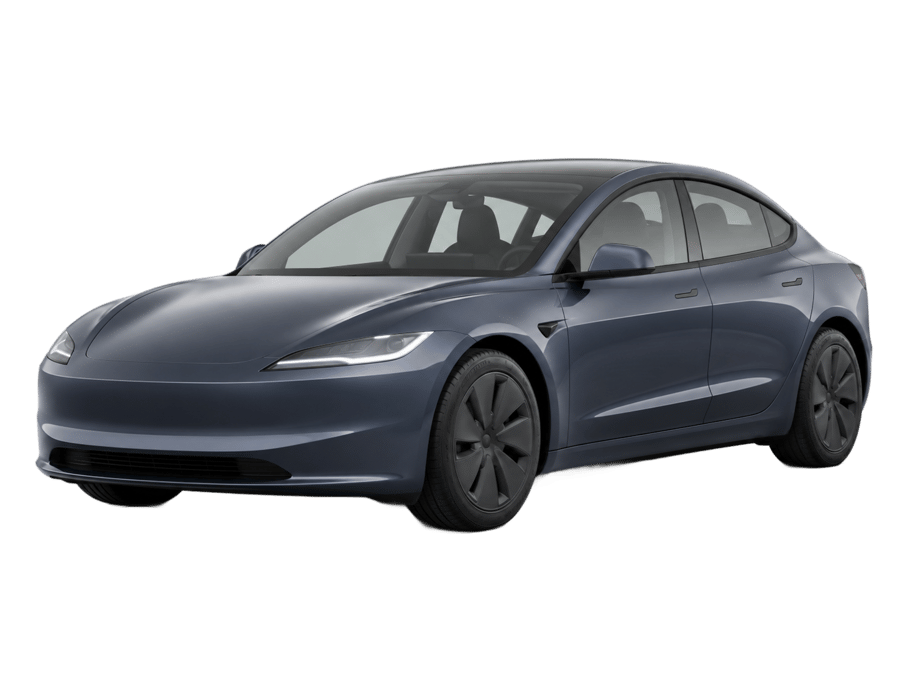
Complaint volume
592 consumer-submitted complaints are matched to this model year. Treat the count as a research signal, then read the actual summaries for repeated symptoms.
Complaint records
592 consumer-submitted complaints on record for the 2019 Tesla Model 3, grouped by component category.
Buyer interpretation
Complaint records are most useful when they turn into inspection points, seller questions, and comparison checks against nearby model years.
592 consumer-submitted complaints are matched to this model year. Treat the count as a research signal, then read the actual summaries for repeated symptoms.
The most common categories are suspension, forward collision avoidance, air bags. Use those categories as a test-drive checklist instead of judging the vehicle from the total count alone.
Enriched records include 58 crash reports, 5 fire reports, 19 injury reports, and 3 fatality reports. These fields come from complaint records and should be read in context.
Mileage is available on 134 complaints, with an average reported failure mileage of 21,753 miles. Compare that with the mileage on the listing.
Build a buyer checklist to turn these issues into questions and inspection points.
592 total complaints on record
| Date | Component | Summary | Severity | Mileage |
|---|---|---|---|---|
| Aug 2025 | AIR BAGS,SEAT BELTS,SEATS | Passenger Restraint System Fault causing the system not to sense the presence of front passengers. This could possibly lead to safety systems for the passenger to not work in the event of a crash. | Crash: No Fire: No | Unknown |
| Aug 2025 | SUSPENSION,AIR BAGS | The contact owns a 2019 Tesla Model 3. The contact stated that the passenger's side air bag warning light was illuminated. The vehicle was taken to the Tesla Service Center, where it was diagnosed and determined that the passenger's side seat sensor had failed. The seat was replaced with a new seat; however, the air bag warning illuminated after the repair. The vehicle was taken back to the service center, where the contact was informed that the technician had failed to install the module connected to the air bag during the previous repair. The seat replacement was performed a second time; however, the failure persisted, and the contact noticed that the seat was not installed correctly. The contact requested for another service through the Tesla App, but the request was denied. The contact was informed that the vehicle was repaired, and the notification of the failure was due to a glitch in the system. Additionally, while driving at various speeds, there was an abnormal creaking sound coming from the front suspension. The contact stated that the sound became louder while turning. An appointment was scheduled with the Tesla Service Center. The vehicle was not diagnosed or repaired. The manufacturer was notified of the failure. The failure mileage was unknown. | Crash: No Fire: No | Unknown |
| Jul 2025 | STEERING,SUSPENSION,SERVICE BRAKES | The vehicle’s front suspension began making loud squeaking noises and felt unstable while driving, especially when turning or going over uneven surfaces. At times, the vehicle does not make a proper turn and almost feels like it loses grip, which is extremely unsafe. I brought the vehicle to a Tesla service center. After inspection, Tesla provided a service estimate and documentation confirming the failure of the front lower lateral links — the exact part and condition described in NHTSA Safety Recalls 21V835000 and 23V235000, which cover defective front suspension lateral link fasteners on this vehicle make, model, and year. Despite the clear match, Tesla did not recognize the repair as recall-related and categorized it as a customer-pay service. This raises concern that some affected vehicles are being excluded from proper recall coverage, despite experiencing the same safety defects. There were no warning lights or alerts prior to the failure. The issue was confirmed by Tesla and the part is available for inspection upon request. | Crash: No Fire: No | Unknown |
| Jul 2025 | BACK OVER PREVENTION: SENSING SYSTEM: CAMERA | My vehicle was working fine when Tesla issued an over-the-air software update recently. The next day, my backup camera was not working. The back up camera is required for this vehicle under FMVSS 111 and is otherwise essential for this vehicle due to limited rear vision through the rear window. In addition, GPS/navigation stopped working, the windshield wipers did not function on certain settings and the display was at times not legible, presumably because it believed it was a different time of day and was in the wrong mode. There are likely additional issues that have not revealed themselves yet. I took the vehicle to the local Tesla Service Center on July 25, 2025. They confirmed the reported issues and said it was a problem with the software update, which they would perform onsite while I waited. The service center personnel also stated this was not a firmware issue or anything to do with my car and that it was just the software update. After a few hours, the personnel reported they could not get the update to install and asked that I bring the vehicle back the following week for further diagnostics. Before I brought the vehicle back, I was sent an invoice for approximately $2,300 for replacement of on vehicle's computer. I brought the vehicle back today, July 29, 2025, and asked them to perform the onsite diagnostics they wanted me to bring the vehicle back in for and did not agree to pay for the computer replacement. I also informed the Tesla personnel that, at a minimum, the the back up camera failure is a safety related issued covered for this vehicle under FMVSS 111 and that they were not permitted to charge me for fixing it. The vehicle warranty period recently expired but it is well within the 10-year date of manufacture. Other issues with the vehicle may also qualify as safety related, but the back up camera is clearly one - Tesla recently issued a recall for this very same problem impacting the Model 3, but the recall did not include my model year. | Crash: No Fire: No | Unknown |
| Jul 2025 | SEATS | The rear camera on my Tesla intermittently fails when shifting into reverse. Additionally, the rear trunk will not open using the in-car release button, mobile app, or key fob. A warning appears stating the function will return on the next drive, but I am often forced to use the emergency release to access the trunk. I believe this may be related to a prior recall involving the rear trunk harness, but when checking my VIN, no active recalls appear. Tesla service also reports no recalls on file. I am also receiving an intermittent fault message regarding the front passenger safety restraint system, stating that service is required. This is a serious concern, as a malfunctioning restraint system may fail to protect occupants in the event of a crash. Tesla has given me an estimate of $225.00 to address the safety restraint fault and $495.27 to repair the trunk/rear camera issues, with a total cost of $739.60 including taxes. I believe that safety-related repairs, especially those involving airbag and restraint systems, should be covered by the manufacturer and not passed on to the vehicle owner when not due to misuse or damage. The passenger restraint fault poses a direct safety hazard in a crash. The rear camera issue, while less severe, still impacts safety, as the camera provides a wider and clearer view than mirrors alone. I am asking NHTSA to review whether these issues are safety defects and whether they may be connected to known problems or recalls not applied to my vehicle. | Crash: No Fire: No | Unknown |
| Jul 2025 | SEAT BELTS | There has been a consistent warning "safety restraint system fault rcm_a021". My initial investigation pin pointed to the harness pinched by the seat. Tesla service center diagnosed and required to replace FIRST ROW SEAT HARNESS ASSEMBLY - LEFT HAND (see attached service estimate). The safety restraint system related issue put every Tesla's driver at risk and thus should be recalled. | Crash: No Fire: No | Unknown |
| Jul 2025 | SEAT BELTS | Seatbelt pre-tension system fault (RCM_a021). Can be cleared by adjusting seats sometimes, but remains constant at my current seat configuration. | Crash: No Fire: No | Unknown |
| Jul 2025 | AIR BAGS | Tesla wants >$750 to "fix" a bug it sold in the car, & won't turn off the beep that happens every 5 minutes of driving, telling us that their sensor is defective. They want us to pay to tear the seat apart so they can replace the entire sensor. This error is happening in most of their vehicles (at least 2019 Model 3's). It's probably a Malfunctioning Occupant Weight Sensor (which determines if someone is in the seat and dictates whether the airbag should deploy). This fault triggers the painful loud beep/warning every 5 minutes of driving, & may disable the airbag in a collision. Tesla's systems rely heavily on software, & it may be a glitch or bug, but they say they can't fix it w/o making us pay to take out the seats. Or it may be Wiring and Connection Issues. (We have just 35,000 miles on this vehicle.) | Crash: No Fire: No | Unknown |
| Jul 2025 | FORWARD COLLISION AVOIDANCE: AUTOMATIC EMERGENCY BRAKING | [XXX]- [XXX]am. Trying to park in YMCA located in camp hill PA. Took soft right turn to park. Car accelerated instead of recognizing break, which I applied when I see it accelerating. Then I left break so it can take emergency break that didn’t happened it keep going and cross over the parking curb about six Torah inch high and went in a ditch. I did not hurt but car front damaged. Tesla was informed and they have the log of the time but told they don’t see any issue. My insurance is paying all the expenses. This was the third incident where car did not tool emergency break itself or recognized the break. I did reported last incident to Tesla. It only happened three times in last six years. INFORMATION REDACTED PURSUANT TO THE FREEDOM OF INFORMATION ACT (FOIA), 5 U.S.C. 552(B)(6) | Crash: No Fire: No | Unknown |
| Jun 2025 | FORWARD COLLISION AVOIDANCE: AUTOMATIC EMERGENCY BRAKING | * The AEB engaged when it shouldn't have. Yes. * Yes * No. * Yes, Tesla remotely told me that the error codes in my service menu had nothing to do with the AEB engaging when it wasn't supposed to. The problem has been reported to Tesla. * None. On [XXX] a car stopped suddenly in front of me and my AEB engaged when it shouldn't have. My car is a Model 3 Performance and it can stop much faster than most cars. The car behind me came inches from hitting me and my dog and myself were thrown violently forward. This is a *MAJOR* safety hazard and could have caused an accident and has caused accidents in other cases. [XXX] This thread has videos of the incident. There was around 20 feet between my car and the car in front of me when the AEB stopped my car. My foot was already on the brake and I was in the process of stopping at a reasonable rate when the AEB suddenly engaged. I could feel the ABS engaging. This happened another time about a month ago. A white box van two cars in front of me slowed down and turned right and the AEB engaged even though there was no need for it. Tesla has the ability to turn off the AEB but you have to do it each time you drive. Please require Tesla to make the AEB on/off choice sticky so you don't have to turn it off each time you drive. Also please make Tesla fix their software or disable AEB on their cars. Recent accident where AEB caused an accident. [XXX] Other incidents where AEB engaged almost causing an accident or caused an accident: [XXX] [XXX] Please do Google searches to find the rest. Thanks! INFORMATION REDACTED PURSUANT TO THE FREEDOM OF INFORMATION ACT (FOIA), 5 U.S.C. 552(B)(6) | Crash: No Fire: No | Unknown |
| Jun 2025 | AIR BAGS | We have recently incurred an alert that comes on as it pleases and has no rhyme or reason for popping up with passenger airbag restraint issue. Tesla is wanting to charge us over $900 to fix this issue yet this isn’t an us issue it’s a them issue. They installed a faulty airbag sensor which now requires the replacement of sensor, airbag, and harness as well as a software update. I have seen thousands of complaints online in regards to the same error code. This is something Tesla needs to take ownership for. This isn’t a wear and tear item, these airbags have never been deployed, so why are we being punished! Recall these cars they are a hazard | Crash: No Fire: No | Unknown |
| Jun 2025 | AIR BAGS | Tesla has just informed me about a safety concern on the 2019 M3 They explained that despite of the car not giving me a notification, it is showing on their end that my car has an airbag safety concern and by law they have to tell me. So I asked why this recall is not being addressed and fixed by Tesla. They told me that is my choice and if I choose to be safe I have to pay. This is not acceptable. Recalls that fail the nhtsa standards need to be accounted and addressed by the manufacturer. Please assist I find interesting that I didn’t receive a notification but they have and we all know that notifications can be manipulated by Tesla. | Crash: No Fire: No | Unknown |
| May 2025 | FORWARD COLLISION AVOIDANCE | For the last few weeks while driving, my car will automatically put itself into FSD with out me authorization. Mean I will we driving and the car will just put itself into FSD. This has happened about 15-20 times over the last 2-3 weeks. Tesla wants to clean the front camera? Which makes no sense and charge me for it. If the front camera was obstructed, like in the case of fog. The car would alert me that it could not due to being obstructed, which isnt the case. | Crash: No Fire: No | Unknown |
| May 2025 | AIR BAGS | Started getting intermittent RCM_a056 faults stating "front passenger safety restraint system fault". Apparently this can be a safety issue as the airbag may not deploy and seems to be a common issue reported by owners. Tesla is charging owners to fix this safety issue, which in some cases is completely replacing the full seat and airbags. Instead, this should be covered under recall or bulletin fix. | Crash: No Fire: No | Unknown |
| May 2025 | AIR BAGS | Around February or March of 2025, my Tesla Model 3 (year 2019) began to flag an electronic warning for a passenger occupancy sear sensor and recommended immediate service. The sensor and warning did not stay on and would only appear intermittently. I still decided to service the vehicle and took the car to the manufacturer service center closest to me in May 2025. I was quoted for $500-$600 to repair the sensors. Later the quote was updated to over $1,200 because the new sensor was “not compatible” with the old air bag. It seems like Tesla intentionally or knowing used an updated sensor either because the old sensor was known to have issues or because of refreshed models but then did not ensure they used a part that worked with their existing model cars. This seems like a major safety issue and requires customers to pay twice their expected repair cost in order to ensure basic required safety functions work on a 6 year old car. I clarified with the service advisor that if I did not replace the airbag that they would not deploy in a collision and they affirmed my understanding which forces me to have to replace the airbags on a 6 year old vehicle for no reason other than Tesla’s poor safety planning. | Crash: No Fire: No | Unknown |
| May 2025 | UNKNOWN OR OTHER | RCM_a021 Front Left safety pretensioner becomes loose after moving seats, tesla refuses to fix this safety issue because there is no recall for this, regardless of how many people complain about this issue being a common problem in 2018-2020 model 3 Tesla | Crash: No Fire: No | Unknown |
| May 2025 | SERVICE BRAKES | Phantom braking (as it's referred to by experts) happened to me twice on the highway using Traffic-Aware-Cruise-Control. Very scary. I was on cruise control going 60 mph when suddenly my car braked suddenly and inappropriately, losing at least 20 mph in a split second before I was able to slam on the accelerator and prevent an accident (rear-end collision). This happened TWICE in the course of 5 minutes on the same highway! There was no obstruction in the road, no cars moving into my lane, nothing but normal road conditions, when it occurred. From my research, this is a huge problem with Tesla vehicles that thousands of individuals are loudly complaining about online and now in court cases in the country. I see there are thousands of reports to your organization about this, but it says you have only complaints from 2021 and later years. However, I have a 2019 and it's happening to me. And it's happening to every single model year out there, just from researching and talking to Tesla owners. This is a major safety hazard, plain and simple. I was inches of being in a rear-end collision, and drivers behind me are extremely upset and vengeful on the road after an incident like this (understandably!). Because of this I fear for my safety and well-being on the road using Tesla's cruise control features. Very disappointing. Above for the ADAS option, I wasn't able to select 2 options, but "automatic emergency braking" is also applicable here as that is what happened. Somehow Teslas are falsely activating emergency braking during cruise control! | Crash: No Fire: No | Unknown |
| May 2025 | SERVICE BRAKES | The brake lines have completely failed on my 2019 Tesla Model 3 due to rust / corrosion in the drivers side front wheel well. Fortunately failure was caught before an accident occurred. Had I not caught this failure, at highway speed this could have resulted in a very bad accident putting me and my family in danger. After the failure occurred the vehicle indicated it had low brake fluid and that it should be taken to a Tesla service center. I had two different Tesla service centers review the brake line failure, and inspect the remaining brake lines. Both service centers denied that the brake lines were covered under warranty. After connecting the second service center with a Tesla shop in the New England region the Tesla service center agreed to cover replacement under good will. While this is a positive outcome the failure of the brake lines has also identified massive corrosion issues on the battery, subframes, and bolts holding critical components together. I've been informed that removal of the sub-frames and battery may result in the battery being deemed faulty. This is due to corrosion found at the edges of the battery which may result in failure of the required battery pressure test. If the battery is faulty it will need to be replaced and is also not considered under warranty. The estimate for replacement is $23k which would mechanically total this vehicle. Battery corrosion is another safety issue, since the battery is designed to be sealed removing moisture from being able to penetrate the battery cells. Corrosion both on the battery pack and battery cells could contribute to failure of the battery pack while driving. | Crash: No Fire: No | Unknown |
| Apr 2025 | SEAT BELTS | The front passenger seat’s OCS required a service bulletin application, involving a retrofit of the seat belt reminder sensor and component replacement, confirmed by a Tesla technician. The repair likely falls under TSB SB-19-20-003 (2017-2019 Model 3), addressing OCS electrical interference causing airbag indicator issues, which can affect seat belt reminder functionality. The TSB involves retrofitting parts My 2019 Model 3 (39,140 miles) needs an OCS repair per SB-19-20-003, a known safety issue from 2019 affecting airbags and seat belts (FMVSS 208). Since it’s a manufacturing defect and a safety risk this should be under a recall. | Crash: No Fire: No | Unknown |
| Mar 2025 | AIR BAGS | The contact owns a 2019 Tesla Model 3. The contact stated that while driving on several occasions at various speeds, the air bags warning light illuminated and the message "Front Passenger Safety Restraint Fault - Service Required" was displayed. The vehicle was not diagnosed or repaired. The vehicle was taken to the dealer where it was diagnosed that the front passenger seat occupancy system had an internal fault and the bolts, knee and passenger air bag bolts, bolt mat, passenger air bag, harness retaining clip, front row seat harness assembly, right hand, front row seat belt reminder sensor box, front row occupancy sensor needed to be replaced. The vehicle was repaired. The manufacturer was not notified of the failure. The failure mileage was unknown. | Crash: No Fire: No | Unknown |
| Mar 2025 | VISIBILITY/WIPER | Back window spontaneously cracked. Much of the back roof is this glass, thus I am concerned that in an accident will that tempered glass hold up | Crash: No Fire: No | Unknown |
| Mar 2025 | AIR BAGS | A warning alert message popped up stating “RCM_a056 Front passenger safety restraint system fault”. I contacted Tesla dealer and they said at is out of warranty after 5 years and my car is 6 years old. On searching internet I noticed several people have same issue. Tesla said there is no recall at this time. Since this is a safety critical system which affects the air bag deployment, can NHTSA investigate and see if this can become a mandatory recall. Tesla are quoting $1130 for repair! | Crash: No Fire: No | Unknown |
| Mar 2025 | SEATS | Passenger safety restraint system fault is occurring and Tesla service has noted this is a very common issue on the vehicles. It poses a risk to whoever is sitting in the seat since safety systems may not work or deploy airbags. | Crash: No Fire: No | Unknown |
| Feb 2025 | VEHICLE SPEED CONTROL | When cruise control or self-driving systems are engaged, there have been numerous times when the automatic emergency braking system mistakenly slowed the car suddenly. At 70+ mph, this is incredibly dangerous. The AEBS apparently sees shadows as dangers. Fortunately, there has never been an instance when another vehicle has been close behind. | Crash: No Fire: No | Unknown |
| Feb 2025 | AIR BAGS | Passenger safety restraint system fault warning keeps alerting on the display screen. I contacted Tesla about the situation and they want to charge me for the fix. This is a safety issue and not a mechanical issue | Crash: No Fire: No | Unknown |