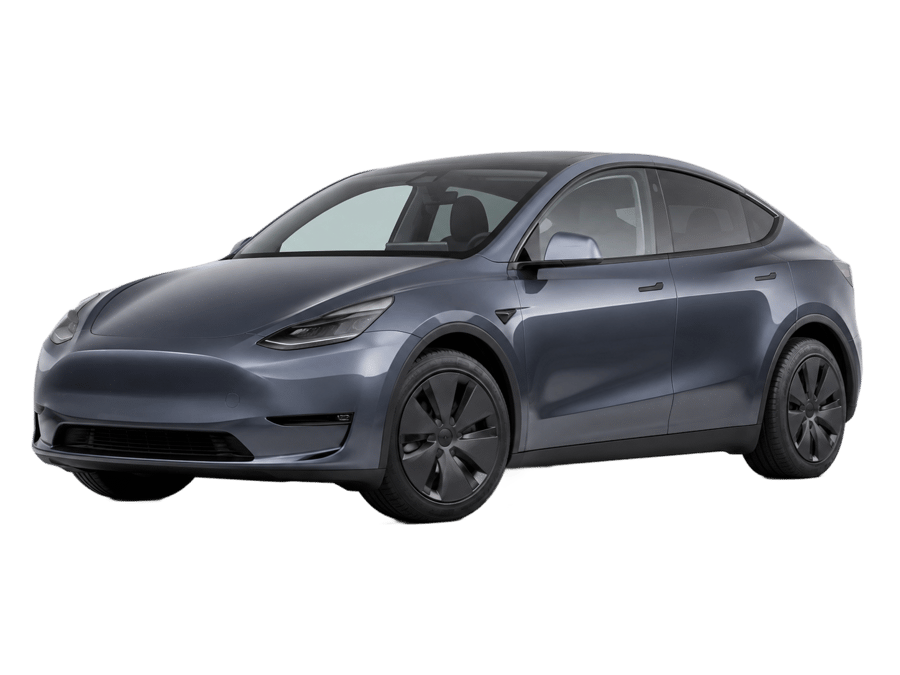
Complaint volume
279 consumer-submitted complaints are matched to this model year. Treat the count as a research signal, then read the actual summaries for repeated symptoms.
Complaint records
279 consumer-submitted complaints on record for the 2026 Tesla Model Y, grouped by component category.
Buyer interpretation
Complaint records are most useful when they turn into inspection points, seller questions, and comparison checks against nearby model years.
279 consumer-submitted complaints are matched to this model year. Treat the count as a research signal, then read the actual summaries for repeated symptoms.
The most common categories are unknown or other, electrical system, forward collision avoidance. Use those categories as a test-drive checklist instead of judging the vehicle from the total count alone.
Enriched records include 53 crash reports, 1 fire report, 13 injury reports, and 0 fatality reports. These fields come from complaint records and should be read in context.
Mileage is available on 18 complaints, with an average reported failure mileage of 7,652 miles. Compare that with the mileage on the listing.
Build a buyer checklist to turn these issues into questions and inspection points.
279 total complaints on record
| Date | Component | Summary | Severity | Mileage |
|---|---|---|---|---|
| May 2026 | FORWARD COLLISION AVOIDANCE: WARNINGS | I PICKED UP BRAND NE TESLA 2026 MODEL Y AFTER TEST DRIVE I WAS TRYING TO PARK THE CAR IN THE GARAGE. THE CAR SUDDENLY ACCELERATED AND HIT CABINETS IN GARAGE, THE CABINETS CRASHED AND BROKE THE ENTRY DOOR AND THE DEBRIS THE THE HEATING AND AC BLOWER UNIT. EXTENSIVE FRONT DAMAGE TO THE CAR FRONT END. NO PERSONAL INJURY. I [XXX] WAS DRIVING MY WIFE WAS IN THE DRIVE WAY. NO PERSONAL INJURY INFORMATION REDACTED PURSUANT TO THE FREEDOM OF INFORMATION ACT (FOIA), 5 U.S.C. 552(B)(6) | Crash: Yes Fire: No | Unknown |
| May 2026 | FORWARD COLLISION AVOIDANCE: WARNINGS | I was using the autopark function in a parking lot, and the vehicle did not detect the shopping cart return rail. As a result, the vehicle struck the rail, causing damage to the hood and front bumper. | Crash: Yes Fire: No | Unknown |
| May 2026 | UNKNOWN OR OTHER | Subject: Safety Concern with Video Evidence (4/28/2026) I am reporting a serious safety concern involving Full Self-Driving (Supervised) on my 2026 Tesla Model Y. Date/Time: April 28, 2026 at approximately 12:48–12:50 PM Location: Soledad Canyon Rd at Golden Oak Rd / Golden Triangle Rd, Santa Clarita, CA While operating in FSD (Supervised), my vehicle approached an active railroad crossing with warning signals engaged and the gate lowered. The vehicle initially stopped appropriately; however, it then proceeded forward onto the tracks while the crossing remained active and a train was approaching. I immediately intervened and reversed the vehicle off the tracks to avoid a potentially dangerous situation. During this maneuver, the railroad gate made contact with the vehicle. I have preserved video footage documenting: * Initial stop at the crossing * Forward movement onto the tracks under FSD * Manual intervention and reverse maneuver * Contact with the railroad gate Following the incident, I observed linear markings across the windshield consistent with contact from the railroad gate arm. While some of the markings appear to be transferable residue, there are remaining visible streaks that have not been fully removed and may indicate surface damage. Photos and videos will not upload | Crash: No Fire: No | Unknown |
| Apr 2026 | SEAT BELTS | Driver’s seatbelt: This issue occurred twice. The first time, the car was parked; when I attempted to pull the seatbelt, it would not extend and instead locked in place. The second time occurred after I summoned the car. Again, I was unable to pull the seatbelt out. Because the vehicle was stopped in the middle of the street, I had to drive without wearing a seatbelt, which felt very unsafe. Middle rear seatbelt: This occurred once. I was initially able to fasten the seatbelt, but when I tried to pull the strap down to loosen it because it was too tight, it retracted and locked. I was unable to extend it again, leaving the belt tight against my neck. This also felt very unsafe. I brought the car to Tesla twice, but they were unable to identify the issue. I showed them a video demonstrating the seatbelt remaining locked while I attempted to pull it, as well as footage showing that I was driving without a seatbelt. No warning lights appeared during any of these incidents. | Crash: No Fire: No | Unknown |
| Apr 2026 | VEHICLE SPEED CONTROL | The contact owns a 2026 Tesla Model Y. The contact stated that while attempting to park the vehicle suddenly lurched forward and crashed into a curb, then the vehicle lunched forward and crashed into a brick wall. The vehicle then erroneously drove in reverse at a high rate of speed and crashed into a second parked vehicle. The contact indicated that after the incident, in order to shut the vehicle off, the doors had to be opened. The contact's foot remained on the brake pedal during the incident. During the crash, the driver sustained a fractured right foot, and the rear center passenger sustained a bruised back. Both injuries later required medical treatment. No police report was taken. The vehicle was later towed to the home. The cause of the failure was not determined. The manufacturer and local dealer were notified of the failure. The failure mileage was 9,440 | Crash: Yes Fire: No Injuries: 2 Towed Medical attention | 9,440 |
| Apr 2026 | STRUCTURE | What component or system failed or malfunctioned, and is it available for inspection upon request? Make/Model: Tesla [Y] Rear Body got significant dent While attempting to reverse into a parking space at a Tesla Supercharger station, the vehicle—operating with Full Self-Driving (FSD) engaged—collided with a stationary pole located behind the designated parking spot. FSD failed to detect the tesla supercharger and tried to park in EVgo charging station despite of plenty of vacant Tesla supercharger spots nearby. No other vehilcle was involved netiher any property damage. We would like to make sure tesla FSD takes full responsibility of damage. as their FSD system malfunctioned. Tesla should bare all charges for repair. | Crash: Yes Fire: No | Unknown |
| Apr 2026 | UNKNOWN OR OTHER | I took delivery of a brand new Tesla Model Y today in Austin, Texas. Within less than two hours of delivery, the vehicle experienced two separate and serious failures while driving. During the first incident, the vehicle suddenly stopped in the middle of the road without any warning while I was driving. The vehicle became completely unresponsive and came to a stop in active traffic. I immediately contacted Tesla service for assistance. The representative advised me not to worry and stated that the vehicle likely came to a safe stop location and that there appeared to be no issue since the system had recovered. I was told the vehicle was safe to continue driving. However, this information did not reflect what actually occurred. The vehicle had stopped in the middle of an active roadway, not in a safe location.After the system temporarily became operable again, I continued driving as instructed. However, during a second drive shortly after, the exact same issue occurred again within approximately 10–15 minutes, this time on a much larger and heavily trafficked road. When the vehicle stopped both times, it became completely electronically controlled and unresponsive. There was no manual way to move or safely reposition the vehicle. I was stranded in the middle of moving traffic on a major road, unable to control or move the car in any way. I felt that my life was in danger due to the inability to regain control or remove the vehicle from traffic. Both incidents occurred on the same day of delivery within a very short time frame, making the vehicle completely unreliable and unsafe to operate. At least one of the incidents occurred while using self-driving features. Due to the repeated failures, the severe safety risk, and the incorrect reassurance provided during the first incident, I no longer feel safe operating this vehicle. I am requesting a buyback or refund rather than repair, as this issue occurred immediately after delivery and represents a critical safety conce | Crash: No Fire: No | Unknown |
| Apr 2026 | STRUCTURE | The contact owns a 2026 Tesla Model Y. The contact stated that while driving at an undisclosed speed, while other vehicles were driving beside the vehicle, or when the wind was blowing, the vehicle unexpectedly moved to the left or right. No warning lights were illuminated. The vehicle was taken to a dealer to be diagnosed, and the contact was informed that the vehicle operated as designed. The vehicle was not repaired. The vehicle was taken back to the dealer, and the contact was informed that the vehicle was operating as designed. The vehicle was not repaired. The vehicle was taken back to a different dealer, and the dealer stated that the vehicle was operating as designed. The manufacturer was made aware of the issue. The failure mileage was approximately 6,000. | Crash: No Fire: No | 6,000 |
| Apr 2026 | UNKNOWN OR OTHER | My 2026 Tesla Model Y front trunk ("frunk"), an Austin, Mar 2026 build, lacks internal lighting & emergency release (unlike 2025 models; the change started Oct 2025). Frunk size/capacity remained unchanged, allowing child up to 4yo to fit & get trapped w/ no escape or signal, esp. in low light. Violates FMVSS 401 (https://www.ecfr.gov/current/title-49/subtitle-B/chapter-V/part-571/subpart-B/section-571.401) which states: "Each passenger car with a trunk compartment must have an automatic or manual release mechanism inside the trunk compartment that unlatches the trunk lid, if the trunk is large enough so that the three-year-old child dummy described in Subpart C of Part 572 can be placed inside the trunk compartment, and the trunk lid can be closed and latched". Request recall/retrofit & investigate Model Y frunk complaints. (See attached picture of 2025 frunk vs 2026 frunk with changed features.) | Crash: No Fire: No | Unknown |
| Apr 2026 | FORWARD COLLISION AVOIDANCE | I have been a user of Tesla's "Full Self Driving" technology for four years. In one of the last major updates, the company removed the ability of the driver to manually set a "cruise control set point" to maintain a safe speed. Instead, they employed a new system with five "drive profiles," which included "sloth," "chill," "standard," "hurry," and "Mad Max." The problem is that only two of those stay anywhere near the speed limit. "Sloth" will go the speed limit, "Chill" is about 2 mph over the speed limit, "Standard" is about 7 mph over the speed limit, "Hurry" is 12 mph over the speed limit, and "Mad Max" is probably 15-17 mph over. Sloth and Chill will remain in the right lane, rarely passing another vehicle, but all the others will include lane changes. And all of these profiles DO NOT MAINTAIN A SAFE FOLLOWING DISTANCE. Users have been complaining about the cars tailgating, sometimes as close as 3 car lengths at 70 mph. However, sometimes conditions necessitate slower speeds...like Work Zones. I live near Denver, and I-70 has a work zone that will be in existence until 2029. The car doesn't recognize the 45 mph speed limit, bouncing back and forth between 45 and 65. FSD must be disengaged completely to follow the 45 mph speed limit. Which brings up the other problem. In many areas, THE SPEED LIMITS ARE WRONG. In Texas, there are areas where the speed limit is 70, and the car thinks it's 55. In New Mexico, the speed limit is 70, but the car thinks it's 60. THERE IS NO SPEED PROFILE THAT WILL MAINTAIN THE LEGAL LIMIT. Tesla also has a mechanism that's supposed to allow users to report problems, but some of these I've been reporting for over three years. They refuse to tell us where we can update the information (Grok says "HERE," Tom Tom, Open Street Maps), and they are NOT fixing the speeds on the maps. | Crash: No Fire: No | Unknown |
| Apr 2026 | LANE DEPARTURE | Lane Departure Aoidane is always enabled for each drive - the car menu states: “Lane Departure Assistance will be reset to Assist on the next drive” - you have to manually go 2 menus and scroll down to the bottom and turn it off every single drive every single transition to Park and drive. The feature is very intolerant. If you swerve around a pothole or a pedestrian or a bicycle, it freaks out and corrects the steering wheel startling the driver and causing a very unsafe situation. I have had several near misses due to this horrible feature. Tesla should design it to be able to be disabled and remember its default state. It’s not a safe feature. It has caused many near accidents and is especially bad in country road driving. The only time he would want such a feature as if the driver is asleep or heavily distracted of which no good driver should be. Tesla has a camera that could detect something like that. This is a safety feature that makes the vehicle significantly less safe. The default for this feature should be disabled for all Teslas. This is a ultra high priority item. It dramatically impacts by driving every day, and I don’t always remember to turn it off until the steering wheel jerks away from me and almost causes an accident!!! This stuff should not be enabled by default!!! | Crash: No Fire: No | Unknown |
| Apr 2026 | SERVICE BRAKES, AIR | The contact owns a 2026 Tesla Model Y. The contact stated while driving using the ADS feature, the vehicle failed to slow down while making a right turn. The contact stated that when the vehicle came to the turn sign, the vehicle failed to yield and continued making the right turn. The contact's vehicle crashed into the rear of the vehicle in front of the contact's vehicle. The contact had to depress the brake pedal to stop the vehicle. No Police Report was filed. No injuries were sustained. The contact later received a warning that the vehicle's cameras needed cleaning. The technician came to the contact's residence and cleaned the cameras. The contact was advised to contact the NHTSA Hotline and report the failure. The manufacturer was made aware of the failure. The failure mileage was unknown. | Crash: Yes Fire: No | Unknown |
| Apr 2026 | STRUCTURE:BODY | On April 11 2026, I was involved in a serious accident involving my 2026 Tesla Model Y. At the time of the incident, I was returning home from my daughter’s event in downtown and had just entered my residential driveway. As I approached the driveway, I applied the brakes and slowed the vehicle. While momentarily stationary or near-stationary, I spoke to my wife, who was seated in the front passenger seat, advising her to secure the food she was holding due to the uneven surface of the driveway. Upon removing my foot from the brake pedal, the vehicle suddenly and unexpectedly accelerated without any input . The vehicle proceeded forward and collided with my garage door. Notably, no collision warning alerts were issued, and no automatic emergency braking system engaged prior to or during the impact. Following the initial collision with garage door, the vehicle failed to stop and instead continued to accelerate into the garage, striking a refrigerator. The impact resulted in substantial damage to the refrigerator and caused extensive structural harm to the property, affecting the garage, adjacent living space, floors, and interior walls. The severity of the collision triggered deployment of the front airbags. At the time, my wife was seated in the front passenger seat, and my [XXX] daughter, along with her friend, was seated in the rear of the vehicle. Emergency services were called, I have forehead bruises and a burn on my hand from airbag deployment. My wife is advised physiotherapy for severe back pain and my daughter has since experienced ongoing emotional distress, nightmares.I am dealing with car and home claims issues for damages I am seeking a formal investigation into the cause of this incident, specifically addressing: 1)The unexpected and unintended acceleration of the vehicle 2)The failure of the vehicle to stop after the initial collision with the garage door 3)The absence of forward collision warnings and failure of automatic emergency braking . INFORMATION REDACTED PURSUANT TO THE FREEDOM OF INFO | Crash: Yes Fire: No Injuries: 2 Towed Medical attention | Unknown |
| Apr 2026 | SEAT BELTS | I am reporting multiple safety-related failures with my Tesla Model Y, purchased December 18, 2025. Within four months of ownership, the vehicle has experienced escalating issues: On April 19, 2026, while driving approximately 70 mph on a freeway in heavy rain, the vehicle suddenly lost power and decelerated to approximately 20 mph. Multiple safety systems became unavailable simultaneously, including automatic emergency braking, traction control, stability control, and vehicle hold. I was able to pull to the side of the road, but the vehicle would not restart and required towing. This created a dangerous situation and significantly compromised my ability to safely control the vehicle. On April 9, 2026, a rear seatbelt unlatched under braking while in use. This is a serious safety concern, as the passenger was not properly restrained and had to brace themselves. On February 10, 2026, the vehicle experienced repeated software failures causing lockouts. In one incident, I was locked out while my [XXX] child was inside the vehicle. On January 2, 2026, the vehicle required service for a cracked window shortly after delivery. The vehicle has been taken in for service multiple times, and although repairs were performed, new and increasingly serious failures have continued to occur. I am concerned about the safety of operating this vehicle, particularly due to the loss of power at highway speed and failure of safety systems. INFORMATION REDACTED PURSUANT TO THE FREEDOM OF INFORMATION ACT (FOIA), 5 U.S.C. 552(B)(6) | Crash: No Fire: No | Unknown |
| Apr 2026 | LATCHES/LOCKS/LINKAGES | The contact owns a 2026 Tesla Model Y. The contact stated that the trunk release button was removed. The contact stated that the manufacturer no longer produced vehicles with a trunk release. The contact was concerned that a child might become trapped in the trunk. No warning lights were illuminated. The local dealer was not contacted. The vehicle was not diagnosed or repaired. The manufacturer was not contacted. The failure mileage was approximately 23,000. | Crash: No Fire: No | 23,000 |
| Apr 2026 | FORWARD COLLISION AVOIDANCE | While in Self driving the car veered into a driveway and hit a house. | Crash: Yes Fire: No Towed | Unknown |
| Apr 2026 | FORWARD COLLISION AVOIDANCE | Driving using Autosteer feature at 65mph on expressway, attempted to change lanes which caused the cruise control to suddenly turn off causing the car to begin braking hard with traffic behind it. Tesla’s new Model Y has combined the lane keeping and cruise control so if the lane keeping turns off the car suddenly brakes hard from the regenitive brakes. Lane keeping and cruise control should be two separate controls to prevent this issue. | Crash: No Fire: No | Unknown |
| Apr 2026 | STRUCTURE | Forward storage compartment (FRUNK) is in violation of FMVSS 401. There is no emergency release, neither manual or automatic, installed on this vehicle. Previous year models of this vehicle have an illuminated release button that complies with this regulation. Enclosed in images is an example of previous year models versus what is found in my vehicle | Crash: No Fire: No | Unknown |
| Apr 2026 | FORWARD COLLISION AVOIDANCE | The standard cruise control is extremely dangerous. The problem is what I hear is called ghosting. When driving using cruise, and there are no other vehicles nor any other objects such as animals or humans. The car will suddenly decelerate almost to the point of a complete if not overridden by manual takeover. I am under the impression that this is intentionally be done by Tesla, so that you will subscribe to their full self driving service. This can and WILL cause accidents in traffic. | Crash: No Fire: No | Unknown |
| Apr 2026 | EXTERIOR LIGHTING,UNKNOWN OR OTHER | I bought this car new and it does not have a FRUNK emergency release or a FRUNK light. | Crash: No Fire: No | Unknown |
| Apr 2026 | SEAT BELTS | I am reporting a safety issue with my 2026 Tesla Model Y. The rear seatbelt system has experienced three separate mechanical failures, each requiring service and replacement. The vehicle was purchased new from Tesla, Inc.. Due to these repeated failures, I have had to adjust seating arrangements for my two children in booster seats, including temporarily relocating one child to the middle seat when a side seatbelt became inoperable. The issue has since recurred on the opposite side. This pattern represents a significant and ongoing safety concern. | Crash: No Fire: No | Unknown |
| Apr 2026 | FORWARD COLLISION AVOIDANCE | Running Full Service Driving (FSD) v14.2.2.5 on HW4. At Skillman St & I-635 Dallas TX, FSD attempted a wrong way turn into oncoming traffic instead of taking the correct leftmost lane. In the image attached instead of following the blue path Tesla took the wrong lane highlighted in red. | Crash: No Fire: No | Unknown |
| Apr 2026 | ELECTRICAL SYSTEM | Upon delivery of the vehicle the passenger door would not open from the outside. Multiple vehicle settings were reviewed, and a repair was scheduled to fix the issue. | Crash: No Fire: No | Unknown |
| Apr 2026 | UNKNOWN OR OTHER | The emergency door release handle is cracked and has the potential to fail during an emergency. Tesla refuses to replace or repair under warranty. | Crash: No Fire: No | Unknown |
| Apr 2026 | UNKNOWN OR OTHER | Missing front trunk light/emergency release in violation of FMVSS 401. | Crash: No Fire: No | Unknown |