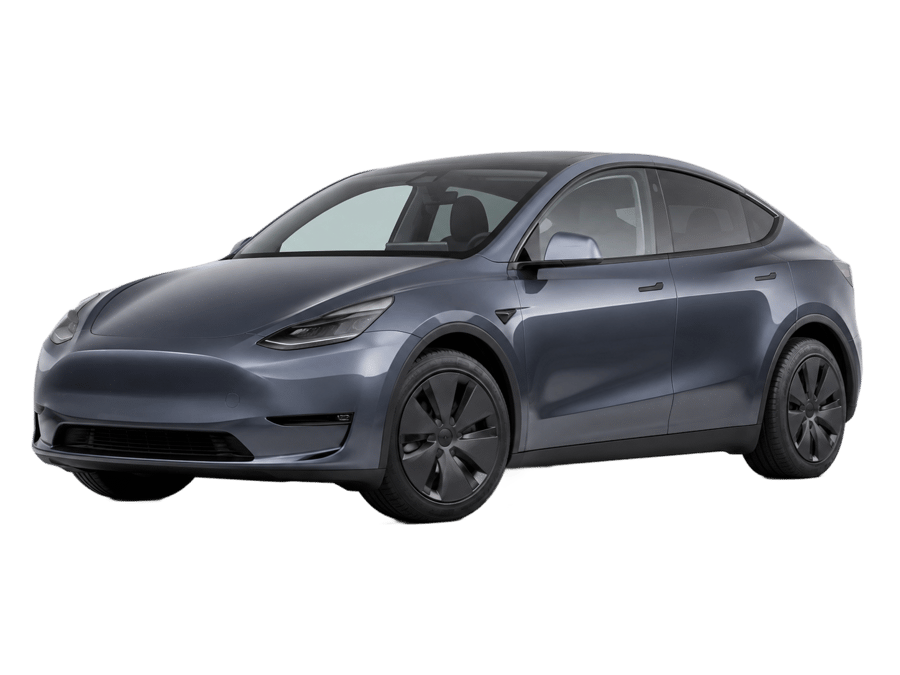
Complaint volume
279 consumer-submitted complaints are matched to this model year. Treat the count as a research signal, then read the actual summaries for repeated symptoms.
Complaint records
279 consumer-submitted complaints on record for the 2026 Tesla Model Y, grouped by component category.
Buyer interpretation
Complaint records are most useful when they turn into inspection points, seller questions, and comparison checks against nearby model years.
279 consumer-submitted complaints are matched to this model year. Treat the count as a research signal, then read the actual summaries for repeated symptoms.
The most common categories are unknown or other, forward collision avoidance, electrical system. Use those categories as a test-drive checklist instead of judging the vehicle from the total count alone.
Enriched records include 53 crash reports, 1 fire report, 13 injury reports, and 0 fatality reports. These fields come from complaint records and should be read in context.
Mileage is available on 18 complaints, with an average reported failure mileage of 7,652 miles. Compare that with the mileage on the listing.
Build a buyer checklist to turn these issues into questions and inspection points.
279 total complaints on record
| Date | Component | Summary | Severity | Mileage |
|---|---|---|---|---|
| Jul 2026 | UNKNOWN OR OTHER,BACK OVER PREVENTION | Home link failure 1 Homelink was set to close the garage at 90 feet. Garage was open and I was parking manually going in reverse. Home link closed the garage as rear of my car was entering. Since tesla has a taller base and the wing like device projects beyond the car was damaged. 2 Homelink does not work consistently and this has put my home at risk because sometimes the garage door does not close as it is supposed to. 3 I had a service call. The technician saw the problem and claimed to have fixed it. He also said that he will tell the service manager about the damage and will see if they could fix the damage. 4 problem with this inconsistent behavior has continued. I have escalated the complaint with Tesla. I have called four times. All visited a service center in East plano. No one has contacted me to discuss the problem. | Crash: Yes Fire: No | Unknown |
| Jul 2026 | UNKNOWN OR OTHER,FORWARD COLLISION AVOIDANCE | Tesla Full Self Driving has no way to limit the speed or lane changes, and even in its standard profile it keeps going 15+ over the limit. Chill mode occasionally goes 10+, and Sloth switches between -10 and +5 erratically. It's unsafe to use and there's no way to do anything about it without a manual speed limit, like it used to have | Crash: No Fire: No | Unknown |
| Jul 2026 | ELECTRICAL SYSTEM | The contact owns a 2026 Tesla Model Y. The contact stated that while driving at an undisclosed speed without the Full Self-Driving (FSD) feature engaged, the steering wheel suddenly jerked to the right. While the FSD was engaged, the vehicle made erroneous turns at 51 MPH, forcing the driver to take control of the vehicle. The contact received several warnings about the brakes and other safety features. The steering wheel jerked to the right while driving with the FSD engaged. The vehicle was towed to a Tesla Service Center on July 9th. The vehicle was taken to a dealer, where it was repaired. The manufacturer was notified of the failure. The failure mileage was 303. | Crash: No Fire: No | Unknown |
| Jul 2026 | VEHICLE SPEED CONTROL | Tesla's FSD system has ZERO opportunity for the driver to adjust what the car believes is the speed limit. My car often has no idea what the speed limit is. More often than not, it believes the speed limit is lower than it actually is, by as much as 30 MPH. This causes the car to impede traffic if I do not intervene. I can press and hold the accelerator to force the car to drive the speed limit, however I am then faced with a warning that the car will not automatically brake in an emergency. I run my car in "Sloth" or "Chill" 99% of the time to prevent speeding (something you should actually enforce), and this is really where the issue becomes somewhat problematic. If I'm on a 55 MPH road driving 55-57 and the car suddenly decides the speed limit is 30, in sloth, it will decelerate aggressively, making people behind me think I'm nuts... could potentially be dangerous. Recently I was on a "new" road into a campground, a couple days after school ended and there were children around, the speed limit on the road is posted at 20... the car said [XXX], and proceeded to accelerate aggressively of course I terminated the FSD session and just drove the car myself. But no matter which way it is, it's insane that I cannot adjust the speed limit to whatever the speed limit actually is. I own this car, and I pay for FSD for one reason, I'm getting older [XXX], and my driving skills and reflexes are not what they used to be. I'm spending my money to increase safety... please insist that Tesla allow us to adjust the speed limit, or provide a way to get them to do it in a timely manner. I report these situations to Tesla often... not once have they adjusted whatever they use in the background... same problems on the same roads over and over and over, day after day. Please force them to do the right thing! INFORMATION REDACTED PURSUANT TO THE FREEDOM OF INFORMATION ACT (FOIA), 5 U.S.C. 552(B)(6) | Crash: No Fire: No | Unknown |
| Jul 2026 | FORWARD COLLISION AVOIDANCE | Supervised self driving. The latest software requires drivers to divert attention from the road to enter information on the screen whenever self driving is disengaged. This is potentially dangerous. | Crash: No Fire: No | Unknown |
| Jul 2026 | VEHICLE SPEED CONTROL,VISIBILITY/WIPER | June 30, I was driving an highway, PA 376 during a rain storm, FSD 60 MPH 4-5 PM. The rain was heavy, vehicles in front of me flashing their emergency lights, I attempted several times to slow down, Acceleration Modes, towards me. Vehicle would not slow down, heavy rain and puddles blurred my vision, thinking I would rear end the vehicle in front of me. Traffic was light due to the rain, FSD needs better software to slow down during weather conditions. | Crash: No Fire: No | Unknown |
| Jul 2026 | ELECTRICAL SYSTEM | The contact owns a 2026 Tesla Model Y. The contact stated that while driving 40 MPH with the Full Self-Driving mode engaged, the vehicle suddenly swerved into the left lane, and the rear passenger’s side door struck the right side of another vehicle. The vehicle stopped after the impact. The air bags did not deploy. The vehicle did not need to be towed. There was no warning light illuminated. Additionally, the Forward Collision Avoidance feature was not activated during the failure. A Police report was filed. There was no injury reported. The dealer was not notified of the failure. The vehicle was not repaired. The manufacturer was not notified of the failure. The failure mileage was 3,609. | Crash: Yes Fire: No | 3,609 |
| Jul 2026 | STEERING,SUSPENSION,WHEELS | Steering wheel vibration occurs at highway speeds between 70 and 75 mph on a 2026 Model Y with under 1,000 miles at time of complaint. The vibration was reported to the dealer, who performed a tire balance and alignment check and confirmed both were within specification. The vehicle was tested by the dealer during a service ride-along and no vibration was detected by the technician. However, vibration was independently confirmed by the owner in a same-model loaner vehicle on the same road, suggesting the issue may not be isolated to a single vehicle or tire set. Similar vibration issues have been reported by other owners of the same model year in online owner forums, with no documented fix currently available. Safety concern: reduced steering feedback at highway speeds. The vehicle remains available for inspection upon request. | Crash: No Fire: No | Unknown |
| Jun 2026 | LANE DEPARTURE,FORWARD COLLISION AVOIDANCE | Yesterday evening, my wife and I had friends over to our house, and we were excited to show them our new Tesla. We offered to take them on a short drive around town using the Full Self-Driving (Supervised) feature. At approximately 8:00 PM, we entered the address of our local Sam's Club as the destination. As the vehicle approached Sam's Club, it entered the parking lot through the gas station entrance, which appeared to be the expected route. However, instead of proceeding to a parking space, the vehicle unexpectedly continued driving and attempted to make another loop toward the gas station entrance. At that moment, an SUV was exiting the gas station. The Tesla steered toward the SUV and then continued toward a brick wall where there was no roadway. It appeared the vehicle was attempting to drive into an area that was not a valid path. I immediately disengaged Full Self-Driving, took manual control of the vehicle, and reversed to avoid what could have been a collision with both the SUV and the brick wall. The occupants of the other vehicles were understandably upset because the situation appeared unsafe. This was a very dangerous situation that placed my wife, our friends, and me at risk. Had I not intervened immediately, the incident could have resulted in a collision causing property damage or personal injury. I am reporting this event so your engineering team can investigate the behavior and improve the Full Self-Driving software. I hope this information helps identify and correct this issue to improve the safety of the system for all Tesla owners and the public. | Crash: No Fire: No | Unknown |
| Jun 2026 | EXTERIOR LIGHTING,STRUCTURE,WHEELS | Tesla Full Self-Driving (FSD) — control handover protocol. Vehicle is available for inspection upon request. WHAT HAPPENED: On June 25, 2026 at approximately 4:17 PM, the vehicle was operating under Full Self-Driving (FSD) navigating into a residential driveway. The driver pressed the gas pedal to take manual control. At the exact moment FSD transferred control, vehicle telemetry confirms the steering wheel was at −299° (nearly 3 full turns of hard left lock). No warning was given. With a ~13:1 steering ratio, approximately 300° of wheel rotation was required before driver input would affect the front wheels — taking 0.4–0.5 seconds during which the front wheels remained pointed left despite the driver turning right. The vehicle struck a tree at approximately 13–15 kph. Secondary failure: FSD re-engaged once during the first override attempt, requiring a second override before full control was obtained, further delaying driver response. Telemetry confirmed: factory crash algorithm (RCM_CRASH_ALGO_WAKEUP_EVENT_ACTIVE), Electronic Stability Control, and Traction Control all activated at impact. Post-impact speed registered −1.67 kph (backward bounce), confirming direct collision. SAFETY RISK: FSD handed off control mid-maneuver at extreme steering lock with no warning, creating an unrecoverable situation in a confined residential driveway. PRIOR WARNINGS: None. No warning lamps, messages, or alerts before or during handover. INSPECTION STATUS: Vehicle photographed. Insurance inspection pending. Not yet inspected by Tesla or dealer. Independently confirmed via vehicle telemetry export (85,776 rows, 300 sensor channels). | Crash: Yes Fire: No Towed | Unknown |
| Jun 2026 | ELECTRICAL SYSTEM | The high volatage heat pumps stopped working after 3 months and they left me without a loaner or credit for transportation | Crash: No Fire: No | Unknown |
| Jun 2026 | STEERING,ELECTRICAL SYSTEM,FUEL/PROPULSION SYSTEM | While driving my 2026 Tesla Model Y in June 2026, the vehicle suddenly applied steering input on its own and began swerving left and right even though there were no obstacles in the road. I was driving on a straight section of roadway, centered in my lane, when the steering wheel started moving by itself as if the lane keeping system and steering were confused. I had to fight the wheel in both directions to keep the car from veering toward the curb and toward the adjacent lane. It felt like struggling against another person at the wheel. Fortunately there were no vehicles directly beside me at that moment, so I was able to avoid a collision, but this behavior could easily cause an accident for a typical driver. This incident is part of an ongoing pattern of safety issues with this vehicle. Since late 2025, I have experienced multiple events where the car fails to respond to the accelerator after shifting into Drive and behaves as if it is in neutral until I shift back to Park and then into Drive again including a complete loss of propulsion while driving in moderate traffic. Tesla has already performed recall repairs on the battery/battery contactors and multiple diagnostic visits for intermittent loss of propulsion and steering concerns, but the problems continue. I am filing this complaint because I believe there is a serious defect involving the steering, propulsion system, and lane keeping driver assist systems that could cause loss of control and a crash. | Crash: No Fire: No | Unknown |
| Jun 2026 | ELECTRICAL SYSTEM | The contact owns a 2026 Tesla Model Y. The contact stated that while driving 30 MPH with the Full Self-Driving (FSD) system engaged, the vehicle unexpectedly made a left turn toward a tree and a light pole. The contact manually took control of the vehicle to avoid a crash. There were no warning lights illuminated, or messages displayed prior to the failure; however, after the failure, the contact was prompted to take control from the vehicle. The vehicle was not taken to a dealer to be diagnosed or repaired. The manufacturer was not notified of the failure. The failure mileage was approximately 11,800. | Crash: No Fire: No | 11,800 |
| Jun 2026 | FORWARD COLLISION AVOIDANCE | We have owned a 2026 model Y Tesla for one week and have encountered these dangerous behaviors while in full self drive mode, even in “sloth” mode: 1. Tailgating, repeatedly, while at highway speeds. Controls did not allow me to increase trailing distance while in FSD. 2. Dangerous merging, cutting off other cars. 3. Failure to read surface directions and driving wrong way against oncoming traffic. And this is with only one week of casual driving! | Crash: No Fire: No | Unknown |
| Jun 2026 | ELECTRICAL SYSTEM,VEHICLE SPEED CONTROL,UNKNOWN OR OTHER | I am writing to bring to your immediate attention a serious safety incident involving our brand‑new 2026 Tesla Model Y (Juniper), equipped with FSD version 14.2.2.5 and Software Version 2025.45.10. We purchased this vehicle as our dream car, and for nearly six months it delivered exactly what we hoped for—innovation, safety, and an exceptional driving experience. That trust was the foundation of our decision to choose Tesla. On [XXX], at approximately [XXX] in Frisco, TX, that trust was shaken by a sudden and alarming event. After coming to a stop and while making a routine right turn at under 10 mph, the vehicle unexpectedly accelerated on its own, causing an immediate loss of control. The entire incident unfolded in seconds, leaving no opportunity to react or correct the vehicle’s behavior. The incident happened at the intersection of [XXX]. The "Autopilot" feature in Tesla was on at the time of the incident. The impact was severe. The airbags deployed, the vehicle was declared a total loss by insurance, and first responders—including the Frisco Police Department—were required to clear the wreckage. My wife sustained injuries in the crash and continues to recover. Witnesses at the scene confirmed that the acceleration was abrupt and not driver‑initiated. The emotional and physical toll has been significant. More importantly, the nature of this incident raises serious concerns about a potential safety issue that could affect other Tesla owners. We feel compelled to ensure this incident is thoroughly examined. If there is a systemic issue—software‑related or otherwise—it is critical that it be identified and addressed to protect other drivers and uphold the integrity of the Tesla name. We truly miss our vehicle and the confidence we once had in it. We hope Tesla will treat this matter with the seriousness it deserves and provide a transparent path forward. Thank you for your time, attention, and commitment to safety. INFORMATION REDACTED PURSUANT TO THE FREEDOM OF INFORMATION ACT (FOIA), 5 U.S.C. 552(B)(6) | Crash: Yes Fire: No Injuries: 1 Towed Medical attention | Unknown |
| Jun 2026 | STEERING | The assisted steering function has on multiple occasions failed to activate when vehicle is turned on. It will reset if vehicle is left off, then will randomly fail to activate again. Dash warns you that it has not activated and the car becomes extremely difficult to steer. Manufacturer stated steering rack likely needs replaced but wait time to get an appointment to inspect was over 2 weeks. Car has less than 500 miles on it. | Crash: No Fire: No | Unknown |
| Jun 2026 | ENGINE | A day or two prior I had received an alert that my coolant was low and to get service on my vehicle. Through the Tesla app I was unable to orginally schedule until July but I kept looking and an opening opened up on June 20th. I was on my way to that appointment from New Bern (the nearest service center is 120 miles from my house). I was avoiding highways, driving early AM, and driving at or below the speed limit to try to avoid the car from overheating. The car is pretty much brand new with just over 10k miles. I was only an hour in and had just left Kinston when I got a warning to pull over and then another alert a few moments later as I was trying to get off the parkway that the rear motor was shutting down and I began to lose speed rapidly. I stopped the car which proceeded to make a ton of noise and called roadside assistance. I had never experienced this type of noise before and was worried about combustion. Tesla was excellent at responding, towing, and the car is currently being repaired under warranty but I wanted to report the incident as it is a 2026 model with only 10k miles on it and has not been in an accident. This should not be happening to a brand new car. The latest repair report shows the rear drive inverter inlet hose and the supermanifold coolant pumps required replacing. | Crash: No Fire: No | Unknown |
| Jun 2026 | STRUCTURE | We just got our new Model Y today (6/21/2026) at Tesla Dealer in Plano. And I noticed the fabric liner in the center console/storage area is shedding fine fibers. The fibers adhere to skin and clothing and continue to release during normal vehicle usage. These fibers can inadvertently inhaled and I am concern that this issue might cause health hazard to me and my family whenever we are using the vehicle. | Crash: No Fire: No | Unknown |
| Jun 2026 | FORWARD COLLISION AVOIDANCE | On June 7, 2026, while Full Self-Driving (FSD) was engaged, my 2025 Tesla Model Y drove itself forward out of a parking spot and struck a stationary landscape rock directly in its path. The vehicle did not slow, brake, or steer to avoid the obstacle before impact. The rock was a fixed object roughly 20 inches tall, clearly visible in the vehicle's forward (windshield) camera from a complete standstill, before FSD began moving the car. It stayed visible as the car advanced and dropped into the camera's near-field blind zone just before contact. The vehicle struck it with no apparent detection or avoidance. This is a serious safety concern beyond the resulting property damage. An obstacle of this height is in the same range as a small child or a crouching person. An automated driving system that fails to detect and respond to a fixed, clearly visible object in its direct path presents a significant risk of injury. The dashcam footage (windshield camera) is available and shows the obstacle visible from a standstill. The vehicle's front bumper camera feed is not saved to dashcam, so only the manufacturer's internal logs can confirm whether the obstacle was detected and how it was classified. I reported this to the manufacturer's service team and requested a log review; they declined to confirm detection and directed me elsewhere. No warning lamps or alerts appeared before the impact. Footage and repair documentation available on request. | Crash: Yes Fire: No | Unknown |
| Jun 2026 | ELECTRICAL SYSTEM,BACK OVER PREVENTION | This is Reference my existing ODI number 11742309. On June 4, 2026, while driving slowly into a parking space, the vehicle experienced a sudden and unintended acceleration. I applied the brake, but the vehicle did not respond as commanded, resulting in a collision. The vehicle was approximately 3 months old at the time of this incident. | Crash: Yes Fire: No Towed | Unknown |
| Jun 2026 | UNKNOWN OR OTHER | I was driving on FSD mode, my car suddenly changed very fast to left lane by itself and hit the car on that lane right behind me. | Crash: Yes Fire: No | Unknown |
| Jun 2026 | WHEELS | The right rear aluminum rim on my 2026 Tesla Model Y (Juniper trim) has a crack in it, causing a slow air leak. I discovered this issue approximately 2 weeks ago when I noticed the tire was repeatedly losing pressure. I have had to refill air in the tire every 2-3 days. The crack is located on the rim itself, at the sidewall area between the rim and the tire, where air bubbles can be observed escaping when submerged or sprayed with soapy water. I have no recollection of hitting any potholes or curbs that would have caused this damage. The rim appears to be defective from the factory. The vehicle component (rim) is available for inspection. No crash, fire, or injuries have occurred at this time, but continued driving poses a safety risk due to the potential for a sudden tire blowout. Photos and a short video documenting the crack and escaping air are available. | Crash: No Fire: No | Unknown |
| Jun 2026 | FORWARD COLLISION AVOIDANCE,LANE DEPARTURE | Using Tesla FSD 14.3.3. It began raining hard, causing standing water to pool on the road. The standing water was making the car lose traction and started sliding within the lane, it did change its speed or driving to account for the rain. FSD was doing over the speed limit and would not slow down slower than the speed limit. Changing the Tesla speed profile from Standard to Sloth slowed it down to exactly the speed limit but no lower. At this point the car could not maintain its lane, I feared for our safety, so I had to disengage FSD to regain control of the car. Tesla have removed all methods of allowing the driver to maintain accurate speed control of the car and it often ignores speed limit signs, which means it is traveling too slow or too fast for the currently posted speed limit. | Crash: No Fire: No | Unknown |
| Jun 2026 | VISIBILITY/WIPER | This is a safety concern for visibility. How can a brand new, barely used windshield crack like this? There are no rock chips and it has barely been driven to fall as wear and tear on the vehicle. This is not okay and incredibly unexceptional for vehicle standards. This vehicle spends 90% of its time in a garage. I have contacted my insurance company. | Crash: No Fire: No | Unknown |
| Jun 2026 | STEERING,FORWARD COLLISION AVOIDANCE | I am writing to formally report a serious safety failure involving Tesla’s Full Self-Driving (Supervised) feature, which resulted in property damage and a severe safety hazard.While FSD (Supervised) was fully engaged, the vehicle failed to detect a large block of wood in the roadway. The vehicle struck the object, causing significant damage to the brand-new car's left-side tire and body, t touched two other cars hence I called 911 and reported it to ensure they remove the wood. Because I did not know how to manually trigger the dashcam save at the exact moment of the crash, video footage was not captured locally. However, the vehicle’s internal sensors, and Event Data Recorder (EDR) should have logged the active FSD status and sensor data at the time of impact and potentially save it.Immediately following the incident, I contacted emergency services via 911 to report the roadway hazard. I have since visited a Tesla Service Center, where staff informed me that I must wait for the formal complaint process to proceed.Due to recent publicly reported fatalities involving FSD, I strongly believe this software is not safe for public roads, and I have chosen not to renew the feature. I am requesting a comprehensive corporate review of my case. I expect Tesla to pull the vehicle's internal logs, take accountability for this hardware and software failure, provide a full repair of the vehicle, costs about $2000 as estimated by their collision center and issue a complete reimbursement for the damages. | Crash: No Fire: No | Unknown |