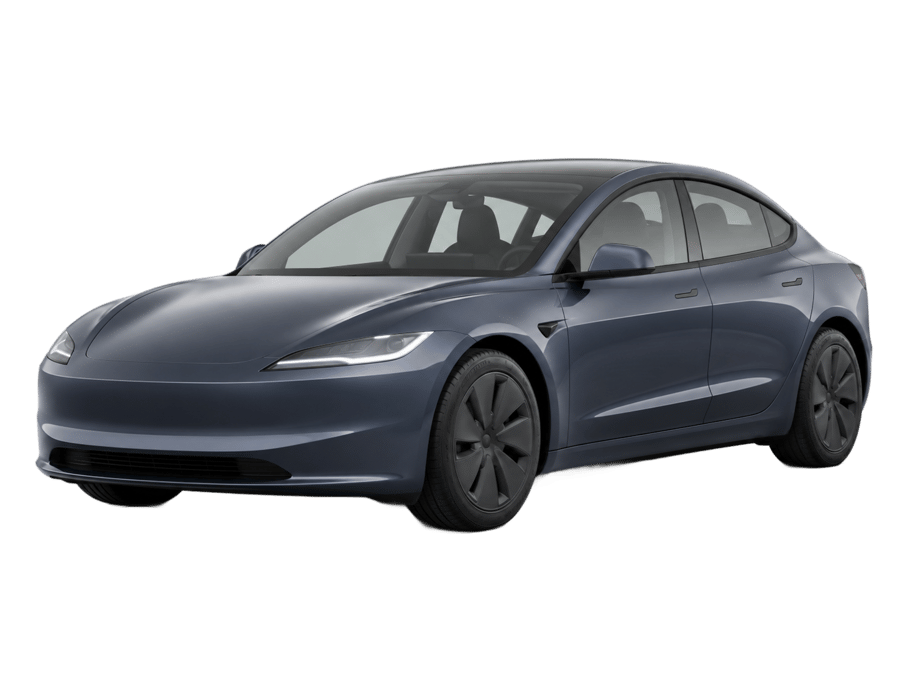
Complaint volume
200 consumer-submitted complaints are matched to this model year. Treat the count as a research signal, then read the actual summaries for repeated symptoms.
Complaint records
200 consumer-submitted complaints on record for the 2024 Tesla Model 3, grouped by component category.
Buyer interpretation
Complaint records are most useful when they turn into inspection points, seller questions, and comparison checks against nearby model years.
200 consumer-submitted complaints are matched to this model year. Treat the count as a research signal, then read the actual summaries for repeated symptoms.
The most common categories are unknown or other, electrical system, steering. Use those categories as a test-drive checklist instead of judging the vehicle from the total count alone.
Enriched records include 20 crash reports, 0 fire reports, 12 injury reports, and 0 fatality reports. These fields come from complaint records and should be read in context.
Mileage is available on 7 complaints, with an average reported failure mileage of 12,614 miles. Compare that with the mileage on the listing.
Build a buyer checklist to turn these issues into questions and inspection points.
200 total complaints on record
| Date | Component | Summary | Severity | Mileage |
|---|---|---|---|---|
| Oct 2025 | WHEELS | Travelling south on [XXX]just south of [XXX] on [XXX] at [XXX]. Climate was medium-rain. Car began to hydroplane due to regenerative breaking. Lost control and began to swerve between lanes. Completely swerved 180 degrees so that car was facing wrong direct. Swerved back to right way on highway. No cars around and did not hit anything. INFORMATION REDACTED PURSUANT TO THE FREEDOM OF INFORMATION ACT (FOIA), 5 U.S.C. 552(B)(6) | Crash: No Fire: No | Unknown |
| Sep 2025 | EXTERIOR LIGHTING | To whom it may concern, I am reporting an incident regarding my Tesla Model 3 (2024) that occurred on June 30th around midnight. My partner was using FSD (full self driving) and driving down i5 towards Vancouver, WA and I was attempting to turn on Bluetooth to listen to music when the exterior lights completely shut off. The section of the freeway we were on had no lights, so it was completely dark. The FSD made my partner take over the wheel and we careened off the road because there was zero visibility. Thankfully and luckily we only hit a traffic reflector. What followed has been a few concerning months of back and forth with Tesla. I reported the incident to them immediately and requested data from that night. The data that they eventually sent over was from the previous day and following days, and conveniently missing that crucial period of time. The service appointment I had with them produced a multiple thousand dollar bill to fix the damage caused by the traffic reflector which I did not pay. I have not heard back from them since then. I am reporting this incident because I don’t think lights should be able to shut off completely at night, whether it was a software malfunction or someone accidentally pressing a button on the screen. If this incident continues to happen in the future many passengers may not be as lucky as us to escape with only a scratch. INFORMATION REDACTED PURSUANT TO THE FREEDOM OF INFORMATION ACT (FOIA), 5 U.S.C. 552(B)(6) | Crash: Yes Fire: No | Unknown |
| Sep 2025 | STEERING,EXTERIOR LIGHTING | Tesla has removed the turn signal stalks on some of their vehicles in favor of buttons on the steering wheel. While Tesla may argue that these buttons work fine, they are unsafe and they do not work in all driving situations (roads with multiple tight turns, roundabouts, etc). The buttons are also prone to sticking, which renders them inoperable. I have been pulled over due to failure to signal on a tight roadway in San Francisco, the officer did not write a ticket when he saw the design defect and advised that I remedy the issue with Tesla. I have also almost gotten into an accident several times in roundabouts because of failure to signal -- it was impossible to signal via the button on the steering wheel while in the roundabout. Tesla has acknowledged that this design is a safety issue and has brought back turn signal stalks on newly manufactured vehicles. Due to the immediate safety issue and Tesla having no retrofit available, I have purchased a 3rd party accessory that fixes the issue. The accessory is from a company called Enhance Auto and it is called "S3XY Stalks". It is a bluetooth enabled turn signal that connects to a device that is attached to the OBD sensor. This device works perfectly and it solves the safety issue. Tesla has refused to reimburse me in the amount of $522.50 for this turn signal device. | Crash: No Fire: No | Unknown |
| Sep 2025 | EXTERIOR LIGHTING | The indicator controls on the steering wheel are unreliable. Soon after purchasing the car, I returned it for warranty repair because sometimes the right indicator fails. When pressing the indicator area in the steering wheel, one can usually feel a button click, but at times it’s like pressing a brick wall, no give and no click. It seemed ok after the repair, but now it’s back to doing exactly the same thing. In addition, sometimes when I press near the bottom of the right indicator area, the left indicator turns on instead. It’s bad enough that I often can’t indicate when turning as I can’t always keep track of directions when the buttons turn upside down and the visuals on the buttons are backwards. It’s much worse that this bad design is so poorly implemented. Now writing this, I noticed when uploading the warranty invoice that they said the indicator works as intended. This after I gave them a video I took, while driving, of my fingers repeatedly pressing the indicator area as hard as I could, while describing how the indicator wasn’t turning on. I see you don’t allow videos to be uploaded here, but I still have that video and can supply it if needed. | Crash: No Fire: No | Unknown |
| Aug 2025 | STEERING | The contact owned a 2024 Tesla Model 3. The contact stated that while her daughter was driving 65 MPH, and was driving on the exit ramp, the brake pedal was depressed, but the vehicle failed to respond. The contact's daughter stated that the brake pedal felt hard. The contact's daughter used the emergency brake but failed to function as intended. In addition, the steering wheel locked. The contact's daughter, to avoid hitting the vehicle in front, was able to pull over to the side of the road using excessive force on the steering wheel, and hit a tree, where it came to a stop. The driver-side air bags and side curtain air bags deployed. Three of the contact’s daughters were taken to the hospital by ambulance. The contact's daughter suffered three fractures in her left eye, three fingers on her left hand were fractured, and the seat belt left a burn on her neck. The contact's three other daughters were passengers inside the vehicle. The daughter who sat in the front passenger seat suffered hematomas on the abdomen and had bruises on her face, legs, and arms. The daughter who sat behind the driver in the back suffered injuries, scratches on the legs, the glass debris from the window caused cuts on the head, and had bruises on her chest and back. The daughter who sat in the front passenger seat was not seriously injured. A police report was filed. The vehicle was towed to the towing yard. The vehicle was not diagnosed or repaired. The insurance company was notified. The contact filed a claim, and it was denied. The manufacturer was notified of the failure but denied assistance. The failure mileage was 13,816. | Crash: Yes Fire: No Injuries: 3 Towed Medical attention | 13,816 |
| Aug 2025 | UNKNOWN OR OTHER | Button turn signal on New Model 3 is vet dangerous. When steering is rotated, is is impossible to find the Signal Button because of the location of the Button is also rotated according to the Rotation of the Steering Wheel. It caused me a traffic accident when I tried to find the Signal Button when there was traffic congestion in the middle os traffics. This must be replaced traditional turn signal lever. | Crash: Yes Fire: No | Unknown |
| Aug 2025 | ELECTRICAL SYSTEM | The contact owned a 2024 Tesla Model 3. The contact stated that while driving 65 MPH on the freeway, the central touchscreen interface displayed a blank screen. The contact mentioned the autopilot engaged independently, causing the vehicle to merge to the left and collide with another vehicle in front of the driver's side. No air bags deployed. The contact stated that she sustained injuries on the left side of her wrist and arms, and a bruise on her right arm near her elbow and upper right thigh swollen on her neck, shoulders, and full back and both hands are swollen. Medical attention was required. A police report was filed. The vehicle was towed to a collision garage. The contact stated that the vehicle was taken to a dealer to be diagnosed; however, the dealer diagnosed and informed the contact to speak with a lemon law expert. The vehicle was deemed a total loss. The contact stated the vehicle has been in the dealer over nine times. The manufacturer was notified and opened a case, then closed it. The approximate failure mileage was 9,611. | Crash: Yes Fire: No Injuries: 1 Towed Medical attention | 9,611 |
| Aug 2025 | FORWARD COLLISION AVOIDANCE: WARNINGS | Driving in the dark I almost had a front end collision and the car had zero reaction. The lights on the oncoming semi truck were bright so as usual I glance away from the lights and generally focus on right lane marker and suddenly I could see an oncoming car out of the corner of my eye cut across the front left corner of my car just barely missing within inches of clearance. Unfortunately I was shaken too much to remember and save the video. Not only does the vehicle software create solid phantom objects but ANYTIME the cameras get blinded the safety system does NOT work and now you have allowed Tesla to drive unmanned. [XXX] INFORMATION REDACTED PURSUANT TO THE FREEDOM OF INFORMATION ACT (FOIA), 5 U.S.C. 552(B)(6) | Crash: No Fire: No | Unknown |
| Aug 2025 | UNKNOWN OR OTHER | While using Tesla’s Auto Park feature, the vehicle struck an obstacle without detecting it before or after impact. The system failed to log a collision event in its detection systems, giving no warning and providing no reasonable opportunity for driver intervention. Data retrieved directly from Tesla confirms that forward/side collision sensors did not activate, “Near Deploy” collision detectors remained inactive, and although a “Crash Algorithm Wake-Up” was triggered, the vehicle did not brake or attempt avoidance. This represents a potential systemic defect in Tesla’s Auto Park detection logic and/or related hardware that could result in collisions without driver awareness or system logging — a safety risk for any Tesla driver using Auto Park. | Crash: Yes Fire: No | Unknown |
| Aug 2025 | VEHICLE SPEED CONTROL | I am filing an urgent complaint regarding multiple incidents involving my 2024 Tesla Model 3 (VIN: [XXX] ) that caused major safety risks, personal property loss, and serious disruption to my life. [XXX] – While in a left-turn lane with Autopilot engaged, the car attempted to go straight. When I took over, the system malfunctioned severely. (Photo evidence available) [XXX] – Remote support failed; car towed to Tesla Upland Service Center. June 27, 2025 – Issued loaner vehicle. July 1, 2025 – Tesla claimed I must pay for repairs. I requested a written evaluation report, but to date it has not been provided. July 20, 2025 – Without consent, Tesla remotely locked my vehicle with my personal belongings inside, violating my property rights. Aug 1, 2025 – Tesla promised review and report but refused to unlock my car. Aug 12, 2025 – After 10+ days, still no report. Upland “options” included threats that my locked car in my garage could be deemed stolen, causing severe mental distress. Demands: 1.Full investigation into Autopilot failure and handling delays. 2.Immediate delivery of written evaluation report. 3.Accountability for delays, threats, and property rights violations. 4.Compensation for all losses and disruptions caused. Contact: [XXX] I request a written response within 24 hours. INFORMATION REDACTED PURSUANT TO THE FREEDOM OF INFORMATION ACT (FOIA), 5 U.S.C. 552(B)(6) | Crash: No Fire: No | Unknown |
| Jul 2025 | AIR BAGS | The contact owned a 2024 Tesla Model 3. The contact stated that while driving approximately 20 mph and making a right turn, due to a blind spot, another vehicle driving at full speed almost crashed into the contact. The contact quickly steered the vehicle away, avoiding a collision with the other vehicle. As a result, the contact crashed into another vehicle. The contact ultimately crashed into a nearby light post. The air bags did not deploy. The vehicle was towed and totaled. The light post had fallen to the ground. There were no injuries or medical attention needed. A police report was filed. The vehicle was taken to a local Tesla dealer; however, the vehicle was not diagnosed with a cause for failure. The manufacturer was not informed of the failure. The failure mileage was 19,571. | Crash: Yes Fire: No Towed | 19,571 |
| Jul 2025 | POWER TRAIN | The rear motor became completely disabled while driving. The rear motor suddenly made noise and locked up when I was driving about 10 mph. I received a red alert on my screen saying to pull over now and another alert saying the car is shutting off. The car suddenly stopped on its own before I could do anything. I then got a yellow warning message saying that the rear motor is disabled. I was luckily driving slowly in a parking lot when this occurred but if it happened on a public road, things could have gone much worse. I contacted Tesla support when it occurred but I cancelled the support request because the alerts went away once I exited the car. The vehicle drives normally but not sure if it will happen suddenly again. | Crash: No Fire: No | Unknown |
| Jul 2025 | UNKNOWN OR OTHER | Newer Tesla Model 3s (2024+ Hihgland) removed the physical turn signal and drive shift stalks. This creates serious safety concerns: 1. Inconsistent or Difficult/Impossible Signaling: In certain turning maneuvers, especially while driving with a sharp wheel angle, such as on curves, roundabouts, or a turn immediately following another, it becomes physically difficult or impossible to reach and activate the appropriate touch signal. This failure to clearly signal intentions to other drivers increases the likelihood of collisions and endangers both the driver and others on the road. 2. More Frequent Signaling Errors: The touch buttons for left and right turn signals are placed side-by-side, with no tactile distinction. This can lead to frequent accidental activation of the wrong signal, especially in high-pressure or fast-response situations. Misleading or absent signals confuse surrounding drivers and pedestrians, increasing the risk of sideswipes, intersection crashes, or pedestrian strikes. 3. Delayed or Failed Emergency Shifting: The removal of a physical gear shift stalk in favor of an on-screen interface causes dangerous delays when quick, instinctive gear changes are needed, such as switching from Drive to Reverse to avoid a crash or recover vehicle control. Because there is no tactile control, blind muscle-memory responses are difficult or impossible, and looking away from the road to the display may be necessary, increasing the likelihood of a collision in time-critical situations where every second counts. Tesla has since reintroduced turn signal stalks in the updated Model Y (Juniper), and older Model 3s had them, proving this is a design choice, not a limitation. These changes reduce the ability to safely operate the vehicle under pressure and should be reviewed for compliance with safety standards. | Crash: No Fire: No | Unknown |
| Jun 2025 | POWER TRAIN,ELECTRICAL SYSTEM,VEHICLE SPEED CONTROL | I was in a drive thru of a fast food restaurant and the car rapidly accelerated on its own and crashed into a wall. The air bags deployed and we were injured. We also narrowly missed hitting a pedestrian. The car hasn’t been inspected by anyone yet, however it is available if someone wants to inspect it. | Crash: Yes Fire: No Injuries: 3 Towed Medical attention | Unknown |
| Jun 2025 | ELECTRICAL SYSTEM | When driving vehicle over the past month, vehicle turn signals on the steering wheel fail to respond to commands and feel almost as if the controls are locked out by a steering wheel software fault. Upon further inspection, checking service mode, found the SCCM service alert to correlate with the exact moment of turn signal unpressability directly. No debris or liquid has ever entered the area, and this issue has gotten so bad that it happens 3-4 times over a 45min drive I cannot activate the turn signals at all when the failure occurs. There is no alternative way to activate them. The steering wheel is the only way to activate the turn signals and the fault does not permit me to use either turn signal when attempting to change lanes on the highway. Tesla reports that it's a normal software bug and to "deal with it" because there's nothing they can do to fix it. This is directly indicative of a known defective part, and this is a safety-critical defect where a recall must be issued to resolve. Numerous units are impacted through research of same failures. I cant use my turn signals when attempting to change lanes, and Tesla does not want to fix/refuses to address this issue. Even through a phone call from Paul from the service center in Orchard Lake, MI, reported that the condition is a "known defect with INTERAL DOCUMENTS" that confirm it, but he cannot share the doc with me, and "that the idea the issue of getting pulled over for not being able to use your turn signal is an imaginative concern." This, is inaccurate, as the inability to actuate turn signals is a safety-critical failure. the service center replaced my steering when and SCCM module, however the issue persisted after the visit, and the service manager of the West Bloomfield, MI service center called me 12 hours before my appointment to deter me from dropping the vehicle off, and then told me this would be a customer pay diagnostic for a warrantable safety failure. | Crash: No Fire: No | Unknown |
| Jun 2025 | ELECTRICAL SYSTEM | The contact owns a 2024 Tesla Model 3. The contact stated while driving at approximately 65 MPH, the vehicle shut off. The contact stated that the vehicle lost electrical power and the main computer screen was black. The contact stated that the steering wheel was difficult to turn left or right, and the brake pedal was soft while depressing the brake pedal. The contact was able to coast to a stop. The contact attempted to restart the vehicle but was unable. The contact was able to get the main computer screen back online. The contact stated that the computer had several unknown warning lights displayed and a timer was activated and counted down and the vehicle shut off. The contact had the vehicle towed to a dealer. The dealer diagnosed the vehicle and determined that there was blown fuse, and that the vehicle went into "Fail Safe Mode” and shut down all systems. The vehicle was not repaired. The manufacturer was informed of the failure. The failure mileage was approximately 20,000. | Crash: No Fire: No Towed | 20,000 |
| Jun 2025 | UNKNOWN OR OTHER | When driving in the rain or in wet conditions, the car’s horn cannot be heard at all. It is extremely muffled and can pose a serious hazard to the drivers if they cannot be heard. | Crash: No Fire: No | Unknown |
| May 2025 | UNKNOWN OR OTHER | The horn is extremely quiet especially after driving in puddles or in the rain. The horn being a speaker on the front of the vehicle causes it to become clogged and practically muted when used in the rain or after driving through water. The speaker horn is extremely quiet and unsafe. | Crash: No Fire: No | Unknown |
| May 2025 | ELECTRICAL SYSTEM | The horn on my 2024 Tesla Model 3 Performance becomes severely muted, distorted, or inaudible when the vehicle is wet—especially during rain, which is when a functioning horn is most critical for safety. The horn sound in this vehicle is emitted through an external speaker (used for pedestrian alerts), not a traditional mechanical horn. This speaker is exposed to the elements and appears to degrade in sound quality and volume when wet. This presents a serious safety risk in conditions where visibility is already compromised, and the horn may be needed to avoid a collision. The issue resolves once the speaker dries out, but it is highly repeatable and affects the horn’s ability to fulfill its basic safety function. I believe this design may violate the intent of FMVSS 108 by failing to ensure a consistent and reliable horn sound in common real-world driving conditions. I urge the NHTSA to investigate this design and require Tesla to implement a more reliable solution, especially considering the horn’s essential role in preventing accidents. | Crash: No Fire: No | Unknown |
| Apr 2025 | STEERING | I have continuous issues with my steering wheel with the turn signals failing to work. Because the buttons aren't physical buttons, more times than not, they are failing for me to be able to use the turn signal. This causes a major safety concern. I have mentioned it with a service ticket with Tesla, but they state there is no fix for this as of today. | Crash: No Fire: No | Unknown |
| Apr 2025 | FORWARD COLLISION AVOIDANCE: ADAPTIVE CRUISE CONTROL | Vehicle: 2024 Tesla Model 3 Date of Incident: [Insert Date] Location: Intersection of [XXX] Operating Mode: Tesla Autopilot (Engaged) On the above date, while driving with Tesla Autopilot engaged, the vehicle initiated an unexpected and improper right turn at the intersection of [XXX] This maneuver was not indicated in the planned navigation route, nor was it consistent with the legal road markings or signage in the area. The vehicle turned into a clearly marked “Do Not Enter” and “Wrong Way” zone, without any driver input or confirmation. I attempted to intervene, but the turn happened abruptly and could not be safely overridden in time. This resulted in a collision, vehicle damage, and physical trauma to both occupants — including nausea and vomiting in my wife immediately after impact. Dashcam footage from the right repeater camera confirms the presence of multiple “Do Not Enter” signs visible at the point of the turn. We have requested the Tesla Event Data Recorder (EDR) logs to confirm that Autopilot was active and that steering input came from the system, not the driver. I am reporting this as a serious safety concern related to Tesla’s Autopilot system and its decision-making at intersections. If this had occurred in a busier traffic environment, the result could have been far worse. This type of navigational or perception failure should be investigated immediately. Both occupants are seeking medical treatment and continuing to deal with the emotional and physical aftereffects of this incident. INFORMATION REDACTED PURSUANT TO THE FREEDOM OF INFORMATION ACT (FOIA), 5 U.S.C. 552(B)(6) | Crash: Yes Fire: No Injuries: 2 Towed Medical attention | Unknown |
| Apr 2025 | BACK OVER PREVENTION: SENSING SYSTEM: CAMERA | Lost all cameras including rear view camera. Tesla diagnosed that I need to replace AP4 computer. This seems exactly like the case of 25V002000 with circuit board failure. But my VIN was not included in this recall, which seems to indicate that Tesla does not have complete understanding of the scope of this failure. | Crash: No Fire: No | Unknown |
| Apr 2025 | ELECTRICAL SYSTEM | The contact owns a 2024 Tesla Model 3. The contact stated that whenever it rained, the horn was filling with water that was entering through the grill, and the horn would not function when needed. The contact stated that when the horn had dried out, the horn worked normally. The contact had taken the vehicle to a local dealer, where it was diagnosed that water was leaking through the grill and causing the horn to malfunction. The dealer determined that the horn system needed to be replaced. The vehicle was repaired; however, the failure reoccurred. The manufacturer was informed of the failure. The failure mileage was approximately 8,500. | Crash: No Fire: No | 8,500 |
| Mar 2025 | FORWARD COLLISION AVOIDANCE | Multiple instances of phantom braking, car will suddenly slam on brakes without any indication of danger or anything to avoid. This has happened at least a dozen times and we are fearful that it will cause an accident. Vehicle will also alert lane departure and attempt to automatically adjust, turn to another lane while in the appropriate lane. Multiple incidents, at least 30 in 6 months of ownership. No collisions as of yet, concerned there could be. | Crash: No Fire: No | Unknown |
| Mar 2025 | UNKNOWN OR OTHER | TURN SIGNAL BUTTONS JAMS OCCASIONALLY. VERY DIFFICULT TO REPRODUCE DUE TO THE INFREQUENT NATURE OF THIS ISSUE, BUT IT HAPPENS ABOUT TWICE A WEEK IN DAILY DRIVING. SEVERAL OWNERS OF THIS MODEL VEHICLE HAVE REPORTED THE SAME ISSUE ON THE FORUMS. DEALER/MANUFACTURER REFUSES TO ADDRESS THIS ISSUE OTHER THAN TO SAY THEY KNOW THIS IS A KNOW ISSUE. IN SEVERAL INSTANCES, THE TURN SIGNAL BUTTON JAMS AT VERY CRITICAL TURNS ON THE HIGHWAY WHICH CREATED A SAFETY HAZZARD. I HAVE SEVERAL VIDEO CLIPS OF THIS OCCURRENCE. | Crash: No Fire: No | Unknown |