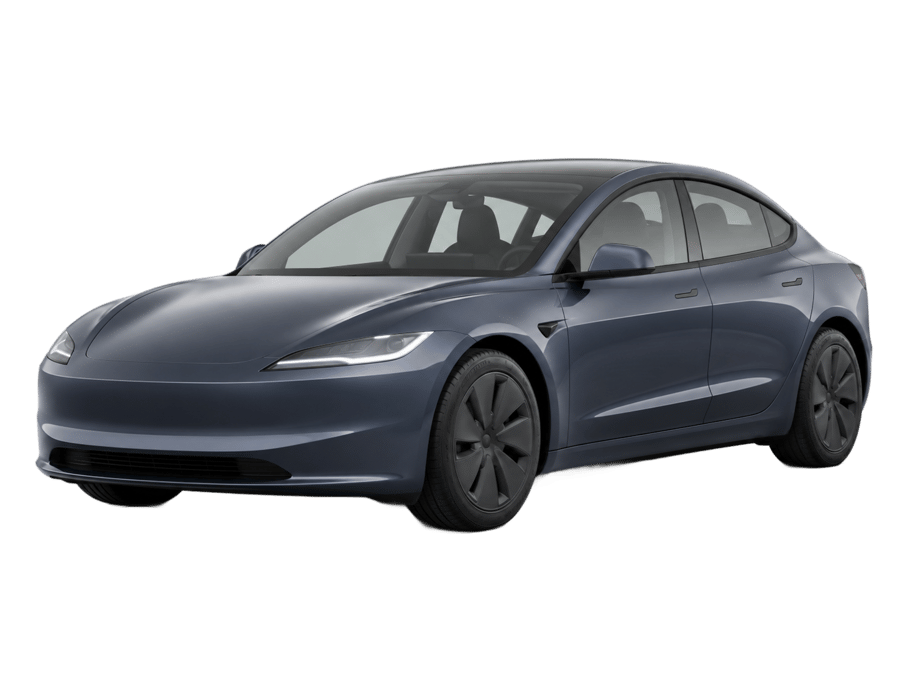
Complaint volume
434 consumer-submitted complaints are matched to this model year. Treat the count as a research signal, then read the actual summaries for repeated symptoms.
Complaint records
434 consumer-submitted complaints on record for the 2020 Tesla Model 3, grouped by component category.
Buyer interpretation
Complaint records are most useful when they turn into inspection points, seller questions, and comparison checks against nearby model years.
434 consumer-submitted complaints are matched to this model year. Treat the count as a research signal, then read the actual summaries for repeated symptoms.
The most common categories are forward collision avoidance, unknown or other, vehicle speed control,forward collision avoidance. Use those categories as a test-drive checklist instead of judging the vehicle from the total count alone.
Enriched records include 51 crash reports, 2 fire reports, 26 injury reports, and 2 fatality reports. These fields come from complaint records and should be read in context.
Mileage is available on 74 complaints, with an average reported failure mileage of 13,034 miles. Compare that with the mileage on the listing.
Build a buyer checklist to turn these issues into questions and inspection points.
434 total complaints on record
| Date | Component | Summary | Severity | Mileage |
|---|---|---|---|---|
| Jan 2024 | UNKNOWN OR OTHER | Re: California Highway Patrol Accident Report [XXX] (see doc: [XXX] ). The driver of the Tesla noted that Tesla's FSD Beta version was engaged, and "When (the Tesla) was in the tunnel, (the Tesla) moved from the #2 lane into the #1 lane and started slowing down unaccountably. When (the Tesla) was about 20 miles per hour, he felt a rear impact." In January 2023, I reviewed available Google map data at the approximate GPS location of the accident. (see video: [XXX] ). Multiple conflicting data layers corresponding to that location may have contributed to the accident if the FSD Beta-controlled vehicle referenced the same or similar map data. The ADAS may have read a road closure on the island surface above the tunnel at [XXX] as relating to the lower level of the tunnel, and the lane change and subsequent slowing of the vehicle described by the driver may have been in response to this map data anomaly. In early 2023, I made multiple attempts to recreate the error while driving a Tesla Model 3 with the then-current FSD Beta version engaged. I drove in both directions of the tunnel and observed no abnormal reactions in any lanes of the eastbound tunnel. In one instance on a Sunday at approximately the same time of day and GPS location as the [XXX] accident, while driving in one of the tunnel's upper-level centermost lanes in the westbound direction, an ADAS alarm was triggered, and the system advised that the driver should take over immediately. It did not automatically slow the vehicle or change lanes. I noted that both occurred when GPS Navigation routing information may have been referencing weekend and holiday data versus weekday commute hours data. Previously, I had observed a difference between weekday and weekend navigation routes into San Francisco. A subsequent retest in the westbound direction on a later Sunday at a different time of day did not trigger an alarm. INFORMATION REDACTED PURSUANT TO THE FREEDOM OF INFORMATION ACT (FOIA), 5 U.S.C. 552(B)(6) | Crash: No Fire: No | Unknown |
| Jan 2024 | UNKNOWN OR OTHER,FORWARD COLLISION AVOIDANCE,LANE DEPARTURE | I am writing to bring to your attention a concerning issue regarding the recent update related to recall alerts in my vehicle, which has inadvertently led to an increase in distraction while driving. I received a software update for my vehicle, which included new features aimed at enhancing autopilot alerts. However, instead of improving safety, these updates have unintentionally resulted in an increased level of distraction while driving. Issues Identified: Frequency of Alerts: The frequency of recall alerts has become excessive, leading to a constant stream of notifications while driving. This has proven to be highly distracting and has compromised my ability to focus on the road. Alert Presentation: The visual and auditory presentation of the alerts is intrusive and often occurs excessively during driving. The alerts are not sufficiently streamlined to ensure minimal disruption, causing a significant distraction. Impact on Driving Behavior: The continuous alerts have forced me to divert attention away from the road, leading to an increased risk of accidents and compromising overall road safety. Recommendations: As per most other vehicle brands that benefit from self-driving technologies, like Cadillac and Ford, they are not affected by this recall, and do not make the driver continually look at the display for information regarding to the alert. Intelligent Alert Timing: Incorporate a smart algorithm that considers the driving context before issuing an alert. This can prevent alerts during critical driving moments, reducing distraction. Comprehensive Testing: Conduct thorough testing of software updates before release to identify and address any unintended consequences, such as increased distraction. Before this update, it was a lot less distracting to drive this vehicle, due to the limited notifications. Since this update, I've found myself removing my eyes from the road because of the increased notifications. A reversal of this recall is in need. | Crash: No Fire: No | Unknown |
| Jan 2024 | STRUCTURE | My Tesla Model 3 was involved in a 'fender bender' almost 9 months ago. It took 3 months just to get an appointment at a "Tesla Certified Collision Center" in my town (and I live in a fairly major city - Portland, Oregon). After the vehicle went to the shop it has now been there for OVER 5 MONTHS! This is a result of parts being incorrectly sent from Tesla, parts being unavailable from Tesla, parts being mislabeled and/or 'hidden' in their Ordering system and so many other unbelievable problems that Tesla has had. I have now been without the vehicle for over 5 months and still waiting on some other part that was now ordered over 2 weeks ago. The whole process is completely unacceptable and Tesla has really dropped the ball. I will be selling the vehicle and never owning another Tesla again, the moment it is finally done being repaired. Do I have any recourse? Can I sue Tesla to cover the 5 months of insurance I just spent my money on? Thanks! | Crash: Yes Fire: No | Unknown |
| Jan 2024 | STEERING | On Oct 9, 2023 1:45 pm I was driving home southbound on [XXX] . The vehicle was pulling hard to the right. I got home and made an appointment with Tesla service in Costa Mesa for the following day. Two days later I was told that they had tried to do a wheel alignment twice and failed, and that the car needed a new steering rack after 52000 miles. I agreed to the repair and demanded the return of the replaced parts. They returned a steering rack and two connecting bolts. They were inspected by the California Bureau of Automotive Repair. I still have the parts and will make them available to aid the investigation. I have a paid invoice in the amount of $3114.53. What began as a concern about wheel alignment quickly became an alarming safety issue when I realized that if the steering rack had failed I could have lost control at any time. It was since that I learned that NHTSA is actively investigating early steering rack failures in Tesla vehicles. I have the part for you to dissect. I look forward to working with you. Best regards, [XXX] INFORMATION REDACTED PURSUANT TO THE FREEDOM OF INFORMATION ACT (FOIA), 5 U.S.C. 552(B)(6) | Crash: No Fire: No | Unknown |
| Dec 2023 | VEHICLE SPEED CONTROL,SERVICE BRAKES,FORWARD COLLISION AVOIDANCE | While operating TACC with lane keeping assist, I experienced multiple iterations of phantom braking when the road and weather was clear ahead. This phantom braking could potentially cause other drivers to collide with the vehicle that unexpectedly braked in the middle of the highway. This problem has been a common issue with multiple people taking their cars to the service center to get checked out with no problem identified. There are no warning lights or indicators that the Tesla is going to phantom brake on the highway. Recommend having Tesla provide information regarding this phantom braking. | Crash: No Fire: No | Unknown |
| Dec 2023 | FORWARD COLLISION AVOIDANCE | At 11:47 AM Pacific time on December 23, 2023 my Tesla model three auto pilot system failed after a recent update mandated by the NHTSA. Ever since the update, the vehicle, cruise control and auto pilot systems no longer function properly, and while I was in, cruise control and auto pilot traffic stopped ahead and the auto pilot system disengaged while I was waiting while it was slowing down, which has never happened in four years of ownership and over 60,000 miles of driving. The new recall software update has made the vehicle unsafe and it should be retracted and corrected. What once was a safe feature is now unsafe. Please investigate this with Tesla to prevent possible injury or death resulting from this programming failure. | Crash: No Fire: No | Unknown |
| Dec 2023 | LANE DEPARTURE | Your latest mandates has arguably made the car less safe by removing what allowed the system to operate safely. Please roll back this “recall” it’s not a recall in the slightest it’s a shot at someone or multiple people that dislike Tesla. | Crash: No Fire: No | Unknown |
| Dec 2023 | LANE DEPARTURE | An incident occurred in April of 2023 while running FSD Beta 11.3.6 firmware. I have been unable to retest this location on more recent software, so this concern may have been mitigated with a subsequent update. As seen in the video, the yellow lane marking on the left transitioned from the roadway up onto the movable center median. Once on the bridge, the left repeater camera and the center display visualization both illustrate the lane centering was definitely biased towards the left side of the lane, a possible indication the vision-based lane centering was miscued by the yellow line now appearing on the barrier instead of the road surface. This left bias brought the vehicle uncomfortably close to the barrier, which resulted in a manual takeover. It is difficult to judge based on the low resolution of the repeater camera view, but my estimation is that the tires were approximately 12 inches away from the protruding bottom lip of the barrier. [XXX] This same left lane marking concern also occurs at the entrance to the Oakland, California Caldecott tunnel eastbound bore. The Google maps link provided shows the yellow line which defines the left lane edge disappears at the tunnel entrance, at which time the vision-based lane centering seemed to be cuing off of the curb as the lane edge, rather than there being a marking that would delineate a lane edge further away from the curb. An FSD beta user (name and date unavailable) reported contacting the curb at this location at approximately the same date as the GGB recording. [XXX] The GGB matter was brought to the attention of the Bay Area Toll Authority with the suggestion they contact Tesla. I have been unable to verify that the Toll Authority followed up on that suggestion. The release notes for Beta 11.4.4 suggest the issue might have been addressed, to wit, "Improved offset consistency when controlling for static obstacles." INFORMATION REDACTED PURSUANT TO THE FREEDOM OF INFORMATION ACT (FOIA), 5 U.S.C. 552(B)(6) | Crash: No Fire: No | Unknown |
| Dec 2023 | STEERING,UNKNOWN OR OTHER | To Whom It May Concern at the National Highway Traffic Safety Administration (NHTSA), I am writing to urgently express my concerns about the latest software update for the Tesla Model 3’s autopilot system, which, in my view, significantly compromises safety. As a Model 3 owner for over two years, I have generally found the vehicle and its features to be reliable and safe. However, the recent update has introduced an overly stringent hands-on-wheel detection mechanism that is not only inconvenient but also potentially hazardous. The new update requires frequent and often forceful interaction with the steering wheel to assure the system of driver presence. This change is drastically different from my previous experience, where I received only one hands-on-wheel violation in two years. The current sensitivity of the system disrupts the smooth operation of the autopilot, leading to frequent and abrupt disengagements. I have found myself struggling to maintain the system’s activation, inadvertently causing the vehicle to exit autopilot mode multiple times. This issue goes beyond mere inconvenience; it actively detracts from driving safety. The need for constant and sometimes aggressive adjustments to satisfy the system’s requirements is distracting and can lead to erratic vehicle behavior. The irony is stark: a system designed to enhance driving safety and ease is now a source of potential danger and stress. The unpredictability and over-sensitivity of the updated system could lead to dangerous situations, especially on highways or in heavy traffic, where sudden disengagement of the autopilot can be particularly risky. As a driver, I now find myself more focused on keeping the autopilot engaged than on the actual driving conditions and surroundings, which is surely contrary to the feature’s intended purpose. I urge the NHTSA to investigate this issue as a matter of urgency and safety. | Crash: No Fire: No | Unknown |
| Dec 2023 | LANE DEPARTURE | I am writing to urgently express my concerns about the latest software update for the Tesla Model 3’s autopilot system, which, in my view, significantly compromises safety. As a Model 3 owner for over two years, I have generally found the vehicle and its features to be reliable and safe. However, the recent update has introduced an overly stringent hands-on-wheel detection mechanism that is not only inconvenient but also potentially hazardous. The new update requires frequent and often forceful interaction with the steering wheel to assure the system of driver presence. This change is drastically different from my previous experience, where I received only one hands-on-wheel violation in two years. The current sensitivity of the system disrupts the smooth operation of the autopilot, leading to frequent and abrupt disengagements. I have found myself struggling to maintain the system’s activation, inadvertently causing the vehicle to exit autopilot mode multiple times. This issue goes beyond mere inconvenience; it actively detracts from driving safety. The need for constant and sometimes aggressive adjustments to satisfy the system’s requirements is distracting and can lead to erratic vehicle behavior. The irony is stark: a system designed to enhance driving safety and ease is now a source of potential danger and stress. The unpredictability and over-sensitivity of the updated system could lead to dangerous situations, especially on highways or in heavy traffic, where sudden disengagement of the autopilot can be particularly risky. As a driver, I now find myself more focused on keeping the autopilot engaged than on the actual driving conditions and surroundings, which is surely contrary to the feature’s intended purpose. You need to investigate this issue as a matter of urgency. Adjustments are necessary to prevent potential accidents and ensure that the tech helps, not hinders. | Crash: No Fire: No | Unknown |
| Dec 2023 | UNKNOWN OR OTHER | cabin heat not working, vehicle’s defroster is also not work well enough to comply with federal motor vehicle safety standards regarding windshield visibility. error message on the vehicle’s user interface saying that heating and air conditioning are limited or unavailable. The blower motor, which sends air into the cabin, will remain operational. | Crash: No Fire: No | Unknown |
| Dec 2023 | FORWARD COLLISION AVOIDANCE | During a month-long road trip in the US, I experienced frequent "phantom braking" incidents while using adaptive cruise control. In some cases, Autosteer was also active. By "phantom braking" I refer to sudden hard braking by the car itself in clear daylight conditions on interstate highways with no vehicles visible ahead of me for at least 1/2 mile. By "frequent" I mean that this behavior occurred multiple times per hour over multiple days. I decided to cease using cruise control for the remainder of the trip after the following episode occurred. With cruise control active on a four lane interstate, I was changing lanes to the right to allow a pickup truck to pass me on the left. I had just passed a semitrailer, who was in the right lane. I could see him in my rear-view mirror as I began the lane change. The road was empty and visible for at least a mile ahead on a sunny morning. We were all traveling about 75 mph in a 70 mph zone. While straddling the lanes, the car suddenly slammed on its brakes, requiring both vehicles behind me to take evasive action. I over-rode the car’s action by pressing the accelerator pedal swiftly and firmly. No accident occurred. I stopped using cruise control entirely for several months, and I have only rarely used it since then, and only when the road behind me is empty. In those few recent trials, I have not experienced any phantom braking. Finally, I speculate that the braking may have been triggered by "mirages" of what look like puddles on the road. We humans are familiar with this phenomenon, but the camera AI may have interpreted those as obstacles. | Crash: No Fire: No | Unknown |
| Dec 2023 | POWER TRAIN,VEHICLE SPEED CONTROL,FUEL/PROPULSION SYSTEM | We had Model 3 with instance of unintended acceleration at the gate of a parking lot. This car was bought in May 2020. On December 6, 2020, she was on the way out of the parking gate and suddenly the car accelerated, hitting the side wall of the gate. The car flew over a two-way street, resulting in a compound fracture of her right hip requiring internal fixation and transfusion. The vehicle was inspected by the police. There were no warning lamps, messages, or other symptoms prior to failure. | Crash: Yes Fire: No Injuries: 1 Towed Medical attention | Unknown |
| Dec 2023 | FORWARD COLLISION AVOIDANCE | Phantom breaking occurred twice while driving east on highway sr 152. Our car was traveling straight with no cars in front of us. I was using cruise control set at the speed limit when the car suddenly slammed on the brakes, the car slowed from 65 mph to 20 mph in a few seconds. This happened twice in a matter of 10 minutes. I no longer use cruise control. Apparently there is no fix. I have two relatives that have experienced same problem with their Teslas. I will suggest that they report to NHTSA. | Crash: No Fire: No | Unknown |
| Dec 2023 | VISIBILITY/WIPER | Currently occurring with FSD Beta firmware V.2022.27.12 but the same has occurred with previous firmware versions also. Normal operation of the vehicle with the ADAS engaged puts the windshield wipers into AUTO mode. At times the windshield wipers are activated when the windshield is dry. It isn't raining or misting and there's nothing on the surface of the windshield at the location of the front-facing cameras. "No rain" occurrences seem to correlate with times when visibility ahead has low contrast and there are no highlights and shadows to sharply define the scene, (ie, a little "muddy"). Observed when it is overcast but not raining, around sunrise when the sun is low in the sky and the light levels ahead are relatively low and headlights aren't helping illuminate the road ahead, and at times there are high-contrast light and shadows immediately ahead but farther down the road there is mist or fog, creating the same low contrast lighting conditions some distance away. It is as if the ADAS is aware that the scenery is not sharply defined and is "wiping its eyes" in an attempt to gain a more sharply-defined view. Occasionally, but rarely in my experience, the windshield washer is also engaged. Having the ADAS activate the wipers at these times is not a safety hazard, per se, but it is distracting and concerning as it gives the driver the impression that perhaps the ADAS is malfunctioning. I've read in user forums reports from a fair number of FSD Beta drivers complaining that the wipers go on when the windshield is dry and the ADAS is engaged. I haven't observed the same when the ADAS is not engaged. | Crash: No Fire: No | Unknown |
| Nov 2023 | FORWARD COLLISION AVOIDANCE | At lease several times in the past 3 months, when using AUTOPILOT and when passing semi-trucks on my right my Model 3 has automatically given a very loud, what I believe to be either a Forward Collision Warning or a Lane Departure Warning, then braked and seemingly veered to the left! This is scary beyond belief and has only happened when AUTOPILOT is engaged and large semi-trucks are to my right. I thought you should know about this issue. Thank you, | Crash: No Fire: No | Unknown |
| Nov 2023 | SERVICE BRAKES,FORWARD COLLISION AVOIDANCE | While driving on the highway from philadelphia to allentown using I-476 north i was driving using cruise control and the car suddenly applied brakes ( phantom braking) there was no one either in front or sides or behind me. No accident happened | Crash: No Fire: No | Unknown |
| Nov 2023 | SERVICE BRAKES,FORWARD COLLISION AVOIDANCE | Driving on the freeway with the adaptive cruise control set to 78 mph. Traveling in the #1 lane, medium traffic, no vehicles in front of us for a while (in our lane or the #2 lane next to us). Roadway was dry, sun was overhead at that time of the day. Weather said it was 72 outside, so not excessively hot. While nearly cresting the top of a slight incline, the car hard-braked, taking the speed from 78mph to 58mph for no obvious reason. (Thank heavens the car behind us was following at a safe distance and was able to brake, too.) There was no debris on the roadway or any other reason why the car would need to brake. Suffice to say that we deactivated the adaptive cruise control for the remainder of the journey. | Crash: No Fire: No | Unknown |
| Nov 2023 | EXTERIOR LIGHTING | Activating FSD Beta Version 2023.27.7 switches the Display brightness to AUTO and to a brightness that is higher then the level set by the driver. In a darkened vehicle at night the Auto setting was too bright and a distraction to safe driving at night. I then spent 2-3 seconds with my attention away from the road ahead as I reset the brightness on the display screen to the comfortable level. After disengaging FSD Beta the display remains at the brightness level set buy the driver. The next time FSD Beta is activated the display brightness is once again set to AUTO and the distracting process of taking the display out of AUTO and adjusting the brightness to a level comfortable to the driver must be repeated. Activating FSD Beta puts the High beams into AUTO and allows the system to use the high beams when the Vision system requires it. This is excellent and works well. The display brightness is a driver preference and adjusting the display brightness is not needed for the vision system to operate effectively and should remain set at the driver's preferred setting so as to no be too bright and so the driver does not need to repeatedly adjust the brightness each time FSD Beta is activated. | Crash: No Fire: No | Unknown |
| Nov 2023 | EXTERIOR LIGHTING,VISIBILITY/WIPER | FSD Beta Firmware Version 2023.27.7. -- When operating with FSD Beta in control of the vehicle, the turn signal is activated and the appropriate left or right side blind spot video is brought upon the driver's display automatically. This works perfectly for city street lane changes and turns at intersections or driveways, etc. When operating on a controlled access highway the systems works in the same manner, activating the turn signal and displaying the blind spot video on the driver's display when changing lanes and exiting the highway. However, the turn signal is not activated and the blind spot video is not displayed on the driver's instrumentation when first entering a controlled access highway. This is the one exception where the driver is required to activate the turn signal while FSD Beta is in control, and seems like an oversight or 'bug'. However, it might be by design, in which case the intent that the driver is required to activate the signal indicating the vehicle's merge has not, to my knowledge, been communicated to the driver as the one exception to the otherwise automatic operation of the turn signal and blind spot video display while the vehicle is under FSD Beta's control. | Crash: No Fire: No | Unknown |
| Nov 2023 | VEHICLE SPEED CONTROL | I was already situated in the left turn lane on a two way city street, slowing down, and about to come to a full stop before making a U turn when I felt a surge in power before the car picked up, accelerated uncontrollably, and launched forward. In front of the turn is a raised cemented median strip divider where the car hit and went on top of it. Instinctively, I just held on to the steering wheel firmly to keep the car straight so that it will stay on (top) and within the divider and not veering to the right or left and running onto incoming traffics on both sides of the street. The car came to a stop after coming off the other end of the divider (approximately 100 ft) and ended on one of the lane from the opposite traffic. Thankfully there were no cars on that lane at the time and I was able to sluggishly drive the car safely into an adjacent parking lot. I, as well as other could have been seriously injured or killed. All wheels and tires are visibly damaged and possibly the underside as well. The car is in a body repair shop and waiting for inspection at this time. I already reported the incident to my insurance and Tesla companies. All inspections and reports are pending at this time. There was no police report since there was no collision or bodily injuries. There were no warning signs, signals, messages, or symptoms from the car or from Tesla before the incident. The car 12V battery was changed 3 months prior by Tesla Service Center. This is my first encounter with this sort of problem. | Crash: No Fire: No | Unknown |
| Nov 2023 | STRUCTURE | My rear bumper on my 2020 Tesla Model 3 AWD LR completely fell off whilst driving through heavy rain floods. There was a recall for my exact year and model but apparently not for my exact car which was manufactured in Texas instead of California. | Crash: No Fire: No | Unknown |
| Nov 2023 | VEHICLE SPEED CONTROL,FORWARD COLLISION AVOIDANCE | I've had the car since December 2019. The car will "phantom brake" when the autopilot adaptive cruise control is on. This happens intermittently, ~1 time per month on my normal commute. I will be going along, cruise set to 75 and out of nowhere it'll slam on the brakes and lose 10 MPH in a second before I can take over. This occurs with absolutely no traffic or reason, it'll be an empty highway and it does it. I drive with my foot over the accelerator so I can floor it to override the car. This is the exact opposite reaction I would think that someone should have to do with a safety feature. Tesla tells me the system is working fine, but random brake checks on the highway should never be normal. I don't understand how this system was approved to operated by the government. | Crash: No Fire: No | Unknown |
| Oct 2023 | STEERING | The contact owns a 2020 Tesla Model 3. The contact stated while driving 30 MPH, the vehicle lost power steering functionality and became firm. The contact was able to pull over to the side of the road. The power steering assist warning light was illuminated. The vehicle was towed to a dealer to be diagnosed. The mechanic was not able to determine the cause of the failure. The manufacturer was not made aware of the failure. The failure mileage was approximately 43,272. The contact stated this email has changed. Please contact me elsewhere for an updated one to continue a conversation. Thank You! | Crash: No Fire: No Towed | 43,272 |
| Oct 2023 | STRUCTURE | The front aero shield cover (undercarriage cover) of the vehicle dropped and began dragging on the highway. This appears to be a common issue amongst many Tesla Model 3 owners. Tesla has now created a plastic version of this to resolve this issue. However, they aren't covering repairs. | Crash: No Fire: No | Unknown |