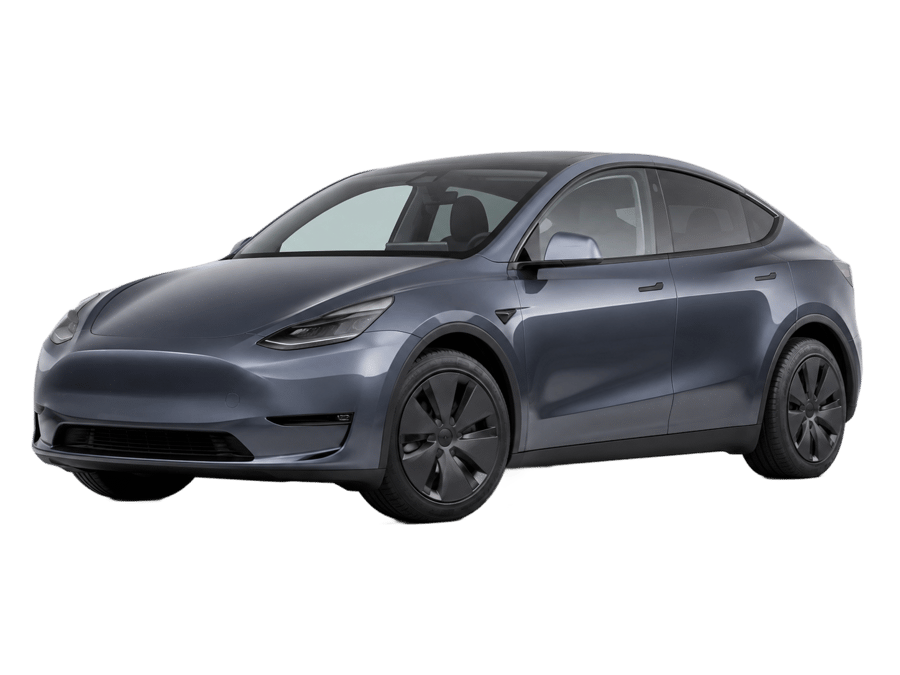
Complaint volume
279 consumer-submitted complaints are matched to this model year. Treat the count as a research signal, then read the actual summaries for repeated symptoms.
Complaint records
279 consumer-submitted complaints on record for the 2026 Tesla Model Y, grouped by component category.
Buyer interpretation
Complaint records are most useful when they turn into inspection points, seller questions, and comparison checks against nearby model years.
279 consumer-submitted complaints are matched to this model year. Treat the count as a research signal, then read the actual summaries for repeated symptoms.
The most common categories are unknown or other, forward collision avoidance, electrical system. Use those categories as a test-drive checklist instead of judging the vehicle from the total count alone.
Enriched records include 53 crash reports, 1 fire report, 13 injury reports, and 0 fatality reports. These fields come from complaint records and should be read in context.
Mileage is available on 18 complaints, with an average reported failure mileage of 7,652 miles. Compare that with the mileage on the listing.
Build a buyer checklist to turn these issues into questions and inspection points.
279 total complaints on record
| Date | Component | Summary | Severity | Mileage |
|---|---|---|---|---|
| Feb 2026 | ELECTRICAL SYSTEM | I am submitting this complaint to report a safety concern involving Tesla’s Full Self-Driving (FSD) system. On [XXX], while my vehicle was operating under FSD in Las vegas NV, the vehicle was positioned in a clearly marked left-turn-only lane. The roadway had visible pavement arrows indicating a required left turn. Despite these clear lane-direction markings, the FSD system proceeded straight instead of turning left. The maneuver occurred abruptly. I did not receive a clear or timely takeover warning prior to the deviation. The transition from a left-turn lane into a straight path happened quickly, leaving extremely limited reaction time (estimated less than one second). As a result of the system’s unexpected behavior, a collision occurred with another vehicle traveling straight. At the time of the incident: Weather conditions were clear. Road markings were visible. There were no obstructions blocking lane markings. I was attentive and looking at the road. The police report assigned fault to me as the driver; however, the vehicle was actively operating under Tesla’s FSD system when it disregarded the clearly marked left-turn-only lane. I am concerned that this behavior represents a potential safety defect involving: Lane interpretation errors Failure to follow traffic control markings Insufficient takeover warning timing If this issue is systemic, it may pose a broader safety risk to other road users. I respectfully request that NHTSA review this matter as a potential safety defect related to Tesla’s Full Self-Driving system. INFORMATION REDACTED PURSUANT TO THE FREEDOM OF INFORMATION ACT (FOIA), 5 U.S.C. 552(B)(6) | Crash: Yes Fire: No Injuries: 2 Towed Medical attention | Unknown |
| Feb 2026 | LANE DEPARTURE | There are two major safety issues that came with the vehicle upon the new car delivery. The problems existed even before the delivery as I found the first issue during the new car delivery and the second issue upon leaving the delivery center. First is the non-operational FSD (Full Self Driving). FSD never worked from the beginning. The Tesla advisor noticed it at the delivery center but insisted that it will work after 10 minutes of driving, needing calibration. However, after more than several hours of driving and 35 miles of driving, FSD still doesn't work and the display says FSD is non-functional. Second is the lane departure and lane approach sensor. When the neighboring car approaches from the side, there is no alert or notification. The blind spot sensor doesn't work either. This is a big safety issue and I almost got into an accident had I looked back and noticed a car approching from behind when I tried to move into the right lane. I expalined both of these two major issues with the vehicle and left the car at the service center in Vienna, VA, expecting the repair to be done within hours as promised. However, the service technician later sent a message via Tesla app that the part is missing from the car and the part needs to be ordered. It's been a full day and Tesla is still in the process of finding the issue, which means they still don't know what the issue is. I belive this is not the quality of product and testing that has been registered with Tesla in NHTSA. This surely represents the sub-par quality product and lack of full testing that needs to be done prior to the new car delivery. The service center employee responded via app that the car needs to in repair for 5 full days and may need more time if necessary. This is definitely not the quality and experience that are advertised by Tesla. | Crash: No Fire: No | Unknown |
| Feb 2026 | UNKNOWN OR OTHER | The 2026 Tesla model Y was driving in FSD (Supervised) mode in the Home Depot Colma, California parking lot, located at [XXX] on [XXX] at [XXX]. It stopped to let a black pickup truck in front of it pull about 3/4 of the way into a parking place on the right side. After waiting several seconds, it turned the wheels slightly to the left and slowly crept around the pickup truck, when the truck reversed and hit the passenger side of the vehicle at low speed just ahead of the rear wheel well. I believe a human driver would have waited until the pickup truck was fully parked before proceeding, thus preventing this accident, thus highlighting a failure of the FSD (Supervised) system. There were no warning lamps, messages or other symptoms of the problem prior to the failure, The accident was reported to my insurance company and the vehicle was inspected by a collision repair shop. The manufacturer has not been informed. INFORMATION REDACTED PURSUANT TO THE FREEDOM OF INFORMATION ACT (FOIA), 5 U.S.C. 552(B)(6) | Crash: Yes Fire: No | Unknown |
| Feb 2026 | STRUCTURE | The contact owns a 2026 Tesla Model Y. The contact stated that while driving approximately 70 MPH, there was a loud pop coming from the rear of the vehicle. The contact noticed that the glass on the passenger’s side had shattered, and glass had fallen inside the vehicle. The contact pulled over to the side of the road and noticed that there was no impact on the glass to cause it to shatter. The contact returned to the residence and parked the vehicle. The dealer was called, and the dealer stated that the repair was not covered under recall or warranty. The vehicle was taken to the dealer, who confirmed that the failure was not caused by an impact and informed the contact that the parts were expected to be ordered and should arrive within a week for the repair. The vehicle was not yet repaired. The manufacturer was informed of the failure. The failure mileage was 13,000. | Crash: No Fire: No | 13,000 |
| Feb 2026 | UNKNOWN OR OTHER | Windshield developed a long crack overnight while parked in an enclosed garage with stable temperatures. No rock impact was observed or heard during driving prior to parking. Upon inspection, a small mark resembling an impact point was found, but it is unclear whether this is an external impact or a stress fracture originating from within the glass. No unusual temperature changes occurred overnight. The crack appeared spontaneously and is disproportionately large. In 15+ years of driving other vehicles, I have never experienced a windshield crack under similar circumstances. This is a widely reported issue among Tesla Model Y owners, with numerous reports of spontaneous windshield cracking with no identifiable external cause. The windshield is a structural safety component critical for passenger airbag deployment and roof crush resistance in rollover accidents. Fragile or defect-prone windshield glass poses an unreasonable safety risk. | Crash: No Fire: No | Unknown |
| Feb 2026 | STEERING,WHEELS | INCIDENT INVOLVING FSD (SUPERVISED) v14.2.2.4. On February 15, 2026, while the vehicle was operating under Full Self-Driving (Supervised) v14.2.2.4, the system failed to detect a stationary curb. The vehicle initiated a trajectory that resulted in a collision, causing a structural gouge in the passenger-side rear tire sidewall. Per MA 540 CMR 4.04, this damage renders the vehicle unroadworthy. I have saved Dashcam/Sentry video footage as proof of the system's failure to navigate the obstacle. | Crash: Yes Fire: No | Unknown |
| Feb 2026 | UNKNOWN OR OTHER | The 2026 Telsa Model Y Juniper I took delivery of on 2/19/2026 has no emergency release in the front trunk (the frunk). This should be standard but for some reason after Oct 2025, Tesla decided not to include this in the new models. This is a safety hazard as if someone were to get locked in the frunk (front trunk) they would have no way of being able to get out. | Crash: No Fire: No | Unknown |
| Feb 2026 | UNKNOWN OR OTHER | The frunk is missing, an emergency release button or latch, so a small child could be trapped inside with no way out. | Crash: No Fire: No | Unknown |
| Feb 2026 | SUSPENSION,LANE DEPARTURE,FORWARD COLLISION AVOIDANCE | I am submitting this complaint regarding a newly leased 2026 Tesla Model Y Premium RWD, which I took delivery of on February 6, 2026 from Tesla Watertown, MA. I am a returning Tesla customer and entered this lease after test driving the same model on January 24, which did not exhibit any issues. Immediately upon driving the vehicle off the lot (approximately 12 miles), I noticed a persistent rattling noise from the front suspension area. The noise occurs over normal road conditions and has been present since delivery, significantly affecting the quality and value of the vehicle. On February 9, Tesla Watertown evaluated the vehicle and later replaced both front upper control arm (FUCA) mounts. On February 10, before repairs were completed, multiple safety systems suddenly disabled while driving, including regenerative braking behavior, traction and stability control, lane safety features, and automatic emergency braking, creating a dangerous situation. I returned the vehicle immediately and was provided a loaner. I picked up the vehicle on February 13 and was told the suspension issue was resolved, but the noise remained. I then sought a second opinion at Tesla Peabody, where a master technician conducted a ride-along and confirmed the condition. He verified that the latest FUCA parts had been installed and the front structural “pencil braces” had been removed per Tesla guidance. I was informed the vehicle falls into a known noise category affecting 2026 RWD Model Y vehicles and that there is currently no repair or engineering solution available. This defect has existed since delivery and remains unresolved after multiple service visits and component replacements. I have contacted Tesla regional leadership and customer support multiple times without response. | Crash: No Fire: No | Unknown |
| Feb 2026 | ELECTRICAL SYSTEM,LATCHES/LOCKS/LINKAGES | The contact owns a 2026 Tesla Model Y. The contact stated that the model year was advertised with a front trunk emergency release and interior lighting. The contact stated that after purchasing the vehicle, the contact became aware that the vehicle was not designed with the front trunk emergency release or interior lighting, which the contact considered a safety issue and a violation of FMVSS No. 401. The Tesla Service Center was contacted and confirmed that the model year and other vehicles were no longer designed with the missing parts. The manufacturer was notified of the issue. The failure mileage was approximately 570. | Crash: No Fire: No | 570 |
| Feb 2026 | ELECTRICAL SYSTEM,EXTERIOR LIGHTING | Tesla decided to remove the safety unlock illuminated button from its front trunk (frunk) sometime in mid 2025. This can be a safety issue which was present in earlier models and against the Federal Motor Vehicle Safety Standard (FMVSS) 401, mandating an interior release mechanism for enclosed trunks to prevent entrapment. I contacted Tesla and they told me that my vehicle was made after Tesla decided to remove this safety feature. | Crash: No Fire: No | Unknown |
| Feb 2026 | SERVICE BRAKES, HYDRAULIC | The contact owns a 2026 Tesla Model Y. The contact stated that while driving at approximately 10 MPH into a parking spot, the contact depressed the brake pedal, but the vehicle failed to stop. The vehicle drove over a parking bump, struck a bench, and the automatic emergency braking system engaged, preventing the vehicle from hitting the wall. The air bags did not deploy. The contact stated that she had back pains, but was unsure whether they were related to the failure. There was no medical attention received. A police report was filed. The vehicle was able to be driven away from the crash site. The vehicle was taken to the dealer, who test-drove the vehicle. The contact was informed that the vehicle was not equipped with a manual parking brake; however, the brakes were functioning normally according to the computer, and to wait for corporate's report before taking the vehicle to a collision center for front-end repairs. The vehicle was not repaired. The manufacturer was made aware of the failure and opened an investigation. The contact was informed that the vehicle was safe to drive. The failure mileage was approximately 6,000. | Crash: Yes Fire: No Injuries: 1 | 6,000 |
| Feb 2026 | UNKNOWN OR OTHER | There is no frunk emergency release button in this version of Juniper Model Y | Crash: No Fire: No | Unknown |
| Feb 2026 | AIR BAGS,FORWARD COLLISION AVOIDANCE | Rear-end collision. My Tesla impacted the rear of another vehicle at approximately 15–18 mph. No forward collision warning observed. Owner-provided data shows AEB status as SNA. Impact is such that the car is totaled. | Crash: Yes Fire: No Towed | Unknown |
| Feb 2026 | BACK OVER PREVENTION,FORWARD COLLISION AVOIDANCE | At approximately 5:50 PM on Feb 12, 2026, a collision occurred while the vehicle was under the control of "Full Self-Driving (Supervised)." While parked in a commercial lot, I engaged FSD to initiate a route home. A stationary semi-truck was positioned behind my vehicle. Upon engagement, the FSD system failed to detect the presence of the stationary truck. The vehicle initiated a rearward/lateral maneuver at a speed of 1 mph, directly striking the corner of the semi-truck. Safety Failure Details: The collision resulted in significant damage to the right rear quarter panel and associated sensors of my Tesla Model Y. Dashcam footage and system telemetry confirm that FSD was active (Supervised mode) during the entire duration of the maneuver. The system's occupancy network and vision suite failed to identify a large, stationary object within its immediate path of travel at a crawl speed. Request for Investigation: I am reporting a critical failure of the FSD software’s object detection and path planning capabilities. The system commanded a movement into a clear obstruction without issuing any takeover alerts or applying emergency braking, despite the low speed and high visibility of the obstacle. | Crash: Yes Fire: No | Unknown |
| Feb 2026 | STEERING,LANE DEPARTURE,FORWARD COLLISION AVOIDANCE | I am reporting a safety incident involving my Tesla while Autopilot/Full Self-Driving was engaged. On February 11, 2025 at approximately 9:22 am, on Waccamaw Medical Park Ct Conway, SC 29526, I was driving on a normal city street with the system actively controlling steering and speed. Without any warning or alert, the vehicle suddenly steered to the right toward the curb and struck it. I was very attentive, but the steering movement happened too quickly for me to safely prevent the impact. No forward collision warning, lane departure alert, or disengagement occurred prior to the incident. The impact caused damage to the wheel and tire (see attached photo). This behavior appears to be an incorrect steering decision by the automated driving system after misinterpreting the roadway edge or lane boundary. I am requesting review of the vehicle logs and investigation of the system behavior during this event. | Crash: No Fire: No | Unknown |
| Feb 2026 | SEATS | The passenger side seat heat was on and burnt the leather of passenger side seat. | Crash: No Fire: No | Unknown |
| Feb 2026 | VEHICLE SPEED CONTROL,SERVICE BRAKES | It was snowing and I was driving slow. About 8:40am, Feb 6th, 2026, I got a "One pedal driving disabled" alert just for a moment, then tried to stop before an intersection because a signal was turning to red. However, break didn't work and I had to enter the intersection under a red signal. Fortunately, there was no car in front of me, also a car coming from the side didn't notice signal changed. No accident, but very very scary. On Dec 6th, I also got an alert "One pedal driving disabled" and even after I released an accelerator pedal, speed didn't slow down. I reached Tesla on Feb 6th, but the service scheduled 4 weeks later. It's not safe to drive at all, thus, I will try to have them to check my vehicle asap. | Crash: No Fire: No | Unknown |
| Feb 2026 | STRUCTURE | The forward trunk also known as the Frunk does not have the legally required interior release. I have children. I train them how to use a trunk emergency release. This car does not have one for the Forward trunk. This is a serious safety hazard. | Crash: No Fire: No | Unknown |
| Feb 2026 | SUSPENSION,WHEELS | Went for a tire rotation. Service tech noticed the following- THE PASSENGER REAR CONTROL ARM HAD A BOLT THAT WAS BACKING OUT OF IT & THE NUT WAS MISSING. THE BOLT HAD RUBBED THROUGH THE WHEEL WEIGHT ON THE WHEEL THAT WAS ORIGINALLY ON THE RIGHT REAR. Photo is included of the rear control arm bolts for both sides of the car. Only the right rear had a problem. | Crash: No Fire: No | Unknown |
| Feb 2026 | ELECTRICAL SYSTEM | The contact owns a 2026 Tesla Model Y. The contact stated that while driving approximately 59 MPH with the Autonomous Self Driving feature activated and attempting to make a right turn, the vehicle failed to decelerate or signal while making the turn. The contact manually made the turn and then continued driving and reengaged the Autonomous Self Driving feature. The failure had occurred twice on the same day. The vehicle was not taken to the dealer. The vehicle was not diagnosed or repaired. The manufacturer was informed of the failure through the Mobile App. The manufacturer was not notified of the failure. The failure mileage was approximately 3,500. | Crash: No Fire: No | 3,500 |
| Jan 2026 | SUSPENSION | Front suspension makes knocking and rattling noise - Tesla's solution was to remove structural braces from the car that transmit the noise - the car has not been recertified with the braces removed, I am concerned about adverse safety, especially in small frontal overlap collision. | Crash: No Fire: No | Unknown |
| Jan 2026 | VEHICLE SPEED CONTROL,FORWARD COLLISION AVOIDANCE | Vehicle equipped with Tesla Full Self-Driving (Supervised v 14.2) software exhibits unsafe automated behavior due to removal of driver speed control. The system infers speed limits and driving speed without allowing the driver to set a safe maximum speed. In residential neighborhoods with children, pedestrians, and shared social spaces, the vehicle drives at model-inferred speeds that are socially and physically unsafe. Driver is unable to impose a lower safe speed limit without disengaging. Tesla removed previous option for driver to adjust speed. In a state park campground, the system failed to detect a posted 15 mph speed limit and inferred a 55 mph limit. The vehicle accelerated to unsafe speeds on narrow, pedestrian-heavy roads, with no driver ability to cap speed while under FSD. This represents a loss of human override authority and unsafe autonomous system behavior, creating pedestrian hazard and safety risk. Failure mode: automated speed inference dominance, map prior misclassification, lack of driver override, unsafe autonomous acceleration in pedestrian environments. | Crash: No Fire: No | Unknown |
| Jan 2026 | VEHICLE SPEED CONTROL,FORWARD COLLISION AVOIDANCE | Vehicle equipped with Tesla Full Self-Driving (Supervised v 14.2) software exhibits unsafe automated following behavior. The system maintains following distances that are too short at steady speeds, including behind stable lead vehicles with no braking or traffic disturbances. Tesla’s own Safety Score system flags this behavior as “following too closely,” indicating elevated collision risk. However, the driver has no available control to adjust minimum following distance or impose safer headway while using FSD This represents unsafe autonomous tailgating behavior with loss of driver control authority over safe following distance, creating increased risk of rear-end collision and hazardous automated driving conditions. Tesla offers several controls (Sloth, Chill, Standard, Hurry, and MadMax) modes, none of which solve the issue if the driver in front is driving the speed limit. My car under FSD will crowd (or tailgate) the front car regardless of the mode. In one instance, I was following a car under FSD in sloth mode and it made the car in front of me pull over just to get me off their tail.... this is certainly now how I wish to drive, and don't want my car driving this way. Failure mode: automated headway policy dominance, lack of driver override, unsafe autonomous following distance. | Crash: No Fire: No | Unknown |
| Jan 2026 | FORWARD COLLISION AVOIDANCE | On full self driving, there is no way to change the follow distance and it follows way too close very often. This generates incidents that the car reports to Tesla insurance and we are penalized for something we can't always control. We also can't change our speed but I'm more concerned about the follow distance on highways. Last incident at 7:46PM on 1/25/2026. | Crash: No Fire: No | Unknown |