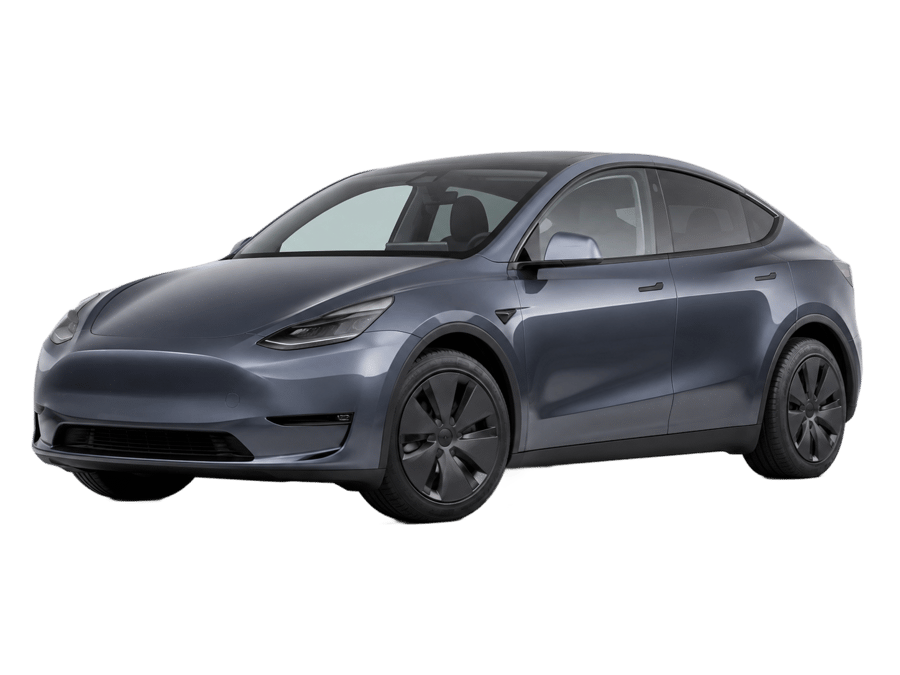
Complaint volume
1068 consumer-submitted complaints are matched to this model year. Treat the count as a research signal, then read the actual summaries for repeated symptoms.
Complaint records
1068 consumer-submitted complaints on record for the 2023 Tesla Model Y, grouped by component category.
Buyer interpretation
Complaint records are most useful when they turn into inspection points, seller questions, and comparison checks against nearby model years.
1068 consumer-submitted complaints are matched to this model year. Treat the count as a research signal, then read the actual summaries for repeated symptoms.
The most common categories are forward collision avoidance, steering, vehicle speed control,forward collision avoidance. Use those categories as a test-drive checklist instead of judging the vehicle from the total count alone.
Enriched records include 137 crash reports, 3 fire reports, 45 injury reports, and 1 fatality report. These fields come from complaint records and should be read in context.
Mileage is available on 74 complaints, with an average reported failure mileage of 13,628 miles. Compare that with the mileage on the listing.
Build a buyer checklist to turn these issues into questions and inspection points.
1,068 total complaints on record
| Date | Component | Summary | Severity | Mileage |
|---|---|---|---|---|
| Feb 2024 | SEAT BELTS | The Tesla displays Passenger restraint system fault occasionally. The vehicle goes into turtle mode and the screen goes in park graphics. The car still drives slowly but doesn’t show any vehicle info such as speed. Took it into tesla service center last month and the said that it was because of a power frunk accessory. This is a common problem. Tons of reddit post and tesla forums. | Crash: No Fire: No | Unknown |
| Feb 2024 | LANE DEPARTURE,BACK OVER PREVENTION | The back camera of the Tesla model y does not provide necessary image quality to identify any objects/persons of cross traffic when reversing the vehicle. In one incident I was about to hit a person behind the vehicle as there was no proper cross traffic alerting and no proper camera view. When I approached Tesla for support they identified the problem and determined it is by design and would not be able to help much. As per the images uploaded, there is clear distinction of camera quality between side camera and back camera. Also the images taken when the vehicle is in stop mode making the back light illuminate otherwise the images would be much darker. Also I want to point out that the back camera functions good during day time and the issue happens only during night. | Crash: No Fire: No | Unknown |
| Feb 2024 | STEERING | Autopilot feature disengaged with a single, 3 second warning. | Crash: No Fire: No | Unknown |
| Feb 2024 | FORWARD COLLISION AVOIDANCE | Random hard breaking at highway speed, multiple times on a road trip between Las Vegas and Tucson. It's an obvious hazard as traffic following the Tesla will likely not have sufficient time to react safely. How is this not regulated ? | Crash: No Fire: No | Unknown |
| Feb 2024 | EXTERIOR LIGHTING,STRUCTURE,VEHICLE SPEED CONTROL | At 9:37 a.m. on January 26, I was driving on Freeway 60. The three cars in front of me braked suddenly. I stepped on the brake quickly, but after I stepped on the brake for 3 seconds, the speed of the car still did not slow down, and it directly hit the rear of the car in front.Afterwards, on the Tesla app on, an alarm was displayed, saying that at 9:37, there was a problem with the steering wheel and brakes(unavailable) And also, there is a Manufacturer recall number:TBD NHTSA Recall Number 24V-035; TC2024-027 (the manufacturer has failed or is unable to remedy this safety recall for my vehicle in a timely manner, I want to file an online complaint with NHTSA) | Crash: Yes Fire: No Towed | Unknown |
| Feb 2024 | FORWARD COLLISION AVOIDANCE | Component that failed: Automatic Emergency Braking What happened: When traveling at night on an ice covered road, the car abruptly and erroneously engaged the automatic emergency braking which almost resulted in a crash. I was driving the vehicle using full manual mode and the car does not have a full self driving subscription; no cruise control was engaged and I was traveling at a steady speed of 35MPH. There was no inclement weather, but the road was covered in snow and ice. The road was a two lane county road with opposing traffic. As a light duty truck passed me traveling in the opposite direction the car abruptly engaged automatic emergency braking. I was centered in my lane, there were no obstructions in my lane, nor was the oncoming vehicle in my lane. The AEB was so incredibly aggressive that I briefly lost control due to the slick road. The AEB also appeared to override the antilock brakes as I did not feel any vibration to indicate that the brakes were oscillating in an attempt to maintain control. The AEB event lasted less than a second and I was able to recover control. HOWEVER, if my car had slid to the left instead of to the right, I would have been in a head on collision with a larger truck at an equivalent of 70MPH, given the size difference and a potential half overlap crash, there is a non-zero chance that it would have been fatal. I contacted Tesla and have received no response and there is no ability to disable AEB. I DO NOT WANT safety features that can kill me without warning based on some nebulous neural network implemented at a breakneck pace by employees that have never driven in snow. | Crash: No Fire: No | Unknown |
| Feb 2024 | STEERING,LANE DEPARTURE | I was driving in the left lane of the highway. Just up ahead I saw something sitting on the guardrail to my left which was jutting into my lane, right about eye level. It looked like a long wood 2x4. I swerved to my right to avoid hitting the piece (scared it would shatter my windshield) and the steer correct safety feature (probably wrong term) quickly threw me back to the left and into the guardrail. I turned my steering wheel to the right to get away from the guardrail and it threw me back into the guardrail. It did this a few times. I didn’t understand what was going on. It felt like I had no control over the car. It just kept slamming back into the guardrail. I finally took my foot off the gas and it slowed down and stopped throwing me around. Luckily, there was no one next to me and no one else in the car with me. No one got hurt. If it wasn’t for that “safety” feature, my car wouldn’t have been damaged. I did call the police to let them know about the wood piece that was sitting on the guardrail so hopefully it gets removed and no one gets hurt. | Crash: Yes Fire: No | Unknown |
| Feb 2024 | AIR BAGS | Rear right occupancy sensor, At service mode shows red and says seat sensor fault, this seat was replaced due to issue at first week of purchase. Tesla service center says, they know my car issue, it will be fixed in future update, but after 6 months no fix yet. | Crash: No Fire: No | Unknown |
| Feb 2024 | FORWARD COLLISION AVOIDANCE | The contact owns a 2023 Tesla Model Y. The contact stated while driving approximately 70 MPH with the cruise control engaged, the vehicle decelerated quickly to 50 MPH as if the brake pedal was depressed. The contact stated no warning light was illuminated. The contact was able to depress the accelerator pedal to regain forward momentum. The contact stated that the failure had occurred several times and an inadvertent braking failure had occurred when the cruise control was engaged. The contact had not taken the vehicle to a local dealer. The vehicle was not diagnosed or repaired. The manufacturer was informed of the failure. The failure mileage was approximately 5,000. | Crash: No Fire: No | 5,000 |
| Jan 2024 | FORWARD COLLISION AVOIDANCE | I received a false forward collision warning on the intersection of Alder Woods Dr. and Sweat Leaf Te. intersection for a parked that is legally parked on the street. Tesla's forward collision mistook the parked car, for a moving car. Driving conditions were clear with no snow, no ice or rain. None of the car cameras were blocked either. I took a picture or the street and the car that is parked on the street. | Crash: No Fire: No | Unknown |
| Jan 2024 | VISIBILITY/WIPER,FORWARD COLLISION AVOIDANCE | To Whom It May Concern at the National Highway Traffic Safety Administration (NHTSA), I am writing to urgently express my concerns about the latest software update for the Tesla Model Y’s autopilot system, which, in my view, significantly compromises safety. As a Model Y owner, I have generally found the vehicle and its features to be reliable and safe. However, the recent update has introduced an overly stringent hands-on-wheel detection mechanism that is not only inconvenient but also potentially hazardous. The new update requires frequent and often forceful interaction with the steering wheel to assure the system of driver presence. This change is drastically different from my previous experience, where I received only one hands-on-wheel violation in two years. The current sensitivity of the system disrupts the smooth operation of the autopilot, leading to frequent and abrupt disengagements. I have found myself struggling to maintain the system’s activation, inadvertently causing the vehicle to exit autopilot mode multiple times. This issue goes beyond mere inconvenience; it actively detracts from driving safety. The need for constant and sometimes aggressive adjustments to satisfy the system’s requirements is distracting and can lead to erratic vehicle behavior. The irony is stark: a system designed to enhance driving safety and ease is now a source of potential danger and stress. The unpredictability and over-sensitivity of the updated system could lead to dangerous situations, especially on highways or in heavy traffic, where sudden disengagement of the autopilot can be particularly risky. As a driver, I now find myself more focused on keeping the autopilot engaged than on the actual driving conditions and surroundings, which is surely contrary to the feature’s intended purpose. I urge the NHTSA to investigate this issue as a matter of urgency. | Crash: No Fire: No | Unknown |
| Jan 2024 | LANE DEPARTURE | The new safety requirement for Tesla to update its autosteer to be more stringent and align to safety regulations is a complete disaster. This requirement results in multiple false alarms and creates more distractions than prior to the update. Furthermore... it's upsetting that this department has an apparent obsession with Tesla's technology. Rather than promote and work with Tesla to create a future where technology can meaningfully assist drivers on the road and reduce fatalities and car crashes, this department is doing its best to ensure that no progress is made. Lastly - it would be nice to see some actually meaningful and relevant statistics regarding Tesla autopilot incidents. Rather than reporting a meaningless number of incidents with 0 context, instead try comparing the number of Tesla incidents to non-Tesla incidents. And analyzing if there's a statistically significant difference between those two groups. | Crash: No Fire: No | Unknown |
| Jan 2024 | FORWARD COLLISION AVOIDANCE | To whom it may concern. The Tesla auto pilot feature was substantially altered recently because of a recall and reports of driver misuse. Auto pilot is inherently a safety feature - under auto pilot the driver is assisted to navigate while being protected by collision avoidance. It also substantially reduces driver fatigue by relieving the driver of the duty to clutch the wheel. We are aware some drivers have abused this system or misused it by not attending to the driving task - and we support efforts to manage this behavior. However, the changes forced upon Tesla drivers have ruined autopilot - in both ineffective and illogical ways. Frequent alerts take driver attention OFF the road, including being chastised for looking at prior alerts. Many drivers will simply no longer use it. The consequence of ruining the driver autopilot experience has bad consequences for safely. To my knowledge, ~40,000 people died in automobile accidents in a typical year, and that number is rising as more drivers are distracted by cell phone use. Most of the deaths can be related to driver error. Advanced driver assistance features are the obvious answer. A few anomalies should not deter policy from missing the value of advanced assist features. Please let Tesla engineers return to more balanced alert mechanisms and pursue other more effective means of detecting and curtailing abuse. Far more deaths will occur if autopilot and other advanced systems are curtailed because features are rendered useless by restrictions the mostly punish safe drivers. Thank you. | Crash: No Fire: No | Unknown |
| Jan 2024 | FORWARD COLLISION AVOIDANCE | While driving our new Tesla MYLR in heavy rain, with Traffic Aware Cruise Control (TACC) on, we experienced two Front Collision Warnings (FCWs) in quick succession, causing the car to massively reduce speed, causing a car behind us to nearly hit us. I believe this is called "phantom braking" in the common parlance. I believe this is also an issue with the wiper system. We were driving about 55mph on a two lane road. It was raining hard and the wipers were set to Auto. The wipers weren't working fast enough to clear the rain well, and adjusting the wipers in the Tesla are not easy to change, requiring hitting the end of the left stalk, then scrolling left or right with a scroll wheel while looking at the screen. There was not another car in front of us and TACC (but not autosteer) was on. All of a sudden a loud alarm sound blared, a FCW appeared on the display, and the car slowed to about 35 mph. The car behind us got very close to hitting us. This happened again about 5 minutes later. It scared the bejeezus out of us. This seems very dangerous! | Crash: No Fire: No | Unknown |
| Jan 2024 | SUSPENSION,STRUCTURE,UNKNOWN OR OTHER | I used to have a 2021 performance y (the 2021 had none of these issues), and purchased a 2023 in early October. My current milage is 2,783. A few weeks into owning this car I could feel something hitting the cabin floor in varying situations. Initially I thought it was a road debris, but it was only at lower speeds. I should only be able to hear road debris and not feel it in the floor. I have come to believe that the car has loose structural bolts. I have a crease/dent in the roof pillar (passenger rear above door). It is an almost impossible spot to hit without a scratch or breaking the glass, and it would take an exorbitant amount of force to bend that pillar. I now have singled it out to torsion moments like entering a driveway or ramp. I believe this twisting could potentially compromise the battery pack and lead to fires in wet conditions. | Crash: No Fire: No | Unknown |
| Jan 2024 | BACK OVER PREVENTION | The contact owns a 2023 Tesla Model Y. The contact stated that while driving in reverse, the back-over protection camera was inoperable. The contact stated that due to the failure, the contact crashed into a parked vehicle which was parked behind the contact's vehicle. There was no damage to the other vehicle. However, the contact's vehicle was damaged on the driver's rear panel. The contact stated that after researching, the contact discovered the soon-to-be Tesla recall SB-24-00-002, in which notifications will be sent out in March. The vehicle was not diagnosed or repaired by an independent mechanic or dealer. The manufacturer was not made aware of the failure. The failure mileage was approximately 5,702. | Crash: Yes Fire: No | 5,702 |
| Jan 2024 | UNKNOWN OR OTHER | The incident: The vehicle moved forward when put in reverse, multiple times on one occasion. Details: At approximately 14:00 on 1/14/24, I parked the vehicle on a driveway that is on a hill. Normal terrain where I reside. As I was leaving 15 minutes later I put the vehicle in drive to get out but I also had to reverse in order get back into the street properly. I then put the car in reverse, and the car started moving forward. I put the car back in park, puzzled. I then carefully put it again in reverse, the car still went forward. This happened four or five times: remove the car from park, then put the car in reverse and the vehicle would move forward instead. In front of me was a fence and a tree and I could not keep going forward. I had a passenger in the vehicle who witnessed all of this and attempted to help by going in front of the vehicle to make I would not hit the wall/tree as the car would only go forward when in reverse. Eventually, after three or so minutes, I put the car in park, then neutral and then in reverse, finally the vehicle moved as it should have. Conclusion: It is hard to tell what component of the system malfunctioned. On the screen, the vehicle would show that it was in reverse by highlighting the "R" but the vehicle would still move forward instead. The vehicle has not yet been inspected by the manufacturer but that has been arranged. With a simple search online, it is apparent that this issue has occurred many times to others with the same model vehicle. This incident was extremely alarming because when a car is supposed to do one action and does the complete opposite, people's lives are put at risk. This is never supposed to happen. When put in reverse a car should reverse not go forward, simple as that. | Crash: No Fire: No | Unknown |
| Jan 2024 | FORWARD COLLISION AVOIDANCE,BACK OVER PREVENTION | Vehicle has frequent occurrences of phantom breaking while in cruise control. Tesla reviewed 3 occurrences and determined the system was working as Tesla intends it to and refuses to remedy. The system is prematurely identifying potential hazards which are not yet hazards and applying the brakes thereby creating a hazard due to vehicles being behind me and could reared my vehicle. One instance is driving on a 4 lane highway with a median, cross section traffic vehicle coming from left hand side pulls into the median and is not a hazard. The Tesla system decides the vehicle is a hazard and applies the brakes which could have resulted in a rear end collision. Another similar instance was a cross section vehicle at a stop sign which slightly moved forward while at the stop sign. The Tesla system decides the vehicle is a hazard and applies the brakes which could have resulted in a rear end collision. Tesla camera systems also falsely identify emergency vehicle lighting which results in immediate braking on an interstate. This system flaw almost resulted in an 18 wheeler rear ending me. | Crash: No Fire: No | Unknown |
| Jan 2024 | STEERING,STRUCTURE | As I attempted to make a left turn, I wasn't able to make a complete turn when the steering wheels partially locked on me, resulting the car hitting a utility pole, I could only drive forward or reverse, difficulty making a turn. I was able to make it home but the next day, it had to be towed to a Tesla authorized collision center for damage assessment. I'm hoping Tesla can remedy the problem because usually my kids are in the car with me. Reached out to Tesla regarding the incident, they took my information as to what happened exactly during the accident and that there would an investigation on their end which should take about 1 week. | Crash: Yes Fire: No Towed | Unknown |
| Jan 2024 | UNKNOWN OR OTHER,SERVICE BRAKES | Tesla model Y AWD 2023 Took delivery of a new Tesla about 3 weeks ago. Upon returning to Crofton Maryland from Charlottesville Virginia January 15 on a snowy day, we parked our Tesla model Y AWD in our driveway. The vehicle was subsequently engaged at the parking gear position with the operator and all passengers out, my wife then opened the trunk to unload our groceries to the garage. Within three minutes of parking the vehicle with its trunk still open as we still had more items to unload, we witnessed the Tesla sliding 30 feet from our driveway and coming to a stop due to a dipped in between the driveway and the street as well as the buildup snow. All these happened within moments of my wife moving from behind the vehicle to the garage. Luckily, there was none of my family behind the vehicle or any other pedestrian around. The incident has since been reported to Tesla. | Crash: No Fire: No | Unknown |
| Jan 2024 | FORWARD COLLISION AVOIDANCE,LANE DEPARTURE | The NHTSA changes that forced the Tesla update as part of campaign #23V-838 do NOT make the vehicle’s autopilot system more safe. Moreover, the car is actually now MORE UNSAFE and distracting with disruptive beeping and alerts. The NHTSA should have Tesla reverse the changes to basic autopilot in this update. Furthermore, the NHTSA should pivot its focus to other manufacturers’ autopilot-equivalent software features, as many of them are even less restrictive or even more dangerous. For example, the blue cruise can disengage without any warning to the user. There have been no recalls relating to this. | Crash: No Fire: No | Unknown |
| Jan 2024 | POWER TRAIN,ELECTRICAL SYSTEM,FUEL/PROPULSION SYSTEM | I hit a rock at approximately 35 mph that got projected under my car and caused a bad leak in the battery coolant system. Received a low coolant warning about one minute after the incident. The alert indicated that the car was safe to drive but to schedule service asap. Tesla instructed me to drive to the local SC that is 15 min away when though enough coolant had leaked to render the user display black. I had no turn signals, no speedometer, nothing except the ability to move the car. Tesla alerted me the next day that the damaged occurred at a poorly protected point where the coolant lines connect to the HV battery and that the battery with less than 20K miles needs to be replaced. As a result, they discharged the energy from the battery to avoid a “thermal event”. In doing some research, I discovered a number of documented cases of similar failure due to the fact that a plastic part is used to protect this critical area and is known to break and not offer ample protection to the coolant lines and front drive system. I’m very concerned that had this occurred on the highway and I continued to drive that a “thermal event” would occur and put me in grave danger of a vehicle fire. This area is too critical for proper vehicle operation and safety around high voltage components to use plastic parts to protect them. I also discovered that earlier model Model 3s used a heavy cloth for this role before changing to the plastic version. | Crash: No Fire: No | Unknown |
| Jan 2024 | STRUCTURE | Defective factory paint. Dirt under the clear coat on hood - inspected by a reputable auto detailer/body shop. | Crash: No Fire: No | Unknown |
| Jan 2024 | UNKNOWN OR OTHER | Received vcfront_a447 error which shut off heating and air in the car. We were returning to Indiana from Tennessee on the [XXX] and lost all ability to heat the cabin or keep windows clear. The temperatures in the car were as low as 27degF by the time we reached home. With ambient temperatures in single digits, the car is basically not useable. This all appears to be related to the NHTSA heat pump campaign 22V050. INFORMATION REDACTED PURSUANT TO THE FREEDOM OF INFORMATION ACT (FOIA), 5 U.S.C. 552(B)(6) | Crash: No Fire: No | Unknown |
| Jan 2024 | SERVICE BRAKES,FORWARD COLLISION AVOIDANCE | I was driving my 2023 Tesla Model Y on I-680 South on Nov 8 2023. The car was on adaptive cruise control. I was driving within the speed limit. The truck infront of me abruptly stopped as there was another collision in the lane I was on. I applied brakes but the car did not stop on time, and I rear ended the truck. I have received the vehicle data report from Tesla. Attached the report for you reference. I believe the adaptive cruise control did not slow down as it should have and when I manually applied break, the vehicle did not stop. | Crash: Yes Fire: No Towed | Unknown |