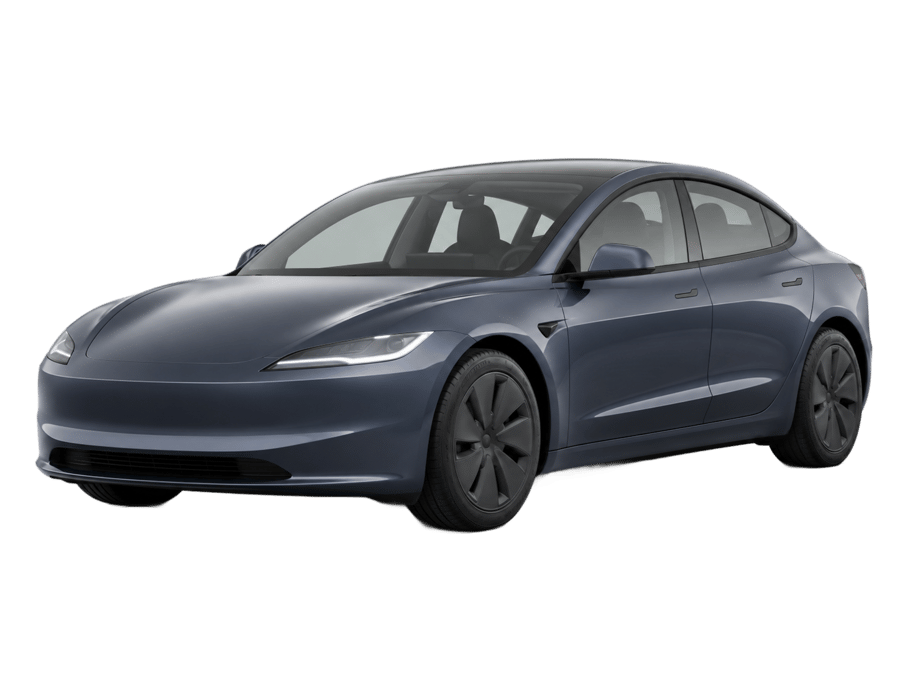
Complaint volume
411 consumer-submitted complaints are matched to this model year. Treat the count as a research signal, then read the actual summaries for repeated symptoms.
Complaint records
411 consumer-submitted complaints on record for the 2023 Tesla Model 3, grouped by component category.
Buyer interpretation
Complaint records are most useful when they turn into inspection points, seller questions, and comparison checks against nearby model years.
411 consumer-submitted complaints are matched to this model year. Treat the count as a research signal, then read the actual summaries for repeated symptoms.
The most common categories are forward collision avoidance, steering, unknown or other. Use those categories as a test-drive checklist instead of judging the vehicle from the total count alone.
Enriched records include 70 crash reports, 1 fire report, 36 injury reports, and 1 fatality report. These fields come from complaint records and should be read in context.
Mileage is available on 39 complaints, with an average reported failure mileage of 14,505 miles. Compare that with the mileage on the listing.
Build a buyer checklist to turn these issues into questions and inspection points.
411 total complaints on record
| Date | Component | Summary | Severity | Mileage |
|---|---|---|---|---|
| Jul 2026 | UNKNOWN OR OTHER | i was using FSD and my vehicle braked suddenly, with nothing in front of me, on the highway going over 50mph with a car close behind. the car to my right was swerving into my lane, so it was trying to help, but my vehicle should have veered left - not brake hard in the fast lane. | Crash: No Fire: No | Unknown |
| Jul 2026 | STRUCTURE | Vehicle: Tesla Model 3 Issue: Power trunk failed to detect obstruction Date of incident: July 5, 2026 Location: Surprise, AZ During normal use of the vehicle, my child pressed the “close trunk” button while I was leaning into the trunk area. The powered trunk began closing and did not stop when it made contact with my head. Instead of reversing direction, the trunk continued applying downward force until I moved out of the way. This indicates a failure of the trunk’s obstruction detection system, which is supposed to prevent injury by stopping or reversing when an object or person is detected. This malfunction poses a significant safety risk, especially to children who may accidentally activate the trunk or to adults loading items. A powered trunk should not be able to continue closing on a person’s head. I request that NHTSA investigate whether this is a defect in the Tesla Model 3 trunk sensor system and whether similar incidents have been reported. | Crash: No Fire: No Injuries: 1 | Unknown |
| Jun 2026 | FORWARD COLLISION AVOIDANCE | My 2023 Tesla Model 3 (VIN [XXX]) has a recurring safety defect in its driver-assistance system involving two unsafe behaviors. First, “phantom braking”: while driving with Autopilot/FSD engaged, the vehicle decelerates suddenly and without warning when there is no obstacle or threat in its path, creating a rear-end collision risk. This was first reported within the vehicle’s warranty period and has recurred. Second, on the most recent occurrence, with a Tesla service technician riding along to witness the issue, Full Self Driving (Supervised) failed to proceed safely through the intersection of [XXX] and [XXX]. The vehicle stopped mid-turn while another vehicle approached from the opposite direction. I had to take manual control to complete the turn and avoid a hazard. The Tesla technician witnessed this directly, and the service summary states FSD “did not proceed through the intersection properly.” The vehicle has been to a Tesla service center twice for this defect. It has not been resolved. The behavior occurs without warning and is unpredictable. INFORMATION REDACTED PURSUANT TO THE FREEDOM OF INFORMATION ACT (FOIA), 5 U.S.C. 552(B)(6) | Crash: No Fire: No | Unknown |
| Jun 2026 | UNKNOWN OR OTHER,FORWARD COLLISION AVOIDANCE | I was driving today in California, to TopGolf. I had to cross a railway crossing around [XXX] I think, or [XXX] - one of those 2, between [XXX] and [XXX] pm.. I was using Tesla's FSD driving to go on a local road. I was not distracted or occupied - the vehicle was going at a fairly high speed like maybe 35 or so, and in a couple of seconds, it broke the red and white safety gate at a railway crossing, inspite of it being down and the train being on the tracks - I WAS IN SHOCK. The car completely missed the red and white gate, and just blew past it, damaging my windshield completely to smithereens and throwing glass all over the car. I was in such SHOCK and TRAUMA that I literaly wanted to exit the car and sit down somewhere, but i gathered my composure and drove quickly to the nearest safest place I could stop, and got into some office parking garage. I then called the cops and reported it. This was such a shock, and thank the Almighty God that I wasnt hurt and that the train didn't just hit me. This HAS to be recalled, and there is no way this should be allowed on the roads. I used FSD a Lot and i will never use it again. INFORMATION REDACTED PURSUANT TO THE FREEDOM OF INFORMATION ACT (FOIA), 5 U.S.C. 552(B)(6) | Crash: No Fire: No | Unknown |
| Jun 2026 | AIR BAGS,STRUCTURE,FORWARD COLLISION AVOIDANCE | A fatal crash occurred involving a 2023 Tesla Model 3. The vehicle departed the roadway, impacted a guardrail, struck a utility pole on the driver’s side, rolled down an embankment, and came to rest upright. The crash resulted in catastrophic intrusion into the driver’s compartment and a fatal injury to the driver. I am requesting that NHTSA investigate the crashworthiness and occupant protection performance of this vehicle, including the structural integrity of the occupant compartment, airbag deployment and effectiveness, and the performance of any advanced driver assistance systems, including collision warnings and automatic emergency braking. I am also requesting review and preservation of all available vehicle data, including Event Data Recorder (EDR) information, vehicle telemetry, driver assistance system status, warning notifications, braking data, steering data, and any other information recorded before and during the crash. At this time, I do not know whether a vehicle defect or system malfunction occurred. My concern is whether the vehicle’s safety systems and occupant protection systems functioned as intended and whether additional vehicle data may help determine if any safety-related issues contributed to the severity of the crash. | Crash: Yes Fire: Yes Fatalities: 1 Towed | Unknown |
| Jun 2026 | ELECTRICAL SYSTEM,VEHICLE SPEED CONTROL,FORWARD COLLISION AVOIDANCE | The vehicle was purchased pre-owned directly from Tesla. On the day of pickup and five days later, while operating on Full Self-Driving (FSD), the vehicle phantom-braked abruptly and then dangerously accelerated through a solid red light into cross-traffic intersections. The driver had to forcefully override the vehicle to prevent a crash. Tesla Service Center was notified but dismissed the issue, performing only a camera recalibration and charging a fee. Following the service appointment, the red-light running behavior stopped, but the vehicle continues to suffer from aggressive, sudden phantom braking multiple times on every single trip, creating a severe and continuous risk of a rear-end collision on public highways. | Crash: No Fire: No | Unknown |
| Jun 2026 | FORWARD COLLISION AVOIDANCE | I am reporting a safety concern involving a Tesla operating with Full Self-Driving Supervised active. On June 5, 2026, at approximately 7:50–7:55 AM Pacific Time, the vehicle was being driven with FSD Supervised engaged. The vehicle was in a turning maneuver when the driver mistakenly applied the accelerator. Vehicle data provided by Tesla appears to show ACTIVE_FSD shortly before the incident, a turning/steering angle, accelerator-pedal input/override, FSD becoming unavailable, and then crash-related/braking/tire-pressure signals shortly afterward. I am not claiming the vehicle accelerated on its own. The data appears to show driver accelerator input. My concern is that while FSD Supervised was active and the vehicle was already turning, the system allowed a strong accelerator override that rapidly worsened the situation. In this case, the vehicle went over a curb/sidewalk area and sustained significant damage. The safety concern I am reporting is whether FSD Supervised should better limit, warn, or manage strong accelerator override during low-speed turning maneuvers, especially where the vehicle may leave the roadway, cross a curb, or enter a sidewalk area. I believe this involved driver error as a mistake pedal acceleration, but the system design may have allowed that error to create a more dangerous outcome. | Crash: Yes Fire: No | Unknown |
| Jun 2026 | VEHICLE SPEED CONTROL,SERVICE BRAKES | -I was driving down into an indoor basement level garage very slowly as there is a steep incline. It descends from street level to basement level within a distance of approximately 30 to 35 ft. At the end of the incline is a sharp curve to the right, followed by a sharp left turn to proceed straight. -While on the incline, the car was slowing to a stop. I gently tapped the accelerator to keep it moving. -The car suddenly lunged forward, rapidly accelerating. The acceleration was not consistent with the amount of accelerator input I applied. -I quickly steered right to avoid hitting the wall, then immediately steered left to avoid hitting parked cars and garage columns. -I braked as hard as possible, pumping it. The brake pedal was stiff. The car kept moving forward despite my efforts and did not stop until I crashed into a parked car at the end of the garage. -My son was in the front passenger seat. We both had seatbelts on. Other than whiplash, there were no major injuries. -There were no warnings, messages or any indications that a problem was present prior to the incident. -There was no one in the parked vehicle that was struck and no other people in the garage. -My cell phone automatically alerted emergency services. The police responded, and I reported the incident. | Crash: Yes Fire: No Injuries: 1 Towed | Unknown |
| Jun 2026 | STEERING | While making a right turn from a near-stopped position, the steering wheel became stuck or extremely difficult to turn. The vehicle initially turned right normally, but when I attempted to steer back left/counterclockwise to complete the turn and straighten the vehicle, the steering wheel did not respond as expected. This caused the vehicle to continue in the wrong direction and resulted in a collision. I believe the electronic power steering assist system malfunctioned or failed. My concern is that the power steering assist experienced an overstress condition, causing a loss of power steering assist after the vehicle almost reached a stop and then accelerated again. This put my safety and the safety of others at risk because I was unable to steer the vehicle as intended during a low-speed turning maneuver. | Crash: Yes Fire: No Injuries: 2 Towed Medical attention | Unknown |
| May 2026 | STRUCTURE | The roof glass is unusually susceptible to failing and cracking under minimal impact. A very small item such as a pebble impacted the roof. The glass cracked. I understand the roof glass is a structural component. I would not expect a roof to require complete replacement due to a minor pebble. | Crash: No Fire: No | Unknown |
| May 2026 | LANE DEPARTURE | I was traveling east on I-215 in [XXX] , exiting on [XXX] . I was in the RH lane, signaling to turn Rt. A small commercial van was in the two lanes Left of me with no turn signal on. Suddenly the van began coming into my lane. I turned my steering wheel slightly to the Rt to avoid a collision. Suddenly the autocorrect turned my wheel sharply Rt, then sharply Left. The car was rocking so sharply I feared a rollover or collision. The blind spot camera on the driver’s side did not pick up the van on my Left. INFORMATION REDACTED PURSUANT TO THE FREEDOM OF INFORMATION ACT (FOIA), 5 U.S.C. 552(B)(6) | Crash: No Fire: No | Unknown |
| May 2026 | ELECTRICAL SYSTEM | Full Self Driving software runs a red light in complete disregard of traffic laws. | Crash: No Fire: No | Unknown |
| Apr 2026 | ELECTRICAL SYSTEM | During Autopilot, the vehicle failed to recognize the curve (or did not input enough turning to steering) and accelerated at the curve thinking it is a straight to almost have me crash into a guard rail. No symptoms. No side damage or collisions with others. | Crash: Yes Fire: No | Unknown |
| Apr 2026 | LANE DEPARTURE,FORWARD COLLISION AVOIDANCE | While driving at highway speed under normal operating conditions with the accelerator engaged and no braking input, the vehicle suddenly experienced a sustained 6-minute-12-second ADAS/EDR degradation cascade. This included OVERHEAT_PROTECT_FANONLY activation, repeated AEB_CAN_STATE_UNAVAILABLE toggling, FAULT 14.0 brake-signal mismatch, impossible negative brake pressures, and 27+ ABS/EBD/ESP fault-lamp cycles. No warning lamps, messages, or alerts appeared prior to the cascade. The degradation resulted in loss of braking assist and stability control functions, causing two collision events (right-side T-bone impact followed by curb strike) despite no driver error or input. This failure mode matches the exact ADAS/EDR degradation pattern under active NHTSA Engineering Analysis EA26002. Full technical details, timestamps, fault logs, sampling gaps, and EDR data are provided in the attached narrative PDF and supporting CSV files. | Crash: Yes Fire: No Injuries: 2 Towed Medical attention | Unknown |
| Mar 2026 | ELECTRICAL SYSTEM,STRUCTURE | I am reporting a serious safety incident involving a 2023 Tesla Model 3. On March 29 at approximately 5:00 PM, while driving on the freeway at about 65 mph, the right-side passenger door suddenly opened while the vehicle was in motion. The door had been fully closed and latched prior to driving. There was no impact, obstruction, or warning indicating that the door was not secure. The opening occurred unexpectedly during normal driving conditions, creating a significant safety risk. After the incident, Tesla was contacted and indicated that a diagnostic inspection would require a fee, and they suggested the possibility of prior modification or tampering but did not provide a confirmed cause. The vehicle was purchased from a used car dealership, and the incident raises concerns about a potential mechanical or electronic failure of the door latch system and the safety of the vehicle as sold.This issue poses a serious risk to occupants and other road users, particularly at highway speeds. I am requesting that this incident be reviewed as a potential safety defect. | Crash: No Fire: No | Unknown |
| Mar 2026 | FORWARD COLLISION AVOIDANCE | The Full Self Driving (Supervised) system (FSD(S)) failed by running a red light. Video is available for inspection upon request. My safety was not at risk - this time - because the system waited until there was no cross traffic to resume motion, even though the light was still red. I have not tried to reproduce the problem for a dealer since it happens infrequently. (This is the third time in perhaps 6 months of subscription to TESLA's FSD(S). TESLA has not informed me of any inspections they have performed, even though they have been notified through the channel they provide. There was no indication from the car that it perceived any failure. It stopped only when I applied the brake. Prior symptoms include two previous incidents of stopping for a red traffic light, waiting until there was no cross traffic, then resuming motion while the traffic light was red. This is the first time I thought to save dash cam video. | Crash: No Fire: No | Unknown |
| Mar 2026 | STRUCTURE | Reporting a stress fracture in the front windhsield of my model 3 tesla. Looking online and speaking to attorney its a very common problem. Mine resulted simply from a heat wave it crack down the middle in a c shape emanating from the top edge of the windshield. No contact evidence and no contact or accident occurred. It’s now unsafe to drive my vehicle and tesla will not cover it under warranty. They are refusing to label it as a stress fracture though it clearly is. I’m filing this report so more awareness and pressure can be put on tesla to improve their windshield design. Its very unsafe to drive my car like this and now I’m forced to choose between my safety and affording a $1700 replacement. I have had several friends with the same problem and same response by tesla. My car had not been driven for 3 days and I have very low mileage, 18k. Car is 3 yrs old and in good condition. | Crash: No Fire: No | Unknown |
| Mar 2026 | ELECTRICAL SYSTEM | Door cannot be opened during power loss / emergency. I am a Tesla Model 3 owner in California. I discovered that the rear doors do not have a mechanical emergency release. Tesla service confirmed that my vehicle does not include any manual rear emergency door release system. This raises a serious safety concern because, in the event of a crash, fire, or 12V power failure, rear passengers—especially children or elderly occupants—may be unable to exit the vehicle. I request NHTSA to investigate whether the absence of a mechanical rear emergency release complies with FMVSS 206 and whether Tesla’s design poses a safety risk during emergency egress. | Crash: No Fire: No | Unknown |
| Mar 2026 | ELECTRICAL SYSTEM | The rear doors intermittently will not unlock. Even after hitting the unlock button from menu or short or long press of the driver unlock button or from the app unlock button. The driver only unlock feature is disabled. I have video that would not upload. Snapshots of video included. | Crash: No Fire: No Injuries: 1 | Unknown |
| Mar 2026 | ELECTRICAL SYSTEM,UNKNOWN OR OTHER,FORWARD COLLISION AVOIDANCE | An incident that occurred while Full Self-Driving (FSD) was engaged. During the drive, the vehicle unexpectedly steered toward the curb while making a right turn. I was actively monitoring the vehicle and immediately took control of the steering, but the vehicle still made contact with the curb. After the incident, the vehicle developed steering misalignment, vibration while driving, and abnormal noise, which suggests possible suspension or wheel damage. Since FSD was engaged at the time, I would appreciate it if Tesla could review the vehicle logs and investigate whether there was any system malfunction or unexpected behavior from the FSD system. | Crash: No Fire: No | Unknown |
| Feb 2026 | FORWARD COLLISION AVOIDANCE | In autopilot mode on 1/28/26 the vehicle without any warnings went through a red light causing an accident. A week prior it failed to adjust speed in a 35 mile per hour zone maintaining 71. | Crash: Yes Fire: No Injuries: 1 Towed | Unknown |
| Feb 2026 | STRUCTURE | The rear driver side door became impossible to open due to a trim piece failure - this is a safety hazard for rear seat passengers. | Crash: No Fire: No | Unknown |
| Feb 2026 | SUSPENSION | A bolt securing the rear subframe assembly is loose and missing its nut. This condition has caused damage to the rear subframe assembly, which now requires replacement. The vehicle was inspected by a licensed dealer who confirmed on video that no impact damage, scraping, bending, or collision damage is present on any surrounding components. The only affected area is the bolt and nut connection point. The dealer's professional assessment is that this is consistent with a factory assembly defect — either the nut was never installed or was not properly torqued during manufacturing. No routine service or alignment would require access to this fastener. Tesla's service records for this VIN should confirm no prior work has been performed in this area, meaning the fastener has not been touched since the vehicle left the factory. Factory-installed suspension bolts of this type are typically secured with a locking mechanism or thread locker; a properly installed nut does not detach through normal vehicle operation. This constitutes a safety defect. A rear subframe fastener that was not properly secured at the factory could lead to suspension component failure, loss of vehicle control, and a serious accident. Tesla's service center has denied warranty coverage for this repair despite the vehicle being within its warranty period, citing that "a manufacturing defect would have presented itself earlier" and that because I am not the original owner, they "don't know what might have happened." Tesla quoted 2,812.49 to replace the damaged rear subframe assembly. | Crash: No Fire: No | Unknown |
| Feb 2026 | UNKNOWN OR OTHER,FUEL/PROPULSION SYSTEM | COMPONENT: Battery and Charging System SUMMARY: 2023 Tesla Model 3 Long Range lost 15% battery capacity (345→300 miles) in 2 months at 9,816 miles. Comparison vehicle shows this is a defect, not normal wear. DESCRIPTION: Vehicle: 2023 Tesla Model 3 Long Range, VIN: [insert VIN], 9,816 miles Defect: Between September 2025 and November 2025, displayed range at 100% charge dropped from 345 miles to 300 miles—a 15% loss in just 2 months. Evidence This Is A Defect: I own a second 2023 Model 3 (base model) with 66,680 miles that only dropped from 272→260 miles (4.4% loss). The Long Range with 7x FEWER miles has 3x MORE degradation, indicating a battery pack defect. Service Refusal: Tesla Service ran “range analysis” but refuses to test battery capacity or check for dead cells. Only provided scripted responses about EPA vs real-world driving, which doesn’t explain why my high-mileage vehicle has healthier batteries. Safety Concern: Rapid cell degradation may indicate failing cells, thermal management defect, or fire risk. Unpredictable range loss creates stranding risk. Request: Investigate 2023 Model 3 LR battery packs for systemic defects. Require Tesla to perform cell-level diagnostics and replace defective packs. Documentation available upon request. | Crash: No Fire: No | Unknown |
| Feb 2026 | STRUCTURE | Tesla has completely removed the rear door manual release latch in my late 2023 Model 3 Performance. This elevates the concern of the ongoing NHTSA Defect Petition DP25002 (opened December 2025), which investigates similar issues with emergency egress controls on Model 3 vehicles, citing them as "hidden, unlabeled, and not intuitive." Again, in my late 2023 Model 3 Performance, these are entirely absent in the design. For some reason, Tesla has doubled down on the defect issue and completely removed the manual door release mechanism. | Crash: No Fire: No | Unknown |