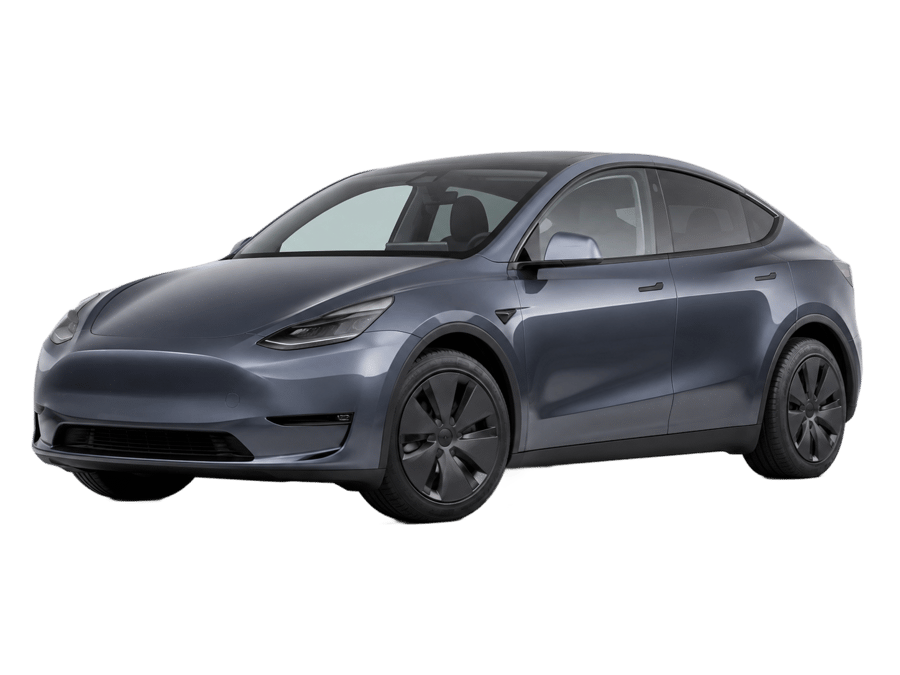
Complaint volume
1019 consumer-submitted complaints are matched to this model year. Treat the count as a research signal, then read the actual summaries for repeated symptoms.
Complaint records
1019 consumer-submitted complaints on record for the 2021 Tesla Model Y, grouped by component category.
Buyer interpretation
Complaint records are most useful when they turn into inspection points, seller questions, and comparison checks against nearby model years.
1019 consumer-submitted complaints are matched to this model year. Treat the count as a research signal, then read the actual summaries for repeated symptoms.
The most common categories are forward collision avoidance, vehicle speed control,forward collision avoidance, service brakes,forward collision avoidance. Use those categories as a test-drive checklist instead of judging the vehicle from the total count alone.
Enriched records include 85 crash reports, 6 fire reports, 22 injury reports, and 4 fatality reports. These fields come from complaint records and should be read in context.
Mileage is available on 98 complaints, with an average reported failure mileage of 16,683 miles. Compare that with the mileage on the listing.
Build a buyer checklist to turn these issues into questions and inspection points.
1,019 total complaints on record
| Date | Component | Summary | Severity | Mileage |
|---|---|---|---|---|
| Jan 2025 | UNKNOWN OR OTHER | The pedestrian warning system and horn are speakers in newer Tesla's. The speaker is in the front right ahead of the wheel facing down towards the road. When it is raining or snowing, rain or snow get lodged into the speaker and it is completely inaudible. I stood 4 feet away from my vehicle and had someone honk the horn and couldn't hear anything at all. This is very dangerous. The pedestrian warning system is complexly inaudible also. Issue persists for approx. 2 days after rain. If it continues to rain for several days, the horn does not work the entire time. I have contacted Tesla support and they state there is nothing they can do to fix it since it is how it was designed. | Crash: No Fire: No | Unknown |
| Jan 2025 | POWER TRAIN | A year ago I went on a road trip from Florida to Iowa in the winter, temperatures were freezing or below freezing. I got an alert to maintenance powertrain, after driving to Tesla they informed me the oil pump on the rear motor was falling apart. It was replaced. A year later on a second road trip to the same location also in sub freezing conditions the exact same error pops up, in service mode it says rear oil pump error | Crash: No Fire: No | Unknown |
| Jan 2025 | FORWARD COLLISION AVOIDANCE,ELECTRICAL SYSTEM | Since March 2024, FSD has failed to function as designed. Tesla denied any problem with the vehicle until October 2024, when a manager told me it's a known issue with no available fix. The issue started with FSD not recognizing traffic signals. Meaning that regardless of whether a traffic light was green or red, the vehicle would treat it like an 4 way stop. It would come to a stop and then proceed through the intersection if it didn't detect immediate cars. This was dangerous and Tesla refused to acknowledge the problem for months. Since then the issue has evolved with FSD only engaging in certain situations (interstate driving). As of the most recent update, FSD won't engage at all. | Crash: No Fire: No | Unknown |
| Jan 2025 | VISIBILITY/WIPER,BACK OVER PREVENTION | The rear view camera didn't work, neither did the windshield wiper. When turning left or right, the sensors did not display anything, the display no longer displayed any distances to other cars, proximity lines, nor speed limits. GPS also did not work. The problems were confirmed by the dealer (and fixed), but they charged us even though the incident involved a software update on their part that made most advanced safety features unavailable available. When we tried to reverse, we could not see anything. When we tried to make a left or right turn, there were no sensors available to sense blind spots. When we tried to understand the speed limit or change lanes, the information was not available. Wipers were patchy in use Auto pilot also did not work. Warnings kept beeping while driving, but we could not turn it off, serving as a distraction to driver, but Tesla was unable to address the repair due to their mass recall of other cars (with similar issues). | Crash: No Fire: No | Unknown |
| Jan 2025 | FORWARD COLLISION AVOIDANCE | This complaint addresses the recent changes made to the cruise control system in Tesla vehicles, as per NHTSA guidance in 2024. While the update aims to simplify the activation of enhanced cruise control, it introduces significant disadvantages and safety risks that need to be addressed. 1. Cruise Control Activation Update: NHTSA Guidance: In 2024, Tesla was required to modify the activation process for enhanced cruise control, allowing it to be engaged with a single pull when the option is selected. There are two options available: single pull and double pull. Advantages: The update simplifies the process, enabling users to activate enhanced cruise control with a single pull, which is more convenient and user-friendly. Disadvantages: When the enhanced cruise control is activated and the turn signal is engaged, the system automatically deactivates. This deactivation causes the vehicle to stop maintaining its set speed, leading to a slowdown or complete stop. 2. Safety Risks: Driver Reaction: The sudden deactivation of cruise control requires drivers to quickly move their feet back to the gas pedal to maintain speed. This is particularly concerning when attempting to change lanes or merge into tight spaces, where maintaining speed is crucial for safety. Loss of Safety Features: Upon deactivation of the enhanced cruise control, the vehicle no longer maintains a safe following distance, transferring full control back to the driver. This abrupt transition means that the driver is left without the system's assistance to ensure safe driving and timely reactions, potentially increasing the risk of collisions. Increased Driver Workload: Drivers must frequently reactivate cruise control after changing lanes, which demands additional effort and diverts attention from the road. This constant need to manage the cruise control system can lead to driver distraction and increased cognitive load, potentially compromising road safety. 3. Recommendations: see attche | Crash: No Fire: No | Unknown |
| Jan 2025 | LANE DEPARTURE,BACK OVER PREVENTION,FORWARD COLLISION AVOIDANCE | This report addresses concerns regarding recent safety updates in the Tesla Model Y, specifically focusing on the "Rear Cross Traffic Alert" and the blind spot warning system. These updates are intended to enhance driver awareness and prevent collisions. However, there are significant shortcomings in their current implementation that may compromise driver safety. 1. Rear Cross Traffic Alert: Intended Functionality: The "Rear Cross Traffic Alert" is designed to warn drivers of approaching vehicles from the side when reversing, thereby preventing potential collisions. Current Implementation: The system currently highlights a portion of the infotainment screen in red when a potential hazard is detected. There is no accompanying audible alert to notify the driver of the danger. Safety Concerns: Drivers are likely to be looking over their shoulder or at their mirrors while reversing, rather than at the infotainment screen. The lack of an audible alert means that drivers may not notice the visual warning, especially if their attention is directed away from the screen. This could lead to an increased risk of collision, as the visual cue alone may not be sufficient to capture the driver's attention. 2. Blind Spot Warning System: Intended Functionality: The blind spot warning system is designed to alert drivers of vehicles in their blind spot when the turn signal is activated, helping to prevent lane-change collisions. Current Implementation: Similar to the Rear Cross Traffic Alert, the system highlights the screen in red when a vehicle is detected in the blind spot. No audible warning is provided to alert the driver. Safety Concerns: In adverse weather conditions, such as rain, drivers may rely more heavily on blind spot warnings due to reduced visibility. Drivers typically turn their heads to check for vehicles, which means they may not see the screen's visual alert. Without an audible warning, drivers may inadvertently change lanes into an occupied space, increas | Crash: No Fire: No | Unknown |
| Dec 2024 | SUSPENSION | Loud clicking noise hurt for several days, then when reversing and turning the steering wheel, the front right of the car collapsed; The suspension broke because a bolt came loose which was found in the driveway. Front right wheel area collapse and is touching the top of the wheel liner. There was no prior accident or damage causing the issue. Car had to be towed and repaired. | Crash: No Fire: No | Unknown |
| Dec 2024 | POWER TRAIN,STRUCTURE,FUEL/PROPULSION SYSTEM | •Unknown parts or system malfunctions; yes, an inspection can be issued •The car is parked very close to the house and continuously producing poisonous and harmful gas, battery liquid and glasses splattered more than 20ft away. •No, before the incident there was no issue observed. •No, but from the fire department report the cause of the fire was "failure of equipment". •No, there was no warnings from the app, or signs of malfunctions. the car functions normally. | Crash: No Fire: Yes | Unknown |
| Dec 2024 | SUSPENSION | On [XXX], our 2021 Tesla Model Y had a catastrophic suspension failure while driving in live traffic. The car came to a sudden stop, the front suspension was loose and the vehicle was not drivable. We had the vehicle towed to the nearest Testa service center in Burlingame, CA. Tesla service center inspected the car and found that the lower lateral links in the front suspension had failed due to two critical suspension bolts falling out. One bolt had completely fallen out and the other had became dangerously loose and was about to fall out. The bolt failures led to a catastrophic failure of the front suspension and the vehicle became undrivable in live traffic. This is a low mileage vehicle with ~29,500 miles and there was no operator error or use that would cause a catastrophic bolt failure in the lower lateral links. Images of the issue from Tesla service center show that the bolts simply fell out after not being sufficiently fastened from the manufacturer. After Tesla service center identified the problem, we researched this issue and found an extremely relevant NHTSA recall for 2020-2021 Model Y vehicles that matches the exact suspension issue that occurred to us (21V-835 / SB-21-31-003 Recall). Our Model Y was built in November 2020, which is within the affected date range of this Recall, and our issue exactly matches this Recall. Tesla service center employees agreed this Recall seemed relevant and investigated. After a couple of days, Tesla service center contacted us and claimed that while the our catastrophic suspension issue looked very similar to the Recall issue mentioned above, our specific VIN was not listed in the Recall. Therefore, Tesla service center refused to repair the failure under warranty or recall and we were stuck with massive repair bill to fix a clear manufacturer defect that is already known and has been recalled. We are not sure why our VIN was not captured in Recall, but have been affected by the same dangerous issue. INFORMATION REDACTED PURSUANT TO THE FREEDOM OF INFORMATION ACT (FOIA), 5 U.S.C. 552(B)(6) | Crash: No Fire: No | Unknown |
| Dec 2024 | ELECTRICAL SYSTEM,STRUCTURE,WHEELS | The arm felt on the driver side while I’m driving. Also, there is issue with the camera and the screen electrical problem. | Crash: No Fire: No | Unknown |
| Nov 2024 | AIR BAGS,SEATS | I have a notice that a sensor went out in my passenger seat. I took it into Tesla to get a quote to repay rid and was quoted $2,000 to fix it. When I asked why it is so expensive I was told it is be cause Tesla has to retrofit my car to fit the new sensors because they stopped making my years sensors, my car is only a 2021. This is safety issue that should be a recall, I have several other friends that own teslas that have had the same issue. The sensor that is not working properly is the sensor that registers if a passenger is in the seat or not determining if the airbag needs to deploy when in an accident. so without a working sensor it puts the passenger at risk. This is something I believe Tesla should covering as it is a safety issue & as a consumer I shouldn't have to pay over the fact they discontinued the proper sensor for my vehicle putting anyone that sits in my passenger seat at risk for the airbag to not deploy in the case of an accident. | Crash: No Fire: No | Unknown |
| Nov 2024 | STEERING,SUSPENSION | Vehicle began making loud creaking noise audible at all speeds, loudest at low speeds. Car was maintained by Tesla dealership. Failure occurred at approximately 52,000 miles, just after 50,000 warranty expired. Diagnosed as failure of both control arms which need to be replaced at significant expense. Failure should not happen on such a low mileage and newer vehicle. | Crash: No Fire: No | Unknown |
| Nov 2024 | UNKNOWN OR OTHER,FORWARD COLLISION AVOIDANCE | Summoned my car in parking lot. Vehicle showed on app that it planned to go straight then turn left but instead cut to a left and thus colliding with the car that was parked next to me. I have the footage if needed. Car should have stopped instead, or followed planned route. I was staring at the car the whole time and it looked that it was going straight, even after colliding, it looked like it was aimed to go forward. The car created a log of what happened if needed. | Crash: Yes Fire: No | Unknown |
| Nov 2024 | SUSPENSION | Yesterday on [XXX], my husband was driving our 2021 Tesla Y on a residential road (my son was on board at the time.) Suddenly they heard a loud noise, and the car rattled and went a loud noise. The next thing the driver felt like the car wasn't able to move and he stopped. One side of the car was dropped to the ground. When he got out, he saw the front of the car's bottom was scrapping on the ground. He realized it was a critical error. The suspension on the right side fell to the ground, and two brand new bolts fell on the ground a little behind the car. Right front tire was twisted and pointed to the opposite direction of the other wheel. Neither of the wheels were parallel. The front tire was scratched with some deep marks because it's been scrapping and dragging on the ground. The twisted tire damaged the side of the front right fender because it was out of place. The scariest thing was that the accident happened out of nowhere and it fell apart while the vehicle is moving. Very dangerous. Our Tesla has 53,000 miles on it. And got new tires and rotations about 2 years ago. It was done by Tesla Service. We never had anyone else touch the car but the dealership. We never had any collision. We had the car towed to the Service Center yesterday (Sunday and they were closed.) I contacted Service Center this morning and asked whether this error is related to the similar recall on Tesla Model 3. Suspension fell apart. The staff membered claimed that it had nothing to do with it. He also claimed that he's very knowledgeable about recalls, "If there is a specific recall relating this problem, I'll be the first one to know." I guess he might be right, but what if our car is the first one which experienced this deadliest problem. Here is the evidence of the current recalls relating to: [XXX] I'm very shocked to find out that this had happened, and there was no previous safety recall. INFORMATION REDACTED PURSUANT TO THE FREEDOM OF INFORMATION ACT (FOIA), 5 U.S.C. 552(B)(6) | Crash: No Fire: No | Unknown |
| Nov 2024 | FORWARD COLLISION AVOIDANCE | To Whom It May Concern: I am writing to report yet another dangerous incident of phantom braking in my Tesla vehicle. As a Tesla owner who has previously filed multiple complaints about this issue, I am deeply concerned and frustrated by the lack of resolution to this potentially life-threatening problem. Today, I experienced a terrifying phantom braking event that nearly resulted in a catastrophic accident. I was driving on a completely empty road with no traffic in sight - no vehicles behind me, none in front, and none approaching from any direction. Suddenly, without any apparent trigger, my Tesla aggressively applied the brakes, violently decelerating from approximately 25 mph to just 3 mph in a matter of seconds. This abrupt and unnecessary braking action caught me entirely off guard. The force of the deceleration threw me forward, and I narrowly avoided losing control of the vehicle. Had there been any traffic behind me, I have no doubt this incident would have resulted in a severe rear-end collision. The frequency and unpredictability of these phantom braking events make me feel unsafe every time I get behind the wheel. It’s only a matter of time before one of these incidents leads to a serious accident or fatality. Despite multiple reports to both Tesla and NHTSA, this critical safety issue remains unresolved. I implore NHTSA to take immediate and decisive action to address this problem. The safety of Tesla drivers, their passengers, and other road users is at stake. Please investigate this issue thoroughly and compel Tesla to implement a permanent fix for the phantom braking problem. Your swift action on this matter is crucial to prevent potential tragedies on our roads. Sincerely, [XXX] INFORMATION REDACTED PURSUANT TO THE FREEDOM OF INFORMATION ACT (FOIA), 5 U.S.C. 552(B)(6) | Crash: No Fire: No | Unknown |
| Nov 2024 | SEAT BELTS | Rear passenger seatbelt stopped latching | Crash: No Fire: No | Unknown |
| Nov 2024 | SEAT BELTS | The third row passenger side seatbelt was restricted and bought in for service 2 weeks after purchasing the vehicle. It was serviced. Problem happened again 1 year later, it was then diagnosed and serviced back to position. 2 years later the same problem persist and restricted the seatbelt. The front passenger seatbelt is now sending alerts and asking for service. The seatbelt belt problem was said to be unknown on the first 2 visits to Tesla. The vehicle is now having the seatbelt system replaced with the current 3rd visit. | Crash: No Fire: No | Unknown |
| Nov 2024 | SUSPENSION | The car started clicking while turning sharply recently. Tesla service advised it was safe to drive and scheduled me for routine inspection in 2 weeks. A few days later the control arm completely detached while driving through an intersection. There was no incident that could have damaged the suspension and I almost got in a severe accident. | Crash: No Fire: No | Unknown |
| Nov 2024 | ELECTRICAL SYSTEM | The software for the car was showing multiple errors in the service page saying the disk space for the car was full. As a result, the car had severe lag issues and the screen completely shut down multiple times while driving on the highway. There were no user warnings and I only knew about the service warnings after speaking with Tesla support. They said it was definitely not user created and that it needed immediate service. However, the service center claimed it was not their responsibility and wanted to charge 300-500$ to look into it. | Crash: No Fire: No | Unknown |
| Oct 2024 | SERVICE BRAKES | I was driving in the dark down a straight road traveling around 60mph when the car abruptly slammed on the breaks and came to an almost complete stop. I was not using self driving, I was in control of the car but when this occurred I did not release the gas. Out of Instict I tried to get the car moving again and pressed the gas but the car did not respond so I pressed the brake and then the gas and the car started driving normally again. Thankfully there was nobody in the car with me and no cars behind me. The braking was abrupt enough that my neck hurts from the jerking forward of my body. | Crash: No Fire: No | Unknown |
| Oct 2024 | SUSPENSION,WHEELS,UNKNOWN OR OTHER | Suspension noise, front suspension or steering squeak or groaning while turning. Tesla service identified LH half Shaft was damaged and blaming it's due to outside influence because impact to the undershiled. This car should be still under 4 years and 50K warranty but Tesla service refused warranty on the parts. | Crash: No Fire: No | Unknown |
| Oct 2024 | FORWARD COLLISION AVOIDANCE | Tesla released a feature called Obstacle Aware Acceleration. The Owner's Manual states: "Obstacle-Aware Acceleration is designed to reduce the impact of a collision by reducing motor torque and in some cases applying the brakes, if Model Y detects an object in its driving path. The touchscreen displays a visual warning and sounds a chime when the brakes are automatically applied. For example, Model Y, while parked in front of a closed garage door with Drive engaged, detects that you have pressed hard on the accelerator pedal. Although Model Y still accelerates and hits the garage door, the reduced torque may result in less damage. Obstacle-Aware Acceleration is designed to operate only when all of these conditions are simultaneously met: Drive or Reverse is engaged. Model Y is stopped or traveling less than 10 mph (16 km/h). Model Y detects an object in its immediate driving path." However, my vehicle (and at least some other Model Y Performance models) do not behave in this manner. Rather than reducing motor torque when all of the above conditions have been met, it reduces torque every time the vehicle accelerates from a stop. This has been replicated by my local Tesla Service Center, and they confirmed the vehicle did not detect any objects in it's path. This is dangerous because the vehicle accelerates so slowly from a stop that I may not be able to avoid an accident if the vehicle doesn't accelerate as expected. | Crash: No Fire: No | Unknown |
| Oct 2024 | FUEL/PROPULSION SYSTEM | High voltage battery systems are failing at an extreme rate on 2021 tesla model 3 and Y. I am a used car dealer and have had 6 battery failures in the last 30 days. When addressing this with the local service center, they said they've reported this to Tesla engineers as they're prematurely failing at "an alarming rate". There is no advanced warnings. The vehicle just leaves you stranded. | Crash: No Fire: No | Unknown |
| Oct 2024 | STEERING,SUSPENSION,WHEELS | I was driving into a parking lot and heard a loud bang. I get out of my car and see that the metal that connects the tire to the car came down and screws came out. It is not drivable. I know this is not something normal and shouldn't happen. This is very dangerous and I am grateful I wasn't on the freeway when it happened. I was not involved in any collision and i did not hit anything. This simply happened on its own | Crash: No Fire: No | Unknown |
| Oct 2024 | FORWARD COLLISION AVOIDANCE | Twice, while in full self-driving mode on I-395, my Tesla has made the potentially fatal mistake of trying to turn the vehicle directly into the closed gates of the so-called "hot lanes" (which separate the north and sound bound lanes) and into on-coming highway traffic on those lanes. This is a serious safety issue that must be fixed IMMEDIATELY. This happened most recently on Sunday October 20, 2024, when I was driving south-bound on I-395 with my wife and son in the car. I was in the far left lane with "full self driving" activated. The hot lanes were to our left with all traffic on those lanes driving northbound. The gates to the hot lanes were closed to southbound traffic to prevent someone from driving directly into oncoming traffic. Shortly before we were about to pass those closed gates, the Tesla left indicator light came on and the car began to turn. The map showed the car was trying to turn us directly into the closed gates and oncoming traffic. Fortunately, I was paying close attention to this potential problem because the identical thing had happened previously, during the prior 30 day period when full self-driving was made available for free to all Tesla owners in April 2024. On that weekday evening, I was my driving my son northbound on I-395 after his basketball practice. The hot lanes were running southbound. Once again, as I approached the closed hot lane gates, the left indicator light came on as the car prepared to drive us through the closed gates and into the on-coming hot lane traffic. I am not a Tesla critic. I really like the car, but please address this issue ASAP before somebody gets killed. | Crash: No Fire: No | Unknown |