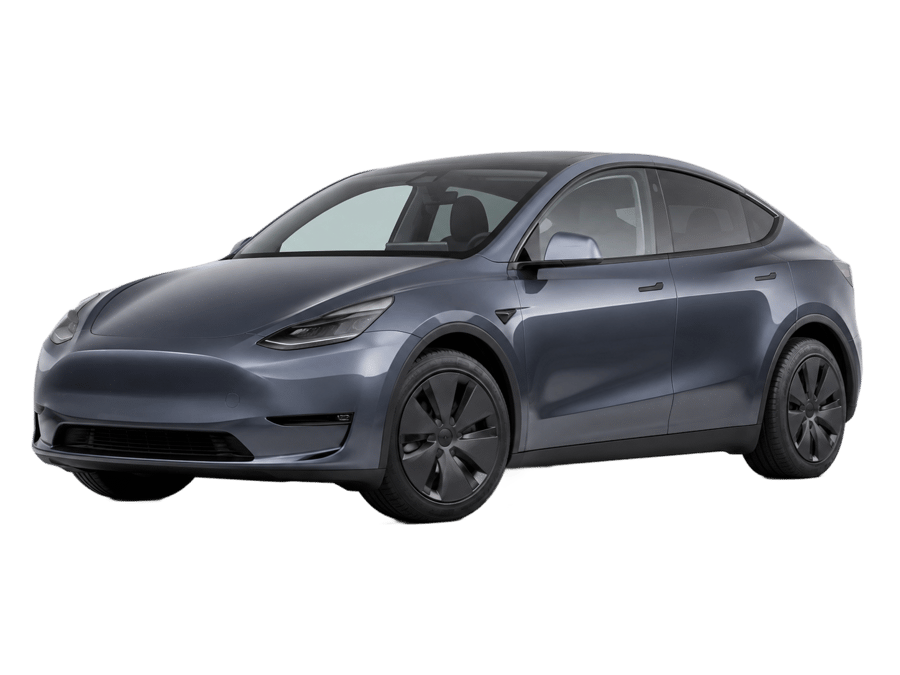
Complaint volume
1035 consumer-submitted complaints are matched to this model year. Treat the count as a research signal, then read the actual summaries for repeated symptoms.
Complaint records
1035 consumer-submitted complaints on record for the 2021 Tesla Model Y, grouped by component category.
Buyer interpretation
Complaint records are most useful when they turn into inspection points, seller questions, and comparison checks against nearby model years.
1035 consumer-submitted complaints are matched to this model year. Treat the count as a research signal, then read the actual summaries for repeated symptoms.
The most common categories are forward collision avoidance, vehicle speed control,forward collision avoidance, service brakes,forward collision avoidance. Use those categories as a test-drive checklist instead of judging the vehicle from the total count alone.
Enriched records include 85 crash reports, 6 fire reports, 22 injury reports, and 4 fatality reports. These fields come from complaint records and should be read in context.
Mileage is available on 98 complaints, with an average reported failure mileage of 16,683 miles. Compare that with the mileage on the listing.
Build a buyer checklist to turn these issues into questions and inspection points.
1,035 total complaints on record
| Date | Component | Summary | Severity | Mileage |
|---|---|---|---|---|
| Jul 2026 | STEERING | The electronic power assisted steering (EPAS) rack on my 2021 Tesla Model Y experienced an internal electronic failure. The failure first occurred while the vehicle was performing an automated parking maneuver (Autopark) at low speed. The vehicle displayed the warning "Steering assist reduced / Steering may require increased effort" (alert UI_a020_SteeringReduced). Using the vehicle's built-in Service Mode, I retrieved the underlying diagnostic fault: EPAS3P_a072_motFeedFwdError, described by the vehicle as "Motor control feed-forward correlation error," set when the difference between estimated motor torque and commanded torque exceeds 1.2 Nm. The vehicle's own diagnostic screen lists the clear condition for this fault as "Replace EPAS," indicating an internal hardware failure of the primary EPAS module. The listed potential impact is "Reduced steering assist and EAC inhibited." The fault initially cleared after approximately three minutes but returned and is now latched: it persists through vehicle reboots and multiple drive cycles. While the fault is active, power steering assist is reduced and lane keeping assistance / active safety steering features are inoperative. Safety risk: steering assist can degrade without warning during low-speed maneuvers, requiring sudden and substantially increased steering effort, and lane keeping assistance is disabled. The failure occurred while an automated driving feature was in control of the steering, with no curb impact, collision, or abnormal use. | Crash: No Fire: No | Unknown |
| Jul 2026 | AIR BAGS,SEAT BELTS | Recurring front passenger safety restraint system fault causing incorrect occupant detection for airbag deployment. Failed and was ‘repaired’ 3 times since 2024, including 2 consecutive failed repairs of the same part within the last 3 months. Tesla service advisor also mentioned informally this is a common issue. Tesla is now refusing further no-cost repair despite both recent repairs remaining under Tesla’s own parts warranty. | Crash: No Fire: No | Unknown |
| Jul 2026 | STEERING,LANE DEPARTURE | Error ui_a020 "steering assist reduced" appears without any noticeable steering changes at the moment, but with a warning that steering may become increasingly harder and harder. There were recent recalls on other models of Tesla. | Crash: No Fire: No | Unknown |
| Jul 2026 | FORWARD COLLISION AVOIDANCE,LANE DEPARTURE | Safety features on vehicle stopped working after software update was pushed to my vehicle. GPS, all cameras including backup camera and ones used for blind spots, and cruise control have all stopped working. Time displays incorrectly due to GPS issue and night mode stays on so rear view & back window stay dark making it hard to see other vehicles around me during the day. I’ve followed all recommended steps to resolve and issue persists. | Crash: No Fire: No | Unknown |
| Jun 2026 | WHEELS,SEATS,FORWARD COLLISION AVOIDANCE | Tesla model y is experiencing a front passenger airbag sensor failure (OCS) covered by factory bulletin SB-23-20-002 alongside TMPS and EAEB alerts. Tesla corporate resolutions is refusing to fix these safety system failures with out charging $1400 out-of-pocket, citing warranty expired. | Crash: No Fire: No | Unknown |
| Jun 2026 | STEERING,LANE DEPARTURE | The steering is not functioning properly. This is sealed system and no where else I can get it. This a safety issue and I haven't seen any car steering failing like this. Even cars as old as 20 year has no such issues. This is huge slap on of $3k+ on consumer. The cars is hardly 5 year old. | Crash: No Fire: No | Unknown |
| Jun 2026 | FORWARD COLLISION AVOIDANCE,LANE DEPARTURE | * What component or system failed or malfunctioned, and is it available for inspection upon request? FSD. It is available upon request. * How was your safety or the safety of others put at risk? Over the course of the last two months since the last FSD update (currently on v12.6.4), at least 20 times the vehicle has not properly stayed in the lane under certain circumstances listed below. These circumstances are always the same and it is repeatable and dangerous as the vehicle would have crashed into the center median if I had not intervened. Repeatable conditions: * 79 MPH * Low curvature highway at highway speeds when turning to the right only. * FSD version 12.6.4 with software version 2026.14.6 is engaged and in Assertive mode. * Has the problem been reproduced or confirmed by a dealer or independent service center? Tesla wanted $1k in order to reproduce and diagnose the problem, so I declined. * Has the vehicle or component been inspected by the manufacturer, police, insurance representatives or others? Same as above; Tesla wanted $1k in order to reproduce and diagnose the problem, so I declined. * Were there any warning lamps, messages or other symptoms of the problem prior to the failure, and when did they first appear? None of the safety systems fired, including lane departure warning or steering correction. FSD would not have veered out of the way of the median. | Crash: No Fire: No | Unknown |
| Jun 2026 | SUSPENSION | 2021 Tesla Model Y suffered a complete failure of the front lower lateral links, compliance links, and upper control arms at only 29,103 miles. The vehicle has been inspected by the manufacturer. It is currently being repaired at my cost. There was no warning lights or messages. I had noticed a creaking sound upon turning, especially while in reverse. I believe this mirrors the exact mechanical failures seen in NHTSA Campaign 21V835000. However, my VIN number was not listed in this recall. | Crash: No Fire: No | Unknown |
| Jun 2026 | SUSPENSION | Backed-out LH Rear Lower Fore Link bolt causing structural elongation damage to the rear subframe mounting hole, requiring full subframe replacement. Vehicle had been serviced exclusively by Tesla. Tesla issued Service Bulletin SB-25-31-004 on April 17, 2026 covering this exact condition. Tesla declined to perform the repair under the bulletin citing out-of-warranty status. A touchscreen alert directing me to service was active at the time of denial. | Crash: No Fire: No | Unknown |
| Jun 2026 | SEAT BELTS | We were trying to drive home and the middle seat belt, where my youngest child was sitting, would not latch. it would 'click' in, but if you pulled on it, it would pop out. This was terrifying because we had to drive home on a 2-lane highway with oncoming traffic. I checked online and found that many others have reported this issue because the seat belt latch sits rigidly upright in a divot in the seat, which acts as a funnel to direct any crumbs or dropped items to go into the seat belt latch, which then apparently causes the issue. This is a death trap design for children, because of course children drop things and make messes all the time, and applies to all three of the seat belt latches in the back. What is even worse about this issue is that as a parent I listen for the Click to know they have buckled, and I also check the seat belt indicator on the dash screen. Even when this model Y seatbelt latch isn't going to hold the seatbelt in place, it makes the Click sound and also shows as latched on the dash screen, giving parents a false sense of security. It looks like no children have been injured or killed yet because of this design flaw, but please do not wait for that to happen. Please make them fix this issue immediately before tragedy strikes a family. Please watch the video I linked to in the PDF to see how the seatbelt clicks into place, but then can be pulled free by a firm tug on the seatbelt. | Crash: No Fire: No | Unknown |
| Jun 2026 | VEHICLE SPEED CONTROL,FORWARD COLLISION AVOIDANCE | I am submitting this complaint to request an investigation into a serious safety defect involving my Tesla vehicle. On multiple occasions, the vehicle has experienced a significant and unexpected loss of acceleration when I attempted to enter or cross intersections. Despite pressing the accelerator, the vehicle failed to respond as expected, leaving me unable to accelerate normally while entering active traffic. This is not a minor hesitation or inconvenience. It is a serious roadway safety hazard. Drivers rely on immediate acceleration when crossing intersections, turning across traffic, or merging. A vehicle that unexpectedly limits acceleration can place occupants directly in the path of oncoming vehicles, creating a substantial risk of a severe collision, serious injury, or death. I reported this issue to Tesla Service and provided multiple timestamps documenting the events. Tesla was unable to identify any fault codes or provide a diagnosis and indicated that because no fault was recorded, the issue could not be confirmed. Through independent research, I found numerous reports from other Tesla owners describing substantially similar acceleration limitation events. Many reports specifically reference Obstacle Aware Acceleration as a possible cause, and some owners report that disabling the feature resolved the issue. If a safety system can falsely detect an obstacle and reduce acceleration while a driver is actively entering an intersection, the system itself may create a greater danger than the one it is designed to prevent. I respectfully request that NHTSA investigate whether Tesla vehicles are experiencing unexpected acceleration limitation or torque reduction during intersection entry and traffic merging situations, evaluate the role of Obstacle Aware Acceleration and related software systems, determine whether a broader pattern exists, and assess whether corrective action or a recall is warranted. This could cause serious injury or fatal crash | Crash: No Fire: No | Unknown |
| Jun 2026 | STEERING,SUSPENSION,LANE DEPARTURE | A 2021 Tesla Model Y experienced steering/suspension warnings followed shortly by a steering-assist reduction event. On or around May 21, 2026, the vehicle displayed: “Steering alignment service recommended — OK to drive, schedule service soon.” The vehicle was brought to Tesla because the owner was concerned the car had detected a steering, alignment, suspension, or safety-related condition. The Tesla invoice from that visit appears inconsistent. It states that “a wheel alignment check was completed,” but also states “No Labor Performed — Customer Did Not Authorize Repairs or Inspection,” with 0.00 labor hours and no charge. A documented steering/suspension diagnostic inspection, alignment report, alert-log review, or safety assessment was not performed by Tesla or inspected. The owner was advised to replace tires and return later. Approximately 90 miles later, during a low-speed three-point turn, the vehicle made a loud pop/clunk from the front area and displayed: “Steering assist reduced — Steering may require increased effort.” A related alert also stated Lane Departure Avoidance features were unavailable. This created a safety concern because steering effort may unexpectedly increase during low-speed turns or parking maneuvers. Tesla later inspected the vehicle and documented torn front lower lateral/compliance link bushings and vehicle log data showing steering gear alerts. Tesla replaced the front lower lateral links and front lower compliance links and performed alignment work. After those repairs, Tesla stated a steering gear alert was still present and recommended steering gear/steering rack replacement with additional alignment work. The concern is that a steering/alignment warning occurred shortly before the physical front-end failure and reduced steering-assist event, but the earlier Tesla visit does not clearly document that the warning was meaningfully inspected or safety-assessed. Vehicle is currently unsafe to drive and is in Teslas possession | Crash: No Fire: No | Unknown |
| Jun 2026 | POWER TRAIN,ELECTRICAL SYSTEM,LANE DEPARTURE | The vehicle’s secondary Autopilot Processor / car computer is internally faulted and stuck in a continuous wake/shutdown loop. This causes severe standby battery drain (~20 miles of range lost per day while parked) and completely prevents all over-the-air software updates - including federally mandated safety recall remedies. On April 4, 2024, Tesla Service diagnosed the fault and linked it to the drain and inability to update. On the same visit, Tesla added two safety recalls (23V-838 Autosteer controls and 24V-051 Brake/Park/ABS indicators) to the work order. They then demanded ~$3,000 customer payment for computer replacement before the recalls could be performed. After I declined the paid repair, Tesla marked both recalls as “completed” via software update despite the same invoice stating the vehicle could not receive updates and remained on software version 2023.38.9 (which predates both remedy firmwares they claimed was installed). Tesla is effectively paywalling federally required safety recall remedies by requiring the customer to first pay for computer replacement first. Two additional recalls remain open (21V-389 seat belt fasteners and 24V-554 hood latch). The problem has been confirmed and documented multiple times by Tesla Service. | Crash: No Fire: No | Unknown |
| Jun 2026 | UNKNOWN OR OTHER,LANE DEPARTURE,BACK OVER PREVENTION | Even after the recent recall for backup camera freezing, my backup camera froze again today. I took the car in, in the past, to report the problem and was told to reset the computer even after the technician witnessed the problem. Got charged $300 so haven't been back. Problem has been there for a couple of years. I had hoped the software update would fix it but no such luck. | Crash: No Fire: No | Unknown |
| Jun 2026 | SUSPENSION,UNKNOWN OR OTHER | I purchased a 2021 Tesla Model Y (VIN: [XXX] ) used directly from Tesla. I am the first retail owner outside of Tesla. I am currently experiencing a knocking noise from the driver side suspension. I have requested that Tesla inspect and complete the following federally mandated safety recalls and service bulletins, none of which appear in my vehicle’s service history: • NHTSA Recall 21V-835 / SB-21-31-003 — Front suspension lateral link fasteners may loosen and separate from the sub-frame, causing instability and crash risk • NHTSA Recall 21V-912 — Suspension knuckles may fracture • SB-20-31-006 — Front upper control arm ball joint reseal Tesla service has refused to perform these repairs free of charge, citing expired warranty (warranty expired April 5, 2025). Tesla’s response does not address that these are federal safety recalls, not warranty repairs. Federal law requires recall repairs to be performed free of charge regardless of warranty status, age, or mileage. Tesla has also failed to provide written documentation confirming whether these recalls were completed prior to selling me the vehicle. Instead, I have been redirected to a self-service VIN lookup tool and a general data privacy request form — neither of which confirms when, where, or whether the recall work was actually performed. I am requesting NHTSA investigate Tesla’s failure to complete these safety recalls prior to selling this vehicle to a retail customer, and their refusal to honor federal recall obligations. INFORMATION REDACTED PURSUANT TO THE FREEDOM OF INFORMATION ACT (FOIA), 5 U.S.C. 552(B)(6) | Crash: No Fire: No | Unknown |
| Jun 2026 | ELECTRICAL SYSTEM | My 2021 Tesla Model Y experienced a critical failure resulting in the vehicle displaying diagnostic code BMS_079. After the fault appeared, I was informed that the vehicle's High-Voltage (HV) Battery requires replacement at a cost exceeding $10,000. As a result of this failure, the vehicle is no longer drivable and has been effectively rendered unusable. The High-Voltage (HV) Battery Management System and/or HV battery pack failed, triggering Tesla diagnostic code BMS_079. The vehicle is currently unable to operate due to this fault. The vehicle and battery system are available for inspection upon request. The sudden failure of the HV battery system created a significant safety concern because the vehicle lost its ability to operate as intended. A battery failure can leave drivers stranded unexpectedly, potentially in unsafe locations such as highways, intersections, remote areas, or during adverse weather conditions. The inability to reliably operate the vehicle creates a safety risk for both occupants and other motorists. The fault code BMS_079 was diagnosed and confirmed through Tesla's service system. Tesla service personnel indicated that the HV battery requires replacement and that the vehicle cannot be driven safely until the repair is completed. Prior to the vehicle becoming inoperable, warning messages appeared on the vehicle display indicating a problem with the battery system. The BMS_079 fault code was displayed, and the vehicle subsequently restricted operation.no warning signs prior. I am concerned that a major HV battery failure requiring a repair exceeding $10,000 occurred on a 2021 Tesla Model Y. A failure of this magnitude on a relatively modern electric vehicle raises concerns regarding battery reliability, consumer cost burden, and potential safety implications when vehicles become unexpectedly disabled. I am requesting that this issue be investigated and that appropriate action be taken to address similar failures affecting Tesla owners. | Crash: No Fire: No | Unknown |
| May 2026 | UNKNOWN OR OTHER | This incident is related to Full self driving feature in my Model Y. It abruptly stopped on the road even when there was no obstacle. Luckily there were no vehicles behind my car which would otherwise resulted in accident and injuries to myself and my family. | Crash: No Fire: No | Unknown |
| May 2026 | UNKNOWN OR OTHER | While my vehicle was operating under FSD, it ran a red light at the above intersection, resulting in an accident. | Crash: Yes Fire: No Towed | Unknown |
| May 2026 | SERVICE BRAKES,FORWARD COLLISION AVOIDANCE | Phantom brake incident today,5/26/26. Traveling 35mph, brakes slammed on for no apparent reason. Seatbelt tightened and my head launched forward. Neck is very strained. | Crash: No Fire: No Injuries: 1 | Unknown |
| May 2026 | SUSPENSION | Component that failed: Front lower lateral link and compliance link suspension bushings. Failed components were removed by Tesla Service and are no longer available for inspection. Safety risk: Failed suspension bushings directly compromise steering precision, vehicle stability, and handling — particularly at highway speeds. A driver unaware of this failure could experience loss of steering control or unpredictable handling without warning. Confirmed by dealer: Yes. Tesla Florida (Tampa, 11945 North Florida Avenue) confirmed the failure in writing on May 22, 2026. Technician repair notes state: “inspection failed due to worn suspension bushings in the front.” Tesla confirmed this was the first time these original components had ever been serviced. Invoice #[XXX]. Manufacturer inspection: Yes, repaired by Tesla Service Center. Cost: $1,669.58. Warning lamps or prior symptoms: None. No warning lights, no alerts through the Tesla app, and no prior symptoms communicated to the owner. Failure was discovered only because vehicle was brought in for an extended service agreement inspection. Assessment: Original factory suspension bushings completely disintegrated at 56,258 miles on a 2021 Tesla Model Y (VIN: [XXX] ). This is not normal wear — photographic evidence shows full structural disintegration of rubber bushing material. Other Model Y owners may be driving with identical failures without knowledge. INFORMATION REDACTED PURSUANT TO THE FREEDOM OF INFORMATION ACT (FOIA), 5 U.S.C. 552(B)(6) | Crash: No Fire: No | Unknown |
| May 2026 | ELECTRICAL SYSTEM,STRUCTURE,FORWARD COLLISION AVOIDANCE | I am reporting two unresolved safety-related defects on my 2021 Tesla Model Y (VIN: [XXX] ) that occurred following paid service at Tesla's League City Service Center on 04/16/2026 DEFECT 1 — COMPUTER AND SENSOR SYSTEM FAILURE: The vehicle's onboard computer cuts in and out intermittently. Sensors fail during operation and the problem worsens significantly in high-temperature conditions. Tesla vehicles rely on their computer and sensor systems for core safety functions including collision avoidance, autopilot, and driver assist features. Intermittent failure of these systems while operating the vehicle is a safety hazard to the driver and the public. DEFECT 2 — GLOVE BOX INOPERABLE: The glove box does not open following Tesla service. The glove box in Tesla vehicles houses key vehicle documentation and is integrated into the vehicle's locking and security system. I paid $2,497.50 for service on [06/16/2026]. Both defects were either caused or left unresolved by that service. I have notified Tesla service staff directly and followed up multiple times over more than four weeks. Tesla has not responded, has not scheduled any repair, and has not refunded my money. I am filing this complaint because (1) the sensor and computer failures present an active safety risk during operation, (2) Tesla has ignored all attempts to resolve this, and (3) public reviews indicate this is a pattern affecting multiple consumers. I request that NHTSA investigate and determine whether a safety defect investigation or recall is warranted. INFORMATION REDACTED PURSUANT TO THE FREEDOM OF INFORMATION ACT (FOIA), 5 U.S.C. 552(B)(6) | Crash: No Fire: No | Unknown |
| May 2026 | ELECTRICAL SYSTEM | The vehicle’s low-voltage battery system failed unexpectedly, causing a complete loss of electrical power and preventing normal vehicle access and operation. The failure resulted in my [XXX] child becoming trapped inside the vehicle. The malfunction appears related to the 12V/low-voltage battery and/or associated power management system. The vehicles inspection invoice is available upon request. This incident created a serious safety risk because the loss of low-voltage power prevented normal door operation and immediate access to my child. The situation posed risks of heat exposure, medical distress, panic, and delayed emergency access. Although the vehicle includes a manual emergency door release, it is not realistically accessible or operable by a baby or toddler secured in a child safety seat. A young child cannot reasonably be expected to understand, locate, or operate the manual release during an emergency. The sudden failure without warning left my child unable to exit independently while caregivers were temporarily unable to access the vehicle. There were no noticeable warning, messages, or other symptoms prior to the failure. The low-voltage battery appeared to fail suddenly and without sufficient warning, resulting in immediate loss of access and vehicle functionality. The problem has not yet been reproduced, but the low-voltage battery failure was identified after the incident. The vehicle has been inspected by Tesla service. No formal police or insurance inspection was performed, but a first responder was present. INFORMATION REDACTED PURSUANT TO THE FREEDOM OF INFORMATION ACT (FOIA), 5 U.S.C. 552(B)(6) | Crash: No Fire: No | Unknown |
| May 2026 | ELECTRICAL SYSTEM,VISIBILITY/WIPER,FORWARD COLLISION AVOIDANCE | My 2021 Tesla Model Y HW3 experienced complete failure of all cameras, GPS, Automatic Emergency Braking, and Adaptive Cruise Control following the installation of software update 2026.8.6.1 — the OTA remedy update issued by Tesla for NHTSA Recall 26V283000. The vehicle was fully functional prior to this update. The failure was confirmed and reproduced by Tesla's authorized service center. The service advisor confirmed in writing: "During the update, the computer failed to reboot properly. We attempted to perform a 12V reset but unfortunately it is still stuck in the boot loop state." The Autopilot ECU (Primary/Turbo A) is stuck in a permanent boot loop and cannot be recovered by software means. Safety impact: All cameras including rearview camera are completely non-functional. Automatic Emergency Braking and all ADAS features are disabled. The vehicle cannot safely detect obstacles or pedestrians. GPS navigation is frozen. Tesla has confirmed the computer requires replacement but is classifying it as a customer-pay repair citing expired warranty, despite the failure occurring during Tesla's own recall remedy software deployment. This vehicle meets every technical criterion of Recall 26V283000 — HW3 hardware, 2021 Model Y, software version 2026.8.6.1, complete camera failure — but does not appear in the recall VIN database. I am requesting NHTSA review whether this VIN should be included in recall 26V283000 or a related investigation. | Crash: No Fire: No | Unknown |
| May 2026 | ELECTRICAL SYSTEM,VEHICLE SPEED CONTROL,FORWARD COLLISION AVOIDANCE | The vehicle began experiencing repeated Autopilot/FSD failures while driving. Symptoms included sudden Autopilot disengagements, cruise control becoming unavailable, and loss of road visualization/navigation display functionality. The issue progressively worsened over time. The vehicle was first brought to Tesla service in 2025 for the same overheating-related concern. At that time, Tesla identified a coolant-related issue, topped off the coolant system, and returned the vehicle to service. However, the problem continued and gradually became more frequent and severe afterward. During the most recent service visit, Tesla diagnosed the HW3 Autopilot computer as overheating due to a heat transfer failure between the Autopilot board and cooling cold plate. Tesla stated that heat generated by the board could no longer be efficiently transferred to the coolant system, causing the Autopilot computer to overheat. Tesla further advised that continued operation without repair could eventually impact additional vehicle functions, including the center display screen shutting off due to overheating-related failures. Given the loss of driver-assistance functionality and potential impact to core vehicle systems, I am submitting this report so the issue is documented as a potential thermal management or hardware reliability concern involving the HW3 Autopilot computer system. | Crash: No Fire: No | Unknown |
| Apr 2026 | STEERING,SUSPENSION | My 2021 Model Y has about 24,500 miles began squeaking when turning the steering wheel or hitting bumps. I read online that many tesla owners had the same issue. The design on these weren't great allowing water to penetrate these parts and cause them to ware down faster. I already paid for the replacement of the upper and lower control arms. | Crash: No Fire: No | Unknown |