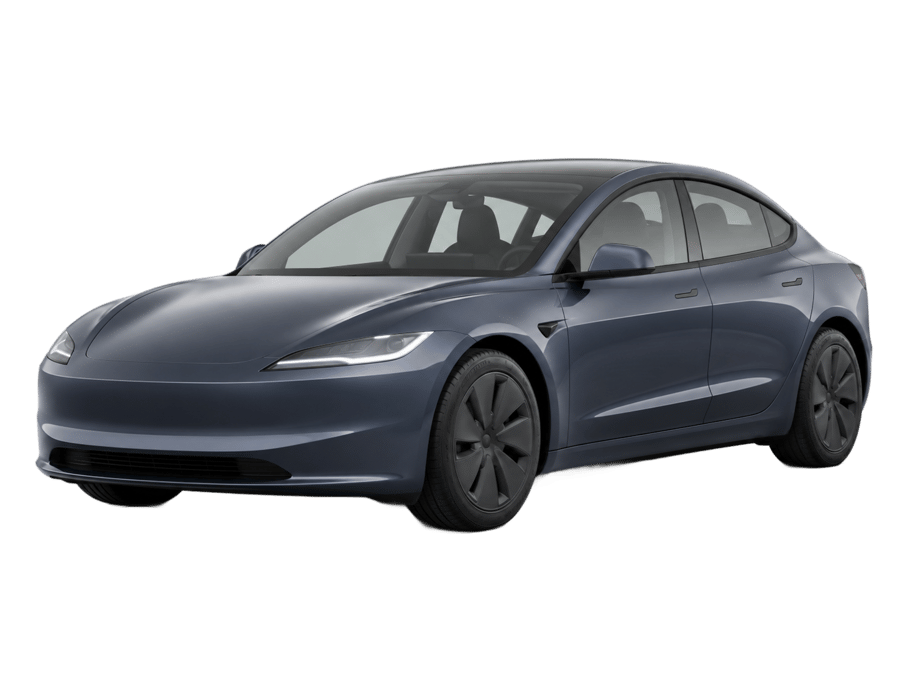
Complaint volume
650 consumer-submitted complaints are matched to this model year. Treat the count as a research signal, then read the actual summaries for repeated symptoms.
Complaint records
650 consumer-submitted complaints on record for the 2021 Tesla Model 3, grouped by component category.
Buyer interpretation
Complaint records are most useful when they turn into inspection points, seller questions, and comparison checks against nearby model years.
650 consumer-submitted complaints are matched to this model year. Treat the count as a research signal, then read the actual summaries for repeated symptoms.
The most common categories are forward collision avoidance, service brakes,forward collision avoidance, vehicle speed control,forward collision avoidance. Use those categories as a test-drive checklist instead of judging the vehicle from the total count alone.
Enriched records include 45 crash reports, 5 fire reports, 16 injury reports, and 5 fatality reports. These fields come from complaint records and should be read in context.
Mileage is available on 42 complaints, with an average reported failure mileage of 18,076 miles. Compare that with the mileage on the listing.
Build a buyer checklist to turn these issues into questions and inspection points.
650 total complaints on record
| Date | Component | Summary | Severity | Mileage |
|---|---|---|---|---|
| Jan 2022 | UNKNOWN OR OTHER,VISIBILITY/WIPER | The heat stops working at cold conditions. Many other users have reported this problem, after going into service I was told there is a sensor that is out in the open behind the bumper that when exposed to snow and rain can freeze and causes heat to stop working. I have experienced this myself when going on a trip back home from upstate NY to NC , I had no heat with temps outside being at 3 degrees F , not only was the car extremely cold causing me and my wife to get sick , but you can not use the defrost because there is no heat. So there is absolutely no visibility since there’s frost on all windows that you cant do anything about. | Crash: No Fire: No | Unknown |
| Jan 2022 | SERVICE BRAKES,FORWARD COLLISION AVOIDANCE | Multiple random automatic braking occurred during Freeway cruising | Crash: No Fire: No | Unknown |
| Jan 2022 | LANE DEPARTURE | On 1/3/21, approximately 2pm. Driving south on I-77 in the city of Broadview Heights. In center lane of highway with Autopilot (speed and steering only) on. A Hummer in my left lane drifts into my lane and hits my car (I have video). No alarms or alerts went off to warn me. No automatic steering occurred. My car continued in lane and at speed (about 64mph), until my driver mirror broke off and adjusted my position to the left. Broadview Height police report # [XXX]. I have a service request into Tesla. I am awaiting the at-fault party insurance to contact me to begin repair process. To above questions: -I am suspicious about the ultrasonic sensors and/or camera and it failure to warn me I was about to be hit. -I was hit on my driver's side by a car that was not detected by my Tesla -I have a service request made to Tesla, awaiting response -No inspections or diagnostics have been performed yet by Tesla -No warning occurred. I am very familiar with the warning my car can produce: things like drifting out of my lane; someone in front of me braking hard; or Autopilot applying brakes when it thinks a car is in front of me (when it's actually on a curved road). INFORMATION Redacted PURSUANT TO THE FREEDOM OF INFORMATION ACT (FOIA), 5 U.S.C. 552(B)(6). | Crash: Yes Fire: No | Unknown |
| Dec 2021 | UNKNOWN OR OTHER,VISIBILITY/WIPER | Tesla in the December 2021 V11 software update as made the car's common control user interface unsafe. Critical controls, such as defrost and climate control, as well as many others (like trip, tire pressure, heated seats, windshield wipers) , are now only accessible by hunting through menus - - all which require the driver to turn their eyes off the road for longer periods of time than the previous user interface. Font sizes have also been made much smaller which will cause readability issues. This is a road hazard and needs to be addressed, and there is no option available to downgrade to the safer user interface. Please require Tesla to perform an over the air recall for this UI to correct these safety issues. | Crash: No Fire: No | Unknown |
| Dec 2021 | UNKNOWN OR OTHER | New software update removes easy access to basic functionality like wipers, defrost, heat, etc. and requires the driver to dig through multiple submenus which requires taking eyes off the road for an extended period of time. | Crash: No Fire: No | Unknown |
| Dec 2021 | VISIBILITY/WIPER | Tesla pushed out a new user interface over Christmas. The new interface buries the wiper controls and defrost controls under sub-menus and you can no longer quickly access them while driving. It takes multiple clicks and requires you removing your eyes from the road for a long time. Furthermore, there is no way to revert back to their old interface. | Crash: No Fire: No | Unknown |
| Dec 2021 | UNKNOWN OR OTHER | This is a follow up to my complaint issued NHTSA ID Number: 11439598. You opened an investigation and Tesla promptly backed down, but only in regards to one PORTION of my complaint. Tesla has now disabled video game playing on the front dashboard screen while the car is in motion. Good! But there's more to be addressed. Tesla still allows Live web browsing on that same screen. A keyboard pops up. You can type in your search, then click around most websites (except for YouTube, which is appropriately blocked.) I checked the latest update and Tesla has now moved the web browsing feature into the "Entertainment" category. Web browsing is permitted FOR DRIVERS. It is not "restricted" to passengers only. This is inherently dangerous. Please do not close this case before this web browsing distraction is addressed as well. | Crash: No Fire: No | Unknown |
| Dec 2021 | FORWARD COLLISION AVOIDANCE,LANE DEPARTURE | Several times during every drive where Cruise Control/Autopilot is used, an event known as "Phantom Braking" occurs often time triggering the collision warning systems with no danger present. Phantom breaking is the automatic braking of the Cruise Control/Autopilot systems when no danger is present, causing an unexpected and dangerous automatic braking event. I wish to emphasize that this happens when either system is used under safe conditions and even within the guidelines recommended by Tesla. It is available for inspection should it be necessary. During these events, a vehicle following mine can and has been caught off-guard by the sudden braking, resulting in near-miss rear-endings. The danger of a vehicle collision is extremely high in these scenarios. The problem happens consistently on two-lane roads with no median using standard cruise control (Autopilot is only recommended on divided highways/interstates). Phantom braking still occurs at random in varied environments with both systems. My vehicle has not been taken to a dealer, but the issue has been confirmed/acknowledged by the manufacturer with no solution. This vehicle is new and delivered to me this year. The problem has been occurring since taking ownership/lease. Aside from the the emergency collision warning chime occurring sometimes at the same time as the braking event, there are no symptoms, warnings, or lamps appearing prior to the automatic braking nor afterwards. I have attempted to use the vehicle's camera recalibration and have changed available safety settings to every combination possible to attempt a consumer fix for the issue, but no combination of settings seems to keep the automatic braking events from happening | Crash: No Fire: No | Unknown |
| Dec 2021 | STRUCTURE,WHEELS | I want to report an issue I have with Tesla concerning the damage that occurred to my vehicle as a result of a failure of Tesla FSD version 10.3 firmware release 2021.36.5.2 recalled by Tesla on 10/29/21 NHTSA recall number 21V-846. At noon on 10-24-21, I was testing the latest release of FSD as part of the beta program. My Tesla was in self-driving mode on a city street at 35 mph. This was the same route it had already successfully done earlier in the day, when suddenly the car jumped over the curb, causing damage to the bumper, to the wheel and a flat tire. This appeared to have been caused by a discolored patch in the road that gave the FSD a false perception of an obstacle which it tried to avoid. Immediately after the accident, the car was towed to the service center. The repair was finished on 10/27/21 at which time I was asked to pay $2,332.37 to take possession of the car. I explained that the damage was caused by the recalled version of FSD NHTSA recall number 21V-846 and that Tesla should be liable for the damages. I was advised that the engineering team would conduct an investigation and based on the results the money would be reimbursed. However, I did not agree to pay hoping that after the investigation Tesla would honor the recall. After two months of waiting, there is still no communication on the results of the investigation even though the case is quite simple. The car was going straight at a very low speed in self-driving mode. There is nothing except the recalled version of FSD that could have changed its trajectory. Therefore, it is obvious that nobody looked at this issue and there is no commitment to doing so anytime soon. I communicated using the Tesla app chat that I am not willing to wait indefinitely and gave notice that I intend to file a petition with the Court. I gave e-mail notice to Tesla’s resolution team as well to make sure that my notice reaches Tesla’s legal department. I have paid the invoice on 12/22/21 to get my car back. | Crash: Yes Fire: No Towed | Unknown |
| Dec 2021 | FORWARD COLLISION AVOIDANCE | Phantom braking events on most every type of road and drive when using cruise control, not autopilot or other automated systems. Standard cruise control is unusable and is a safety concern with constant warning alerts and automatic emergency braking when other vehicles pass by safely in the adjacent lane. | Crash: No Fire: No | Unknown |
| Dec 2021 | VEHICLE SPEED CONTROL | The contact owns a 2021 Tesla Model 3. The contact stated while driving 65 MPH with the cruise control activated, the vehicle decelerated, and the brakes activated erroneously. The accelerator pedal was depressed, and the vehicle returned to normal driving operation. The contact stated that the failure recurred several times. There was no warning light illuminated. The vehicle was not diagnosed or repaired. The manufacturer was not made aware of the failure. The failure mileage was approximately 8,000. | Crash: No Fire: No | 8,000 |
| Dec 2021 | VEHICLE SPEED CONTROL,FORWARD COLLISION AVOIDANCE | Constant “phantom braking” when using autopilot on the freeway and other roads. When the pavement changes color, the car slams on the brakes in the middle of the freeway. When a truck is in the opposing lane, the car slams on the brakes. When a truck is merging into a lane to my right on the freeway, the car slams on the brakes. This is extremely unsafe and frightening. This software is garbage and worse than my 6 year old Subaru. Tesla needs to address this, and I hope they’re eventually forced to. | Crash: No Fire: No | Unknown |
| Dec 2021 | FORWARD COLLISION AVOIDANCE | We continue to have issues with Tesla's autopilot feature. The Model 3 with autopilot activated or just with the adaptive cruise control activated, will "phantom" brake for zero reason. Today, 12/14/2021, it happened three times within 90 minutes. All three times there was no reason for the car to make emergency actions. Once I had a truck with a trailer behind me, forcing them to brake hard to avoid hitting the rear of the car. I submitted a service request to Tesla and this is what they told me: Incidents like the one you are describing where the vehicle slowdowns for apparently no reason are generally caused by a few reason such as: Map data inaccuracy, Speed limit data inaccuracies, the vehicle reacting to an upcoming event, GPS position inaccuracies, and predicative driving anomalies. In all of these situations the computer is trying to make the safest determination of what to do with the information that it being fed. To us as drivers, it would seem like a bad decision, but the computer uses our input following these events to get better at predicting how it should respond. Anytime you intervene with an autopilot behavior decision you are helping the system as whole get better. There are no faults with any of the hardware in the vehicle and at this time these behaviors are a limitation of software in the system. Our engineering team is working to improve auto pilot with every firmware update and we hope to see improvements in future updates. I'm sorry you feel that was Justin. Future firmware updates will improve functionality. You always have the options of not using your AutoPilot until they do. Thank you | Crash: No Fire: No | Unknown |
| Dec 2021 | FORWARD COLLISION AVOIDANCE,LANE DEPARTURE | On a daily basis while using the Adaptive Cruise Control or Tesla Autopilot, I will experience multiple erroneous automatic braking events. The car generally slams the brakes on when it is cresting a hill, attempting to pass a semi truck, or when sun angles produce large shadows in the road. The automatic braking events are sometimes very aggressive and can be extremely dangerous, especially if someone is following behind you in high speed traffic. My wife has requested that I don’t use cruise control or autopilot while she’s in the car, as we experienced an unwarranted, aggressive automatic braking episode which caused great pressure against her pregnant belly on a previous road trip. Additionally, the cameras on my vehicle will often produce warning/error messages stating “X camera is blocked or blinded” for absolutely no reason other than headlights from oncoming traffic shining into my lane. I am unsure if this contributes to the automatic braking issue. | Crash: No Fire: No | Unknown |
| Dec 2021 | VISIBILITY/WIPER | Windshield has highly visible internal reflections resulting in vertical ghosting in high contrast situations such as headlights brake lights and even on sunny days service center said it was within acceptable tolerance but it greatly diminishes the clarity of vision through the windshield. Haven't seen anything like it in the four other cars manufactured across two decades that I've driven regularly. Dangerous design or manufacturing defect. | Crash: No Fire: No | Unknown |
| Dec 2021 | EXTERIOR LIGHTING | Front right headlight on a brand new car no longer functions, safety was put at risk by the fact that it is illegal to drive on 1 working light in the dark and rain; and this happened thankfully before leaving home on a dark morning so it was detectable and actionable. Problem was confirmed by remote diagnostic from dealer. No warnings or messages before failure which was confirmed by Tesla representative on the phone. They have not inspected the component and will not return calls / have not responded to service scheduling for 3 days. There is no service possible when they have a monopoly on their supply chain and will not schedule service. My car is unsafe to drive and is basically a lemon at this point until they fix it. | Crash: No Fire: No | Unknown |
| Dec 2021 | VEHICLE SPEED CONTROL,FORWARD COLLISION AVOIDANCE | My Tesla Model 3 is brand new and delivered in 2021, the vehicle has had no recalls or issues report by the manufacture and is running the latest software updates provided by Tesla, which as of this date is: 2021.36.8 I have driven the car since delivery a total of 5,596 miles, which includes a cross country road trip from CA to FL. During this trip I used "Autopilot" a feature which is touted as safe, however after my experience and reading and hearing other users reports I believe this is not the case. I had numerous cases of "phantom braking" which is where the vehicle believes there is an object that it will collide with and it slams the brakes on, usually dropping around ~20 MPH extremely rapidly. Many of these events occurred in lower light scenarios (night time) and almost all of them occurred when I had no vehicles in any direction for over half a mile, which means that there should have been no indicators flagging an emergency braking event. Here are some other reports, including a well known publisher CNET: https://www.cnet.com/roadshow/reviews/2021-tesla-model-y-review/ The Model Y and 3 share a lot of common design and technical elements, including their lack of a forward radar system, which is think is likely why this issue is occurring for these vehicles and not for the Model S and X. Here is a full user report: https://www.youtube.com/watch?v=uxvh60zBl70&t=1s I am writing this report in order to add myself to a growing list of Tesla customers that have not been listened to about this issue, it is a massive safety issue and should likely trigger a full investigation, this issue can easily be replicated with and 2020-2021 Model 3 and/or Y. And likely should trigger an immediate call for either a software patch, disabling of the feature, and/or recall of all affected vehicles, either to retrofit a radar system, or to fix the camera system. | Crash: No Fire: No | Unknown |
| Nov 2021 | VEHICLE SPEED CONTROL,SERVICE BRAKES,FORWARD COLLISION AVOIDANCE | Driving normally, with cruise control (not auto steering) engaged vehicle will spontaneously and dangerously apply emergency breaking. This happens regularly to the point I won’t use it. It’s going to cause accidents, especially when slippery conditions exist. | Crash: No Fire: No | Unknown |
| Nov 2021 | FORWARD COLLISION AVOIDANCE | Vehicle will randomly have phantom braking and braking events when using adaptive cruise control. It happens more often when a vehicle has recently passed and it 150+ feet in front of the vehicle. This poses a safety risk for vehicles behind as the car will randomly slow down. The adaptive function becomes unusable. | Crash: No Fire: No | Unknown |
| Nov 2021 | FORWARD COLLISION AVOIDANCE | ADAS systems detect oncoming traffic from the opposing lane on single lane roads and sounds forward collision alarm. If using adaptive cruise control or Autopilot, vehicle will rapidly decelerate. This poses a risk to the occupants and vehicles behind from unexpected changes in speed, which could cause a rear-end accident. The issue can be repeated in the scenario described above. Forward Collision Warning alarm goes off when it sees a oncoming vehicle far off in the distance. | Crash: No Fire: No | Unknown |
| Nov 2021 | FORWARD COLLISION AVOIDANCE | Tesla cars are having an issue with phantom breaking which is causing the car to slow down or even slam on the brakes for zero reason. Since I have zero control of how close someone follows me, this is a huge safety issue and makes me fear for my life every time it happens. I drove 60 miles today on two lane roads and this happened at least 6 times. Seems to happen more on two lane roads that aren't flat, but I've had it happen other times too. | Crash: No Fire: No | Unknown |
| Nov 2021 | VEHICLE SPEED CONTROL,SERVICE BRAKES,FORWARD COLLISION AVOIDANCE | My new Tesla 3 deployed automatic emergency braking seven (7) times in a 5 hour period. The Tesla Autopilot was turned off due to reports of phantom braking like this from many other drivers in a Tesla online forum. Regardless, the car slammed on the brakes when there were no obstructions or cars in front of me. I almost suffered a rear end collision during one of these phantom emergency braking events, where the car suddenly braked from 70MPH to less than 40MPH. The malfunctioning component is likely the Tesla software that works with the forward-facing cameras which are installed as part of the Full Self Driving feature. While I did not pay the $10,000 for FSD, this system still operates for automated braking and lane departure. I have requested Tesla inspect the car, which has 482 miles on it, but am filing with you anyway due to the similarity between this experience today and the dozens of other complaints I have read about on the Tesla Owners forum called TOO. | Crash: No Fire: No | Unknown |
| Nov 2021 | FORWARD COLLISION AVOIDANCE | Terrible phantom braking. On a road trip, flat straight open roads, little to no traffic in front of me, and consistent full on hard braking from 75mph down to 35mph in a split second. Multiple times and so consistent I had to stop using the cruise control completely. This never happened like this in my day to day city driving. But as is, the cruise control is nerve wracking and dangerous. Thankfully no cars behind me because it could very easily cause a serious and deadly accident. | Crash: No Fire: No | Unknown |
| Nov 2021 | FORWARD COLLISION AVOIDANCE | Recurrent, frequent, and unpredictable sudden braking while vehicle is being driven in TACC (Traffic Aware Cruise Control). These event, or "phantom brakes", occur when there is no visible obstruction ahead of the car (i.e. crossing vehicle or object), nor any environmental explanation (sun glare, heavy rain, etc.). Events occur in all conditions, including daytime, clear sky, with or without traffic. Frequently the collision warning will sound during these events. Given the episodes occur during highway driving, the unexpected hard braking is a set-up for being rear ended by cars behind me. These events are most common on 2 lane divided highways, and can occur as frequently as every 2-5 minutes. Brought in for evaluation at Tesla service center, and they refused to acknowledge any problem, stating the car is "operating as designed." This was based on the fact that they did not reproduce symptoms on their test drive. Although I had logged >20 of these events for them to review on the automated records, it was not clear this was done. | Crash: No Fire: No | Unknown |
| Nov 2021 | VEHICLE SPEED CONTROL,UNKNOWN OR OTHER,SERVICE BRAKES | On a recent trip, we started experiencing extreme issues with our car's cruise control and autopilot features. Specifically, when in cruise control or auto pilot, the car would randomly disengage the cruise control or auto pilot and start braking. Taking the car out of cruise control or auto pilot, restarting the car, etc did not fix the problem. We noticed the problem was much worse at night and when we were traveling on a two lane highway. We would be in cruise control/auto pilot and often when another vehicle would approach us from the opposite direction the vehicle would suddenly brake. While this happened more often at night, it continued to happen at any point during the day and when we were on many different roads/interstates. This seems extremely unsafe to have our vehicle hard braking randomly when we are traveling at high speeds (60mph+). We scheduled a service appointment with Tesla and were told that this is a software issue and we would have to wait for an update. | Crash: No Fire: No | Unknown |