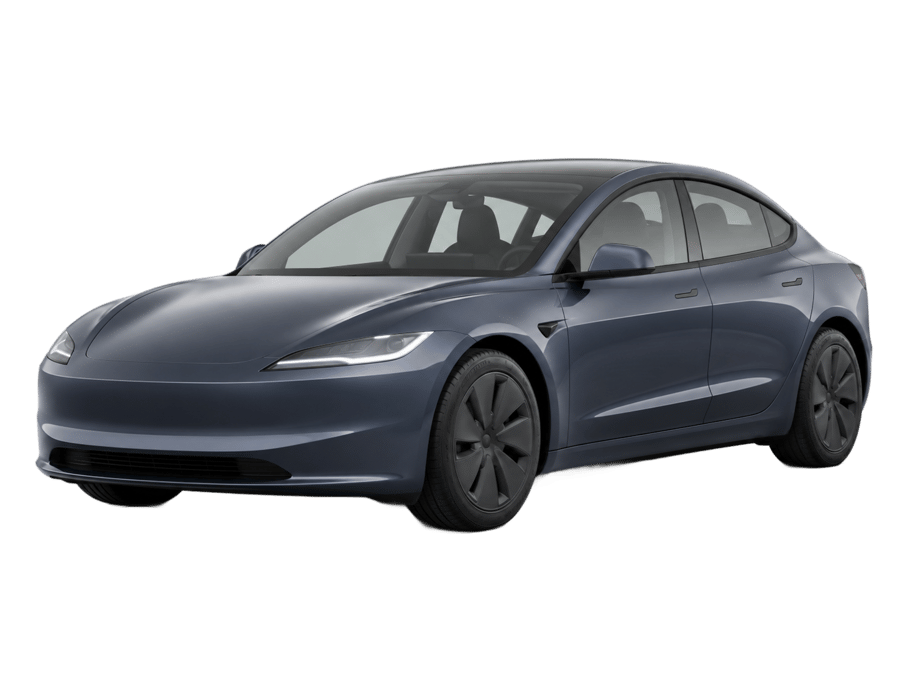
Complaint volume
650 consumer-submitted complaints are matched to this model year. Treat the count as a research signal, then read the actual summaries for repeated symptoms.
Complaint records
650 consumer-submitted complaints on record for the 2021 Tesla Model 3, grouped by component category.
Buyer interpretation
Complaint records are most useful when they turn into inspection points, seller questions, and comparison checks against nearby model years.
650 consumer-submitted complaints are matched to this model year. Treat the count as a research signal, then read the actual summaries for repeated symptoms.
The most common categories are forward collision avoidance, forward collision avoidance: adaptive cruise control, unknown or other. Use those categories as a test-drive checklist instead of judging the vehicle from the total count alone.
Enriched records include 45 crash reports, 5 fire reports, 16 injury reports, and 5 fatality reports. These fields come from complaint records and should be read in context.
Mileage is available on 42 complaints, with an average reported failure mileage of 18,076 miles. Compare that with the mileage on the listing.
Build a buyer checklist to turn these issues into questions and inspection points.
650 total complaints on record
| Date | Component | Summary | Severity | Mileage |
|---|---|---|---|---|
| Feb 2026 | UNKNOWN OR OTHER | Full self driving system (fsd) has ran a red light twice. It slows almost to a stop then takes off. | Crash: No Fire: No | Unknown |
| Jan 2026 | SEAT BELTS | The driver’s side belt makes a “click” sound when latch is inserted into the locking component but at times does NOT remain lock and the belt is released shortly after. The issue is sporadic. The belt is released with a low amount of force i.e. adjusting the body in the seat or twisting body to look over the shoulder | Crash: No Fire: No | Unknown |
| Jan 2026 | POWER TRAIN | The high-voltage traction battery pack has failed twice on my 2021 Tesla Model 3, both times while the vehicle was under the original battery warranty. The failures occurred on: • 08/30/2022 at approximately 15,100 miles • 11/08/2025 at approximately 57,222 miles The exact error code by Tesla was bms_a079, which doesn’t let the vehicle charge at all. The vehicle was drivable before the battery depleted. The defect has been reproduced, confirmed, and repaired by the manufacturer twice, but the same critical system has failed again after replacement, raising concern of a recurring defect. The failed component is the high-voltage battery pack. The component was inspected by Tesla, and in both cases Tesla confirmed battery failure and replaced the entire HV battery pack with a remanufactured unit under warranty. The failed components were retained by Tesla and are available for inspection by the manufacturer. | Crash: No Fire: No | Unknown |
| Jan 2026 | VISIBILITY/WIPER | HVAC system went out at 7500ish miles. It was repaired under warranty, and a "fix" was administered through software by tesla. My HVAC has gone out again at 84k miles FOR THE SAME REASON. about 77k miles after it was just repaired. Quick check online. this is still a very common issue. No heat creates a significant safety hazard due to lack of the ability to defrost the vehicle or frost building up on cold days. | Crash: No Fire: No | Unknown |
| Jan 2026 | UNKNOWN OR OTHER | To Whom It May Concern, I am submitting this complaint to report a serious and potentially dangerous safety defect affecting my 2021 Tesla Model 3 Performance. After exposure to heavy rain or wet conditions, the vehicle’s horn completely stops functioning. The failure occurs regardless of the activation method—neither pressing the steering wheel horn nor using the horn via the mobile app produces any sound. The horn remains nonfunctional even though the vehicle is otherwise operable. This issue has occurred after the vehicle becomes wet due to rain and appears to be related to moisture intrusion or an electrical/design flaw. Once the failure occurs, the driver fully loses the ability to use the horn for warnings or emergency signaling. This is a critical safety concern. The horn is a federally required safety device and is essential for alerting pedestrians, cyclists, and other drivers to avoid collisions. Losing horn functionality significantly increases the risk of accidents, especially in urban driving, highway merging, and emergency situations where immediate warning signals are necessary. This issue is not isolated to my vehicle. Numerous Tesla owners have reported the same horn failure after rain or wet conditions on online forums and owner communities, indicating a widespread and systemic defect rather than isolated wear or misuse. Given the safety implications and the volume of similar reports, I respectfully request that NHTSA investigate this issue to determine whether a design or manufacturing defect exists and whether corrective action or a recall is warranted. Thank you for your attention to this matter. Owner – 2021 Tesla Model 3 Performance | Crash: No Fire: No | Unknown |
| Dec 2025 | STRUCTURE | There is no manual door release for the rear doors. Thus rear passengers are at risk should the electrical system fail in a crash. Tesla should be required to provide a modification that allows rear passengers to manually open the rear doors. | Crash: No Fire: No | Unknown |
| Dec 2025 | ELECTRICAL SYSTEM | After Tesla replaced my high voltage battery in May of 2024 all of the following started to happen. Prior to the replacement none of these issues were present. While driving under normal conditions, my 2021 Tesla suddenly and violently steered into an oncoming lane or toward the roadside without any driver input. The steering wheel physically turned on its own with force. Full Self-Driving was NOT engaged at the time of the incident. This was not lane assist correction and occurred without warning. Importantly, the vehicle did NOT issue a warning at the time of the steering event. A “Take Control Immediately” message appeared several minutes AFTER the incident, not before or during, indicating a delayed or failed system response. This defect began immediately after a High-Voltage Battery replacement performed by Tesla Service in May 2024 and has occurred multiple times since. The incident presents a serious safety risk, including loss of vehicle control, roadway departure, or head-on collision. In addition to the steering defect, the vehicle began exhibiting multiple electronic and control anomalies immediately after the High-Voltage Battery replacement. These include navigation/map screen failures, windows adjusting themselves while driving, random “cannot shift into drive” warnings, system failure messages, camera malfunctions, and unexpected screen reboots. These issues did not exist prior to the battery replacement and support the presence of an underlying electrical or control system instability related to the steering defect. | Crash: No Fire: No | Unknown |
| Dec 2025 | VISIBILITY/WIPER | -- Summarized Explanation The automatic windshield wiper system behaves unpredictably and creates unsafe driving conditions. Wipers frequently activate when there is no rain, operate at excessive speeds during light rain, and, most critically, fail to activate during active rainfall. These failures reduce driver visibility and increase the risk of a motor vehicle crash. Automatic wipers are forcibly enabled whenever cruise control or Autopilot is activated, regardless of weather conditions. This requires the driver to repeatedly adjust or disable the wipers while driving. Sudden transitions to maximum speed during light rain are distracting and divert attention from the roadway, increasing cognitive load during vehicle operation. -- Attempted Remedies •Replaced windshield wipers multiple times using different manufacturers •Cleaned forward-facing camera/rain detection area •Applied windshield water-repellent treatments •Installed approximately 30–50 over-the-air software updates over four years •Multiple inspections at Tesla-authorized service centers Tesla has consistently stated the system is operating “as intended,” despite continued unsafe behavior. -- Additional Notes There is no option to permanently disable automatic wipers when cruise control or Autopilot is enabled, nor any way to adjust sensitivity of the rain detection. Because the system repeatedly re-enables itself, the driver must divert attention from driving to manage wiper behavior, often multiple times during a single trip. This is especially hazardous when using standard cruise control without Autopilot, where full driver attention is required. | Crash: No Fire: No | Unknown |
| Dec 2025 | ELECTRICAL SYSTEM | Central computer (motherboard), cameras (front/rear/side), autopilot/auto steer system. Error code: APS_w132. Description of Problem: On or around [XXX], Tesla pushed a mandatory over-the-air software update to my vehicle. Immediately after, multiple safety-critical systems failed: all cameras (including backup) became intermittent or non-functional, auto steer/autopilot stopped working, and the car emitted constant distracting beeping alerts due to a critical motherboard failure. This made driving hazardous—impaired visibility for parking/reversing, loss of collision avoidance features, and constant audio distractions that could lead to accidents. I had to drive in this unsafe condition for weeks while waiting for service. Tesla attempted a remote fix but it failed. I scheduled service on November 19 for December 3 (19-day delay). Diagnostics confirmed the update induced the hardware failure, a known issue reported by other 2021 Model 3 owners on forums like Reddit (e.g., software bricking motherboards post-update). Despite this, Tesla refused warranty/goodwill coverage, quoting $2,576.83 for repairs. Service advisors Josh and Andy were unprofessional: Josh was rude/condescending; Andy was aggressive, sarcastic, and retaliatory. After I mentioned filing complaints with the AZ Attorney General and News Channel 3, Andy threatened $100/day storage fees with an impossible deadline (called at 4 PM Friday, close at 5 PM, demanded pickup by morning, then noon). He closed my ticket without authorization, delaying fixes and forcing me to contact another location—prolonging my exposure to the unsafe vehicle. This defect poses serious safety risks: sudden loss of cameras/autopilot could cause crashes. Tesla's awareness (from prior reports) and poor handling (intimidation delaying repairs) exacerbates the danger. No crash/injury yet, but potential is high. Please investigate this update-induced failure as a widespread defect. INFORMATION REDACTED PURSUANT TO THE FREEDOM OF INFORMATION ACT (FOIA), 5 U.S.C. 552(B)(6) | Crash: No Fire: No | Unknown |
| Dec 2025 | FORWARD COLLISION AVOIDANCE: ADAPTIVE CRUISE CONTROL | The car, with no known or evident driver, stopped the lane awareness, cruise control, etc. All of those just stopped working and per Tesla that's expected which is surprising since it's all part of the safety systems. The car's visual cues stopped identifying lanes and as a byproduct of that, none of the dependent features work. | Crash: No Fire: No | Unknown |
| Nov 2025 | LATCHES/LOCKS/LINKAGES | I am the owner of a 2021 Tesla Model 3 and am filing this complaint due to a significant safety concern: my vehicle does not have manual or mechanical releases for the rear doors; only electronic mechanisms are present. In the event of a total power failure, accident, fire, or submersion, rear seat passengers would be unable to exit the vehicle through the rear doors, as there is no physical lever or alternative escape route directly available inside the rear seats. This design poses a serious risk to occupant safety in emergencies, especially for families with children or passengers unable to access the front seat manual releases or trunk escape features. The lack of a rear mechanical release is inconsistent with standard automotive safety practices and could lead to injury or loss of life if electronic door access is disabled. It’s important to note that newer Tesla models now include manual rear door release mechanisms, demonstrating that Tesla recognizes the safety benefit and necessity of this feature. Owners of earlier models, like mine, are left without this critical safety upgrade, and I believe this should be addressed for all affected vehicles. I strongly urge NHTSA to investigate this issue and consider whether a recall or mandatory modification is warranted for the affected Tesla Model 3 vehicles. Please contact me if any additional details are required. | Crash: No Fire: No | Unknown |
| Nov 2025 | UNKNOWN OR OTHER | Tesla full self driving software malfunctioned and turned into oncoming traffic lanes instead of crossing over to the correct opposite side of the roadway. This occurred after getting off a on ramp in Ukiah, California around 2am Nov 15, 2025. This could have put others in serious danger if there were cars coming in the oncoming lanes heading in the different direction. The problem has not been reproduced by a dealer or other entity. Yet This has happened to other tesla drivers as well using FSD as you are probably already aware. No inspection and it was sudden and unexpected. | Crash: No Fire: No | Unknown |
| Nov 2025 | ELECTRICAL SYSTEM | I have been very cautious on charging my Tesla Model 3 and have followed all of the manufacturer's recommendations. The HV battery recently failed at 105,050 miles. South Korea has noted a battery reliability issue for this year car and model, so I am reporting this to you so if a recall is needed, you can track this. I believe my battery is a Panasonic NCA. | Crash: No Fire: No | Unknown |
| Nov 2025 | STRUCTURE | We were not able to open the door after the 12 V battery died; fortunately we were not inside the car else this could have been catastrophic. There was no way for anyone trapped inside to come out. | Crash: No Fire: No | Unknown |
| Oct 2025 | FORWARD COLLISION AVOIDANCE: AUTOMATIC EMERGENCY BRAKING | I drove into my neighbor’s driveway to drop her off. As I slowed down and applied the brakes to stop, the car failed to respond. It continued forward, running over the flower and plant pots at the edge of the driveway, crossing the backyard, and finally colliding with the trees and bushes at the rear of the property. All airbags deployed, and the vehicle was damaged beyond repair. | Crash: No Fire: Yes Medical attention | Unknown |
| Oct 2025 | STRUCTURE | This car is dangerous to rear passengers there's no mechanical door release cable so if there's a loss of electrical power and the car is involved in an accident the rear people or children are trapped | Crash: No Fire: No | Unknown |
| Sep 2025 | STEERING | Steering wheel is peeling/degrading and causing difficulties with steering and control. | Crash: No Fire: No | Unknown |
| Sep 2025 | STRUCTURE | The passenger door handle is inoperable . The door handle is stucked open. | Crash: No Fire: No | Unknown |
| Sep 2025 | STEERING,LANE DEPARTURE | Steering rack failure. Steering assist, auto pilot and lane departure prevention failed and would not work properly so this is a safety issue. Manual steering worked fine but the safety and auto pilot functions would no longer function. Paid for Tesla service over $3,000 to replace steering rack and now is working properly. Reporting this as this may happen to others and probably should be a proactive recall on the steering racks so others don't lose these safety features. Maybe related to computer as it failed, worked again and then failed again and was then repaired by Tesla service center. | Crash: No Fire: No | Unknown |
| Sep 2025 | UNKNOWN OR OTHER | Resistive occupancy sensor consistently failing causing: -Bluetooth to not automatically connect anytime the vehicle is entered - vehicle puts itself in park to prevent rollback if seatbelt is not applied - car does not recognize when driver is in seat These are serious safety concerns as it could cause a domino effect in safety features if not applied when needed. | Crash: No Fire: No | Unknown |
| Sep 2025 | SEAT BELTS | Driver belt latch failed while driving | Crash: No Fire: No | Unknown |
| Aug 2025 | WHEELS | While driving a Tesla 2021 model 3 tonight at 8:45 P.M. turning left the wheels locked to the left and would not turn straight causing me to hit a concrete divider. After hitting concrete divider steering released to normal driving but driver side car front rim tire was damaged and wheel alignment misdirected. | Crash: No Fire: No | Unknown |
| Aug 2025 | FORWARD COLLISION AVOIDANCE: ADAPTIVE CRUISE CONTROL | Component/System involved: Advanced Driver Assistance Systems — FSD (Supervised)/Autosteer (Lane Keeping Assistance) and Adaptive Cruise Control. Possible failure to warn/stop (FCW/AEB). Vehicle and data are available for inspection upon request. I preserved dashcam files and requested Tesla to preserve engineering logs and EDR. What happened & safety risk: On [XXX] at ~[XXX] PDT on [XXX] near East Palo Alto, CA, with FSD (Supervised) engaged, the system appeared to misinterpret an exit ramp/gore area as a continuing lane at a highway fork and maintained ~60 mph (posted ~70). As soon as I saw the trajectory was unsafe, I braked and began manual steering takeover, but the vehicle contacted a roadside sign near the gore/shoulder before I could complete the maneuver. I then stopped safely. No other vehicles were struck. Airbags did not deploy. This posed a serious collision risk to me, my passenger, and nearby traffic. Reproduction/confirmation: NOT REPRODUCED. I have not attempted to reproduce the event. UNKNOWN whether the issue has been reproduced by Tesla or a service center yet. Inspection to date: Police responded (report pending). My insurer has opened a claim. I opened a Tesla Service request asking to PRESERVE Autopilot/FSD engineering logs for the incident window and to coordinate EDR extraction; engineering review pending. Vehicle remains drivable. Warnings or symptoms before failure: No audible/visual forward-collision warning was perceived by me and I did not observe automatic emergency braking. No prior warning lamps/messages were noticed before the departure toward the gore. UNKNOWN whether any internal/partial interventions were recorded in logs. Evidence available: Four-camera Tesla dashcam footage saved and backed up (see [XXX] ); precise time window ~[XXX] PDT on [XXX]. I can provide files and cooperate with data retrieval/inspection upon request. INFORMATION REDACTED PURSUANT TO THE FREEDOM OF INFORMATION ACT (FOIA), 5 U.S.C. 552(B)(6) | Crash: Yes Fire: No | Unknown |
| Aug 2025 | TIRES | On [XXX], I was given a Tesla Model 3 loaner vehicle (VIN: [XXX] ) from the Knoxville, TN Tesla Service Center while my own Tesla was in for warranty repair. At pickup, I told the service advisor that the passenger-side tires looked unsafe. No inspection or warning was provided. After driving only 7.7 miles at normal speed on smooth roads, both passenger-side tires failed simultaneously. There were no potholes, curbs, or debris impacts. Tesla’s own service invoice states the cause was “not specified” and only speculates possible curb or debris damage without proof. Two tires failing on the same side so soon after hand-off suggests a pre-existing structural defect or safety issue. This incident posed a serious safety risk to myself and other motorists and could have caused loss of control at highway speeds. INFORMATION REDACTED PURSUANT TO THE FREEDOM OF INFORMATION ACT (FOIA), 5 U.S.C. 552(B)(6) | Crash: No Fire: No | Unknown |
| Aug 2025 | BACK OVER PREVENTION | The 2017-2020 Tesla model 3's have a recall for the rear camera wiring harness. The recall ends with cars built until September of 2020. My car was built in December of 2020 and my 2021 tesla model 3 was just repaired and had the exact same issue. The coaxial cable wore out and my rear camera didn't work. Because my car wasn't included in this recall, i had to pay for it. This recall needs to be expanded to other year models of the tesla model 3. The problem isn't isolated to vehicles prior to 2020. | Crash: No Fire: No | Unknown |