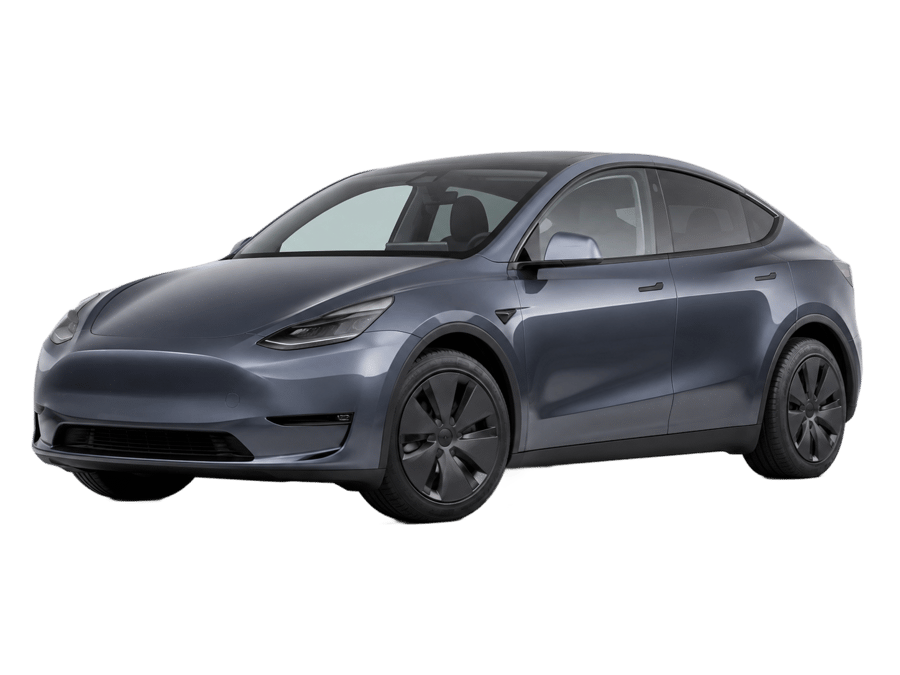
Complaint volume
271 consumer-submitted complaints are matched to this model year. Treat the count as a research signal, then read the actual summaries for repeated symptoms.
Complaint records
271 consumer-submitted complaints on record for the 2020 Tesla Model Y, grouped by component category.
Buyer interpretation
Complaint records are most useful when they turn into inspection points, seller questions, and comparison checks against nearby model years.
271 consumer-submitted complaints are matched to this model year. Treat the count as a research signal, then read the actual summaries for repeated symptoms.
The most common categories are forward collision avoidance, unknown or other, suspension. Use those categories as a test-drive checklist instead of judging the vehicle from the total count alone.
Enriched records include 47 crash reports, 0 fire reports, 17 injury reports, and 0 fatality reports. These fields come from complaint records and should be read in context.
Mileage is available on 52 complaints, with an average reported failure mileage of 15,703 miles. Compare that with the mileage on the listing.
Build a buyer checklist to turn these issues into questions and inspection points.
271 total complaints on record
| Date | Component | Summary | Severity | Mileage |
|---|---|---|---|---|
| Jun 2026 | SEATS,UNKNOWN OR OTHER | Seat occupancy sensor failed for the second time. The car will randomly shut off if I am inside because it does not detect a passenger. When I exit the vehicle, the car will stay on for an extended period of time due to failed seat occupancy sensor. This is a widespread issue affecting all makes and models of Tesla. They are aware of the high rate of failure and have not made any attempt to issue a recall. This is dangerous and inconvenient as the infotainment system will not pair with your phone because it does not detect a driver. When moving, the car will also randomly throw itself into PARK at speed if you don’t put on your seatbelt before moving. The first time this happened, I smashed my head on the steering wheel. | Crash: No Fire: No | Unknown |
| May 2026 | SUSPENSION | The contact's daughter owns a 2020 Tesla Model Y. The contact stated that while driving at various speeds, an abnormal, squeaking sound would emit from the vehicle without warning. The contact called the service center where they gave the contact an estimate for a diagnostic. The contact was also informed that the vehicle may be covered under a goodwill warranty. The vehicle several parts of the front control arm were defective and had caused several other defects related to the control arm. The contact was given an estimate for the repair. The manufacturer had yet to be notified of the failure. The vehicle remained in the service center's possession but had yet to be repaired. The failure mileage was approximately 48,000. | Crash: No Fire: No | 48,000 |
| Apr 2026 | SUSPENSION,WHEELS,SERVICE BRAKES | There was a grinding sound coming from the LF wheel. This was progressively getting worse. Car was shaking while driving so dropped it off with my mechanic due to safety concerns. Per the mechanic that fixed the issue: Inspection found LF wheel bearing is loose. A bolt backed out on inside rubbing through axel shaft. Allowed wheel bearing to damage to damaged from moving in place. Axle shaft damaged from rubbing on backed out bolt. Replace LF axle shaft and wheel bearing. Informed by mechanic that wheel could have fallen off while driving. No prior work. Mechanic believes most likely issue was not having the bolts appropriately installed at time of manufactue | Crash: No Fire: No | Unknown |
| Apr 2026 | ELECTRICAL SYSTEM | Odometer Fraud. The contact purchased a 2020 Tesla Model Y. It was discovered that there was a mileage discrepancy. The vehicle was a dealer sale. At the time of purchase, the vehicle mileage was 78,823, but after driving the vehicle from the dealer's lot, the contact discovered through the vehicle settings that the actual mileage was 80,810. The dealer was contacted, but no resolution was provided. The dealer then updated the advertised mileage on the website. | Crash: No Fire: No | 80,810 |
| Apr 2026 | UNKNOWN OR OTHER,BACK OVER PREVENTION | My Tesla Model Y 2020 (VIN: [XXX] ) is stuck on software version 2023.44.1 for more than 2 years and has four incomplete NHTSA safety recalls: • 23V838 – Autosteer driver monitoring improvements • 24V051 – Brake/Park/ABS warning font size too small • 24V153 – Muted Pedestrian Warning System • 24V554 – Hood not detected as unlatched
Tesla Service in the Baltic region and Tesla Service in Warsaw (Poland) both refused to deliver the required OTA safety recall updates. They classified the vehicle as “unsupported” because it is a US-market vehicle located in Latvia.
I am unable to bring the vehicle to any Tesla Service Center.
Tesla is not fulfilling its legal obligation to provide the free safety recall remedies. Please require Tesla to deliver the updates or provide a proper solution.
Attached: screenshots of refusals from Tesla Service (Baltic Warsaw).
INFORMATION REDACTED PURSUANT TO THE FREEDOM OF INFORMATION ACT (FOIA), 5 U.S.C. 552(B)(6) | Crash: No Fire: No | Unknown |
| Mar 2026 | SEAT BELTS,SEATS | Vehicle had "front passenger safety restraint system fault" multiple times intermittently. Serviced by Tesla service center in Dublin, CA who confirmed the problem. Documentation on the invoice stated that there was an open service bulletin related to this issue and was related to "the occupancy sensory in the seat was not functioning as expected." Upon inspection by the technician they found "an open connection in the seat harness and seat cover that can cause intermittent alerts." Additional repair notes indicate that this was to "address a service bulletin related to the front passenger seat's occupant classification system. We identified the need for an update to ensure proper functionality. To resolve this, we retrofitted the system in the front passenger seat as per the bulletin requirements." The fact that there is an open service bulletin for this issue indicates that it is not isolated to just this vehicle. An issue with the occupant sensors of a front vehicle seat directly impacts whether the air bags will deploy in a crash, therefore this is a serious safety risk. | Crash: No Fire: No | Unknown |
| Mar 2026 | STEERING | A 2018 Ford Explorer, marked police vehicles, was operating with lights and siren when it proceeded through a red traffic light at an intersection. The subject vehicle, 2020 Tesla Model 3, was proceeding through a green traffic light at the intersection and struck the Ford. | Crash: Yes Fire: No Injuries: 2 Towed Medical attention | Unknown |
| Feb 2026 | FORWARD COLLISION AVOIDANCE | The full self-driving (FSD) stopped working although it was fully paid for at the time of vehicle purchase. Along with that, the car stopped receiving/installing over the air software updates, the lane markings in the display disappeared, and the automatic cancelling turn signals stopped working (requiring me to manually cancel them). I took it to Tesla service and was told that the car needs a new computer at a cost of approximately $2,300. To answer the bullet points above: 1. The main vehicle computer malfunctioned. 2. I paid for FSD for the safety it provides - without FSD, the car is simply less safe in traffic. 3. The Tesla service center confirmed that the vehicle computer has malfunctioned. 4. There was no indication of any kind, until suddenly the FSD stopped working and I noticed subsequently that downloading/installing software updates failed, lane markings disappeared, and automatic cancelling turn signals stopped working requiring manual operation. | Crash: No Fire: No | Unknown |
| Feb 2026 | ELECTRICAL SYSTEM,VISIBILITY/WIPER | Observed intermittent center display/infotainment computer (MCU) crashes/reboots where the center display becomes blank and then restarts. In recorded events, when reverse was selected during an MCU reboot interval, the rearview camera image did not display until the reboot completed. Recorded rear camera unavailability during reverse was approximately 10–17 seconds. MCU crash/reboot behavior was observed to be repeatable, including predictable occurrence while the vehicle was in the built-in Service Mode. After a factory reset, repeated/double boot behavior was also observed. Additional observations: - With the turn signal activated, light leakage was observed in the side repeater camera image (glare/bloom present in the camera view). - With each windshield wiper sweep, the forward camera image was observed to briefly flicker to a purple/green distorted state and then return to normal. - During driving, the on-screen message “Auto Lane Change unavailable” was observed. A separate rear camera symptom has also been observed: intermittent freezing/stale frames (image appears not to update). This rear camera freeze behavior has not yet been captured on video. These conditions have been documented by video/screenshots and reported to the manufacturer/service center for inspection/diagnosis. No crash or injury occurred. The vehicle is currently located at the manufacturer’s service center and is available for inspection upon request. | Crash: No Fire: No | Unknown |
| Dec 2025 | UNKNOWN OR OTHER,LANE DEPARTURE | Car was on complete auto pilot on mayland highway 270 and car suddenly took exit with any command and notification. Car was very close , few feet away from the guardrail at 55 mile per hour. This could have been a life threatening event with such decisions made by car. I saved all the dash cam videos of such two occurrence. I no longer have any trust in auto pilot software after too many mishaps with recent updates. | Crash: No Fire: No | Unknown |
| Dec 2025 | STEERING,SUSPENSION,STRUCTURE | I would hear squeaking/tearing/rattling noises, this was found to be due to malfunctioning/broken nuts and compliance arms and control arms. This happened three times so far, attached are two repairs that was required previously. Per report with Tesla staff, this has been a recurring issue. Per additional Tesla owners, this has been a frequent issue amongst many different Tesla forums. Now I have to get it repaired for the third time. I bought a used Tesla that was certified by Tesla, problems occured at 37876 miles, but car was bought at 34529 miles. | Crash: No Fire: No | Unknown |
| Nov 2025 | UNKNOWN OR OTHER | I brought the car to the dealership to work on the recalls that are all done by over the air download. The car is not receiving the updates so I brought the car to the dealership to force the download on their computers. They stated they will not do any work on the car without doing a high voltage inspection due to the car being salvage. The charge for the inspection is almost $1500. The recalls have nothing to do with the high voltage but they are requiring me to pay it before they fix the recalls. | Crash: No Fire: No | Unknown |
| Oct 2025 | UNKNOWN OR OTHER | Interior of glass roof - dangerously hot on sunny days, capable of causing burns. This problem has caused several family members including children to yelp in pain due to brief contact with the glass (heads meeting glass surface while placing children in car seat, getting in and out of car seat and hands brushing against glass surface). The temperature inside the tesla also far exceeds other cars I go into. This is easily reproducible on any spring/summer day. I understand there are cars with black paint that can get hot and you try to avoid touching that area. But if there is literally black glass above you in the interior that is not insulated, that is completely unavoidable and a constant hazard. There should be insulation provided standard. | Crash: No Fire: No | Unknown |
| Sep 2025 | STEERING,SUSPENSION | While driving at approximately 39,000 miles, the vehicle developed loud rattling and creaking noises from the front suspension when steering or backing out. A Tesla service center inspected the car and confirmed that both front lower lateral link assemblies were completely torn and required replacement. This failure placed safety at risk by compromising front suspension stability and steering control. The issue was confirmed and repaired by Tesla, and the replaced components are available for inspection. The defect, symptoms, and remedy match those described in NHTSA Recall 21V-835, which covers abnormal noise and damage caused by defective front lower lateral link fasteners. Despite this, the repair was classified as customer-pay instead of being covered under recall. No dashboard warning lights were displayed before the failure; the only symptom was abnormal noise when steering. | Crash: No Fire: No | Unknown |
| Sep 2025 | STRUCTURE | The mechanical door release cable for the rear doors is not accessible without a screwdriver. This safety door release mechanism should be accessible without tools in case of emergency. | Crash: No Fire: No | Unknown |
| Sep 2025 | STRUCTURE | The rear trunk smashed my fingers. I pressed the open button on the rear trunk and heard it unlatch. I stuck my hand under the trunk to try to help it open up. The trunk quickly reached, smashing my fingers. I was able to press the open button again and lift the trunk up. The could break someone’s fingers off completely, especially a small child. A warning is 100% necessary. I thought it was unlatched and would open since I heard it unlatch and it looked as if it was opening, albeit very slowly. | Crash: No Fire: No Injuries: 1 | Unknown |
| Aug 2025 | ELECTRICAL SYSTEM,UNKNOWN OR OTHER | Problem: I purchased a 2020 Tesla Model Y Long Range AWD, EPA-certified at 316 miles. My vehicle consistently delivers only 120–150 miles per full charge, and just ~80 miles from the recommended daily 80% → 20% SOC window. This is less than half the advertised/certified range. I have meticulously logged trips since July 2025, recording start/end battery %, mileage, Wh/mi, and driving conditions. Even after following Tesla’s own efficiency guidance (Chill Mode, conservative HVAC, no Sentry Mode, no Cabin Overheat Protection, speeds at/below limits), the shortfall is repeatable. Company’s Response: Tesla repeatedly stated: No warranty action unless there is a system alert. My range loss is due to “short trips” or “driving habits.” They “cannot go off EPA numbers,” though Tesla advertises the EPA rating. To review my logs, I must pay $235/hour, while I cannot access my own internal vehicle data. On Aug 7, Tesla told me 33% SOC should equal their quoted range. In reality, I received only ~40 miles before needing to recharge. At my Aug 21 service visit, after 1.5 hours onsite, I was again told results were “normal,” despite my detailed logs showing otherwise. Why It Matters: EPA ratings are federally mandated certification numbers. Dismissing them as “not applicable” contradicts federal law and advertising practices. A consumer should not accept half the advertised range while being told it is “normal.” Charging $235/hour to access my usage data blocks validation of Tesla’s claims. What I Request: Investigation into whether Tesla is failing to deliver its EPA-certified range. Enforcement of Tesla’s 8-year/120,000-mile battery warranty, as my results suggest excessive degradation or defect. Requirement that Tesla provide consumers access to their own vehicle/battery data without fees. Written clarification of Tesla’s real-world range obligations under Arizona conditions. Evidence Available | Crash: No Fire: No | Unknown |
| Aug 2025 | ELECTRICAL SYSTEM | On [XXX], I identified a severe and unacceptable loss of driving range in my 2020 Tesla Model Y (VIN: [XXX] , mileage: 59,127 miles). The vehicle now shows only ~180 miles of range at 100% charge, compared to the original advertised 316 miles — representing a ~43% loss of range. This degradation is far outside normal industry standards for EV battery health. This loss of range significantly impacts vehicle safety, as trip planning becomes unreliable and there is a heightened risk of being stranded on highways or in unsafe locations without charging availability. This could endanger both myself and other drivers, especially in rural areas or during extreme weather conditions. The issue has been repeatedly reported to Tesla, but they have failed to provide a technical explanation, battery replacement, or corrective action. Tesla service claims it is “normal degradation,” despite the magnitude of loss and the vehicle’s mileage being well below expected battery life thresholds. No warning lamps appeared prior to the loss of range. The problem is ongoing and reproducible — the vehicle consistently charges to ~180 miles of estimated range. I believe the battery is defective or has been subject to software-imposed range limitation. I request that NHTSA investigate this matter as it may indicate a broader safety risk or a systemic defect in Tesla batteries that could affect other consumers. INFORMATION REDACTED PURSUANT TO THE FREEDOM OF INFORMATION ACT (FOIA), 5 U.S.C. 552(B)(6) | Crash: No Fire: No | Unknown |
| Jul 2025 | VISIBILITY/WIPER | Was driving in rain, had windshield wipers on, suddenly windshield wipers stopped working; could not see through windshield because of the rain; almost had collision before being able to move to the side of the road to safety. Cost $255 to have windshield wipers repaired. | Crash: No Fire: No | Unknown |
| Jul 2025 | ELECTRICAL SYSTEM,ENGINE | My 2020 Tesla Model Y Long Range/AWD vehicle has 46,000 miles and can no longer recharge its battery (engine) with an approved charger (L2) due to a commonly failed part inside the battery. This part is called PCS (Power Conversion System). This device attached to the Tesla battery is used to convert power from a charger which is AC (household alternating current) into DC (Direct Current) the battery can understand. This error appeared for the first time on [XXX] at [XXX]. This critical part has failed in thousands of Tesla vehicles, some multiple times easily verified by thousands of customer complaints online. The PCS is NOT a consumable part - such as a tire, wiper blades, brake pads, etc. There is nothing the vehicle Owner can do to prevent the PCS failure. The Cost to repair/replace the PCS part(s) is ~ $3,000 and may fail again after replacement. As required by Tesla, I scheduled a service appointment through their phone app, and received an estimate of ~$280.00 to repair my vehicle on June 26, 2025 at the Irvine, CA Tesla Service Center 2801 Barranca Pkwy. After diagnosis, I was informed the cost to fix/repair the PCS part in my vehicle so that I could charge and drive it, would be ~$3,000. The Manager Ryan Sutherland (949) 404-2989, further stated the repair would not be covered under my Vehicle Tesla Warranty (Tesla battery or drive unit warranty that does not expire until [XXX]). I tried to contact Tesla corporate for assistance at resolutions@tesla.com and did not receive a response but instead was contacted by service manager Ryan Sutherland via email confirming Tesla's warranty position. Tesla is essentially the only service/repair resource available for these vehicles. This repair is obviously due to a faulty/defective PCS or faulty design by Tesla affecting thousands of vehicles and should covered under my vehicle warranty so that it can be driven. [XXX] INFORMATION REDACTED PURSUANT TO THE FREEDOM OF INFORMATION ACT (FOIA), 5 U.S.C. 552(B)(6) | Crash: No Fire: No | Unknown |
| Jun 2025 | SEAT BELTS | Subject: Complaint Regarding Faulty Seat Belt on Tesla Vehicle (VIN: [XXX] ) Dear NHTSA Vehicle Safety Hotline, I am writing to formally report a safety concern regarding my Tesla vehicle, VIN [XXX] . I have experienced issues with the seat belt system, which I believe are related to a known defect. Despite this, my vehicle was not included in the recent recall for faulty seat belts. The problem I am facing is consistent with the conditions described in the recall notice, and I am concerned about the safety implications of continuing to use this defective component. I believe that my vehicle shares the same defect as the recalled units, and I request that NHTSA review this matter to determine whether my VIN should be included in the recall or whether further investigation is warranted. Please advise on the next steps I should take, and whether Tesla should be required to address this issue for my vehicle. Safety is a top priority, and I appreciate your attention to this matter. Thank you for your assistance. Sincerely, [XXX] INFORMATION REDACTED PURSUANT TO THE FREEDOM OF INFORMATION ACT (FOIA), 5 U.S.C. 552(B)(6) | Crash: No Fire: No | Unknown |
| May 2025 | STEERING,SUSPENSION | Steering became difficult to turn to the right with the wheel sticking to the right when trying to turn or drive the vehicle. Tesla claims we had some kind of a large impact. Maybe a pothole. Tesla claims well this is a heavy vehicle. Out of no where we had to replace the entire steering rack. I've never had to replace an entire steering rack for a pothole. Seems ridiculous. | Crash: No Fire: No | Unknown |
| May 2025 | WHEELS,ELECTRICAL SYSTEM | I am submitting this service request and formal incident report concerning a serious malfunction of the Full Self-Driving (FSD) system on my 2020 Tesla Model Y. While operating the vehicle on [insert road name or location] with FSD fully engaged, the system initiated a left-hand turn but failed to complete it properly. As a result, the vehicle mounted the sidewalk, causing a blowout of the rear tire and visible damage to the passenger-side rims. Following this incident, I had the tires and wheels replaced. However, the vehicle now exhibits the following ongoing issues: - Rubbing noise from the front passenger wheel well when turning - Multiple system alerts, including: - Autonomous Emergency Braking Disabled - Steering Alignment Issue - Stability Control and Traction Control Warnings | Crash: No Fire: No | Unknown |
| May 2025 | UNKNOWN OR OTHER,VISIBILITY/WIPER | I have a Tesla Model Y and a Model 3. Both of them 2020 year purchased. The miles on Model Y is 96K and 43K respectively. In Feb 2025, my Model Y windshield had cracked and I had made a Tesla Insurance claim and paid the 500$ deductible and got it replaced. Now, in May 1st week, the same Model Y's windshield is cracked. When I take to Tesla service center, they say that its because of an external impact and so, they can't consider a warranty claim and I have to make another payment for this. That's the first thing. Now, with my Model 3, there is a crack developing on the rear windshield. I understand from Tesla that it has to be replaced too. I had a chat with Safelite auto glass company technician and he said that Tesla's glasses are too thin to accmmodate sensors and thats why this is happening repeatedly. | Crash: No Fire: No | Unknown |
| Apr 2025 | VISIBILITY | Component or System Failure: The HVAC system, specifically the compressor and supermanifold, failed on my 2020 Tesla Model Y. Tesla retained the replaced components during service, so they are not available for inspection. Safety Risk: This failure caused a loss of cabin heating and prevented proper windshield/window defrosting during cold weather, severely impairing visibility and creating unsafe driving conditions. Critically, this system also regulates battery heating. Without it, battery performance in cold temperatures can be compromised, reducing driving range, impairing charging capability, and risking vehicle operability in freezing conditions. Problem Confirmation: Tesla service technicians diagnosed and confirmed failure of the compressor and supermanifold. Full replacement was required to restore proper HVAC and battery heating functions. Inspections Conducted: The vehicle was inspected by Tesla service both before and after the failure. Prior to my ownership, the vehicle had been brought in by a family member (prior owner) for HVAC performance concerns. HVAC issues reappeared around 28,000 miles, but I was unable to immediately schedule repairs due to the Tesla Service Center being approximately 1 hour and 15 minutes away and personal scheduling constraints. The vehicle was finally repaired on April 24, 2025, at 38,511 miles. Warning Indicators: Before the failure, HVAC symptoms included inconsistent heating, occasional HVAC warnings, and degraded cold weather performance. Additional Context: I was required to pay $2,992.89 for the repair out of pocket, as the vehicle was just outside of warranty. Due to this failure, I drove for an extended time without reliable cabin heat, defrosting, or proper battery heating in winter conditions, exposing me to serious safety risks. Tesla has acknowledged HVAC component contamination issues in official service bulletins, suggesting a known systemic problem. | Crash: No Fire: No | Unknown |