Vehicle report

2025 Tesla Model Y

Recalls, consumer complaints, safety ratings, fuel cost estimate, and next steps from official public data sources.
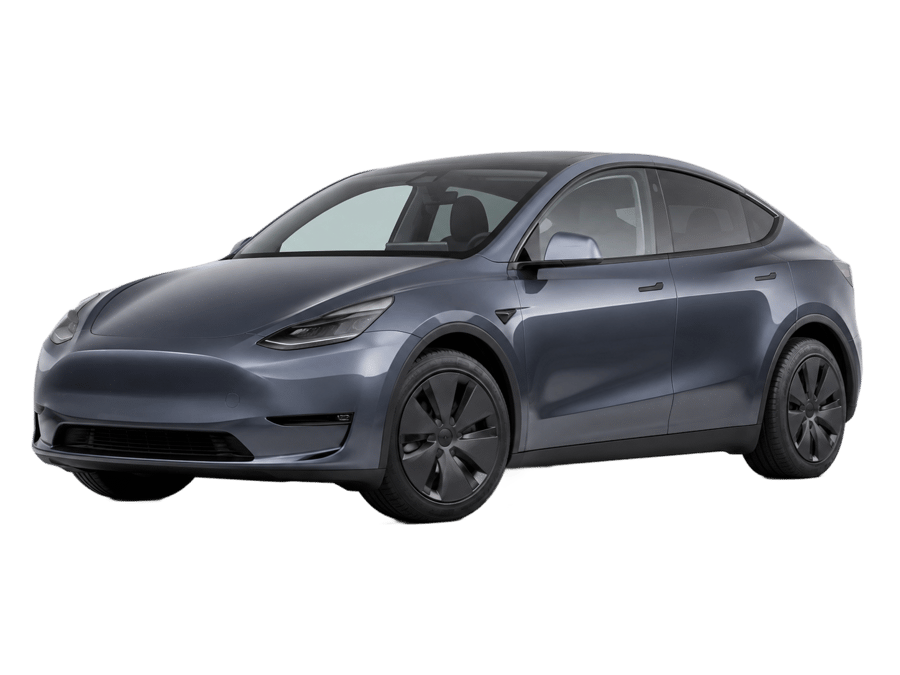
2025 Tesla Model Y
3 Total recalls
May 19, 2026 Latest recall date
82 Complaint reports
$651 Estimated fuel cost
Quick answer: The 2025 Tesla Model Y has 3 official recalls and 82 consumer complaints in our database. The latest recall date is May 19, 2026. The most common complaint categories include unknown or other, forward collision avoidance, service brakes,forward collision avoidance. Estimated annual fuel cost is $651 based on the current calculator assumptions.

Buyer interpretation

What this record means before you buy

The useful question is not just whether this page has records. It is what those records should make you verify before money changes hands.

Recall homework

There are 3 official recalls listed for this model year. Before buying, use the VIN to confirm which campaigns are still open and ask for dealer repair records on completed work.

Owner complaint pattern

Owner complaints most often mention unknown or other, forward collision avoidance, service brakes,forward collision avoidance. Scan those categories before the test drive so you know what symptoms, warning lights, or service history to ask about.

Open investigation signal

3 federal defect investigations are still open. That is not a recall, but it is worth reading before assuming the issue is settled.

Ownership-cost check

The fuel-cost estimate is based on a representative EPA match, not every trim. Confirm the actual engine, drivetrain, and tire setup before comparing this listing with another year or model.

Questions to ask the seller

  • Can you show the current VIN recall status for this 2025 Tesla Model Y?
  • Do you have dealer invoices or campaign paperwork for the listed recall repairs?
  • Have you noticed any issues related to unknown or other, forward collision avoidance, service brakes,forward collision avoidance?
  • Can I review recent maintenance records before the test drive?
Used-car checklist

Thinking of buying this vehicle?

Use our buyer checklist to know what to inspect, ask, and verify before the test drive.

2025 Tesla Model Y Electricity
Create checklist Compare with other years Sends year, make, and model to pre-fill your checklist.

Safety ratings

Official safety ratings were found for 2 tested variants of the 2025 Tesla Model Y.

Overall 5/5 stars
Frontal crash 5/5 stars
Side crash 5/5 stars
Rollover 5/5 stars

Displayed variant: 2025 Tesla Model Y SUV RWD ; rollover risk 9.7%

Safety ratings can vary by tested body style, trim, drivetrain, or variant. Do not assume every trim has the same rating unless the official record says so.
Variant Overall Front Side Rollover
2025 Tesla Model Y SUV RWD Default 5/5 stars 5/5 stars 5/5 stars 5/5 stars
2025 Tesla Model Y SUV AWD 5/5 stars 5/5 stars 5/5 stars 5/5 stars

How many recalls does the 2025 Tesla Model Y have?

Verify with official VIN lookup

3 official recalls on record for the 2025 Tesla Model Y. 10 matched quarterly completion reports are available.

Latest recall: May 19, 2026

Recall data is based on official records. This page is not an official VIN recall check. Always confirm open recalls with an official VIN lookup, the manufacturer, or an authorized dealer. Completion reports are campaign-level, delayed, and not VIN-specific.
Campaign Component Summary Consequence Remedy Date Completion
26V315000 EQUIPMENT:OTHER:LABELS Tesla, Inc. (Tesla) is recalling certain 2025-2026 Model Y vehicles. The certification label may not have been installed. As such, these vehicles fail to comply with the requirements of 49 C.F.R. Part 567, "Certification." Missing weight information provided by the label may lead to unintentionally overloading the vehicle, increasing the risk of a crash. Tesla Service will inspect and install a certification label as necessary, free of charge. Owner notification letters are expected to be mailed July 17, 2026. Owners may contact Tesla customer service at 1-877-798-3752. Tesla's number for this recall is SB-26-19-002. May 2026 Not matched
25V002000 BACK OVER PREVENTION:SOFTWARE Tesla, Inc. (Tesla) is recalling certain 2024-2025 Model 3, Model S, 2023-2025 Model X, and Model Y vehicles. The computer circuit board may short, resulting in the loss of the rearview camera image. As such, these vehicles fail to comply with the requirements of Federal Motor Vehicle Safety Standard (FMVSS) number 111, "Rear Visibility." A rearview camera that does not display an image reduces the driver's rear view, increasing the risk of a crash. Tesla released an over-the-air (OTA) software update, free of charge. Tesla will also identify any vehicles that experienced a circuit board failure, or stress that may lead to a circuit board failure, and replace the affected computers, free of charge. Owner notification letters were mailed March 7, 2025. Owners may contact Tesla customer service at 1-877-798-3752. Tesla's number for this recall is SB-25-00-001. Jan 2025 2026-1
238,290 remedied / 239,382 involved (99.5%)
24V935000 TIRES:PRESSURE MONITORING AND REGULATING SYSTEMS Tesla, Inc. (Tesla) is recalling certain 2024 Cybertruck, 2017-2025 Model 3, and 2020-2025 Model Y vehicles. The tire pressure monitoring system (TPMS) warning light may not remain illuminated between drive cycles, failing to warn the driver of low tire pressure. As such, these vehicles fail to comply with the requirements of Federal Motor Vehicle Safety Standard number 138, "Tire Pressure Monitoring Systems." Driving with improperly inflated tires increases the risk of a crash. Tesla released an over-the-air (OTA) software update, free of charge. Owner notification letters were mailed February 15, 2025. Owners may contact Tesla customer service at 1-877-798-3752. Tesla's number for this recall is SB-24-00-018. Dec 2024 2026-1
695,669 remedied / 696,281 involved (99.9%)

Are there federal defect investigations for the 2025 Tesla Model Y?

Official records show 4 federal defect investigations matched to the 2025 Tesla Model Y.

3 open 1 closed
Investigations are not recalls. They show official defect reviews and may close without a recall, or may reference a related campaign when one exists.
Action Status Component Subject Opened Related recall
EA26002 Open ELECTRICAL SYSTEM:ADAS FSD Collisions in Reduced Roadway Visibility Conditions
The Office of Defects Investigation (ODI) is opening this Engineering Analysis to evaluate Tesla’s Full Self Driving Beta and Full Self Driving (Supervised) (collectively, FSD) degradation detection system. The focus of this investigation will be to assess the system’s ability, when encountering reduced roadway visibility conditions, to detect degradation and alert the driver with sufficient time to respond. ODI will evaluate the performance of FSD in degraded roadway conditions and the updates or modifications by Tesla to the degradation detection system, including the timing, purpose, and capabilities of the updates, and Tesla’s assessment of their safety impact. Tesla’s FSD is an advanced driver assistance system (ADAS) that relies exclusively on vision-based cameras and the related FSD software to detect and respond to the roadway ahead, projecting a path forward based on traffic control devices, vehicles, pedestrians, and the roadway itself. When Tesla began transitioning away from using both cameras and radars to an exclusively camera-based approach, known as Tesla Vision, in mid-2021, it developed and implemented a degradation detection system that it deployed by a software update to existing and new Tesla vehicles. On June 28, 2024, the day after Tesla submitted the SGO report of the November 28, 2023 fatal crash listed in this document, Tesla began developing an update to the degradation detection system. At this time, ODI does not have information on when the update was deployed and which vehicles have the updated system. ODI discussed individual incidents and its initial findings during the PE phase of its investigation with Tesla. As part of those discussions, Tesla’s post-incident analysis indicated that the update to the degradation detection system, had it been installed on the vehicles at the time, may have affected 3 of the 9 incidents identified by ODI. Tesla also described internal data and labeling limitations that prevented a uniform identification and analysis of crash events with the subject system engaged. ODI believes this limitation could have led to under-reporting of subject crashes over portions of the defined time-period. Available incident data raise concerns that Tesla’s degradation detection system, both as originally deployed and later updated, fails to detect and/or warn the driver appropriately under degraded visibility conditions such as glare and airborne obscurants. In the crashes that ODI has reviewed, the system did not detect common roadway conditions that impaired camera visibility and/or provide alerts when camera performance had deteriorated until immediately before the crash occurred. Review of Tesla’s responses revealed additional crashes that occurred in similar environments and where the system either did not detect a degraded state, and/or it did not present the driver with an alert with adequate time for the driver to react. In each of these crashes, FSD also lost track of or never detected a lead vehicle in its path. In upgrading PE24031 to an Engineering Analysis (EA), ODI will gather further information on the updated degradation detection system, including the status of updating vehicles and scope of compatible vehicles, the system’s visibility degradation detection capability, and alerts or warnings to the driver. Lastly, ODI will conduct analysis on six recent potentially related incidents. These incidents can be found at NHTSA.gov under the following SGO report identification numbers: 13781-11937, 13781-13211, 13781-13569, 13781-13633, 13781-13693, 13781-13788. The crashes included in the failure report summary can be found at NHTSA.gov under the following SGO report identification numbers: 13781-8004, 13781-7181, 13781-7381, 13781-7767, 13781-7964, 13781-8977, 13781-9267.
Mar 2026 None
PE25012 Open ELECTRICAL SYSTEM:ADAS Traffic safety violations while Full Self Driving ("FSD") is engaged
The Office of Defects Investigation (“ODI”) is opening this Preliminary Evaluation (PE) to assess the scope, frequency, and potential safety consequences of FSD executing driving maneuvers that constitute traffic safety violations. This investigation concerns versions of FSD that Tesla has labeled as "FSD (Supervised)" and "FSD (Beta)." Tesla characterizes FSD as an SAE Level 2 partial automation system requiring a fully attentive driver who is engaged in the driving task at all times. Level 2 partial automation systems are designed to support and assist the driver in performing certain aspects of the driving task, requiring a driver to supervise and intervene as necessary.  The driver remains fully responsible at all times for driving the vehicle, including complying with applicable traffic laws. ODI’s investigation will therefore focus, in particular, on whether certain driving inputs within the control authority of FSD forestall the driver’s supervision when they are unexpectedly performed. ODI has identified a number of incidents in which the inputs to the dynamic driving task commanded by FSD induced vehicle behavior that violated traffic safety laws. Although reports of this nature span a variety of behaviors, the reports appear to most commonly involve two types of scenarios. The first type of scenario involves a vehicle operating with FSD proceeding into an intersection in violation of a red traffic signal. The second type of scenario involves FSD commanding a lane change into an opposing lane of traffic. With respect to the first type of scenario, ODI has identified 18 complaints and 1 media report alleging that a Tesla vehicle, operating at an intersection with FSD engaged, failed to remain stopped for the duration of a red traffic signal, failed to stop fully, or failed to accurately detect and display the correct traffic signal state in the vehicle interface. Some complainants also alleged that FSD did not provide warnings of the system's intended behavior as the vehicle was approaching a red traffic signal. ODI has identified six Standing General Order ("SGO") reports in which a Tesla vehicle, operating with FSD engaged, approached an intersection with a red traffic signal, continued to travel into the intersection against the red light and was subsequently involved in a crash with other motor vehicles in the intersection. Of these incidents, four crashes resulted in one or more reported injuries. At least some of the incidents appeared to involve FSD proceeding into the intersection after coming to a complete stop. ODI's pre-investigative work, including coordination with the Maryland Transportation Authority and State Police, indicated that the problem may be repeatable, given that multiple subject incidents occurred at the same intersection in Joppa, Maryland. NHTSA understands that Tesla has since taken action to address the issue at this intersection. With respect to the second type of scenario, ODI has identified 2 SGO reports, 18 complaints, and 2 media reports alleging that a Tesla vehicle, operating with FSD engaged, entered opposing lanes of travel during or following a turn, crossed double-yellow lane markings while proceeding straight, or attempted to turn onto a road in the wrong direction despite the presence of wrong-way road signs. Likewise, ODI has identified 4 SGO reports, 6 complaints, and 1 media report alleging that a Tesla vehicle, operating with FSD engaged, proceeded straight through an intersection in a turn-only lane or executed a turn at an intersection in a through lane despite the presence of lane markings or signals. Complaints also alleged that FSD did not provide warnings of the system's intended behavior. Some complaints alleged that more than one of these failures occurred and, as such, the numbers are not cumulative. Some of the reported incidents appeared to involve FSD executing a lane change into an opposing lane of travel with little notice to a driver or opportunity to intervene. ODI’s review will assess whether there was prior warning or adequate time for the driver to respond to the unexpected behavior or to safely supervise the automated driving task. This review will assess any warnings to the driver about the system's impending behavior; the time given to drivers to respond; the capability of FSD to detect, display to the driver, and respond appropriately to traffic signals; and the capability of FSD to detect and respond to lane markings and wrong-way signage. NHTSA's review will also consider any updates or modifications to the system(s) that may affect the performance of FSD with respect to obeying traffic safety laws and signals. This assessment will focus, in particular, on the types of traffic safety violations described above, as most reports identified thus far have centered around those behaviors. While the behaviors under investigation appear to occur most frequently at intersections, NHTSA’s investigation will encompass any other types of situations in which this behavior may arise, such as when traveling adjacent to a lane of opposing traffic or when approaching railroad crossings. If other evidence received during this investigation involve other types of traffic safety violations, those may be considered as part of this assessment as well. To review the ODI reports cited in the Opening Resume ODI Report Identification Number document, go to NHTSA.gov. The SGO reports cited in this Resume are listed below by report ID and are available for download at NHTSA.gov/laws-regulations/standing-general-order-crash-reporting. 13781-8739-1, 13781-8995-1, 13781-9623-1, 13781-10333-1, 13781-10872-1, 13781-10930-1, 13781-10939-1, 13781-10941-1, 13781-11069-1, 13781-11305-1, 13781-11579-1 Media reported allegations included as a separate attachment.
Oct 2025 None
AQ25002 Open ELECTRICAL SYSTEM:ADAS Compliance with Standing General Order 2021-01 Reporting Requirements
The Office of Defects Investigation (“ODI”) has identified numerous incident reports submitted by Tesla, Inc. (“Tesla”) in response to Standing General Order 2021-01 (the “SGO”), in which the reported crashes occurred several months or more before the dates of the reports. The majority of these reports involved crashes in which the Standing General Order in place at the time required a report to be submitted within one or five days of Tesla receiving notice of the crash. When the reports were submitted, Tesla submitted them in one of two ways. Many of the reports were submitted as part of a single batch, while others were submitted on a rolling basis. Preliminary engagement between ODI and Tesla on the issue indicates that the timing of the reports was due to an issue with Tesla’s data collection, which, according to Tesla, has now been fixed. NHTSA is opening this Audit Query, a standard process for reviewing compliance with legal requirements, to evaluate the cause of the potential delays in reporting, the scope of any such delays, and the mitigations that Tesla has developed to address them. As part of this review, NHTSA will assess whether any reports of prior incidents remain outstanding and whether the reports that were submitted include all of the required and available data. The SGO reports cited in the Opening Resume, can be found at NHTSA.gov/SGOCrashReporting under the following SGO 2021-01 report IDs: 13781-11020-1 13781-10844-1 13781-10843-1 13781-10530-1 13781-10160-1 13781-10159-1 13781-10157-1 13781-10146-1 13781-10122-1 13781-10098-1 13781-10097-1 13781-10096-1 13781-10095-1 13781-10094-1 13781-10093-1 13781-10023-1 13781-10022-1 13781-10021-1 13781-10020-1 13781-10017-1 13781-10016-1 13781-10015-1 13781-10014-1 13781-10013-1 13781-10012-1 13781-6047-1 13781-9930-1 13781-9917-1 13781-9928-1 13781-9925-1 13781-9924-1 13781-9923-1 13781-9922-1 13781-9835-1 13781-9834-1 13781-9833-1 13781-9832-1 13781-9831-1 13781-9830-1 13781-9829-1 13781-9827-1 13781-9818-1 13781-9780-1 13781-9779-1 13781-9778-1 13781-9777-1 13781-9775-1 13781-9774-1 13781-9773-1 13781-9772-1 13781-9771-1 13781-9770-1 13781-9728-1 13781-9688-1 13781-9715-1 13781-9714-1 13781-9713-1 13781-9712-1 13781-9711-1 13781-9710-1 13781-9709-1 13781-9696-1 13781-9695-1 13781-9694-1 13781-9693-1 13781-9692-1 13781-9691-1 13781-9690-1 13781-9687-1 13781-9686-1 13781-9342-1 13781-9319-1 13781-9019-1 13781-8910-1 13781-8732-1 13781-8712-1 13781-8310-1 13781-7897-1 13781-7895-1 13781-7835-1 13781-7798-1 13781-7797-1 13781-7758-1 13781-7757-1 13781-7756-1 13781-7755-1 13781-7667-1 13781-7399-1 13781-7398-1 13781-7397-1 13781-7396-1 13781-7395-1 13781-7394-1 13781-7393-1 13781-7389-1 13781-7388-1 13781-7387-1 13781-7386-1 13781-7385-1 13781-7383-1 13781-7187-1 13781-7186-1 13781-7185-1 13781-7184-1 13781-7181-1 13781-7023-1 13781-6399-1 13781-6389-1 13781-6388-1 13781-6387-1 13781-6386-1 13781-6379-1 13781-6378-1 13781-6377-1 13781-6375-1 13781-6214-1 13781-6172-1 13781-6155-1 13781-6154-1 13781-6122-1 13781-6120-1 13781-6118-1 13781-5800-1
Aug 2025 None
PE24033 Closed ELECTRICAL SYSTEM:ADAS:AUTONOMOUS/SELF DRIVING Actually Smart Summon sessions resulting in low-speed impacts.
On January 6, 2025, the Office of Defects Investigations (ODI) opened Preliminary Evaluation 24003 (PE24033) to investigate Actually Smart Summon (Summon) sessions resulting in crashes during active sessions. According to Tesla, Summon is a short-distance SAE Level 2 system, controlled by the user from a cell phone within a certain distance and intended for use in parking lots and on private property. ODI analyzed complaint data provided by Tesla as well as complaints submitted to ODI from consumers to identify Summon incidents resulting in crashes. ODI's analysis indicates that almost all Summon reported crashes involved minor property damage claims with no reported incidents involving a vulnerable road user, injury, fatality, or major property damage as indicated by an air bag deployment or vehicle tow away. Out of millions of Summon sessions, a fraction of 1% resulted in an incident. Almost all those incidents took place where, typically early in a Summon session, the system or person using the app failed to fully detect or respond appropriately to vehicle surroundings resulting in minor impacts. Incidents took place when app users did not have a complete 360-degree view of the surroundings in the app to assess situational awareness. This limited the app user’s ability to determine whether an impact was imminent during initial vehicle maneuvers such as reversing in close proximity to an obstacle or a curb. ODI found that the impacts most often occurred with parking gates, adjacently parked vehicles, and short parking bollards. During this investigation, ODI identified two Summon crashes related to camera blockages. In both crashes, Summon attempted to navigate a snowy parking lot with snow partially or fully obstructing the forward-facing cameras. Summon did not detect the camera blockage and the vehicles collided with unoccupied parked vehicles while navigating the parking lot. App users in both instances did not command a vehicle stop or pause despite the obstructed camera visible in the camera stream in the app. On January 15, 2025, Tesla released Over-the-Air (OTA) Software (SW) Update Action numbers 578998 and 579185 for vehicles in service to implement a camera blockage detection condition. Both OTAs improve camera blockage detection mechanisms. Additionally, on January 20, 2025, and January 30, 2025, Tesla identified additional system requirements associated with camera visibility checks and released OTA SW-578752 and SW-580322, respectively. These firmware updates reduce false negative camera blockage detections due to snow or condensation. In its investigation, ODI identified one Summon incident where the vehicle did not yield for a gate arm blocking a garage exit lane and the app user did not command a vehicle stop or pause, resulting in an impact. On February 6, 2025, Tesla deployed OTA SW-578839 to improve vehicle reaction to dynamic gates. This OTA update upgraded vehicle perception systems through a high-fidelity occupancy determination network, which uses data from vehicle sensory systems to improve reconstruction of field objects with high accuracy. On November 20, 2025, Tesla further improved vehicle performance by adding object detections from a separate neural network through OTA SW-580514. Owners of the affected vehicles received all six OTA SW updates. Tesla also released these SW updates to production vehicles. See online public file for detailed descriptions of all six OTA SW updates. Due to low incident occurrence and low incident severity, this preliminary evaluation is closed. The closing of this investigation does not constitute a finding that a safety-related defect does not exist. The agency reserves the right to take additional action if warranted by future circumstances. For additional information regarding this investigation, see the complete online public file.
Jan 2025
Closed Apr 2026
None

Are there manufacturer notices for the 2025 Tesla Model Y?

Official records show 4 manufacturer communications on record for the 2025 Tesla Model Y.

0 warranty 0 service campaigns 0 software/OTA

Common components: ELECTRICAL SYSTEM (1), STRUCTURE:BODY (1), SUSPENSION (1), UNKNOWN OR OTHER (1)

Manufacturer communications are not recalls. They can include service bulletins, repair instructions, warranty extensions, software updates, service campaigns, and other notices.
Date Type Component Summary ID / document
Feb 2026 Service Bulletin/Repair Instructions ELECTRICAL SYSTEM On some Model Y vehicles, water may ingress into the front fascia camera via the channels on the front fascia harness. This may corrode the camera connector or submerge the camera lens, which results in camera alerts and possible loss of the front fascia camera feed. Inspect the vehicle for symptoms related to the condition. If symptoms are present, replace the front fascia harness and the front fascia camera. 11029585
SB-25-17-012
Feb 2026 Service Bulletin/Repair Instructions STRUCTURE:BODY On some Model Y Standard vehicles, the gap between the front door glass run seals and the moving glass might not meet Tesla specifications, resulting in high-pitched wind noise from the A-pillar areas when the vehicle is driven at high speed. Upon customer complaint, inspect the gap between the front door glass run seal and the moving glass on both front doors. If the gap on either side is 0.5 mm or greater, replace both front door glass run seals. 11029584
SB-26-11-001
Jun 2025 Service Bulletin/Repair Instructions SUSPENSION A firmware diagnosis feature is being introduced on Model 3 and Model Y vehicles that monitors wheel alignment over time. This feature detects changes in wheel alignment that may be related to incorrect tire pressures, degraded ball joints, bushings or damaged suspension links. If the feature determines that an inspection at a Tesla Service Center is required, a customer-facing alert will appear on the touchscreen. 11020192
SB-25-31-004
Jun 2025 Service Bulletin/Repair Instructions UNKNOWN OR OTHER On certain Model Y vehicles, the glove box might not open because the retention force of the magnets in the glove box door is too strong due to the airgap between the magnets being too small. 11020188
SB-25-14-001

What are the most common 2025 Tesla Model Y complaints?

82 total complaints on record

How much does the 2025 Tesla Model Y cost in fuel?

Estimated annual cost $651 $54/month at 12,000 miles/year
Energy used 3,456 kWh/yr
Price assumption $0.19 $/kWh

Assumptions: 123 city / 111 highway / 117 combined MPGe · Electricity · efficiency ratings from official public data when available · fuel price default: official public data (U.S. average, Mar 1, 2026)

Fuel score 9/10Smog 10/10SmartWay Elite311 mi EV range28.8 kWh/100 mi12.0 hr L2 charge

Find public charging stations

Model-year comparison