Recall homework
There are 5 official recalls listed for this model year. Before buying, use the VIN to confirm which campaigns are still open and ask for dealer repair records on completed work.
Vehicle report
Recalls, consumer complaints, safety ratings, fuel cost estimate, and next steps from official public data sources.
Buyer interpretation
The useful question is not just whether this page has records. It is what those records should make you verify before money changes hands.
There are 5 official recalls listed for this model year. Before buying, use the VIN to confirm which campaigns are still open and ask for dealer repair records on completed work.
Owner complaints most often mention power train, engine, unknown or other. Scan those categories before the test drive so you know what symptoms, warning lights, or service history to ask about.
237 manufacturer communications are listed. These are not recalls, but they can reveal repair instructions, warranty extensions, software notices, or known service patterns.
The fuel-cost estimate is based on a representative EPA match, not every trim. Confirm the actual engine, drivetrain, and tire setup before comparing this listing with another year or model.
Use our buyer checklist to know what to inspect, ask, and verify before the test drive.
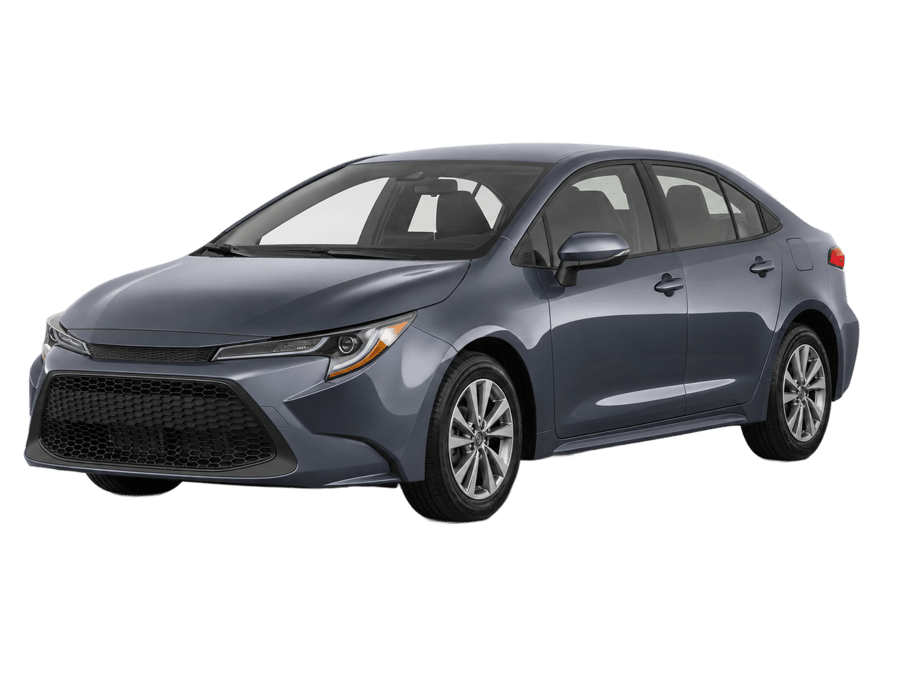
Official safety ratings were found for 2 tested variants of the 2019 Toyota Corolla.
| Variant | Overall | Front | Side | Rollover |
|---|---|---|---|---|
| 2019 Toyota Corolla 4 DR FWD Default | 5/5 stars | 4/5 stars | 5/5 stars | 4/5 stars |
| 2019 Toyota Corolla 5 HB FWD | 5/5 stars | 5/5 stars | 5/5 stars | 4/5 stars |
5 official recalls on record for the 2019 Toyota Corolla. 37 matched quarterly completion reports are available.
Latest recall: January 17, 2020
| Campaign | Component | Summary | Consequence | Remedy | Date | Completion |
|---|---|---|---|---|---|---|
| 20V024000 | AIR BAGS: AIR BAG/RESTRAINT CONTROL MODULE | Toyota Motor Engineering & Manufacturing (Toyota) is recalling certain 2011-2019 Corolla, 2011-2013 Matrix, 2012-2018 Avalon, and 2013-2018 Avalon Hybrid vehicles. During certain crashes, the air bag electronic control unit (ECU) may malfunction, possibly disabling the deployment of the air bags and/or seat belt pretensioners. | In the event of a crash, air bags and/or seat belt pretensioners that do not deploy as intended may increase the risk of injury. | Toyota will notify owners, and dealers will inspect the ECU and install a noise filter between the air bag control module and its wire harness, as necessary, free of charge. Owners were notified of the safety risk beginning March 2, 2020. A second letter notifying owners of the remedy repair will be mailed between March 16, 2020 and June 27, 2020. Owners may contact Toyota customer service at 1-888-270-9371. Toyota's numbers for this recall are 20TB03, 20TA03 and 20TA05. | Jan 2020 | 2022-1 |
| 20V012000 | FUEL SYSTEM, GASOLINE:DELIVERY:FUEL PUMP | Toyota Motor Engineering & Manufacturing (Toyota) recalled certain 2018-2019 4Runner, Highlander, Camry, Land Cruiser, Sequoia, Sienna, Tacoma and Tundra, and Lexus RC 300, RC 350, GS 350, GX 460, IS 300, LC 500, LS 500, LX 570, RX 350L, and 2019 Toyota Avalon and Corolla, and certain Lexus NX 300, and ES 350 vehicles on January 13, 2020. On March 4, 2020, Toyota expanded the recall to include certain 2014-2015 Toyota 4Runner and Land Cruiser, 2018 Avalon, Corolla, 2014 FJ Cruiser, 2017 Sienna and Lexus 2018 ES 350, 2018-2019 GS 300, 2013-2014 GS350, 2014-2015 GX 460, IS 350 and LX 570, 2014 IS F, 2018-2019 IS 350, LC 500H and LS 500H, 2013-2015 LS 460, 2015 NX 200T and RC350, 2017 RC 200T and RX 350. Toyota also removed the 2018-2019 Toyota 4Runner and Land Cruiser and 2018-2019 Lexus GX 460 and LX 570 and 2019 NX300 from inclusion in this recall. On March 19, 2020, Toyota expanded the recall to include 2015 Lexus GS350 vehicles. The low-pressure fuel pump inside the fuel tank may fail. | If the fuel pump fails, the engine can stall while driving, increasing the risk of a crash. | Toyota will notify owners, and dealers will replace the fuel pump, free of charge. The recall began May 4, 2020. Owners may contact Toyota customer service at 1-888-270-9371 or Lexus customer service at 1-800-255-3987. Toyota's numbers for this recall are 20TB02 and 20TA02 for Toyota vehicles and 20LB01 and 20LA01 for Lexus vehicles. | Jan 2020 | 2022-1 |
| 19V503000 | EQUIPMENT:OTHER:LABELS | Southeast Toyota Distributors, LLC (SET) is recalling certain 2017-2019 Toyota Camry, Corolla, Rav4, Sienna, and Yaris iA vehicles equipped with factory-installed floor mats. The load carrying capacity modification label may be incorrect. As such, these vehicles fail to comply with the requirements of Federal Motor Vehicle Safety Standard (FMVSS) number 110, "Tire Selection and Rims." | An incorrect label may lead to unintentionally overloading the vehicle, increasing the risk of a crash. | SET will notify owners and provide a corrected label for placement over the inaccurate label, free of charge. The recall began August 23, 2019. Owners may contact Toyota customer service at 1-888-270-9371. SET's number for this recall is SET19A. | Jun 2019 | 2021-2 |
| 19V244000 | EQUIPMENT:OTHER:LABELS | Gulf States Toyota (GST) is recalling certain 2019 C-HR, 4Runner, Avalon, Avalon Hybrid, Camry, Camry Hybrid, Highlander, Land Cruiser, Prius, RAV4, Sequoia, Tacoma, Sienna, Tundra and Yaris vehicles. The text on the load capacity label may become illegible. As such, these vehicles fail to comply with the requirements of Federal Motor Vehicle Safety Standard (FMVSS) number 110, "Tire Selection and Rims." | If the driver cannot read the label, they may unknowingly overload the vehicle, increasing the risk of a crash. | GST will notify owners, and dealers will provide corrected load carrying capacity modification labels, free of charge. The recall began May 24, 2019. Owners may contact GST customer service at 1-800-444-1074. GST's number for this recall is 19R1. | Mar 2019 | 2020-3 |
| 18V901000 | POWER TRAIN:AUTOMATIC TRANSMISSION:TORQUE CONVERTER | Toyota Motor Engineering & Manufacturing (Toyota) is recalling certain 2019 Toyota Corolla hatchback vehicles equipped with Continuously Variable Transmissions (CVT). The pump impeller blades within the torque converter may detach, especially when driven under high load, potentially causing a vehicle stall. | A vehicle stall, especially when driving a high rate of speed, can increase the risk of a crash. | Toyota has notified owners, and dealers will replace the CVT and torque converter, free of charge. The recall began April 22, 2019. Owners may contact Toyota customer service at 1-888-270-9371. Toyota's number for this recall is J17/J07. | Dec 2018 | 2020-3 |
Official records show 1 federal defect investigation matched to the 2019 Toyota Corolla.
| Action | Status | Component | Subject | Opened | Related recall |
|---|---|---|---|---|---|
| EA19001 | Closed | AIR BAGS: AIR BAG/RESTRAINT CONTROL MODULE | Electrical overstress | Apr 2019 | 20V024 |
Official records show 237 manufacturer communications on record for the 2019 Toyota Corolla.
| Date | Type | Component | Summary | ID / document |
|---|---|---|---|---|
| Feb 2026 | Service Bulletin/Repair Instructions | ENGINE | OBSOLETE NOTICE February 27, 2026: This bulletin is no longer applicable and is now obsolete. | 11029896 |
| Jan 2026 | Service Bulletin/Repair Instructions | ELECTRICAL SYSTEM | OBSOLETE NOTICE January 30, 2026: This bulletin is now obsolete. Please see T-SB-0001-26. | 11028726 |
| Jan 2026 | Service Bulletin/Repair Instructions | ELECTRICAL SYSTEM | Some 2018 – 2024 model year Toyota vehicles equipped with a Premium Audio with Dynamic Navigation System require a Special Service Tool (SST) USB flash drive to update the map, points of interest, and system software. | 11028722 |
| Jan 2026 | Service Bulletin/Repair Instructions | UNKNOWN OR OTHER | Some 2005 – 2026 Toyota vehicles that have undergone water intrusion may exhibit a condition in which a musty odor is present. Follow the procedures in this bulletin to remediate the odor and address this condition. The purpose of this Service Bulletin is to provide general guidelines and procedures for odor remediation. This Service Bulletin provides a guide on how to prepare and treat the interior of the vehicle for odor remediation. Refer to the applicable model and model year Repair Manual and the EPA (Environmental Protection Agency) website for the most up-to-date safety and precautionary guidelines. | 11028712 |
| Aug 2025 | Service Campaign | ENGINE | The specific condition covered by this program is for a small engine coolant leak that can occur from the flow shut-off valve that can allow coolant to drip on other parts of the vehicle. This can cause "Engine Maintenance Required" to be displayed on the instrument cluster or cause the A/C not to function normally. Although the flow shut-off valve is covered by Toyota’s New Vehicle Limited Warranty for 36 months or 36,000 miles (whichever comes first), we at Toyota care about the customers’ ownership experience. Toyota is providing coverage for repairs related to Flow Shut-off Valve Coolant Leak. | 11022949 |
| Jun 2025 | Service Bulletin/Repair Instructions | ELECTRICAL SYSTEM | Some 2021 – 2022 model year Avalon, 2018 – 2024 Camry, 2019 – 2025 model year Corolla, 2022 – 2025 model year Corolla Cross, and 2019 – 2025 model year RAV4 vehicles with A25A-FKS and M20A-FKS engines may have a MIL ON condition with one or more of the following Diagnostic Trouble Codes (DTCs) upon cold soak start up with engine coolant temperatures between 14°F – 41°F: •P030027 – Random/Multiple Cylinder Misfire Detected (Emission) Signal Rate of Change Above Threshold •P030000 – Random/Multiple Cylinder Misfire Detected •P030100 – Cylinder 1 Misfire Detected •P030200 – Cylinder 2 Misfire Detected •P030300 – Cylinder 3 Misfire Detected •P030400 – Cylinder 4 Misfire Detected | 11020670 |
| Jun 2025 | Service Bulletin/Repair Instructions | ENGINE | Some 2018 – 2021 model year Toyota vehicles equipped with an A25A-FKS, A25A-FXS, or M20A-FKS engine may exhibit a condition in which an “Engine Maintenance Required” message is displayed in the Multi-Information Display (MID). Additionally, the vehicle will exhibit DTC(s) P268111 (Engine Coolant Bypass Valve Circuit Short to Ground) and/or P268115 (Engine Coolant Bypass Valve Circuit Short to Battery or Open). | 11020668 |
| Jun 2025 | Service Campaign | ELECTRICAL SYSTEM | The air conditioning dye injection tool kit has been developed to aid in identifying the location of air conditioning refrigerant leaks. The procedures outlined in this Service Bulletin aid in locating, inspecting, and repairing refrigerant leaks. | 11020657 |
| Apr 2025 | Service Bulletin/Repair Instructions | ELECTRICAL SYSTEM | To assist with the early detection and early resolution of audio related concerns you may be asked to recover MMR data from the head unit. The following steps are instructions on how to retrieve the data from the system and are only to be used when requested by FTS and/or FPE. | 11019332 |
| Apr 2025 | Service Bulletin/Repair Instructions | ELECTRICAL SYSTEM | To assist with the early detection and early resolution of audio related concerns you may be asked to recover MMR data from the head unit. The following steps are instructions on how to retrieve the data from the system and are only to be used when requested by FTS and/or FPE. | 11018329 |
200 total complaints on record
Assumptions: 27 city / 35 highway / 30 combined MPG · Regular Gasoline · efficiency ratings from official public data when available · fuel price default: official public data (U.S. average, Jul 18, 2026)