Recall homework
There are 3 official recalls listed for this model year. Before buying, use the VIN to confirm which campaigns are still open and ask for dealer repair records on completed work.
Vehicle report
Recalls, consumer complaints, safety ratings, fuel cost estimate, and next steps from official public data sources.
Buyer interpretation
The useful question is not just whether this page has records. It is what those records should make you verify before money changes hands.
There are 3 official recalls listed for this model year. Before buying, use the VIN to confirm which campaigns are still open and ask for dealer repair records on completed work.
Owner complaints most often mention air bags, fuel system, gasoline, air bags,fuel/propulsion system. Scan those categories before the test drive so you know what symptoms, warning lights, or service history to ask about.
4 federal defect investigations are still open. That is not a recall, but it is worth reading before assuming the issue is settled.
The fuel-cost estimate is based on a representative EPA match, not every trim. Confirm the actual engine, drivetrain, and tire setup before comparing this listing with another year or model.
Use our buyer checklist to know what to inspect, ask, and verify before the test drive.
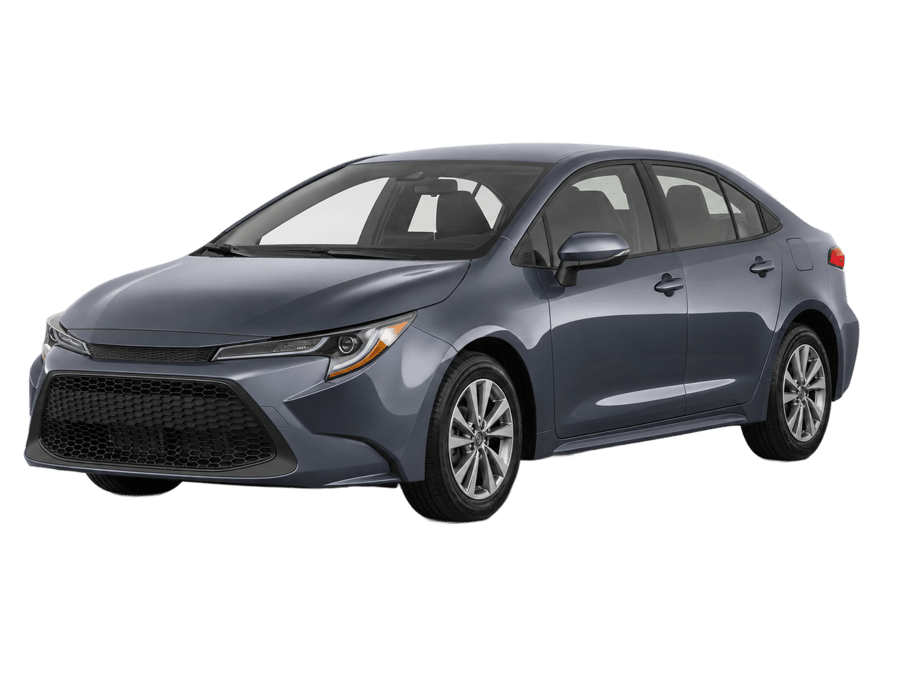
Official safety ratings were found for 1 tested variant of the 2018 Toyota Corolla.
3 official recalls on record for the 2018 Toyota Corolla. 25 matched quarterly completion reports are available.
Latest recall: January 17, 2020
| Campaign | Component | Summary | Consequence | Remedy | Date | Completion |
|---|---|---|---|---|---|---|
| 20V024000 | AIR BAGS: AIR BAG/RESTRAINT CONTROL MODULE | Toyota Motor Engineering & Manufacturing (Toyota) is recalling certain 2011-2019 Corolla, 2011-2013 Matrix, 2012-2018 Avalon, and 2013-2018 Avalon Hybrid vehicles. During certain crashes, the air bag electronic control unit (ECU) may malfunction, possibly disabling the deployment of the air bags and/or seat belt pretensioners. | In the event of a crash, air bags and/or seat belt pretensioners that do not deploy as intended may increase the risk of injury. | Toyota will notify owners, and dealers will inspect the ECU and install a noise filter between the air bag control module and its wire harness, as necessary, free of charge. Owners were notified of the safety risk beginning March 2, 2020. A second letter notifying owners of the remedy repair will be mailed between March 16, 2020 and June 27, 2020. Owners may contact Toyota customer service at 1-888-270-9371. Toyota's numbers for this recall are 20TB03, 20TA03 and 20TA05. | Jan 2020 | 2022-1 |
| 20V012000 | FUEL SYSTEM, GASOLINE:DELIVERY:FUEL PUMP | Toyota Motor Engineering & Manufacturing (Toyota) recalled certain 2018-2019 4Runner, Highlander, Camry, Land Cruiser, Sequoia, Sienna, Tacoma and Tundra, and Lexus RC 300, RC 350, GS 350, GX 460, IS 300, LC 500, LS 500, LX 570, RX 350L, and 2019 Toyota Avalon and Corolla, and certain Lexus NX 300, and ES 350 vehicles on January 13, 2020. On March 4, 2020, Toyota expanded the recall to include certain 2014-2015 Toyota 4Runner and Land Cruiser, 2018 Avalon, Corolla, 2014 FJ Cruiser, 2017 Sienna and Lexus 2018 ES 350, 2018-2019 GS 300, 2013-2014 GS350, 2014-2015 GX 460, IS 350 and LX 570, 2014 IS F, 2018-2019 IS 350, LC 500H and LS 500H, 2013-2015 LS 460, 2015 NX 200T and RC350, 2017 RC 200T and RX 350. Toyota also removed the 2018-2019 Toyota 4Runner and Land Cruiser and 2018-2019 Lexus GX 460 and LX 570 and 2019 NX300 from inclusion in this recall. On March 19, 2020, Toyota expanded the recall to include 2015 Lexus GS350 vehicles. The low-pressure fuel pump inside the fuel tank may fail. | If the fuel pump fails, the engine can stall while driving, increasing the risk of a crash. | Toyota will notify owners, and dealers will replace the fuel pump, free of charge. The recall began May 4, 2020. Owners may contact Toyota customer service at 1-888-270-9371 or Lexus customer service at 1-800-255-3987. Toyota's numbers for this recall are 20TB02 and 20TA02 for Toyota vehicles and 20LB01 and 20LA01 for Lexus vehicles. | Jan 2020 | 2022-1 |
| 19V503000 | EQUIPMENT:OTHER:LABELS | Southeast Toyota Distributors, LLC (SET) is recalling certain 2017-2019 Toyota Camry, Corolla, Rav4, Sienna, and Yaris iA vehicles equipped with factory-installed floor mats. The load carrying capacity modification label may be incorrect. As such, these vehicles fail to comply with the requirements of Federal Motor Vehicle Safety Standard (FMVSS) number 110, "Tire Selection and Rims." | An incorrect label may lead to unintentionally overloading the vehicle, increasing the risk of a crash. | SET will notify owners and provide a corrected label for placement over the inaccurate label, free of charge. The recall began August 23, 2019. Owners may contact Toyota customer service at 1-888-270-9371. SET's number for this recall is SET19A. | Jun 2019 | 2021-2 |
Official records show 5 federal defect investigations matched to the 2018 Toyota Corolla.
| Action | Status | Component | Subject | Opened | Related recall |
|---|---|---|---|---|---|
| EA21002 | Open | AIR BAGS:FRONTAL:DRIVER SIDE:INFLATOR MODULE | Desiccated Air Bag Inflator Rupture | Sep 2021 | None |
| EA21002 | Open | AIR BAGS:FRONTAL:PASSENGER SIDE:INFLATOR MODULE | Desiccated Air Bag Inflator Rupture | Sep 2021 | None |
| EA21002 | Open | AIR BAGS:FRONTAL:DRIVER SIDE:INFLATOR MODULE | Desiccated Air Bag Inflator Rupture | Sep 2021 | None |
| EA21002 | Open | AIR BAGS:FRONTAL:PASSENGER SIDE:INFLATOR MODULE | Desiccated Air Bag Inflator Rupture | Sep 2021 | None |
| EA19001 | Closed | AIR BAGS: AIR BAG/RESTRAINT CONTROL MODULE | Electrical overstress | Apr 2019 | 20V024 |
Official records show 188 manufacturer communications on record for the 2018 Toyota Corolla.
| Date | Type | Component | Summary | ID / document |
|---|---|---|---|---|
| Jan 2026 | Service Bulletin/Repair Instructions | UNKNOWN OR OTHER | Some 2005 – 2026 Toyota vehicles that have undergone water intrusion may exhibit a condition in which a musty odor is present. Follow the procedures in this bulletin to remediate the odor and address this condition. The purpose of this Service Bulletin is to provide general guidelines and procedures for odor remediation. This Service Bulletin provides a guide on how to prepare and treat the interior of the vehicle for odor remediation. Refer to the applicable model and model year Repair Manual and the EPA (Environmental Protection Agency) website for the most up-to-date safety and precautionary guidelines. | 11028712 |
| Jun 2025 | Service Campaign | ELECTRICAL SYSTEM | The air conditioning dye injection tool kit has been developed to aid in identifying the location of air conditioning refrigerant leaks. The procedures outlined in this Service Bulletin aid in locating, inspecting, and repairing refrigerant leaks. | 11020657 |
| Dec 2024 | Service Bulletin/Repair Instructions | STRUCTURE:BODY | To prevent brake rotor rust from forming during transportation and storage, wheel film will be used instead of a cardboard type of anti-rust cover. The purpose of the wheel film is to shield the disc brake rotor from weather elements and initial rust before the vehicle is delivered to the customer. Consequently, the film should remain on the wheel for as long as possible. | 11012743 |
| Dec 2024 | Service Bulletin/Repair Instructions | STRUCTURE:BODY | The condition known as acid rain is caused by airborne chemicals or particles in the atmosphere, which mix with rainwater, nighttime dew, or high humidity to form acidic compounds. If these contaminants settle and remain on a painted vehicle surface, especially the horizonal areas of the hood, roof, and decklid, significant damage can occur. This damage is the result of actual etching of the paint and appears as pitting or water spots. As acid rain droplets on the vehicle surface evaporate, the concentration strength of the acid increases, causing deeper and more rapid damage. This evaporation and corrosive action also occur more rapidly on dark colored cars as direct sun heat increases. It is the dealer’s responsibility to protect and maintain the quality of the vehicle’s paint finish after receipt at the dealership prior to the first sale. In areas known for high frequency and/or concentration of acid rain, frequent vehicle washing during high heat or humidity periods will minimize the potential for paint damage caused by acid rain. It is further recommended that either reverse osmosis or deionized water be used to prevent water spotting. | 11012744 |
| Dec 2024 | Service Bulletin/Repair Instructions | STRUCTURE:BODY | Acid rain results from rainwater or other airborne moisture that become acidic due to industrial chemical impurities in the atmosphere. If these acidic compounds settle on an exposed vehicle, especially the horizontal areas such as the hood, roof, and decklid, significant damage to the painted surfaces can occur. Acid rain damage can typically be identified on vehicles by the presence of stains on the paint surface that resemble hard water spots. Unlike water spots however, acid rain damage cannot be removed by regular washing procedures. Also, because acid rain can etch and soften the paint, normal buffing or polishing repair procedures should not be attempted. This can cause further damage and result in visible depressions in the paint surface. The following are the three major categories of acid rain damage: •Minor damage: requires only buffing to repair. •Moderate damage: usually requires neutralizing, color sanding, and buffing. •Severe damage: extending beyond 1/2 mil of clearcoat on a pearl, metallic, or solid color, requires neutralization, sanding, and repainting. In cases where acid rain damage is minor, neutralization and buffing with a liquid-type paint finessing product may provide an adequate repair. Only specially formulated products outlined in this bulletin should be used for that purpose. Unfortunately, other than minor damage, there is no simple method of determining the actual extent (depth) of acid penetration other than color sanding a representative affected area until there is no visible etching or depressions, followed by measuring the amount of paint removed with either a magnetic or digital-type film thickness gauge. The procedures in this bulletin are intended for use by qualified body/paint technicians and should not be attempted by inexperienced personnel. It is the dealer’s responsibility to protect and maintain the quality of the vehicle’s paint finish after receipt at the dealership prior to the first sale. Perform frequent vehicle washing, as often as daily, during high heat and humidity periods to minimize the potential for paint damage due to acid rain exposure. This is especially important in geographical areas known for high frequency and concentration of acid rain and industrial fallout. | 11012742 |
| Dec 2024 | Service Bulletin/Repair Instructions | STRUCTURE:BODY | Toyota vehicles are currently protected with RapgardTM protective film designed to protect the horizontal painted surfaces. This material protects from acid rain, environmental fallout, and rail contamination. Follow the Removal Procedure in this bulletin to remove the RapgardTM protective film within 90 days from initial application. | 11012735 |
| Dec 2024 | Service Bulletin/Repair Instructions | STRUCTURE:BODY | Vehicles may occasionally be subjected to contamination by airborne iron particles shed from railroad tracks, train wheels, exposure to heavy machinery facilities, grinding, welding, etc. This type of contamination can be identified by the presence of small, red or brown particles on the paint surface. These particles are often difficult to see on dark color paints but can be easily felt when brushing a hand across horizontal body surfaces such as the hood, roof, or deck lid. Follow the Repair Procedure in this bulletin to clean vehicles that may have been subjected to contamination by airborne iron particles such as rail dust during rail transportation or extended storage near industrial areas. | 11012727 |
| Jul 2024 | Service Bulletin/Repair Instructions | STRUCTURE:BODY | Some 2005 – 2024 Toyota vehicles that have undergone water intrusion may exhibit a condition in which a musty odor is present. Follow the procedures in this bulletin to remediate the odor and address this condition. The purpose of this Service Bulletin is to provide general guidelines and procedures for odor remediation. This Service Bulletin provides a guide on how to prepare and treat the interior of the vehicle for odor remediation. Refer to the applicable model and model year Repair Manual and the EPA (Environmental Protection Agency) website for the most up-to-date safety and precautionary guidelines. This Service Bulletin is to provide a general overview and direction for the odor remediation process. | 11007455 |
| Jul 2024 | Service Bulletin/Repair Instructions | STRUCTURE:BODY | Some 2005 – 2024 Toyota vehicles that have undergone water intrusion may exhibit a condition in which a musty odor is present. Follow the procedures in this bulletin to remediate the odor and address this condition. The purpose of this Service Bulletin is to provide general guidelines and procedures for odor remediation. This Service Bulletin provides a guide on how to prepare and treat the interior of the vehicle for odor remediation. Refer to the applicable model and model year Repair Manual and the EPA (Environmental Protection Agency) website for the most up-to-date safety and precautionary guidelines. This Service Bulletin is to provide a general overview and direction for the odor remediation process. | 11006161 |
| Jul 2024 | Service Bulletin/Repair Instructions | STRUCTURE:BODY | The condition known as acid rain is caused by airborne chemicals or particles in the atmosphere, which mix with rainwater, nighttime dew, or high humidity to form acidic compounds. If these contaminants settle and remain on a painted vehicle surface, especially the horizonal areas of the hood, roof, and decklid, significant damage can occur. This damage is the result of actual etching of the paint and appears as pitting or water spots. As acid rain droplets on the vehicle surface evaporate, the concentration strength of the acid increases, causing deeper and more rapid damage. This evaporation and corrosive action also occur more rapidly on dark colored cars as direct sun heat increases. It is the dealer’s responsibility to protect and maintain the quality of the vehicle’s paint finish after receipt at the dealership prior to the first sale. In areas known for high frequency and/or concentration of acid rain (see Figure 1), frequent vehicle washing during high heat or humidity periods will minimize the potential for paint damage caused by acid rain. It is further recommended that either reverse osmosis or deionized water be used to prevent water spotting. | 11007445 |
133 total complaints on record
Assumptions: 27 city / 35 highway / 30 combined MPG · Regular Gasoline · efficiency ratings from official public data when available · fuel price default: official public data (U.S. average, Jul 18, 2026)